Attractions and Places To See around Brie - Top 20
Best attractions and places to see around Brie encompass a diverse landscape, from historical sites to natural waterways. The region, known for its varied geography, offers a mix of cultural landmarks and outdoor exploration opportunities. Visitors can discover medieval castles, significant historical museums, and scenic routes along canals and rivers. This area provides a range of experiences for those interested in history, architecture, and natural features.
Best attractions and places to see around Brie
- The most popular attractions is Somme Valley Cycle Path, a route that was recently updated with a bitumen coating. This path provides greater accessibility for cyclists and walkers along the Somme river.
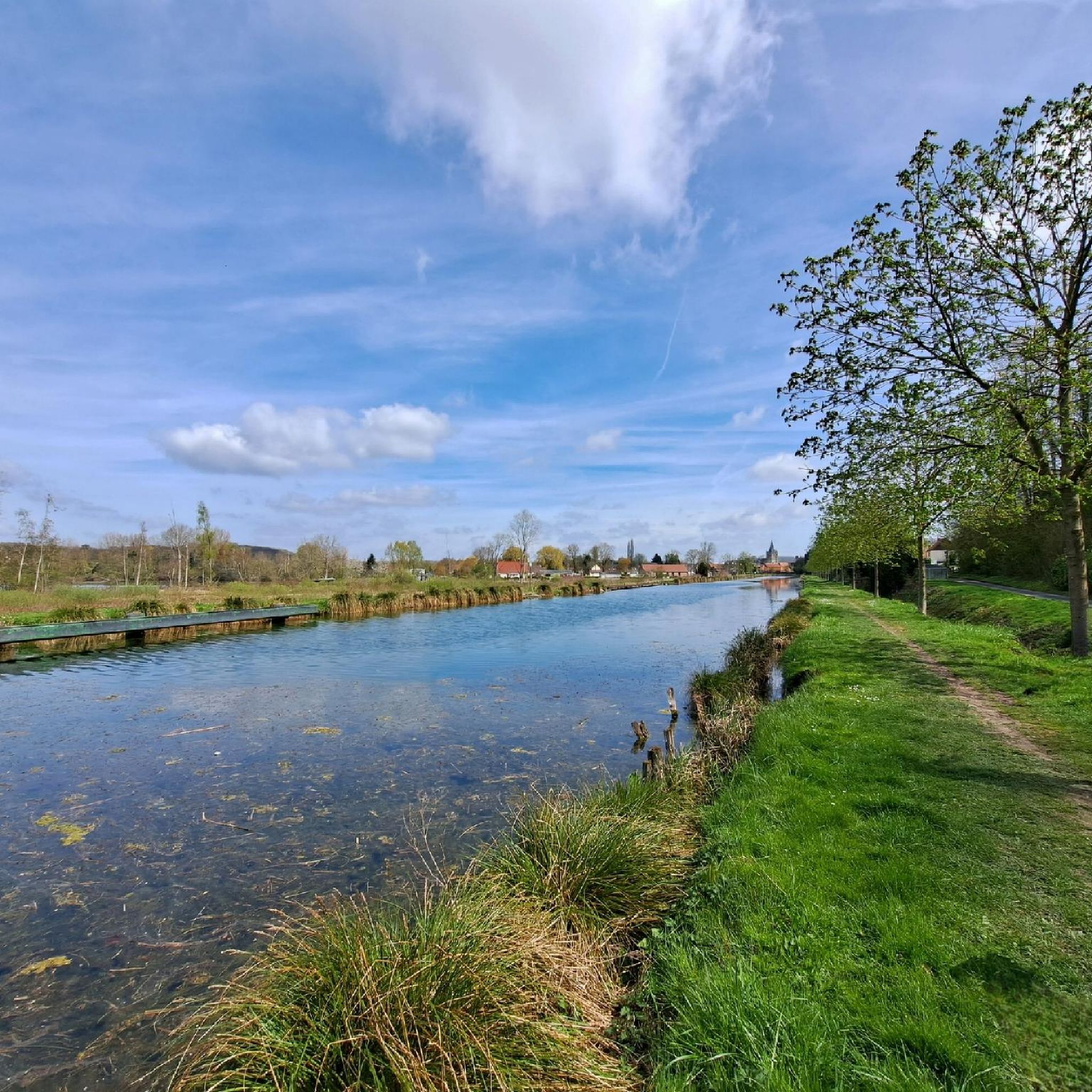
- Another must-see spot is Canal du Nord, a 95 km long canal connecting the Oise Valley to the Dunkirk-Scheldt Canal. It features 19 locks and two tunnels, serving as an important waterway in northern France.
- Visitors also love Historial of the Great War – Château de Péronne, a museum dedicated to the First World War. Located within a 13th-century castle, it offers insights into the war's preparation, events, and post-war rebuilding.
- Brie is known for its historical castles, significant museums, and scenic waterways. The region offers a variety of attractions, including medieval fortresses, cultural institutions, and routes for cycling and walking.
- The attractions around Brie are appreciated by the komoot community, with more than 40 upvotes and 25 photos shared by visitors.
Last updated: July 1, 2026
Historial of the Great War – Château de Péronne
Highlight • Castle
The museum has two parts: You enter through the Château de Peronne which dates from the 13th century, and was built during the reign of Louis-Philippe. The second structure, which is more recent, dates from 2016. It is the work of architect Henri-Edouard Ariani and is located on the edge of the Cam pond.
Translated by Google •
Tip by

Château de Péronne
Highlight • Castle
The Somme here forms natural ponds that surround the city, giving it an undeniable attractiveness. Its old center is on a small hill which dominates the whole.
Translated by Google •
Tip by
Sign up now to discover places like this
Get recommendations on the best single tracks, peaks, & plenty of other exciting outdoor places.
Sign up for free
Canal du Nord
Highlight • River
The canal has 19 locks and two tunnels, including the Ruyaulcourt Tunnel, which spans a height difference of 40 metres. The Canal du Nord is an important waterway for inland navigation, but will be replaced in the future by the Seine-Nord Europe Canal, a more modern connection.
Translated by Google •
Tip by

Château d'Happlincourt
Highlight • Castle
Showing Translation
Tip by
Cycle path of the Somme Valley
Highlight • Cycleway
Translated by Google •
Tip by
Sign up for free to discover even more attractions around Brie.
Sign up for free
Already have an account?
Start today with a free account
Your next adventure awaits.
Login or Signup




Tips from the Community

Also a bicycle repair and electric bike charging point
0
0

The castle is almost invisible from the towpath. Good that the highlight is positioned correctly, otherwise you will definitely miss it.
5
1
The Canal du Nord is a 95 km long canal in northern France that connects the Oise Valley to the Dunkirk-Scheldt Canal. Construction began in 1908, but was interrupted by the First World War. The canal was not completed and opened to navigation until 1965. The canal has 19 locks and two tunnels, including the Ruyaulcourt Tunnel, which spans a height difference of 40 metres. The Canal du Nord is an important waterway for inland navigation, but will be replaced in the future by the Seine-Nord Europe Canal, a more modern connection.
5
0
The Château d'Happlaincourt, a medieval castle, dates from the 13th century and was originally a fortified structure with a square floor plan, surrounded by water. During the First World War, the castle was largely destroyed, leaving only ruins today. Historically, it played a role in the Catholic League in the 16th century, when Jacques d'Humières drew up a manifesto there to restore the Catholic religion.
5
1

The museum covers the period of the First World War in all its aspects: military, social, cultural.
0
0
This museum is located on the front lines of the Battle of the Somme. The white concrete design by architect Henri-Edouard Ciriani describes a gentle arc set into the southwest wall of the medieval castle. It forms a harmonious whole with the four large round towers, each with a diameter of 9 m. The building at the Etang du Cam stands on a series of smooth white concrete columns, creating a beautiful reflection in the water. The rooms are accessed through an opening in the wall of the 13th-century castle, which was built by the Counts of Vermandois. Charles the Bold imprisoned Louis XI in one of the towers.
2
0

Very nice museum in a great, historic building. A must visit on a bike tour 😍.
3
0

Whether on the Somme or on the canals: driving on the water is always pleasant. Water-rich area...
1
0
Frequently Asked Questions
What historical sites can I visit around Brie?
The Brie region, particularly around Péronne, offers significant historical sites. You can explore the 13th-century Château de Péronne, which houses the Historial of the Great War. Further afield, in the historical Brie region (Seine-et-Marne), you'll find the feudal château in Brie-Comte-Robert, the 14th-century Château de Blandy-les-Tours, and the UNESCO World Heritage site of the Medieval City of Provins.
Are there any notable natural features or waterways in the Brie area?
Yes, the region is characterized by its waterways. The Canal du Nord is a prominent 95 km long waterway connecting the Oise Valley to the Dunkirk-Scheldt Canal, featuring 19 locks and two tunnels. The Somme River also forms natural ponds around Péronne. In the historical Brie region (Seine-et-Marne), the Seine and Marne rivers are significant, and the Forest of Fontainebleau offers a natural paradise with boulders, ponds, and moors.
What family-friendly attractions are available around Brie?
Around Péronne, the Historial of the Great War – Château de Péronne is considered family-friendly, offering insights into history within a castle setting. In the broader historical Brie region (Seine-et-Marne), the Lumigny Zoological Parks, which include Parc des Félins and Terre de Singes, provide engaging experiences for families.
Can I go cycling or hiking near the attractions in Brie?
Absolutely. The area around Péronne is excellent for outdoor activities. The Somme Valley Cycle Path offers a recently updated bitumen coating for greater accessibility for cyclists and walkers. You can find various road cycling routes, general cycling tours, and hiking trails around Péronne and nearby towns like Biaches and Athies. Explore options like the 'Froissy Lock – Canal de la Somme Cycle Path loop' for road cycling, or the 'Historial of the Great War — loop from Péronne' for hiking, by visiting the Road Cycling Routes around Brie, Cycling around Brie, and Hiking around Brie guides.
What is the Somme Valley Cycle Path like?
The Somme Valley Cycle Path is a recently developed route, with its bitumen coating dating from 2019. This upgrade has significantly improved accessibility for cyclists and walkers along the Somme River, making it a pleasant experience to travel the 200 kilometers of journey that previously involved towpaths.
What is the significance of the Canal du Nord?
The Canal du Nord is a crucial 95 km long waterway in northern France, connecting the Oise Valley to the Dunkirk-Scheldt Canal. It features 19 locks and two tunnels, including the Ruyaulcourt Tunnel. Although construction began in 1908, it was only completed and opened in 1965 due to interruptions from the First World War. It serves as an important route for inland navigation.
What can I learn at the Historial of the Great War?
The Historial of the Great War – Château de Péronne is a fascinating museum dedicated to the First World War. It provides a comprehensive understanding of the war's preparation, the events themselves, and the subsequent rebuilding of Europe. The museum presents the perspectives of various countries involved, as well as the daily lives of soldiers and civilians. It's housed within the historic Château de Péronne, overlooking a pond.
Are there any medieval castles to explore in the Brie region?
Yes, the Brie region is home to several medieval castles. In Péronne, you can visit the 13th-century Château de Péronne. Nearby, you can also find the ruins of the 12th-century Château d'Happlincourt, which was largely destroyed during the First World War. In the historical Brie region (Seine-et-Marne), the feudal château in Brie-Comte-Robert and the impressive 14th-century Château de Blandy-les-Tours are notable examples.
What do visitors enjoy most about the attractions around Brie?
Visitors particularly appreciate the historical depth and natural beauty of the area. The Historial of the Great War is highly regarded for its insightful portrayal of history. The charming town of Péronne, with its natural ponds formed by the Somme, is also a favorite. The accessibility and pleasantness of cycling and walking along waterways like the Somme Valley Cycle Path are frequently highlighted.
Is there a specific Brie region known for its cheese?
Yes, the historical region of Brie, primarily located in the Seine-et-Marne department within the Île-de-France region, is world-renowned for its cheese, particularly Brie de Meaux. In Meaux, you can visit the Maison du Brie de Meaux to learn about its history and production.
Are there any other significant cultural landmarks in the broader Brie areas?
Beyond the Somme region, other 'Brie' locations offer cultural gems. In Brie-Comte-Robert (Seine-et-Marne), you'll find the Gothic Saint-Etienne church and the Hôtel-Dieu. Near Brie in Charente, the Château de La Rochefoucauld is a magnificent castle, and Angoulême is a 'City of Art and History' with its Saint-Pierre Cathedral. Near Brie in Somme, Saint-Quentin boasts Art Deco architecture and a Basilica.
What kind of terrain can I expect on hiking trails around Brie?
Hiking trails around the Brie area, particularly near Péronne, often follow waterways and offer relatively gentle terrain. For instance, routes like the 'Historial of the Great War — loop from Péronne' are generally moderate. The Somme Valley Cycle Path, which is also suitable for walking, has a smooth bitumen surface. The region is not abundantly watered, but you'll encounter paths along canals, rivers, and through picturesque countryside.

Get inspired with the komoot mobile app


Explore more
Still not found the Highlight you’re looking for? See guides of the top attractions in other regions:
