Attractions and Places To See around Darbres - Top 20
Best attractions and places to see around Darbres include a blend of historical sites and natural features within the Ardèche department of France. This picturesque village is nestled against the cliffs of the Coiron plateau, offering insights into its Neolithic past and industrial heritage. The region is characterized by impressive columnar basalt formations, scenic chestnut groves, and numerous hiking routes. Darbres serves as a gateway to the Monts d'Ardèche Regional Natural Park, providing access to diverse landscapes and geological wonders.
…Last updated: August 30, 2026
Jastres Oppidum
Highlight • Other
"Gallic oppidum of the barred spur type, dominating the Ardèche. On the accessible side, it is defended by a monumental wall presenting three stages of construction. The first …
Translated by Google •
Tip by

Privas
Highlight • Settlement
Nestled in the Ardèche Verte and gateway to the Monts d'Ardèche Regional Natural Park, the town has some …
Translated by Google •
Tip by

Sign up now to discover places like this
Get recommendations on the best single tracks, peaks, & plenty of other exciting outdoor places.
Sign up for free
Col du Benas (795 m)
Highlight • Mountain Pass
Translated by Google •
Tip by

La Roche Castle
Highlight • Castle
Translated by Google •
Tip by

Saint-Germain Church
Highlight • Other
Translated by Google •
Tip by

Sign up for free to discover even more attractions around Darbres.
Sign up for free
Already have an account?
Start today with a free account
Your next adventure awaits.
Login or Signup

Tips from the Community

"...had spared the village from a cholera epidemic... As a token of thanks to the Virgin Mary, a statue of the Virgin Mary was placed on the renovated village bell tower on March 12, 1893." > At almost 40 meters high, the bell tower of Saint Germain is the tallest in the Ardèche
0
0

Former Huguenot capital, Privas is one of the smallest prefectures in France. Nestled in the Ardèche Verte and gateway to the Monts d'Ardèche Regional Natural Park, the town has some notable buildings, such as the 15th century Diane de Poitiers tower and the Loius XIII bridge. “Capital of candied chestnuts”, it also shines with its chestnut puree and candied chestnuts which have earned it the label of “Remarkable site of taste”.
4
0

Maximum slopes of 6.2% in the Benas David pass, we didn't have to do the same. And then 17.5 km with a flat area which can make it seem shorter if you don't have the wind in your face. There are some passages that are even steeper. I consider it more difficult than Ventoux from Areau to Chalet Reynard 20km. But it is true, a very nice pass to do, for a good beginner like me aged... (Lol).. And a good preparation in comparison therefore for the Ventoux from Areau done the next day, in which it was necessary to have kept strength for the 6 deniers kilometres.
0
0

The church has a very distinctive bell tower: a 9m high statue of Our Lady of Lourdes. It is said to have been built in gratitude for sparing the village from a cholera epidemic that hit neighboring villages. At almost 40 meters high, the Saint Germain bell tower is the tallest in Ardèche.
1
0

Privas is the capital of the Ardèche. Historically the city was one of the centers of French Protestantism during the Wars of Religion. It is also the birthplace of Clément Faugier who launched a company specializing in recipes based on the famous Ardèche chestnut at the end of the 19th century. Privas is therefore, with Aubenas, the capital of candied chestnuts and chestnut cream!
2
0

Sources: https://www.pop.culture.gouv.fr/notice/merimee/PA00116726 "Gallic oppidum of the barred spur type, dominating the Ardèche. On the accessible side, it is defended by a monumental wall presenting three stages of construction. The first is represented by a rectilinear dry stone wall, pierced by a cart door which delimits a four-hectare oppidum, dated 130 AC Then, the enlargement of the oppidum results in a massive work punctuated by square towers involved in the work. An external clavicula, usually found in Roman camps and serving as the forward defense of the gate, and the use of mortar to bind the core are seen in this second phase dating back to around 80 AC. Finally, a third phase, around 50 AC, doubles this construction of overhanging towers, alternately round and square. This last state uses mortar more widely for facings and towers. At the rear of these fortifications is perceptible a habitat composed of houses of different sizes interspersed by a network of roads. This site is undoubtedly the former administrative center of the city of the Helvians, before the creation of Alba Helviorum."
1
1

The Col du Benas from Privas is 13.5 km long with a total drop of 515 m. The average gradient is 3.7% with maximum gradients of 6.2%.
1
0

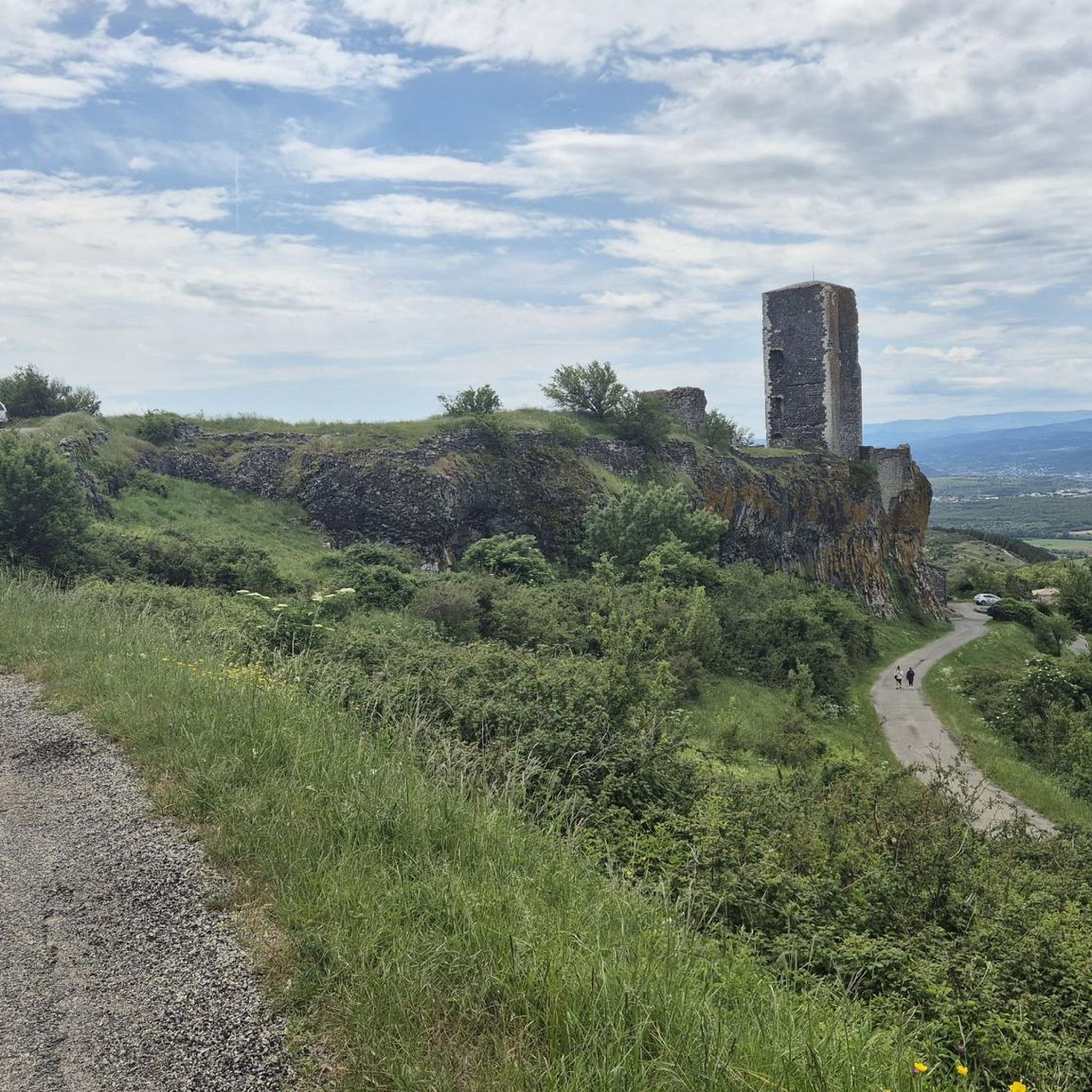
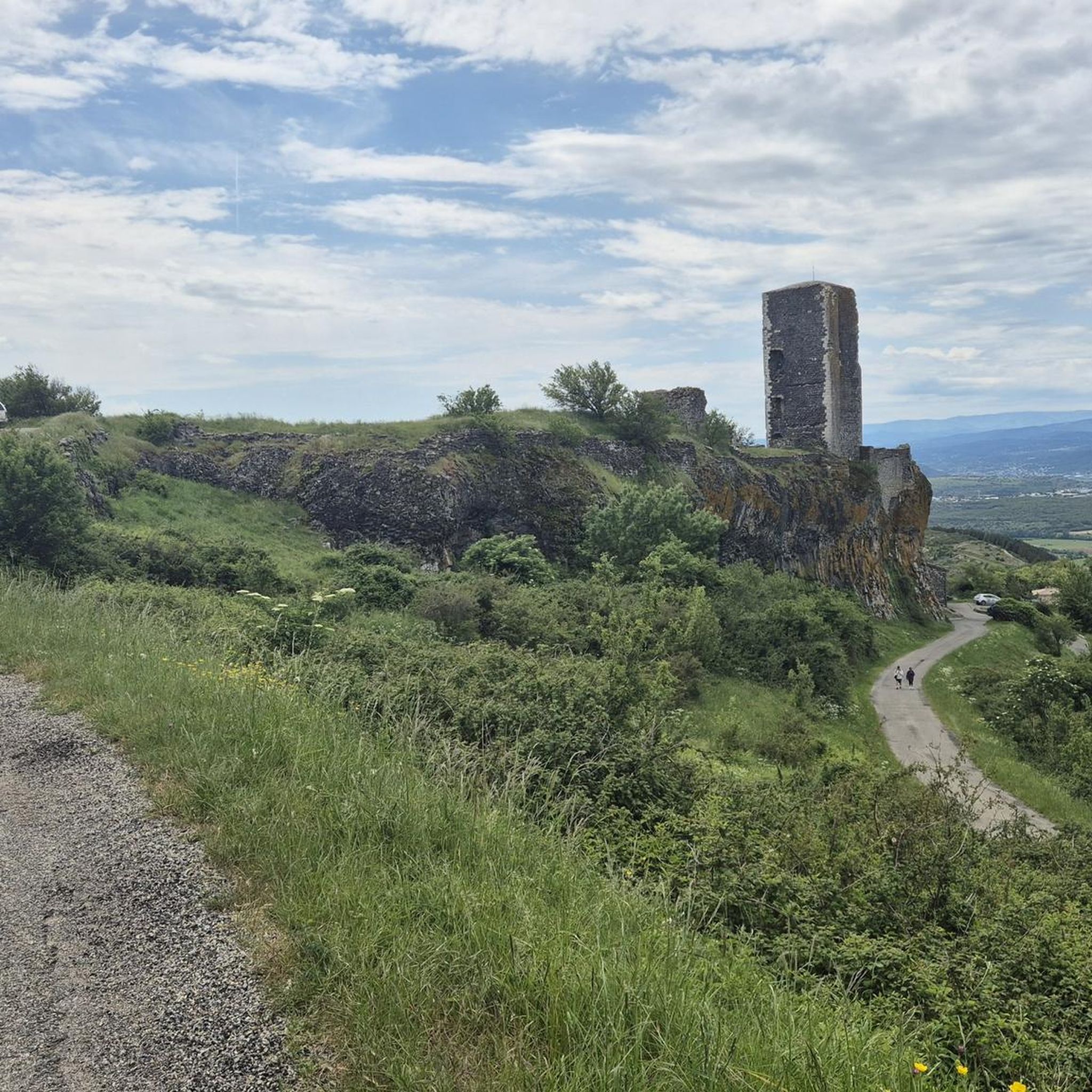
This basaltic plateau was actually home to two castles, one on the eastern slope and the other on the western slope. The eastern castle has disappeared, leaving the tower of the western castle balanced on the edge of the rocky plateau.
2
0
Frequently Asked Questions
What historical sites can I visit in and around Darbres?
Darbres and its surroundings are rich in history. You can explore the ancient Gallic oppidum of Jastres Oppidum, which features monumental walls and traces of early settlements. The village of Darbres itself has a rich past, with records dating back to the 10th century, and features the late 19th-century Saint-Arconce Church and the historic Moulinage (mill) from 1812. Nearby, the settlement of Privas, a former Huguenot capital, offers notable buildings like the 15th-century Diane de Poitiers tower and the Louis XIII bridge.
Are there any natural attractions or geological features to see near Darbres?
Yes, Darbres is set against the stunning backdrop of the Coiron plateau, known for its volcanic history. You can find impressive columnar basalt formations, which are natural classified sites showcasing the region's geological past. The area is also characterized by beautiful chestnut groves, offering scenic landscapes. Darbres is a gateway to the Monts d'Ardèche Regional Natural Park, a UNESCO Geopark with diverse landscapes and over 50 volcanoes.
What kind of outdoor activities can I do around Darbres?
The region around Darbres is ideal for various outdoor activities. You can enjoy hiking on numerous routes accessible from the village, particularly from the Place de l'Eglise. For cyclists, there are many options, including road cycling routes like the "Viaduct – Col du Benas (795 m) loop from Darbres" or mountain biking trails such as the "Col de Fontenelle (718 m) – Rocky Descent Trail loop". You can find more detailed routes for road cycling, MTB, and general cycling around Darbres.
Are there any family-friendly attractions or activities in the Darbres area?
While Darbres itself is tranquil, the historic Moulinage (mill) building is now utilized as a children's vacation center, and its well-irrigated gardens are lovely to explore. The surrounding Ardèche region offers many family-friendly options, such as exploring the impressive La Roche Castle, which offers great views. The natural landscapes, including chestnut groves and hiking trails, provide opportunities for outdoor family adventures.
What are some notable villages to visit near Darbres?
The Ardèche region boasts several charming villages close to Darbres. These include Vogüé (13 km away) with its dominant castle, Balazuc (19 km away) leading down to the Ardèche river, and Mirabel (4.3 km away) with its medieval square tower. Alba-la-Romaine (13 km away) is also worth a visit for its picturesque historic center.
Where can I find panoramic views or scenic viewpoints?
For breathtaking views, head to La Roche Castle, where the tower of the western castle, perched on a rocky basaltic plateau, offers expansive vistas. Another excellent spot is Col du Benas (795 m), a mountain pass that provides scenic routes and elevated perspectives of the surrounding landscape.
What is the significance of the Saint-Arconce Church in Darbres?
The Saint-Arconce Church, built in the late 19th century on the site of an older structure, is a significant cultural landmark in Darbres. It houses a painting of Christ on the cross, which is a copy of a work by Pierre-Paul Prud'hon, and features a stained-glass window created by the renowned 19th-century glass painter Louis-Victor Gesta.
Is there anything unique about the water sources in Darbres?
Yes, Darbres is home to the intriguing Intermittent Boulègue Fountain. This fountain is known for its water sometimes being tinged with ocher, which, according to local legend, signals a coming threat or misfortune. It's a unique local curiosity reflecting the village's folklore.
What is the Monts d'Ardèche Regional Natural Park, and how close is it to Darbres?
Darbres serves as a gateway to the Monts d'Ardèche Regional Natural Park. This park is recognized by UNESCO as a Geopark and is celebrated for its incredibly diverse landscapes, rich biodiversity, and over 50 volcanoes. It offers extensive opportunities for exploring nature, hiking, and discovering the geological wonders of the Ardèche.
What is the history of the Moulinage (mill) in Darbres?
The Moulinage, or mill, in Darbres dates back to 1812. This two-story basaltic building is a testament to the village's industrial past, having once employed around 70 workers, primarily women, and playing a central role in the local economy. While it closed after World War I, it now serves as a children's vacation center, and its well-irrigated gardens, fed by the original canals, are still noteworthy.
What is the tallest bell tower in Ardèche, and where is it located?
The tallest bell tower in Ardèche belongs to the Saint-Germain Church. At almost 40 meters high, it is distinctive for its 9-meter statue of Our Lady of Lourdes, which is said to have been built in gratitude for sparing the village from a cholera epidemic.
Most popular routes around Darbres

Get inspired with the komoot mobile app


Explore more
Still not found the Highlight you’re looking for? See guides of the top attractions in other regions:
