Attractions and Places To See around Fey-En-Haye - Top 20
Best attractions and places to see around Fey-En-Haye include historical sites and cultural landmarks situated in the Moselle valley. This region, located between Metz and Nancy, is characterized by its riverine landscape and historical significance. Visitors can explore a variety of sites, from ancient castles to baroque abbeys, reflecting centuries of regional history.
Best attractions and places to see around Fey-En-Haye
- The most popular attractions is Premonstratensian Abbey Pont-à-Mousson, a religious building known for its Baroque architecture and historical…
Last updated: July 16, 2026
Pont-à-Mousson Town Centre
Highlight • Settlement
Located on the Moselle, between Metz and Nancy, Pont-à-Mousson is a city with deep roots. It was founded around a medieval …
Translated by Google •
Tip by

Premonstratensian Abbey
Highlight • Religious Site
Translated by Google •
Tip by

Sign up now to discover places like this
Get recommendations on the best single tracks, peaks, & plenty of other exciting outdoor places.
Sign up for free
St. Martin's Church
Highlight • Religious Site
Translated by Google •
Tip by
Prény Castle
Highlight • Castle
Translated by Google •
Tip by

Carmelite Cross
Highlight • Other
Translated by Google •
Tip by

Sign up for free to discover even more attractions around Fey-En-Haye.
Sign up for free
Already have an account?
Start today with a free account
Your next adventure awaits.
Login or Signup

Tips from the Community

The abbey is well worth a visit. I would recommend spending the night in this unique setting.
3
0
An overnight stay at the abbey is worthwhile, as you sleep in a truly unique setting. We chose the location because it's ideally located for cycling tours along the Moselle to Metz and Nancy.
3
0

This imposing 18th-century abbey is one of the finest examples of baroque monastic architecture in Lorraine. Once the headquarters of the Order of the Premonstratensians, the building now houses a cultural centre and a hotel. Situated on the banks of the Moselle, between Metz and Nancy, the abbey offers a unique mix of heritage, art and tranquillity. The gardens, monumental staircase and cloisters are open to the public and are an impressive stop on any bike tour.
8
0
🏰 Pont-à-Mousson – City of bridges, books and baroque Located on the Moselle, between Metz and Nancy, Pont-à-Mousson is a city with deep roots. It was founded around a medieval bridge and became an intellectual centre thanks to the creation of the University of Lorraine in the 16th century. The city has been hit by wars several times, but has always risen again. Today, you can admire the baroque abbey of the Prémontrés, the lively Place Duroc with its Renaissance houses, and Gothic churches such as Saint-Martin and Saint-Laurent. Pont-à-Mousson is also known for its industrial heritage – it is the world centre for cast iron pipes – and for its cultural festivals such as the Mousson d’Été.
8
1
Gothic with a story. Behind the austere façade of this church lies a rich history. Built from the 13th century onwards by the Antonists, an order dedicated to caring for the sick, it was originally the church of a hospital. The architecture is a rare mix of Gothic Rayonnant and Flamboyant, with a unique façade designed by Jacquemin de Lenoncourt, who later also designed Toul Cathedral. In 1574, the church was handed over to the Jesuits, who transformed it into the university church of the newly founded Université de Pont-à-Mousson. In 1840, the church was one of the first buildings in France to be classified as a Monument Historique. Today, it remains a silent witness to religious, intellectual and architectural history – and a haven of peace in the heart of the city.
7
0

If you are looking for accommodation in Pont a Mousson, you should take a look at the hotel in the former abbey (Abbaye). It is not cheap, but the atmosphere is worth seeing. And the breakfast is a good basis for a long bike ride.
6
0

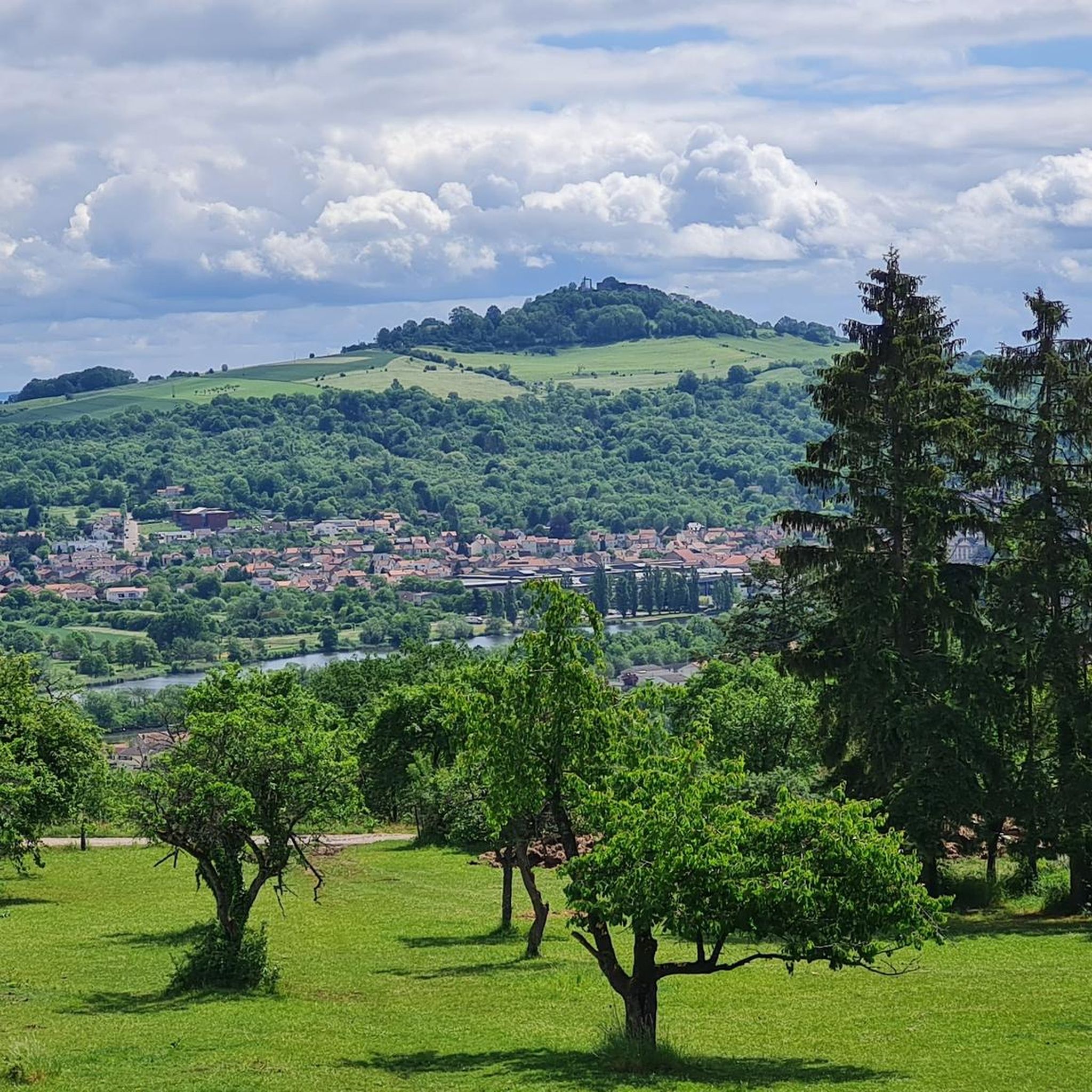
Visible from afar on the banks of the Moselle.
5
0

Memorial to the bloody Battles of Bois-le-Prêtre during the First World War. Initially a simple wooden cross which marked the highest point of the forest massif at 372 meters above sea level, a strategic point, it returned to its place of origin shortly after the war and was enshrined in the stone monument commemorating this battle which was inaugurated on September 23, 1923 by Raymond Poincaré.
0
0
Frequently Asked Questions
What historical sites can I explore around Fey-En-Haye?
The region is rich in history. You can visit the impressive Premonstratensian Abbey Pont-à-Mousson, a Baroque masterpiece and significant monastery complex. The Pont-à-Mousson Town Centre itself offers Renaissance houses and Gothic churches. Don't miss St. Martin's Church, a 13th-century Gothic church classified as a Monument Historique. Further afield, explore the ancient Prény Castle, a symbolic fortress of the Dukes of Lorraine.
Are there family-friendly attractions near Fey-En-Haye?
Yes, several attractions are suitable for families. The Pont-à-Mousson Town Centre is great for a stroll, with its historical buildings and lively atmosphere. The Premonstratensian Abbey (also known as Premonstratensian Abbey Pont-à-Mousson) offers beautiful architecture and gardens that can be enjoyed by all ages. St. Martin's Church, with its rich history and impressive architecture, can also be an engaging visit for older children.
What outdoor activities can I do near these attractions?
The area around Fey-En-Haye offers various outdoor activities. You can find numerous routes for hiking, gravel biking, and running. For hiking, explore trails like the 'Le Pétant National Necropolis – Carmelite Cross loop' or the 'Health trails loop from Montauville'. Gravel biking options include the 'Reflections – Scenic Path Along the Canal loop'. Runners can enjoy routes such as the 'Scenic Path Along the Canal loop from Norroy-lès-Pont-à-Mousson'. You can find more details on these and other routes in the hiking guide, gravel biking guide, and running trails guide for the region.
Are there easy walking trails around Fey-En-Haye?
Yes, there are several easy walking trails. For instance, the 'Le Pétant National Necropolis – Carmelite Cross loop from Montauville' is an easy 5.9 km hike, and the 'Health trails loop from Montauville' is an easy 4.3 km option. Another easy route is the 'Carmelite Cross – German shelter loop from Norroy-lès-Pont-à-Mousson', which is about 6.8 km. These trails are perfect for a relaxed outdoor experience. More options are available in the hiking guide.
What is the best time to visit Fey-En-Haye attractions?
The region's attractions, particularly historical sites and town centers, can be enjoyed year-round. However, for outdoor activities like hiking and biking, spring (April-May) and autumn (September-October) offer pleasant temperatures and beautiful scenery. Summer (June-August) is also popular, though it can be warmer. Winter visits are possible, especially for indoor attractions, but some outdoor trails might be less accessible depending on weather conditions.
What do visitors enjoy most about the attractions in Fey-En-Haye?
Visitors frequently appreciate the rich history and architectural beauty of the region. The Premonstratensian Abbey Pont-à-Mousson is often highlighted for its Baroque grandeur, monumental staircase, and serene gardens. The Pont-à-Mousson Town Centre is loved for its charming Renaissance houses and historical significance. Many also enjoy the peaceful atmosphere and the opportunity to explore centuries of regional heritage.
Can I find cafes or refreshments near the walking routes?
The Pont-à-Mousson Town Centre, being a settlement with deep roots, offers various cafes and restaurants where you can find refreshments. Many walking and cycling routes in the area pass through or near towns and villages, providing opportunities to stop for a break. It's always a good idea to check specific route details or local maps for exact locations of cafes along your chosen path.
Are there any hidden gems or lesser-known spots to discover?
While the main attractions are well-known, exploring the smaller villages and the natural landscapes along the Moselle river can reveal charming, quieter spots. The historical significance of places like Prény Castle, though a recognized monument, offers a glimpse into the region's past away from the more bustling town centers. Delving into the various hiking and biking trails can also lead you to serene natural areas and historical markers that are less frequented.
Are there any dog-friendly walks in the Fey-En-Haye area?
Many of the outdoor trails around Fey-En-Haye are suitable for walks with dogs, provided they are kept on a leash and you follow local regulations. The 'Le Pétant National Necropolis – Carmelite Cross loop' and 'Health trails loop from Montauville' are generally good options for a walk in nature. Always ensure to bring water for your dog and clean up after them. Check specific trail guidelines for any restrictions.
What kind of architecture can I expect to see in Fey-En-Haye?
The architecture around Fey-En-Haye showcases a blend of historical styles. The Premonstratensian Abbey Pont-à-Mousson is a prime example of magnificent Baroque architecture. In Pont-à-Mousson Town Centre, you'll find charming Renaissance houses and Gothic churches. St. Martin's Church features a unique mix of Gothic Rayonnant and Flamboyant styles, reflecting centuries of architectural evolution.
Are there any wheelchair accessible trails or attractions?
While specific wheelchair-accessible trails are not explicitly detailed, many town centers and the grounds of larger attractions like the Premonstratensian Abbey Pont-à-Mousson may offer accessible paths. The Pont-à-Mousson Town Centre, with its flat areas, could also be partially accessible. It is advisable to contact individual attractions directly for detailed accessibility information before your visit.
Where can I find parking for hiking trails around Fey-En-Haye?
Parking for hiking trails is typically available in or near the starting points of routes, often in the villages or towns close to the trailheads. For example, if you're hiking a loop from Montauville or Norroy-lès-Pont-à-Mousson, you would generally find parking within those communities. Specific parking details can often be found on detailed route maps or local tourism websites for the respective starting locations.
Most popular attractions around Fey-En-Haye

Get inspired with the komoot mobile app


Explore more
Still not found the Highlight you’re looking for? See guides of the top attractions in other regions:
