Attractions and Places To See around Pouillon - Top 20
Best attractions and places to see around Pouillon include a variety of historical sites and cultural landmarks. The area features significant architectural structures and public spaces. Visitors can explore monuments and historical buildings that reflect the region's heritage. These attractions offer insights into the local history and urban development.
Best attractions and places to see around Pouillon
- The most popular attractions is Place Royale (Reims), a man-made monument that was formed in the mid-18th century in honor of Louis…
Last updated: July 6, 2026
Coulée Verte de Reims
Highlight • Trail
Translated by Google •
Tip by

Place Royale (Reims)
Highlight • Monument
Translated by Google •
Tip by

Sign up now to discover places like this
Get recommendations on the best single tracks, peaks, & plenty of other exciting outdoor places.
Sign up for free
Subé fountain
Highlight • Monument
Translated by Google •
Tip by
Mars Gate
Highlight • Historical Site
Translated by Google •
Tip by
Equestrian Statue of Joan of Arc
Highlight • Monument
Translated by Google •
Tip by

Sign up for free to discover even more attractions around Pouillon.
Sign up for free
Already have an account?
Start today with a free account
Your next adventure awaits.
Login or Signup



Tips from the Community

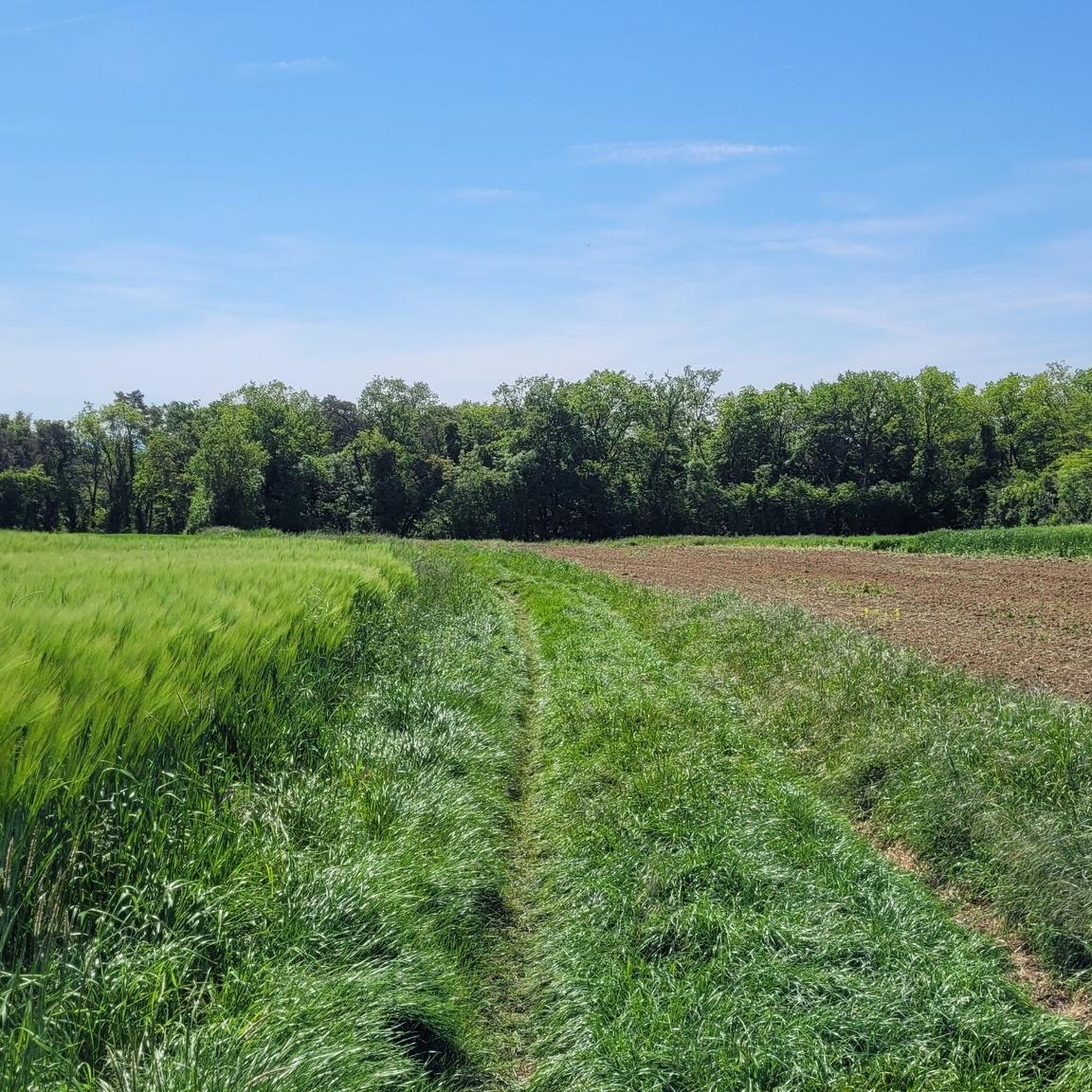
The cycle path offers the possibility to park outside and cycle into the city in a relaxed manner.
0
0

Under the central arch is a calendar depicting the activities and tasks of agriculture and viticulture: grape pressing, harvesting, etc. A calendar can be seen here through the carved reliefs. Under the eastern arch, we can see a she-wolf suckling Romulus and Remus. According to legend, it was Remus who founded Reims. Finally, under the western arch, we can see Leda being seduced by Jupiter.
1
0
This ancient monument is one of the longest in the Roman world: it is approximately 32 meters long and 12 meters high! The Mars Gate was built towards the end of the 2nd century and is the only one of the four monumental arches providing access to the city of Durocortorum that has survived. It consists of three arcades. The central arch carried the city's major north-south axis, intended for the passage of carriages. The two side arcades were used by pedestrians.
1
0

The monument survived destruction because it was walled up inside the Archbishop's castle in the 13th century, which inadvertently preserved it for future generations.
3
1
The Porte de Mars is a 3rd-century Roman monument in Reims, France, representing the widest arch in the entire Roman world at 33 meters long and 13 meters high. Originally built as one of four monumental arches at the cardinal entrances to ancient Durocortorum, it's the only surviving example of these grand structures. The arch features three decorated archways with intricate relief carvings, including scenes of Romulus and Remus with the she-wolf, agricultural calendars showing Gallic harvesters, and mythological figures like Leda and Zeus.
3
1
The square sits on the site of the ancient Roman forum of Durocorturum and follows the original Roman street layout with the main axes (Cardo and Decumanus). The architect Jean-Gabriel Legendre was married to the sister of Sophie Volland, who was the famous correspondent of philosopher Denis Diderot.
4
1
a historic square in central Reims that was built in the 18th century after demolishing a maze of narrow medieval streets that were so cramped that Queen Marie Leszczyńska couldn't pass through with her carriage. The square was designed by architect Jean-Gabriel Legendre and features orderly architecture typical of royal squares, with a central monument that originally honored Louis XV but was replaced after the French Revolution. Construction began in 1758 and cost 620k livres, significantly more than originally budgeted, and the square remained incomplete until 1910.
4
1
From its inauguration, residents criticized the fountain's weak water flow of only 12 liters per second, and the nude naiads representing the rivers caused public controversy. During World War II, German occupiers removed the bronze statue, but remarkably the fountain remained intact despite 60% of Reims being destroyed during the war.
4
3
Frequently Asked Questions
What historical sites can I visit in Pouillon?
Pouillon is rich in history. You can explore the impressive 11th-century Saint-Martin Church, which features Romanesque architecture, albalatriere loopholes, and crenellations from its time as a fortified structure. Another significant historical site is the Chapel of Bénarrucq, dating back to the late 19th century, which served as a stopover for pilgrims on their way to Saint-Jacques de Compostelle. Additionally, you can spot several old mills scattered throughout the town, many of which have been transformed into charming dwellings.
Are there any natural attractions or features to explore in Pouillon?
Yes, Pouillon offers beautiful natural features. The Source of Bidas is a unique natural spring known for its medicinal properties, flowing at a constant 19°C. Its waters were historically favored by Louis XIV. For recreation, Lake Luc is a popular spot offering a range of family-friendly activities amidst natural beauty.
What outdoor activities are available in Pouillon?
Pouillon is an excellent destination for outdoor enthusiasts. The area boasts 90 kilometers of marked hiking trails, perfect for exploring the surrounding landscapes. You can also enjoy activities at Lake Luc, which includes fishing areas, mini-golf, and tennis courts. For more structured outdoor adventures, you can find various MTB trails, running routes, and cycling routes around Pouillon.
Are there family-friendly attractions in Pouillon?
Absolutely! Lake Luc is a fantastic family-friendly destination, offering mini-golf, children's games, tennis courts, and a pétanque court. The extensive network of hiking trails also provides opportunities for family walks. Additionally, the traditional 9-Pin Bowling (Quilles de 9) is a cultural activity that families can learn and enjoy together.
What cultural experiences can I have in Pouillon?
Pouillon offers unique cultural experiences. You can witness traditional Landes courses (courses Landaises) at the Arènes Alfred-Longuefosse during spring and summer. Experience the annual Winegrowers' Mass held at the Chapel of Bénarrucq on the first Sunday of October. Don't miss the chance to learn 9-Pin Bowling (Quilles de 9), a traditional sport of the Chalosse region, at the local bowling alley. For an immersive experience, consider the 'Balade Conteur des Landes' storyteller walks to discover the village and its traditions.
Where can I experience traditional Landes courses?
You can experience the traditional Landes courses (courses Landaises) at the Arènes Alfred-Longuefosse in Pouillon. These events are a significant part of the local culture and are typically held during the spring and summer months.
Are there any unique local traditions or sports in Pouillon?
Yes, Pouillon is known for 9-Pin Bowling (Quilles de 9), a traditional sport of the Chalosse region. Visitors can learn its secrets at the local bowling alley. Additionally, the village hosts the annual Winegrowers' Mass at the Chapel of Bénarrucq, a special event that is part of a march to raise money for cancer research.
What are the 'Balade Conteur des Landes'?
The 'Balade Conteur des Landes' are unique storyteller walks that offer an engaging way to discover the village of Pouillon. These walks often include visits to sites like the Larras mill and provide insights into local traditions, such as 9-pin bowling, shared by local storytellers.
Is Pouillon a good base for exploring the wider Aquitaine region?
Yes, Pouillon's location makes it a convenient base for further exploration. It is in proximity to other notable towns like Dax and Salies-de-Bearn, as well as heritage sites such as Sorde l'Abbaye, allowing for easy day trips to discover more of the Aquitaine region.
What is the significance of the Saint-Martin Church?
The Saint-Martin Church is an impressive 11th-century Romanesque church in Pouillon. It is classified as a Historic Monument due to its unique architectural features, including albalatriere loopholes and crenellations on its apse, which date back to its fortification during the English occupation. The church also boasts 15th and 16th-century Gothic naves and an 18th-century marble altar.
What is the 'Coulée Verte de Reims' and what activities can I do there?
The Coulée Verte de Reims is a beautiful green corridor stretching about 24 kilometers along the banks of the canal and the River Vesle. It's an ideal spot for walking, cycling, and jogging, offering a carefully landscaped environment for both relaxation and sporting activities in the heart of the city.
Can you tell me about the Place Royale in Reims?
The Place Royale (Reims) is a historic square formed in the mid-18th century in honor of Louis XV. While the present statue dates from the 19th century, its pedestal survived revolutionary turmoil. It's a significant historical site that reflects the city's past.
What is the Subé fountain?
The Subé fountain is a monumental fountain located on the Place Drouet-d'Erlon in Reims. Designed in 1906, it features four statues symbolizing the region's rivers and is topped by a bronze winged Victory. It's a notable landmark and a popular spot in the city center.
Most popular routes around Pouillon

Get inspired with the komoot mobile app


Explore more
Still not found the Highlight you’re looking for? See guides of the top attractions in other regions:
