The best walks and hikes around Fleury-Devant-Douaumont
4.6
(152)
673
hikers
58
hikes
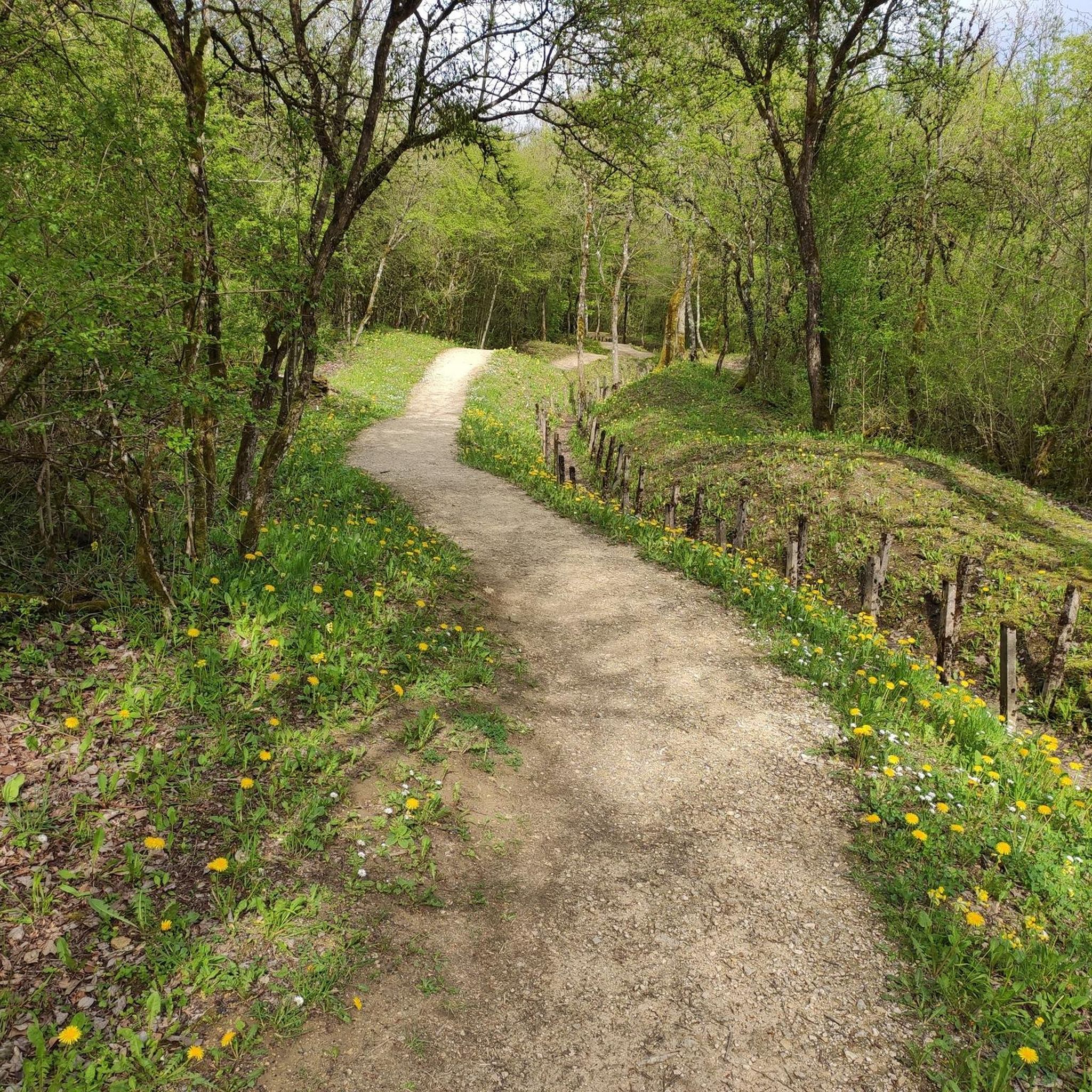
Hiking around Fleury-Devant-Douaumont offers a unique experience through a landscape shaped by its historical significance. The region features wooded hills and forests, bearing the scars of past conflict with impressive craters and preserved battlefield terrain. This area provides a distinctive backdrop for exploring both nature and history.
Best hiking trails around Fleury-Devant-Douaumont
- The most popular hiking route is From the Verdun Memorial to Bezonvaux — loop from Fleury-devant-Douaumont, a 9.8 miles (15.8 km) trail that takes 4 hours 18 minutes to complete. This moderate route connects significant historical sites within the former battlefield.
- Another top favourite among local hikers is Fort Douaumont – Douaumont Ossuary loop from Fleury-devant-Douaumont, a moderate 8.6 miles (13.8 km) path. This trail links two major landmarks of the Verdun battlefields.
- Local hikers also love the Fort Douaumont – Verdun Memorial loop from Fleury-devant-Douaumont, a 5.5 miles (8.8 km) trail leading through historical battlefield terrain, often completed in about 2 hours 24 minutes.
- Hiking around Fleury-Devant-Douaumont is defined by wooded hills, forests, and historical battlefield terrain marked by craters. The network offers options for different ability levels, from easy walks to moderate routes.
- The routes in Fleury-Devant-Douaumont are highly rated by the komoot community with an average score of 4.5 stars from over 100 reviews. More than 600 hikers have used komoot to explore Fleury-Devant-Douaumont's varied terrain.
Last updated: July 7, 2026
4.4
(8)
32
hikers
15.8km
04:18
230m
230m
Moderate hike. Good fitness required. Easily-accessible paths. Suitable for all skill levels.
4.6
(34)
113
hikers
8.52km
02:20
130m
130m
Moderate hike. Good fitness required. Easily-accessible paths. Suitable for all skill levels.

Sign up for free
4.6
(11)
51
hikers
Moderate hike. Great for any fitness level. Mostly accessible paths. Sure-footedness required.
5.0
(3)
34
hikers
Easy hike. Great for any fitness level. Easily-accessible paths. Suitable for all skill levels.
4.7
(12)
37
hikers
12.9km
03:30
190m
190m
Moderate hike. Good fitness required. Easily-accessible paths. Suitable for all skill levels.
Get access to more routes and recommendations from other explorers.
Sign up for free
Already have an account?
Our route recommendations are based on thousands of hikes, rides, and runs completed by other people on komoot.
Start today with a free account
Your next adventure awaits.
Login or Signup

Tips from the Community

16,000 fallen French soldiers are buried here. War is so pointless.
0
0

The Douaumont National Necropolis was established in 1923 on 14.4 hectares and officially inaugurated on June 23, 1929, by French President Gaston Doumergue. The cemetery contains 16,142 graves of French soldiers, including a Muslim section with 592 steles and monuments dedicated to soldiers of both Muslim and Jewish faiths.
2
0

The Ossuary of Douaumont is an impressive memorial that holds the remains of more than 130,000 unknown French and German soldiers who died during the Battle of Verdun (1916). The bones are visible through small windows in the base – a confronting reminder of the horrors of war. In front of the ossuary is the Nécropole nationale de Douaumont, the largest French military cemetery of the First World War, with 16,142 graves, including a Muslim and Jewish plot. The complex was recognized as a UNESCO World Heritage Site in 2023.
8
0
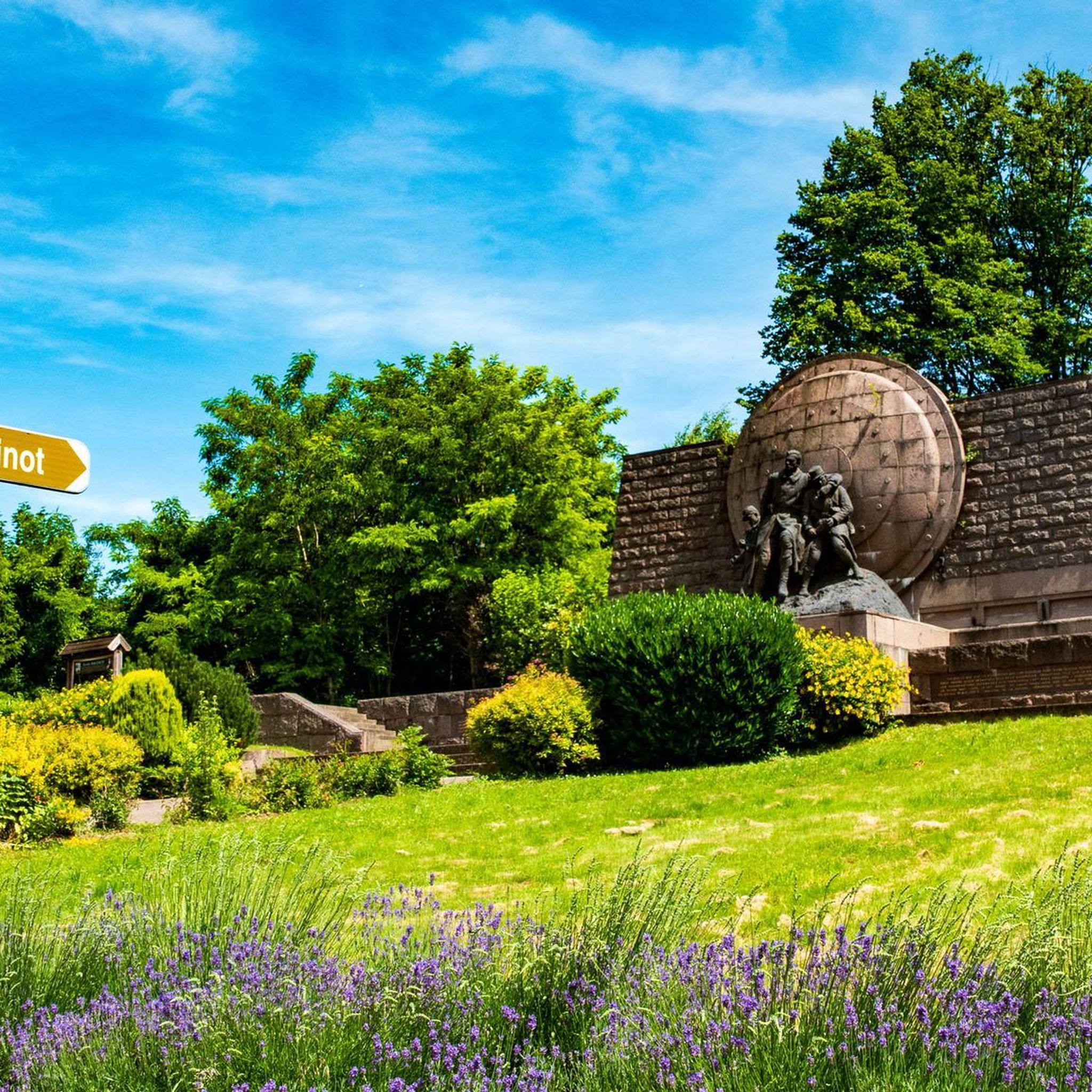
Since 2006, a monument has stood on the hill of Douaumont in memory of the 30,000 Muslim soldiers who died for France during the First World War. Inaugurated by President Jacques Chirac, it consists of a semicircular gallery with Arab architectural elements. In the middle is a column with the inscription: “À la mémoire des soldats musulmans morts pour la France”. The monument recognizes the diversity of the French army and honors the contribution of soldiers from North Africa and other parts of the then French empire.
8
0
This monument depicts a recumbent French soldier and is dedicated to André Thomé, a member of parliament who volunteered for the front and was killed at Verdun on 10 March 1916. Although exempted from service as a politician, he chose to fight. The sculpture, by Alexandre Descatoire, is entitled Le Soldat du Droit – the soldier of the right – and symbolises the sacrifice of just men for a higher ideal.
7
0
The Mémorial de Verdun, located near the ruined village of Fleury-devant-Douaumont, is a leading museum and commemoration site for the Battle of Verdun (1916). The museum displays more than 2,000 objects and uses authentic objects, photographs and audiovisual installations to show how French and German soldiers experienced this battle – in the exact same place where they fought.
8
3
Casemate Pamart – Fort de Souville This concrete machine gun bunker was built in 1917 to reinforce the defences of Fort de Souville. Designed by Commandant Pamart, the Casemate offered an easy-to-install alternative to traditional gun turrets. Equipped with two Hotchkiss machine guns, it has a field of fire of 160°, with 14 cm of armour. Its compact size and robustness made it particularly suitable for use in the heavily damaged terrain around Verdun.
2
0

The French 155mm artillery piece displayed in front of the entrance to the Verdun Memorial museum is the eye-catcher of the welcome.
1
0
Frequently Asked Questions
What is the typical terrain like for hiking in Fleury-Devant-Douaumont?
The terrain around Fleury-Devant-Douaumont is characterized by wooded hills and forests, heavily impacted by its historical significance. Hikers will encounter a unique landscape bearing the scars of past conflict, including impressive craters and preserved battlefield terrain. Despite this, the region also offers serene natural spots.
Are there hiking options for different fitness levels in Fleury-Devant-Douaumont?
Yes, the area offers a range of hiking options suitable for various fitness levels. You'll find easy walks, as well as moderate routes. There are currently 31 easy and 29 moderate routes available, with no difficult trails listed, making it accessible for many hikers.
What historical landmarks can I expect to see while hiking in Fleury-Devant-Douaumont?
Hiking in Fleury-Devant-Douaumont often involves a 'memorial hike' experience, connecting natural exploration with historical remembrance. You can visit significant sites such as the destroyed village of Fleury-Devant-Douaumont itself, the Douaumont Ossuary, and Verdun Memorial. Trails also lead to Fort Douaumont and the Crête des Éparges, which offers views of craters and monuments from the 1915 battles.
Are there any natural features or viewpoints to discover on the trails?
While the landscape is heavily influenced by its history, the region features wooded hills and forests that have reclaimed much of the former battlefield. You'll find serene natural spots, and the Lachaussée Pond, a Regional Nature Reserve, is nearby, offering a tranquil environment for birdwatching, though visitors should stay on marked paths. The area also sits on the watershed divide between the Rhine and Meuse basins.
Is there parking available near the hiking trails in Fleury-Devant-Douaumont?
Yes, parking is generally available at key historical sites and trailheads within the Fleury-Devant-Douaumont area, such as near the Verdun Memorial, Fort Douaumont, and the Douaumont Ossuary. These locations serve as common starting points for many of the region's hiking routes.
How can I reach the hiking trails in Fleury-Devant-Douaumont by public transport?
Fleury-Devant-Douaumont is primarily accessed by car. While there isn't extensive public transport directly to the trailheads, you can reach Verdun by train, and from there, local bus services or taxis might be available to take you closer to the main historical sites and hiking areas. It's advisable to check local transport schedules in advance.
Are permits required for hiking in the Fleury-Devant-Douaumont battlefields?
No, permits are generally not required for hiking on the marked trails within the Fleury-Devant-Douaumont battlefields. However, visitors are strongly advised to stay on designated paths due to the historical nature of the site and the presence of unexploded ordnance. Respecting the memorial sites is also paramount.
What is the best time of year to go hiking in Fleury-Devant-Douaumont?
The best time to visit Fleury-Devant-Douaumont for hiking is typically from spring to autumn (April to October). During these months, the weather is generally mild and pleasant, making for comfortable walking conditions. The forests are lush in spring and summer, and autumn brings beautiful foliage. Winter hiking is possible, but conditions can be cold and trails may be muddy or icy.
Are there family-friendly hiking trails in Fleury-Devant-Douaumont?
Yes, there are several easy walks suitable for families in Fleury-Devant-Douaumont. Many trails are relatively flat and well-maintained, allowing for a comfortable experience for all ages. For example, the route Retractable Gun Turret – Fort Douaumont loop from Douaumont is an easy 5.3 km (3.3 miles) path that takes about 1 hour 23 minutes to complete, offering a blend of history and nature without being overly strenuous.
Can I bring my dog on the hiking trails in Fleury-Devant-Douaumont?
Generally, dogs are allowed on hiking trails in Fleury-Devant-Douaumont, but it is crucial to keep them on a leash at all times. This is especially important due to the historical significance of the area and the potential presence of unexploded ordnance off-path. Always ensure your dog is under control and respect any specific signage regarding pet access at memorial sites.
What do other hikers enjoy the most about hiking in Fleury-Devant-Douaumont?
The area is highly rated by the komoot community, with an average score of 4.5 stars from over 100 reviews. Hikers often praise the unique combination of natural beauty and profound historical significance, finding the trails through the former battlefields to be both moving and engaging. The well-preserved historical sites and the quiet, reflective atmosphere are frequently highlighted.
Are there any caves or shelters to explore near the hiking routes?
Yes, the region has several historical caves and shelters that can be explored. These include sites like the Douaumont Cave Shelter, Combat Shelter - PC 118, and the Abri DV3 (Fort de Vaux Shelter). These offer a glimpse into the conditions faced during the Battle of Verdun and are often accessible from nearby hiking paths.
Are there any circular hiking routes available in Fleury-Devant-Douaumont?
Yes, many of the hiking routes in Fleury-Devant-Douaumont are designed as loops, allowing you to start and end at the same point. Examples include the 13.8 km (8.6 miles) Fort Douaumont – Douaumont Ossuary loop from Fleury-devant-Douaumont, and the 8.8 km (5.5 miles) Fort Douaumont – Verdun Memorial loop from Fleury-devant-Douaumont, which are popular choices for exploring the historical sites.
Most popular routes around Fleury-Devant-Douaumont
Most popular attractions around Fleury-Devant-Douaumont

Get inspired with the komoot mobile app


Explore more
Browse the best Hikes in other regions.
