Attractions and Places To See around Saint-Martial - Top 15
Best attractions and places to see around Saint-Martial include historical sites, religious buildings, and viewpoints. This region, likely situated in Nouvelle-Aquitaine, features a landscape characterized by historical architecture and natural observation points. Visitors can explore ancient churches and castles, reflecting the area's rich heritage. The diverse range of sites offers opportunities for cultural exploration and scenic appreciation.
Best attractions and places to see around Saint-Martial
- The most popular attractions is Moulin de perdrigeau, a viewpoint that offers a panorama. This mill, built in the 18th century, also served as an observation post and fire detection watchtower.
- Another must-see spot is Saint-Denys Church of Montmoreau, a religious building. This 12th-century Romanesque church features a polylobed portal, two arcades, and a semicircular apse.
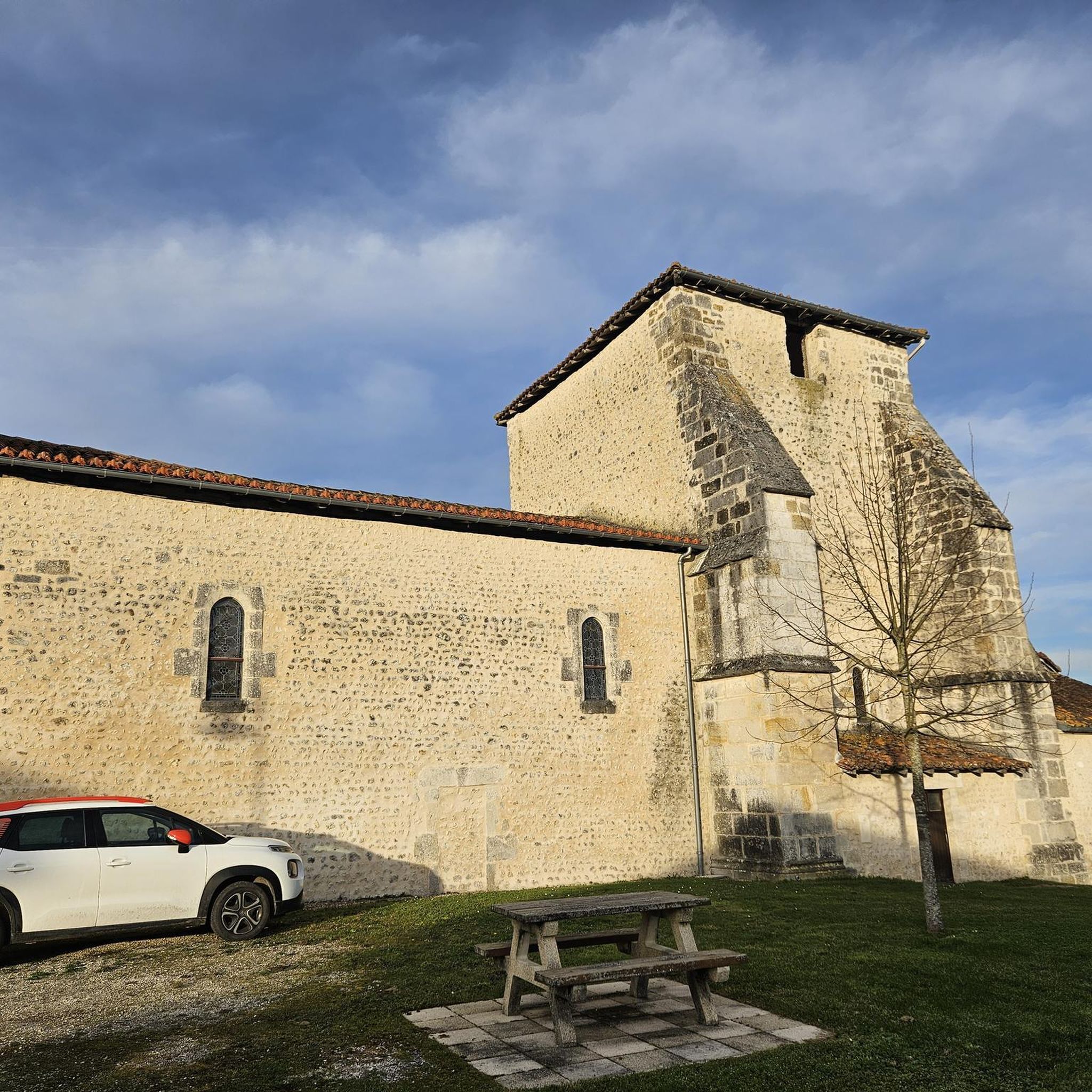
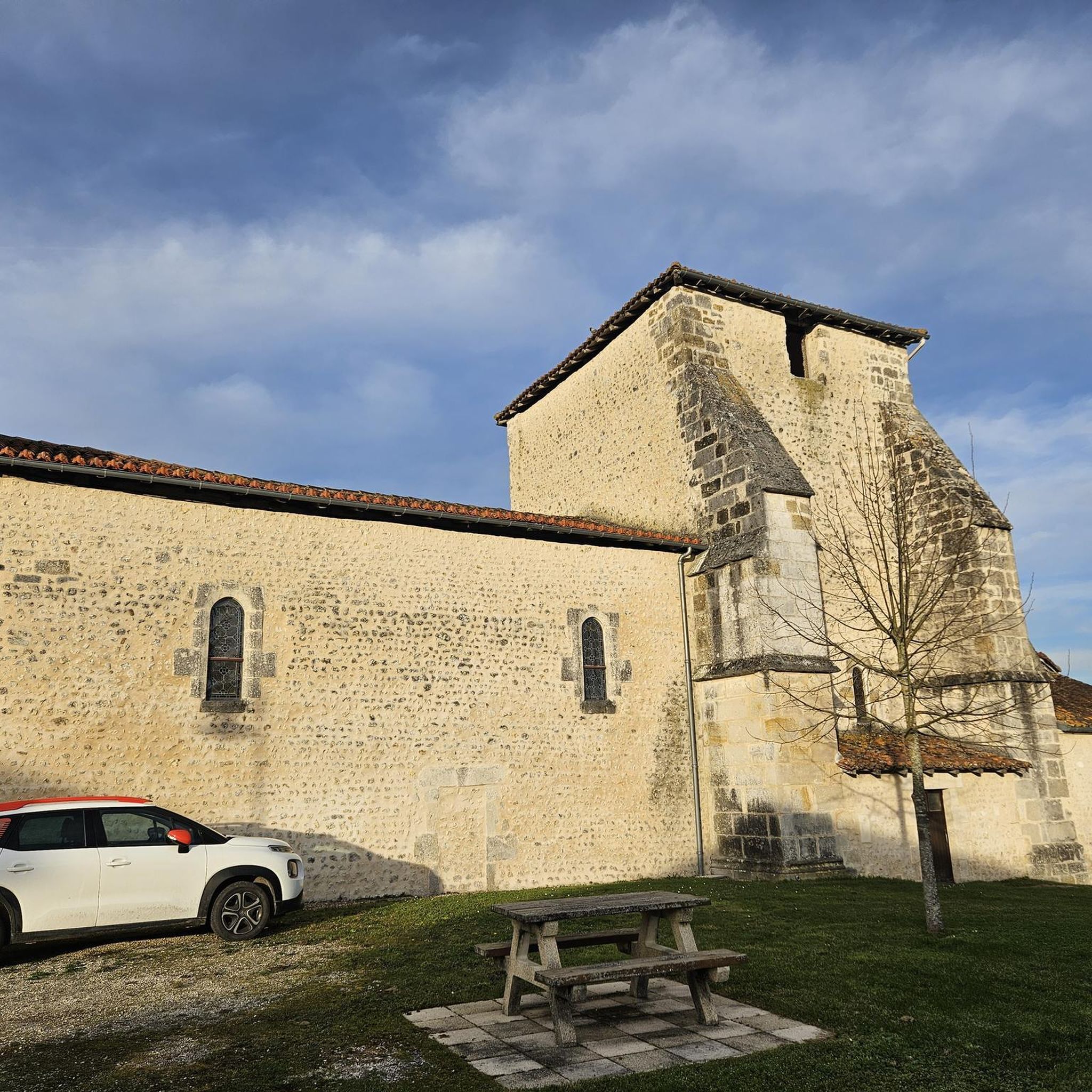
- Visitors also love Notre-Dame-de-la-Nativité Church of Brossac, a religious building with 12th-century origins. The church, though altered over time, retains its Romanesque foundations and features a painted fresco rediscovered during restoration.
- Saint-Martial is known for its historical castles, religious buildings, and scenic viewpoints. The area offers a variety of attractions to see and explore, from ancient architecture to natural observation points.
- The attractions around Saint-Martial are appreciated by the komoot community, with 3 highlights featuring photos and 3 highlights receiving upvotes.
Last updated: July 8, 2026
Viewpoint over the Dronne Valley
Highlight • Other
Translated by Google •
Tip by

Château de la Léotardie
Highlight • Castle
Translated by Google •
Tip by

Sign up now to discover places like this
Get recommendations on the best single tracks, peaks, & plenty of other exciting outdoor places.
Sign up for free
Notre-Dame-de-la-Nativité Church of Brossac
Highlight • Religious Site
sauvegardeartfrancais.fr/projets/brossac-eglise-notre-dame-de-la-nativite
Translated by Google •
Tip by

Saint-Denys Church of Montmoreau
Highlight • Religious Site
A Romanesque church whose façade is marked by a polylobed portal and two arcades. It consists of a nave covered with a barrel vault, a transept whose crossing has a dome on pendentives and a vast, very bright semicircular apse.
The chevet bordering the road is decorated with a very prominent horizontal cordon supported by modillions representing human or animal faces. The magnificent Romanesque frontispiece has an arched portal whose five arches form an archivolt resting on slender columns with sculpted capitals. The inner arch is openworked by six lobes ending with symbolic animal heads. All the decorations bear witness to an oriental influence in the South-West Romanesque and especially to the virtuosity of the sculptors.
montmoreau.fr/index-module-orki-page-view-id-115.html
monumentum.fr/monument-historique/pa00104432/montmoreau-eglise-saint-denis
Translated by Google •
Tip by
Moulin de perdrigeau
Highlight • Viewpoint
Translated by Google •
Tip by

Sign up for free to discover even more attractions around Saint-Martial.
Sign up for free
Already have an account?
Start today with a free account
Your next adventure awaits.
Login or Signup


Tips from the Community

Built during the second half of the 18th century, this mill ceased operation at the end of the 19th century. It served as an observation post for occupying troops from 1940 to 1941, and as a fire detection watchtower from 1973. While its ground floor provides welcome shelter from the weather, its viewpoint is only open to the west, and for a short time, its northern view being blocked by the new fir shoots, which will inevitably surround it completely.
0
0

Château de La Léotardie in Nonac, in Charente, not in Dordogne. Listed as a Historic Monument, Château de la Léotardie in Nonac was originally the property of Hélie Léotard, then Archdeacon of Bourges. Part country house, part monastery, this former fortified castle was largely rebuilt in the 14th century and then renovated in the 15th. Visitors can discover a vaulted room and an ogival doorway on the ground floor. It is also possible to admire a medieval triple-nave barn a few hundred meters away. https://www.france-voyage.com/villes-villages/nonac-2918/chateau-leotardie-12663.htm
0
0
The Church of Our Lady of the Navitiy was built in the 12th century. This Romanesque-style monument was considerably altered with age, so much so that only the foundations are original today. The walls, for example, were raised shortly after the Hundred Years' War to allow refuge rooms to be built under the roof. The Romanesque façade, for its part, was remodeled during the Gothic period. The use of grison, a local grey stone very common in this area of Charente, limited the sculpted decoration to its strictest expression; this stone was unsuitable for sculpture. On the other hand, the church has a painted fresco, rediscovered in the sanctuary during restoration work. Like all medieval churches, Notre-Dame de Brossac was once surrounded by its cemetery, abandoned in 1843. Outside, in the north wall of the nave, there remain two funerary recesses intended to shelter the burial of high-ranking figures. https://www.sauvegardeartfrancais.fr/projets/brossac-eglise-notre-dame-de-la-nativite
0
0
Located on one of the paths to Santiago de Compostela, the Via Turonensis (Road to Tours), the Saint-Denys de Montmoreau church was built in the 12th century. It has retained its original appearance, with the exception of the square Romanesque bell tower which was completely modified in the mid-19th century by Paul Abadie. A Romanesque church whose façade is marked by a polylobed portal and two arcades. It consists of a nave covered with a barrel vault, a transept whose crossing has a dome on pendentives and a vast, very bright semicircular apse. The chevet bordering the road is decorated with a very prominent horizontal cordon supported by modillions representing human or animal faces. The magnificent Romanesque frontispiece has an arched portal whose five arches form an archivolt resting on slender columns with sculpted capitals. The inner arch is openworked by six lobes ending with symbolic animal heads. All the decorations bear witness to an oriental influence in the South-West Romanesque and especially to the virtuosity of the sculptors. https://www.montmoreau.fr/index-module-orki-page-view-id-115.html https://monumentum.fr/monument-historique/pa00104432/montmoreau-eglise-saint-denis
0
0

Why Visit Château de la Léotardie? For its enchanting setting: Nestled in the heart of the Périgord countryside, the château is a haven of peace where you can recharge your batteries while admiring a magnificent example of Renaissance architecture. For its history: This place full of history allows you to discover a part of the rich past of the Périgord, with architecture that reflects the art of living and elegance of yesteryear. For its role in social and event life: The château offers a perfect setting for private events or receptions, with beautifully designed indoor and outdoor spaces. Château de la Léotardie is a hidden gem in the Dordogne, combining history, elegance and nature. It is a place to discover for those looking to explore an authentic corner of Périgord heritage.
1
0
Park and Gardens: Exceptional Natural Setting: Surrounded by vast meadows, woods and gardens, the château offers an idyllic natural setting. Visitors can enjoy quiet strolls in the shaded paths, among century-old trees, or relax while observing the local wildlife. French Gardens: Some of the château's gardens are laid out in a classic "à la française" style, with geometric flowerbeds and boxwood-lined paths, adding to the charm of the place. Intimate and Historical Atmosphere: Venue for Receptions and Events: The Château de la Léotardie is often used for private receptions, weddings and other events, making it a choice venue for those wishing to celebrate in a historic and romantic setting. Authentic Atmosphere: Despite its prestigious past, the château retains an intimate and tranquil atmosphere, offering visitors a true immersion in the history of the Périgord. Proximity to Tourist Sites: Périgord Noir Region: Located close to the famous tourist sites of the Dordogne, such as Sarlat, the caves of Lascaux and the castles of Beynac and Castelnaud, the Château de la Léotardie is an ideal base for exploring the region. Cultural and Natural Heritage: The castle is surrounded by magnificent landscapes, dense forests and rivers, typical of the Dordogne, offering many opportunities for nature lovers, whether it be hiking, canoeing or visiting picturesque villages.
1
0
Château de la Léotardie is a magnificent château located in the Dordogne region of Nouvelle-Aquitaine. Nestled in the heart of the Périgord countryside, it embodies the elegance and history of the region, while offering a peaceful and green setting. Although it is less well-known than some of the great châteaux of the Dordogne, it has a particular charm, particularly due to its architecture and its environment. Points of Interest at Château de la Léotardie: Renaissance Architecture: Périgourdine Elegance: Château de la Léotardie, dating from the Renaissance, is distinguished by its refined architecture. It has features typical of manor houses of this period, with stone facades, sloping roofs covered with tiles and beautiful stone fireplaces. Historical Details: Certain architectural elements bear witness to the history of the château, such as mullioned windows and circular towers which give the whole an appearance that is both defensive and elegant.
1
0

A stone's throw from Aubeterre-sur-Dronne, this overlooking position offers a superb view of the Dronne valley.
0
0
Frequently Asked Questions
What historical sites can I visit around Saint-Martial?
The region around Saint-Martial in Nouvelle-Aquitaine is rich in history. You can explore the 13th-century Château de la Léotardie, a magnificent castle with Renaissance architecture and beautiful gardens. Additionally, there are several ancient religious buildings, such as the 12th-century Romanesque Saint-Denys Church of Montmoreau, located on a path to Santiago de Compostela, and the Notre-Dame-de-la-Nativité Church of Brossac, which retains its Romanesque foundations and features a rediscovered painted fresco.
Are there any viewpoints or scenic spots near Saint-Martial?
Yes, for panoramic views, visit the Moulin de perdrigeau. This 18th-century mill offers a superb panorama and historically served as an observation post and fire detection watchtower. While its northern view is becoming obscured by growing firs, it still provides a beautiful perspective.
What kind of architecture can I expect to see in the churches around Saint-Martial?
The churches in the Saint-Martial area primarily showcase Romanesque architecture from the 12th century. For example, the Saint-Denys Church of Montmoreau features a polylobed portal, two arcades, and a semicircular apse, with decorations showing oriental influence. The Notre-Dame-de-la-Nativité Church of Brossac, though altered, retains its Romanesque foundations, and the Saint-Étienne Church of Courgeac is a modest Romanesque church with a single nave and a semicircular apse, featuring defensive modifications from the Wars of Religion.
Are there hiking opportunities near the attractions around Saint-Martial?
Absolutely! The region offers various hiking trails. You can find routes like the 'Asphodels Trail' (moderate, 11 km), 'Château de Maumont loop from Juignac' (easy, 4.7 km), or the 'Moulin du Perdrigeau loop from Bellon' (moderate, 9 km). For more options, explore the Hiking around Saint-Martial guide.
Can I go running or mountain biking near Saint-Martial's attractions?
Yes, there are dedicated routes for both running and mountain biking. For running, consider loops like 'Château le Châtelar in Passirac loop from Passirac' (moderate, 11.5 km) or 'Running loop from la Pouillargues' (moderate, 9.2 km). Mountain bikers can enjoy trails such as 'Mountainbike loop from Bellon' (easy, 12.5 km) or the longer 'Moulin de perdrigeau – Aubeterre-sur-Dronne loop from Montmoreau' (moderate, 52.5 km). Find more details in the Running Trails around Saint-Martial and MTB Trails around Saint-Martial guides.
What is special about the Château de la Léotardie?
The Château de la Léotardie is a romantic castle built in the 13th century, rebuilt in the 14th, and renovated in the 15th. It features refined Renaissance architecture typical of Périgord manor houses, with stone facades, mullioned windows, and circular towers. Surrounded by vast meadows and woods, it offers an idyllic natural setting with French-style gardens, making it a charming and historic site.
Are there any religious buildings with unique historical features?
The Saint-Étienne Church of Courgeac is notable for its 12th-century Romanesque architecture, featuring a single nave and a semicircular apse. During the 15th and 16th centuries, a porch was added, and an upper chamber was built above the apse for defensive purposes, including a battlement and gun ports, likely during the Wars of Religion. You can get a full view by entering the cemetery.
What can I learn about the history of the Saint-Denys Church of Montmoreau?
The Saint-Denys Church of Montmoreau, built in the 12th century, is significant as it lies on the Via Turonensis, one of the paths to Santiago de Compostela. Its Romanesque façade features a polylobed portal with five arches and sculpted capitals, and the inner arch is openworked with six lobes ending in symbolic animal heads, reflecting an oriental influence in Southwest Romanesque art.
What kind of natural landscapes can I explore in the Nouvelle-Aquitaine region around Saint-Martial?
While the immediate attractions focus on historical sites, the Nouvelle-Aquitaine region, particularly the Dordogne, is known for its magnificent landscapes, dense forests, and rivers. The area surrounding Château de la Léotardie, for instance, offers vast meadows and woods, providing opportunities for quiet strolls and observing local wildlife.
What is the significance of the Notre-Dame-de-la-Nativité Church of Brossac?
The Notre-Dame-de-la-Nativité Church of Brossac, originally built in the 12th century, has undergone significant alterations over time, yet its Romanesque foundations remain. A unique feature is a painted fresco that was rediscovered in the sanctuary during restoration work. The church's walls were also raised after the Hundred Years' War to create refuge rooms under the roof.
Are there any family-friendly activities or attractions around Saint-Martial?
While specific family-friendly attractions are not detailed, the region's castles like Château de la Léotardie with its gardens and the various easy to moderate hiking trails listed in the Hiking around Saint-Martial guide can be enjoyable for families. Exploring historical sites and natural observation points offers educational and engaging experiences for all ages.

Get inspired with the komoot mobile app


Explore more
Still not found the Highlight you’re looking for? See guides of the top attractions in other regions:
