The best road cycling routes around La Croix-Du-Perche
4.3
(20)
298
riders
63
rides
Road cycling routes around La Croix-Du-Perche traverse a varied landscape characterized by a hilly and undulating countryside, featuring diverse agricultural fields and dense forests. The region offers a mix of challenging and leisurely routes, with many boasting mostly paved surfaces and low traffic. Green valleys and meandering rivers also contribute to the serene environment for cyclists.
Best road cycling routes around La Croix-Du-Perche
- The most popular road cycling route is Shaded section in the forest – Saint Martin Church loop…
Last updated: May 4, 2026
Moderate road ride. Good fitness required. Mostly well-paved surfaces and easy to ride.
3
riders
83.8km
04:01
1,080m
1,090m
Hard road ride. Very good fitness required. Mostly well-paved surfaces and easy to ride.

Sign up for free
4
riders
45.8km
01:48
190m
190m
Easy road ride. Great for any fitness level. Mostly well-paved surfaces and easy to ride.
3
riders
55.1km
02:10
220m
220m
Moderate road ride. Good fitness required. Mostly well-paved surfaces and easy to ride.
3
riders
61.3km
02:35
470m
470m
Moderate road ride. Good fitness required. Mostly well-paved surfaces and easy to ride.
Get access to more routes and recommendations from other explorers.
Sign up for free
Already have an account?
Our route recommendations are based on thousands of hikes, rides, and runs completed by other people on komoot.
Start today with a free account
Your next adventure awaits.
Login or Signup


Tips from the Community


Built on an old feudal motte, which is still visible and was completely destroyed during the Hundred Years' War, it was replaced in the second half of the 15th century by the castle, the remains of which can still be seen today. The Saint-François Tower remains as it was, with its Grisons base and rows of white stone. Halfway up the circle is the Cord of Saint Francis of Assisi, with its coils and knots. A Renaissance building was added in the 16th century, and new buildings were constructed in the 17th and 18th centuries.
0
0

The Saint-Lubin church, built on a sloping site, is a vast building with juxtaposed constructions, bearing witness to renovations and additions up to the 19th century, the oldest distinguished by the presence of grison, the most recent by limestone and flint. The sanctuary was ceded in 1077 by the monks of Saint-Denis de Nogent-le-Rotrou to the monks of the Saint-Père de Chartres abbey. Built in the 11th-12th century, the nave extended by a semi-circular apse is the oldest part of the church, in Romanesque style. In the thickness of the north walls of the nave are still visible the grison bonds which bear witness to the original openings. The building was considerably enlarged in the 15th and 16th centuries by the construction of a large transept, formed of two chapels, and a south aisle forming an alignment of gables attached to the slopes decorated with leafy motifs and finished with chimeras. The construction of the north aisle, just begun, was not finished. On the outside, on the west wall of the chapel, we can see the beginning of a first bay (stone arch and walls removed that remained unfinished). On the gable of the north transept, the walled door can be seen from the pointed arch and the ornate pinnacles, characteristic of the end of the 15th century. In the center, two animals present a coat of arms. On each side of the door, niches with canopies once housed statues. Above, we can still see a coat of arms presented by two bearded figures and probably surmounted by God the Father. According to local tradition, all or part of the extensions were due to the generosity of Florimont Robertet, who owned the barony of Brou from 1509 until his death in 1527, and it was because of this that the work was interrupted. Occupied by the revolutionaries, the building became a ten-day temple in 1794; it was finally returned to worship in 1802. Burnt down by lightning in 1813, the upper part of the bell tower, which was a slender spire, was replaced by the construction of a square limestone tower pierced with louvers. On the southern part of the bell tower, a turret provides access to the bells. In the southern part of the nave, a door, now blocked and highlighted by a basket-handle arch topped with a pinnacle, provided access to the cemetery that once surrounded the church. The building can boast of having preserved very uniform oak furniture, most of which was made in the second half of the 18th century.
0
0
The church has a Latin cross plan. It has a single nave and a flat chevet. A small building is attached to the chevet. A bell tower flanks the building. Buttresses support the drip walls and the gable wall. Pointed arch bays with tracery illuminate the building. The portal, in a low arch, has its external arched voussure.
0
0
Church built in the 12th and 16th centuries. Listed apse from the 12th century. 4-storey bell tower. Corner buttress bell with staircase turret. Renaissance portal. Large Gothic window above the portal. 16th century roof and nave. Stone statue of a bishop, 16th century paintings.
0
0
The Saint-Martin church, listed as a Historic Monument, is located in Nocé, Normandy. It was probably built in the 12th century near the ruined and abandoned Nocé castle after the Hundred Years' War. Originally, the church was surrounded by a cemetery that was moved in the 18th century. In the 15th century, the walls were razed and the Romanesque framework of the nave replaced by a new paneled framework. In the 16th century, after the troubles of the Hundred Years' War, the building was modified: a single large roof was built in place of the various previous volumes and the framework was transformed, a new chapel was added against the south facade and a stone bell tower was built to the right of the nave. This tower, square from base to top, stands twenty meters high. The church is composed of a rectangular nave, three bays and a choir with a Romanesque semicircular chevet. A succession of three chapels opens a side aisle separated from the nave by pillars. The chapels are covered with ribbed vaults. A sacristy is fitted out behind the church. Note the altarpiece and the tabernacle in painted and gilded wood with steps, installed in the choir and lit by two bays with tracery, a painting presenting the disciples of Emmaus and one of the Annunciation, as well as a polychrome terracotta statue and a stone statue of Saint Madeleine without forgetting a stone statue of Our Lady of Pity.
0
0
Bishop of Naples, he devoted himself to the service of the poor, helped his diocesans who were prisoners of the Saracens and restored liturgical worship in his Church. In Veroli in Latium, in 872, the death of Saint Athanasius, Bishop of Naples. He suffered greatly from his impious nephew, Serge, who chased him from his seat. Overwhelmed with grief, he passed from earth to heaven during his exile. The church was the chapel of the castle built by Rotrou III. The façade shows traces of the old bell tower-wall. It is supported by buttresses of grison which enclose a pointed arch; the upper part with the bays which contained the bells was removed in the 16th century. The windows are partly walled up. The walls of the nave and choir were paneled in the 18th century.
0
0
The village is distinguished by its mystical Notre-Dame church, in Romanesque style and dedicated to the Virgin. Its openings date from the 16th century and its chevet has the particularity of being flat. It holds a remarkable statue representing Saint-Jacques le Majeur, dating from the 15th century and classified as an object in the inventory of Historical Monuments. The priest Frédéric Courtois, born in 1860 in the commune, was appointed curator of the Sikowé scientific museum in Shanghai in 1902. Passionate about ornithology, he discovered species previously unknown including two garulax since named Courtois' garulax, today threatened with extinction.
0
0
Frequently Asked Questions
What kind of terrain can I expect on road cycling routes around La Croix-Du-Perche?
The region around La Croix-Du-Perche is characterized by a hilly and undulating countryside. You'll encounter varied elevations, from moderate climbs to more challenging sections, all set against a backdrop of diverse agricultural fields and dense forests. Most roads are paved, and traffic is generally low, offering a peaceful cycling experience.
Are there road cycling routes suitable for beginners or families in La Croix-Du-Perche?
Yes, La Croix-Du-Perche offers routes suitable for various fitness levels, including easy options. For instance, the Château de Frazé – Frazé loop from Frazé is an easy 45.8 km path that passes by the notable Château de Frazé, making it a good choice for a more relaxed ride.
What are some scenic highlights or viewpoints along the road cycling routes?
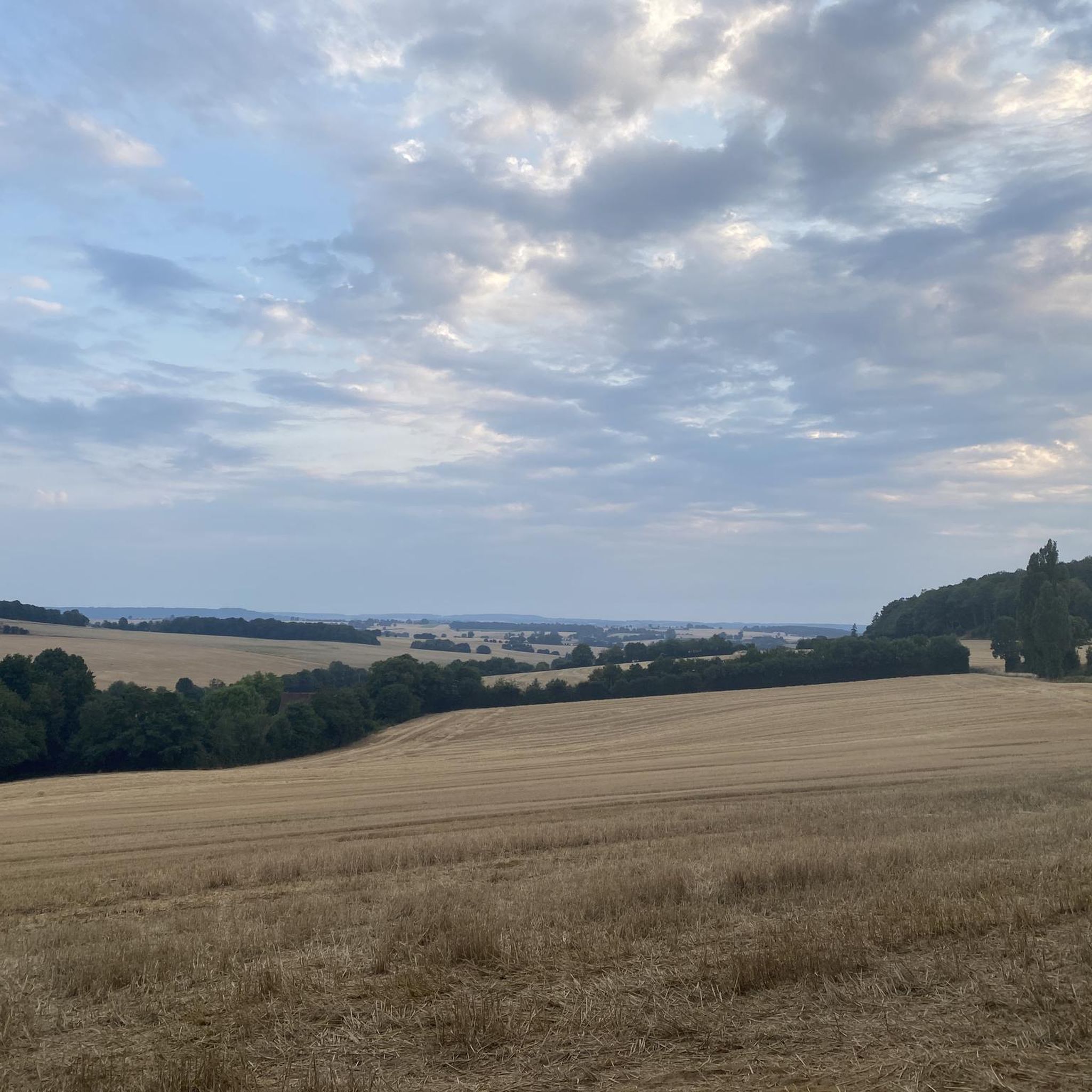
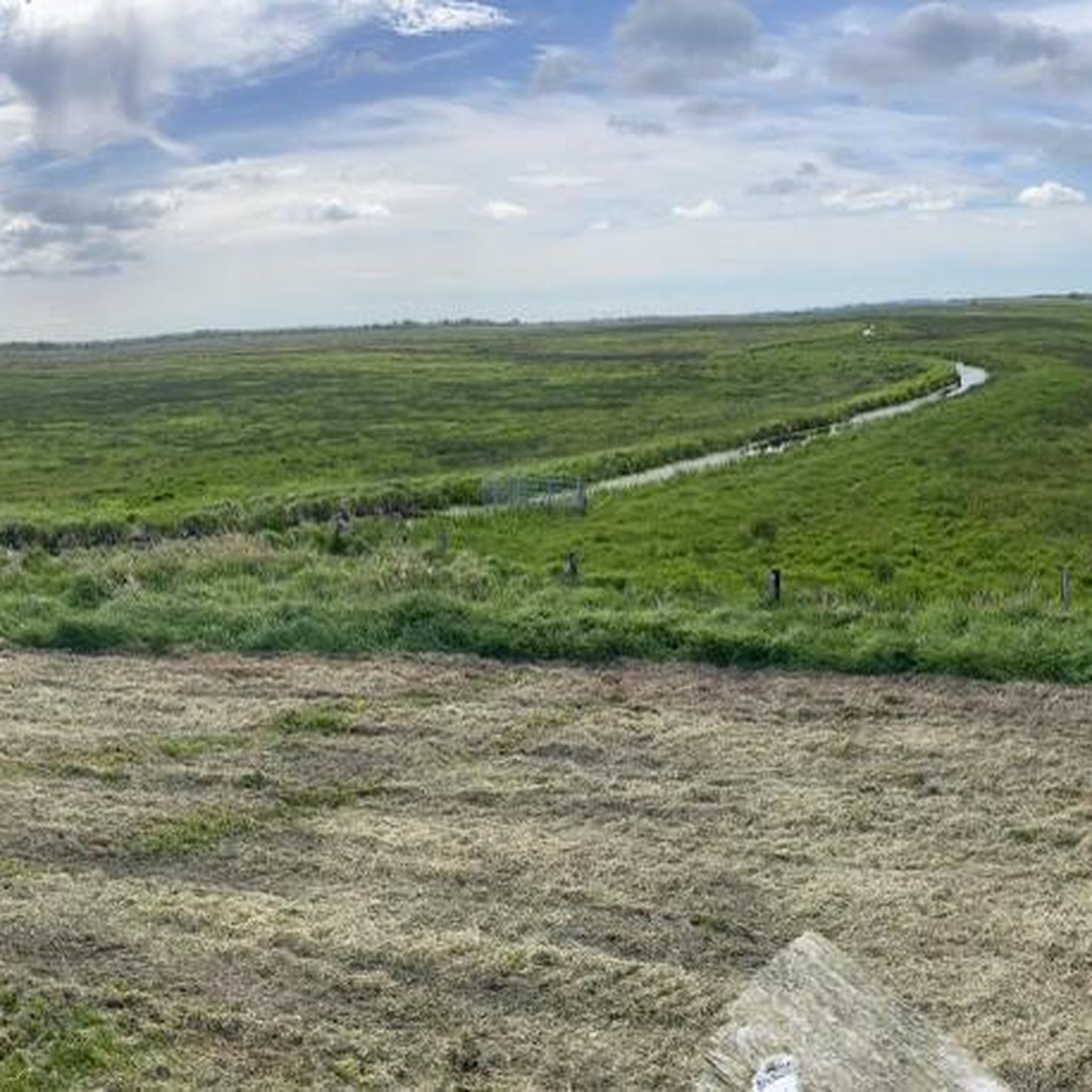
The routes offer picturesque scenery with rolling green landscapes, diverse agricultural fields, and historic forests. You can experience a Lovely stretch through the fields or enjoy a Shaded section in the forest, which are popular highlights among cyclists for their natural beauty.
Are there any historical or cultural attractions to see while road cycling in the area?
Absolutely. The region is rich in history. You can cycle past the impressive Château de Frazé, known for its French-style exteriors. Another significant site is the Thiron-Gardais Abbey Gardens, which feature medieval-inspired designs and an abbey church dating back to 1114.
How many road cycling routes are available around La Croix-Du-Perche?
There are nearly 60 road cycling routes available around La Croix-Du-Perche, catering to various skill levels. This includes 14 easy routes, 44 moderate routes, and 1 difficult route for those seeking a greater challenge.
What do other road cyclists think about the routes in La Croix-Du-Perche?
The road cycling routes in La Croix-Du-Perche are highly rated by the komoot community, with an average score of 4.3 stars from over 15 reviews. Cyclists often praise the varied terrain, low traffic, and the beautiful, serene environment of the Perche countryside.
Are there any long-distance road cycling routes in the La Croix-Du-Perche area?
Yes, you can find longer routes that allow for extended rides. For example, the Château de Frazé – Church of Bonneval loop from Frazé is a 76.4 km trail that takes you through the Perche countryside, typically completed in about 3 hours.
Can I find circular road cycling routes around La Croix-Du-Perche?
Many of the road cycling routes in the area are designed as loops, allowing you to start and end in the same location. An example is the Frazé – Illiers-Combray loop from Frazé, a moderate 55.1 km ride.
What kind of natural features can I expect to see along the routes?
The region is rich in natural beauty. You'll cycle through dense forests, such as those historically known in the Perche region, offering shaded sections and opportunities for wildlife spotting. Green valleys and meandering rivers, like the Ozanne, also contribute to the serene environment and offer enchanting views.
Is there a specific time of year that is best for road cycling in La Croix-Du-Perche?
The Perche region's varied landscapes, with fields of diverse crops and dense forests, offer picturesque scenery throughout much of the year. Spring and autumn generally provide pleasant temperatures for cycling, while summer offers longer daylight hours to explore the shaded forest sections.
Are there any routes that pass through historic villages or offer a glimpse into the region's heritage?
Yes, the Perche region is known for its historic habitats. Many routes will take you through or near charming villages, past old manors, mills, and farms from the 17th and 18th centuries, preserving the area's rich heritage. The Saint Martin Church – Château de Frazé loop from Frazé is one such route that connects historical points of interest.
Where can I find more information about cycling in the wider Perche Regional Natural Park?
The Perche Regional Natural Park, where La Croix-Du-Perche is situated, offers extensive cycling itineraries, including sections of La Véloscénie. For broader information on cycling in the Perche region, you can visit France Vélo Tourisme.
Most popular attractions around La Croix-Du-Perche

Get inspired with the komoot mobile app


Explore more
Browse the best Road cycling routes in other regions.
