Attractions and Places To See around Cessac - Top 20
Attractions and places to see around Cessac, a commune in the Gironde department of France, offer a blend of historical sites, natural features, and cultural points of interest. The area is characterized by its religious architecture, historical ruins, and diverse landscapes, providing a range of experiences for visitors. Cessac is situated in a region known for its cycling routes and preserved natural environments. This Cessac tourism guide highlights various points of interest for exploration.
Best attractions and places to see…
Last updated: May 10, 2026
Espiet tunnel
Highlight (Segment) • Other
Translated by Google •
Tip by

Roger Lapébie Cycle Path: Créon to Dardenac
Highlight (Segment) • Cycleway
Translated by Google •
Tip by

Sign up now to discover places like this
Get recommendations on the best single tracks, peaks, & plenty of other exciting outdoor places.
Sign up for free
Sauveterre-de-Guyenne - bastide
Highlight • Other
Translated by Google •
Tip by

Church of Branne
Highlight • Religious Site
Showing Translation
Tip by

Roger Lapébie track - Sauveterre to Cessac
Highlight (Segment) • Other
Translated by Google •
Tip by

Sign up for free to discover even more attractions around Cessac.
Sign up for free
Already have an account?
Start today with a free account
Your next adventure awaits.
Login or Signup



Tips from the Community

The Saint-Étienne church of Branne is a true haven of peace in the heart of the village, offering a setting conducive to recollection and prayer. The architecture, both sober and majestic, bears witness to the deep faith that has inhabited these places through the centuries. The beauty of the sanctuary naturally invites the elevation of the soul and contemplation of the divine mysteries. One feels an atmosphere of serenity that helps each faithful to find themselves before the Lord in silence and dignity. It is a living place of worship where the presence of Christ is felt, recalling the importance of our Christian roots in the Gironde landscape. A spiritual stopover highly recommended for all those who seek to nourish their faith within a beautifully maintained church.
0
0

Sauveterre-de-Guyenne is a bastide. A bastide is a type of French medieval town, founded in the 13th and 14th centuries, primarily in southwestern France. A bastide is characterized by a rectangular street pattern that divides the town into eight blocks around a central market square. The Treaty of Paris (1229) prohibited the building of walls around new towns. Many bastides were provided with some form of fortification, such as gates, after their founding to provide some protection during turbulent times. Most bastides had only local significance and did not develop into large towns. As a result, many bastides, such as that of Sauveterre-de-Guyenne, have been preserved in their original state.
1
0

It's impressive when you suddenly enter a rather long railway tunnel, it's pleasantly fresh there and I think there are some lamps installed, I didn't like the cycle path although the quality of the cycle path itself is rather basic (French), the road crossings are quite dangerous and in some areas the path is quite narrow for 2 bikes next to each other
4
0

Pretty village in the center of Entre-Deux-Mers - Medieval bastide with ramparts all around, some pretty gates and a central square which is worth a stop...
2
0

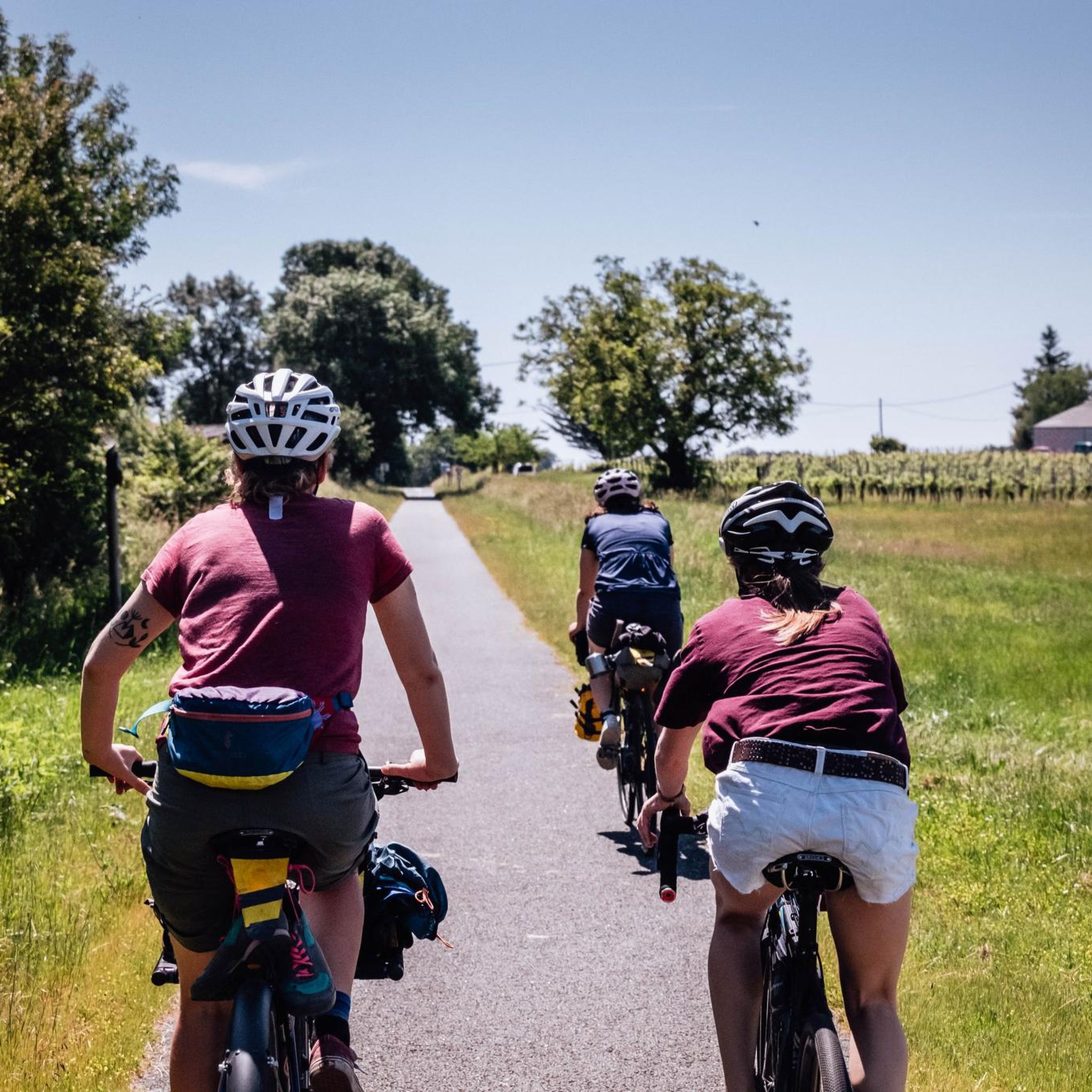
Very well developed cycle path and easy to ride.
2
0


Really nice ride on a very nice bike path
4
0

Great bike ride from Bordeaux. We had planned overnight accommodation in Saint Brice, in a large tent made available for participation. Ecological solar shower toilets. It is located in the chestnut grove (Google Maps). No reservations, just ask on the spot.
4
0
Frequently Asked Questions
What are some highly-rated attractions around Cessac?
Visitors frequently enjoy the Espiet tunnel, an old railway tunnel integrated into the Roger Lapébie cycle path, offering a cool passage in summer. Another favorite is the Roger Lapébie Cycle Path: Créon to Dardenac, a family-friendly greenway with former stations along the route. The Roger Lapébie track - Sauveterre to Cessac is also popular, winding through forests.
What do visitors particularly enjoy about the attractions near Cessac?
Visitors appreciate the refreshing coolness of the Espiet tunnel, especially during summer rides. The Roger Lapébie Cycle Path is loved for its pleasant, well-maintained track and the charm of old stations. The peaceful atmosphere of country lanes along the Dordogne, like the Country lane along the Dordogne, is also a highlight, offering a quiet escape from traffic.
What kind of cycling experiences can I find near Cessac?
The area is renowned for its cycling paths, particularly the Roger Lapébie Cycle Path, a greenway built on an old railway line that connects Créon and Sauveterre-de-Guyenne. You can also enjoy quiet rides along the Country lane along the Dordogne. For more structured routes, explore various road cycling and MTB trails, such as the 'Piste Roger Lapébie loop from Bellefond' or the 'Espiet tunnel – View over La Sauve loop from Baigneaux', available on the Road Cycling Routes around Cessac and MTB Trails around Cessac guides.
Are there opportunities for hiking or running around Cessac?
Yes, the region offers several options for hiking and running. The greenways, like the Roger Lapébie Cycle Path, are often frequented by pedestrians in certain sections. For dedicated running, you can find routes such as the 'Bivouac Area – Piste Lapébie loop from Romagne' or a 'Running loop from Cessac'. More details can be found in the Running Trails around Cessac guide.
What historical sites can I visit near Cessac?
Cessac and its surroundings are rich in history. You can explore the significant Sauveterre-de-Guyenne - bastide, a well-preserved medieval town with ramparts and a central market square. Other notable historical sites include the Église Saint-Romain de Cessac, Vieux Château Roquefort, Motte Maucourt, and the impressive Abbaye de La Sauve-Majeure, located nearby. Chateau de Rauzan and Cadillac Ducal Castle are also within the wider area.
Are there any unique architectural points of interest in the region?
Beyond the medieval bastide of Sauveterre-de-Guyenne, the area features traditional rural architecture such as the Pigeonnier de Capiet and the Colombier du château Roquefort, which are historical pigeon houses. The Église Saint-Romain de Cessac is also a significant religious architectural site.
Are there family-friendly activities or attractions around Cessac?
Absolutely. The Roger Lapébie Cycle Path is explicitly noted as family-friendly, offering a safe and enjoyable cycling experience on an old railway line. The Lac de Laubesc provides opportunities for fishing, and the Base de Loisirs de Blasimon is another leisure base suitable for families.
What natural features can I explore in the Cessac area?
The region offers diverse natural landscapes. The Lac de Laubesc is a prominent natural site, known for fishing and its recently inaugurated wetland area. You can also discover the Allées couvertes de Roquefort, which are intriguing covered alleys, and La Grotte Célestine, a natural cave. The greenways like the Roger Lapébie track also wind through forests, offering scenic natural views.
Can I find medieval towns or villages to visit near Cessac?
Yes, the area is home to charming medieval towns. Sauveterre-de-Guyenne is a prime example of a well-preserved bastide, characterized by its rectangular street pattern and central market square. Saint-Émilion, a highly recommended historic site known for its wine and heritage, is also within the broader region.
Are there any specific points of interest related to mills or traditional structures?
Yes, the Moulin de Haute Roque is identified as a point of interest, showcasing traditional mill structures. Additionally, the Pigeonnier de Capiet and Colombier du château Roquefort are notable pigeon houses, offering a glimpse into historical rural architecture.
What are the best outdoor activities to do near Cessac?
The Cessac area is ideal for outdoor enthusiasts. Cycling is very popular, with extensive greenways like the Roger Lapébie Cycle Path and numerous road cycling and mountain biking routes. Fishing is possible at Lac de Laubesc. You can also explore various running and hiking trails, such as those listed in the Running Trails around Cessac guide.
What towns near Cessac offer additional attractions?
Beyond Cessac, you can explore nearby towns like Sauveterre-de-Guyenne, known for its medieval bastide, and Sainte-Foy-la-Grande. Saint-Émilion is also a highly recommended historic site in the broader region, famous for its wine and heritage. These towns offer additional attractions and a broader regional experience.

Get inspired with the komoot mobile app


Explore more
Still not found the Highlight you’re looking for? See guides of the top attractions in other regions:
