The best cycling routes around Monprimblanc
4.3
(231)
1,420
riders
122
rides
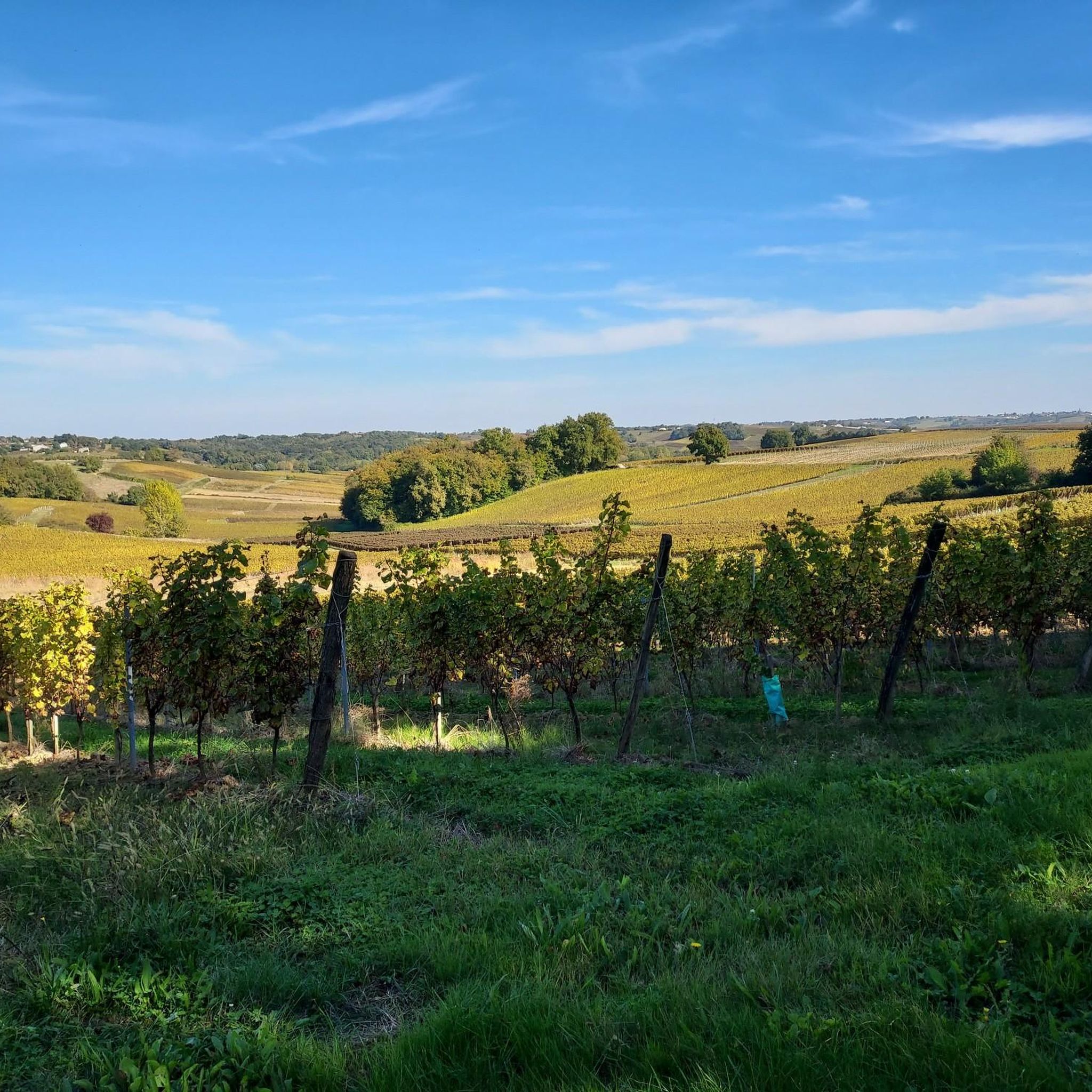
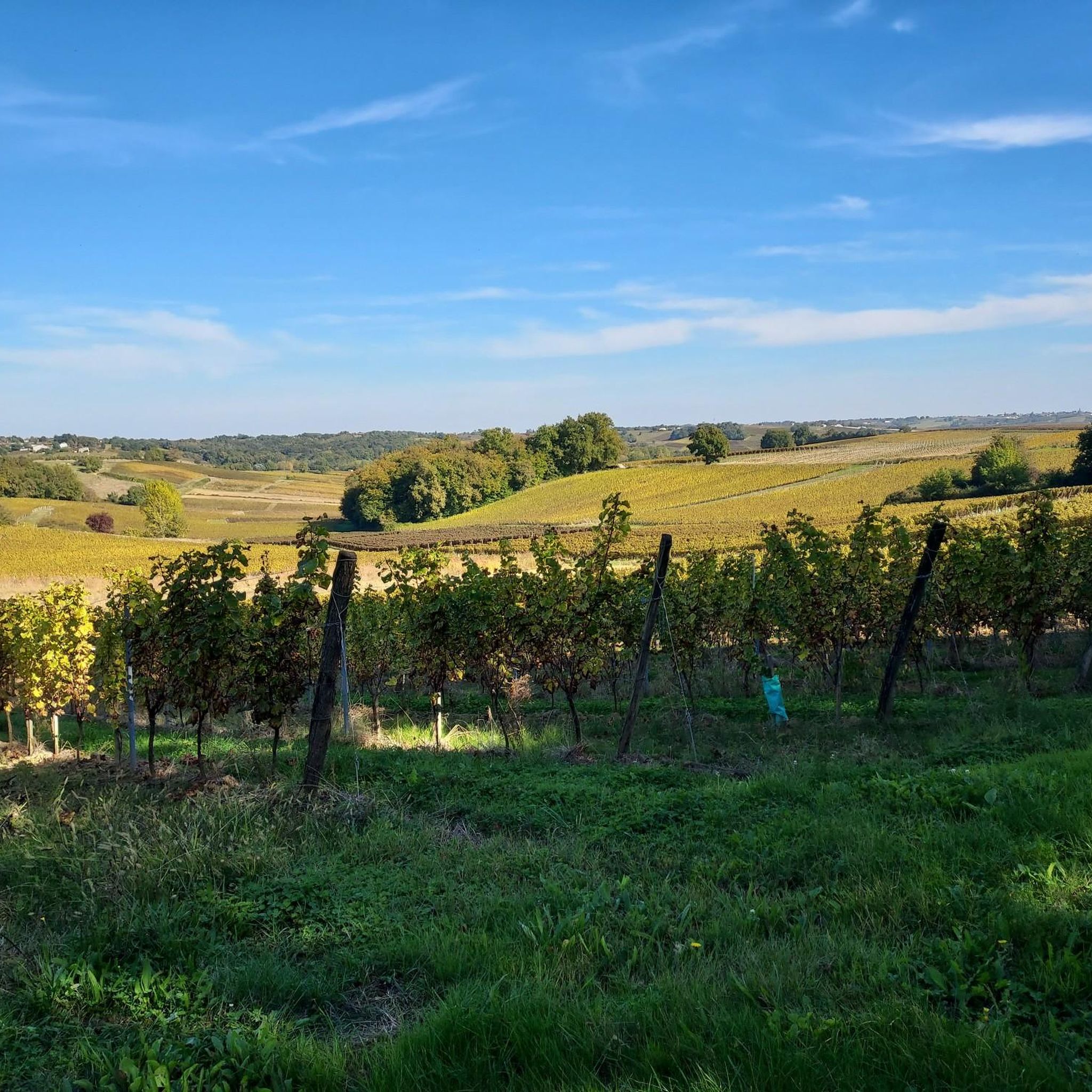
Touring cycling routes around Monprimblanc are situated within the Entre-deux-Mers region of Gironde, characterized by rolling hills, extensive vineyards, and river valleys. The landscape features gentle gradients, making it suitable for extended rides. A significant feature is the Roger Lapébie track, a greenway built on an old railway line, providing car-free cycling through forests and vineyards. The area is also influenced by the Garonne River and the Canal Latéral à la Garonne, offering flat routes along towpaths.
Best touring cycling…
Last updated: June 30, 2026
2
riders
112km
06:54
840m
840m
Hard bike ride. Very good fitness required. Mostly paved surfaces. Suitable for all skill levels.
2.0
(1)
8
riders
22.8km
01:47
330m
330m
Moderate bike ride. Good fitness required. Mostly paved surfaces. Suitable for all skill levels.

Sign up for free
4
riders
35.1km
02:06
150m
150m
Moderate bike ride. Good fitness required. Mostly paved surfaces. Suitable for all skill levels.
5
riders
42.6km
02:39
430m
430m
Moderate bike ride. Good fitness required. Mostly paved surfaces. Suitable for all skill levels.
4
riders
46.1km
02:48
350m
350m
Moderate bike ride. Good fitness required. Mostly paved surfaces. Suitable for all skill levels.
Get access to more routes and recommendations from other explorers.
Sign up for free
Already have an account?
Our route recommendations are based on thousands of hikes, rides, and runs completed by other people on komoot.
Start today with a free account
Your next adventure awaits.
Login or Signup

Tips from the Community

Lively small market town, with an arcaded market square
0
0

Majestic in its size and appearance, the Loubens mill is one of the most remarkable in the Entre-deux-Mers region. Its installation seems to date back to the 11th century. A square, medieval tower, built on an island, bears similarities to the Bagas mill located 2 km downstream. It includes three sets of millstones still in place. However, it is not a fortified building; it is a weir mill. To the north construction, a bridge with a double row of arches was added in the 18th century, containing two more pairs of millstones and a fulling mill (a machine used not for grinding grain, but for fulling textiles. These mills were often called "beating mills"). This southern part of the mill earned it the name "little Chenonceau". The mill has been classified as a Historic Monument since 2000.
0
0

Beautiful view of the ivy-covered mill.
1
0

Budos Castle is the work of Raymond Guilhem de Budos, nephew of Pope Clement V. Largely supported by his uncle, he rebuilt the old family castle in 1306, adopting the architectural features of the neighboring Château de Villandraut, as evidenced by the following document from King Edward I, written from Wynten on March 9, 1306, to the Seneschal of Gascony[4]: "The Knight of Budos, nephew of Clement V, Sovereign Pontiff, has begged us to allow him to crenellate his house in Budos, to surround it with walls, towers, moats, and finally to fortify it. Out of respect for the Sovereign Pontiff, and because a fortress of this nature will protect not only our possessions in this part of Guienne, but also the subjects of the Pope's nephew, we grant the aforementioned Raymond permission to fortify his castle and we grant it to him, his heirs, and successors in perpetuity, and we undertake not to disturb him in any way in this possession." In 1422-23, the King of England took possession of the castle and placed Pons, Lord of Castillon, in charge. Around 1433, Henry VI granted the lands and the castle to the Duke of Gloucester. In 1446-47, Budos was given to Gaston IV of Foix-Béarn, Count of Foix, following the death of the Earl of Gloucester. After the conquest of Guyenne, the Budos family, which had supported the cause of France, regained possession of its lordships in Guyenne. Purchased from the Budos family by Raymond de La Roque in 1571, Budos Castle suffered a severe assault in 1652 during the Fronde Wars. Lasserre ransacked, pillaged, and burned its archives. The Budos lordship remained in the La Roque family until the Revolution, which nearly destroyed it. It was sold as national property and used as a quarry to build dikes on the Ciron. In 1841, the Gironde Historical Monuments Commission was informed of this by Léo Drouyn. In 1860, it became the property of Léon de Brivazac, son of Delphine Catherine de La Roque de Budos (born at the castle in 1789). Five descendants (including Savary de Beauregard) entrusted it to the Adichats association, which brings together young people to enhance and preserve what can be preserved. The castle was registered as a historic monument in 1988
0
0

Sauveterre-de-Guyenne is a bastide. A bastide is a type of French medieval town, founded in the 13th and 14th centuries, primarily in southwestern France. A bastide is characterized by a rectangular street pattern that divides the town into eight blocks around a central market square. The Treaty of Paris (1229) prohibited the building of walls around new towns. Many bastides were provided with some form of fortification, such as gates, after their founding to provide some protection during turbulent times. Most bastides had only local significance and did not develop into large towns. As a result, many bastides, such as that of Sauveterre-de-Guyenne, have been preserved in their original state.
1
0
Stay in a modest guest house, with a very friendly welcome at Les Chambres de l'Archange. Dinner is also available. Booking in advance is recommended, as it's also possible on Sundays.
0
0

Restaurant/hotel. Looks good but it is closed on Sunday
0
0

Very beautiful castle and long history since Henry III. Beautiful exhibitions and interesting permanent exhibition on the reformatory for young girls (early 20th century).
0
0
Frequently Asked Questions
How many touring cycling routes are available around Monprimblanc?
There are over 120 touring cycling routes around Monprimblanc, offering a wide range of options for different skill levels. You'll find everything from easy loops to more challenging long-distance rides through the region's diverse landscapes.
What is the general terrain like for touring cycling in the Monprimblanc area?
The Monprimblanc area, situated in the Entre-deux-Mers region, is characterized by rolling hills, extensive vineyards, and river valleys. The terrain generally features gentle gradients, making it suitable for extended rides. Dedicated greenways like the Roger Lapébie track offer car-free, flat cycling experiences, while routes along the Garonne River and Canal Latéral à la Garonne also provide peaceful, relatively flat options.
What do other touring cyclists say about the routes around Monprimblanc?
The touring cycling routes around Monprimblanc are highly rated by the komoot community, with an average score of 4.2 stars from nearly 200 reviews. Cyclists often praise the picturesque vineyards, the tranquility of the car-free greenways, and the opportunities to explore historic sites and charming villages.
Are there any notable landmarks or natural features to see along the cycling routes?
Yes, the region offers several interesting sights. You can cycle along the Garonne Lateral Canal, explore sections of the Roger Lapébie track, or admire the Château de la Benauge from nearby routes. The Castets Lock, no. 53, is another charming spot along the waterways. Further afield, you might discover the Grottes d'huîtres fossiles Nature Reserve or the UNESCO World Heritage site of the Abbey of La Sauve-Majeure.
Can I cycle through vineyards and visit châteaux in the Monprimblanc region?
Absolutely. The Entre-deux-Mers region is famous for its vineyards, and many cycling routes pass directly through them, offering opportunities to admire the landscapes and potentially visit local châteaux for tastings. For example, the Benauge Castle – Benauge Castle loop from Mourens leads through vineyards and offers views of Château de la Benauge.
What is the Roger Lapébie Track and how can I access it from Monprimblanc?
The Roger Lapébie Track is a significant greenway built on an old railway line, offering a largely car-free, asphalted path through forests and vineyards. It's ideal for all fitness levels due to its gentle gradients and shaded sections. While Monprimblanc is not directly on the track, its proximity means you can easily access it by cycling a short distance to towns like Créon or Sauveterre-de-Guyenne, which are connected by the track.
Are there any routes along the Canal Latéral à la Garonne?
Yes, the Canal Latéral à la Garonne offers very scenic and peaceful cycling routes along its towpaths. These routes are generally flat, often lined with trees, and feature charming locks like the Castets Lock. The canal's path in the Gironde department is noted for its good surface, providing an enjoyable ride.
Are there family-friendly cycling options around Monprimblanc?
Yes, the Monprimblanc area offers several family-friendly cycling options. The Roger Lapébie Track, being car-free and mostly flat, is particularly suitable for families with children. Shorter, easy routes like the Cadillac Gate loop from Cadillac-sur-Garonne provide a pleasant ride through the local countryside without significant challenges.
What is the best time of year for touring cycling in Monprimblanc?
The Entre-deux-Mers region offers beautiful cycling conditions throughout much of the year. Spring and early autumn are particularly pleasant, with mild temperatures and vibrant landscapes. Summer can be warm, but shaded sections of routes like the Roger Lapébie track provide relief. The region's natural beauty changes with the seasons, offering diverse scenery.
Where can I find places to eat or stay that are cyclist-friendly near Monprimblanc?
Along the Roger Lapébie track, old railway stations have been repurposed into charming cafés and rest areas, providing convenient stops for cyclists. The numerous villages and towns in the Entre-deux-Mers region, including Monprimblanc itself, offer various options for cafes, restaurants, and accommodation such as gîtes, many of which are accustomed to welcoming cyclists.
Are there any circular cycling routes available?
Yes, many of the touring cycling routes around Monprimblanc are designed as loops, allowing you to start and finish in the same location. Examples include the Verdelais – Le Moulin de Loubens loop from Verdelais and the The Footbridge – Budos Castle loop from Barsac, offering varied distances and difficulties.
Is it possible to combine cycling with wine tourism in this region?
Absolutely. The Entre-deux-Mers region is a prime location for combining cycling with wine tourism. You can cycle through vast vineyards, stopping at local châteaux for wine tastings and tours. Many routes are designed to showcase the viticultural landscape, offering a unique cultural and gastronomic dimension to your cycling trip. For more information on cycling through the vineyards, you can visit Bordeaux Tourism's cycling guide.
Most popular routes around Monprimblanc
Most popular attractions around Monprimblanc

Get inspired with the komoot mobile app


Explore more
Browse the best Cycling routes in other regions.
