Attractions and Places To See around Montfort-L'Amaury - Top 20
Best attractions and places to see around Montfort-L'Amaury include a variety of historical sites and natural features. This medieval town in the Yvelines region of France is situated at the foot of low hills, bordering the expansive Rambouillet Forest. Visitors can explore remnants of its rich history, such as castle ruins and ancient churches, alongside tranquil green spaces and ponds. The area offers a blend of cultural heritage and natural landscapes for exploration.
Best attractions and places to see around…
Last updated: July 16, 2026
Vaux-de-Cernay Road and Vaux-de-Cernay Abbey
Highlight (Segment) • Historical Site
Translated by Google •
Tip by

Rompu Pond
Highlight • Lake
Translated by Google •
Tip by

Sign up now to discover places like this
Get recommendations on the best single tracks, peaks, & plenty of other exciting outdoor places.
Sign up for free
Château des Mesnuls
Highlight • Castle
Translated by Google •
Tip by
Notre-Dame du Chêne Chapel
Highlight • Religious Site
Translated by Google •
Tip by

Villa Landru
Highlight • Historical Site
Translated by Google •
Tip by

Sign up for free to discover even more attractions around Montfort-L'Amaury.
Sign up for free
Already have an account?
Start today with a free account
Your next adventure awaits.
Login or Signup
Popular around Montfort-L'Amaury
Other adventures around Montfort-L'Amaury

Tips from the Community

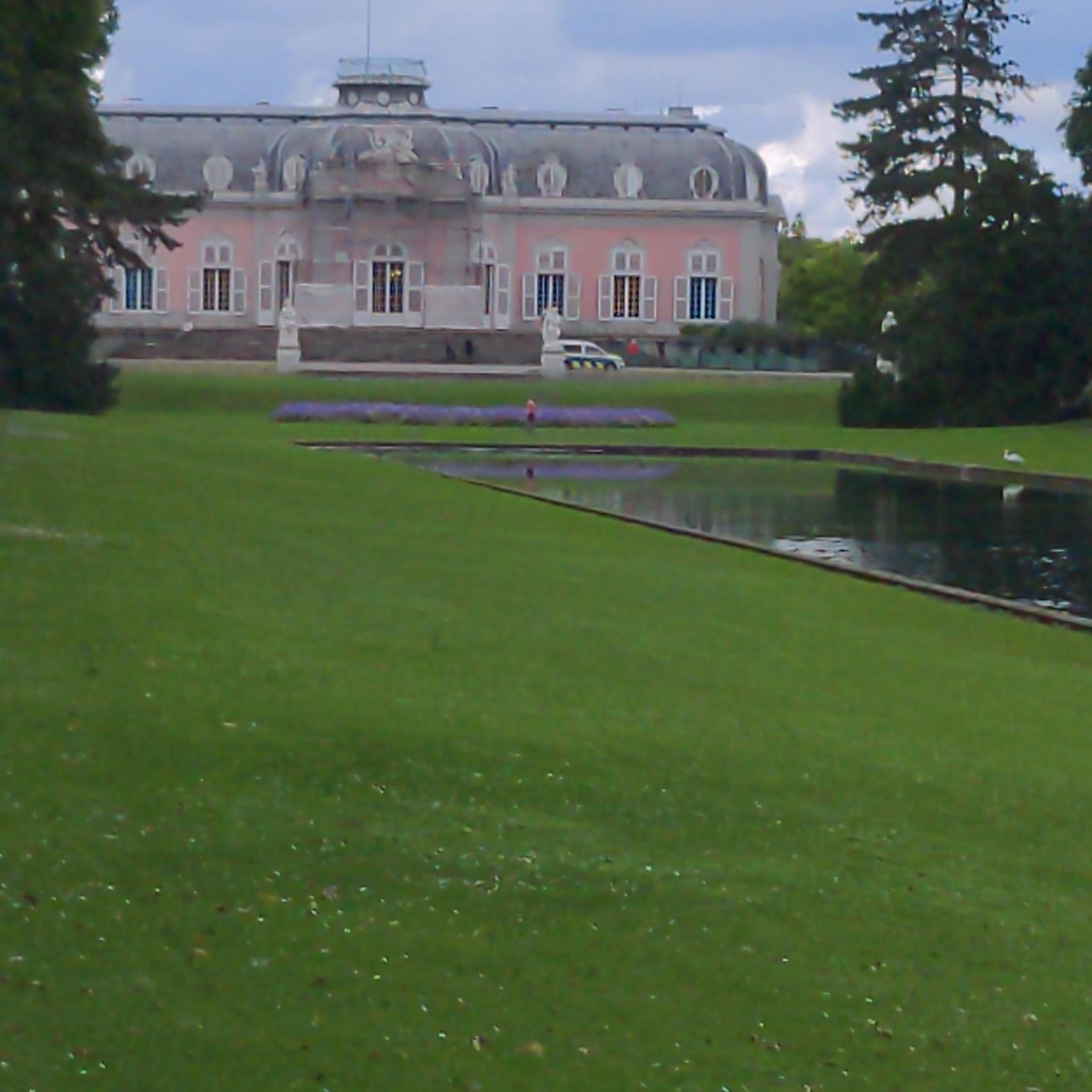
The Château des Mesnuls is a historic castle in the Louis XIII style built of brick and stone, located in the commune of Les Mesnuls, in the Yvelines department in France. The structure, protected since 1945 and officially classified as a historic monument in 1975, is not open to the public for classic individual tourist visits. The building is indeed owned by the Châteauform' chain and is entirely dedicated to corporate seminars, conferences, and private events.
0
0

Most beautiful segment of the Valley | Auffargis - Cernay-la-Ville
0
0

The Abbey of Vaux-de-Cernay is a former Cistercian monastery
6
0

Many houses of worship in France bear the title “Notre-Dame” (in German “Our Lady”) and are therefore dedicated to the Blessed Mother Mary. Sometimes the specific patronage is made clear by an additional name, such as “Assumption of Mary” or “Immaculate Conception”. Here in Les Mesnuls, the church or chapel bears the suffix "Notre-Dame du Chêne", i.e. "to the oak". This means that it is not an event in the life of the Mother of God that is referred to in the patronage, but rather a tree that gave the immediate surroundings of the church a formative shape. In fact, you can see a tree on the left and right of the building.
0
0

Here at 36 rue de l'église, an old house different from the neighboring buildings. This is the "Tric" villa acquired in 1915 by Henri Désiré Landru to commit his macabre crimes. Within these walls, 7 women were murdered between 1915 and 1919 among the 11 officially recorded victims. The choice of the Gambais villa was motivated by its isolation, as it was 300 m from the nearest house (this is obviously no longer the case now), and by its outbuildings and the basement. Here were found supposedly human remains in a heap of ashes discovered in a shed, in the fireplace, and in the stove; one will also find clasps, pins, pieces of corset, partly burnt buttons. In all, the police found 4.176 kg of charred bone debris, including 1.5 kg undoubtedly coming from human bodies, as well as 47 teeth or tooth fragments. The medical examiner will announce to the press that these bones correspond to three heads, five feet and six hands. Having become a famous place on the occasion of the resounding trial, Villa Tric de Gambais was looted by the crowd, then sold to a restorer who renamed it "Au Grillon du Foyer" and converted part of the building into a museum. It even seems that the "Landru" rib steak was served there, grilled over a wood fire... The restaurant closed its doors in 1940 and the house was then sold to private individuals. The famous villa also gave rise to a series of postcards. Somewhat forgotten after several decades, the house came back into the news in 2018 when it was put up for sale with an announcement very discreetly stating "very beautiful house steeped in history"... The cook of the villa after a succession of transactions ended up being bought by Laurent Ruquier. Passionate about the character, he wrote a play on the subject, in 2005, with Régis Laspalès in the main role. No sign, no sign comes to announce the history of this house which undoubtedly wishes to fall back into oblivion.
3
0

Located at an altitude of 154 meters1, the pond covers an area of 0.8 hectares. The “Ponts-Quentin stream” flows into the Rompu pond — coming from the Holland ponds located about 1 km upstream to the east — and comes out to flow, about ten kilometers further to the west, in the Vesgre, having previously changed its name twice: first under the name of “Etang-Neuf stream” then under that of “Grapelin”. The Ponts-Quentin stream passes under departmental road 138 before flowing into the pond, which justifies the undulation of the road and its bend. The pond is part of the Rambouillet national forest, a private state domain. As such, its management is ensured by the National Forestry Office (ONF). Wikipedia
1
0

A beautiful meandering and rolling road through the forest that passes the Vaux-de-Cernay Abbey
1
0
Frequently Asked Questions
What historical sites can I explore in Montfort-l'Amaury?
Montfort-l'Amaury is rich in history. You can visit the impressive Ruins of the Castle, dating back to 996, which offer panoramic views. The Church of Saint-Pierre, rebuilt in the late 15th century, is renowned for its 16th-century stained glass windows. Don't miss the Vaux-de-Cernay Road and Vaux-de-Cernay Abbey, a former Cistercian monastery from the 12th century, or the unique Villa Landru with its intriguing past.
Are there natural attractions or green spaces to enjoy?
Absolutely. Montfort-l'Amaury borders the expansive Rambouillet Forest, offering a natural backdrop for outdoor activities. Within the forest, you'll find the charming Rompu Pond, known for its reflective scenery that changes with the seasons. The town itself is recognized for its relaxing green spaces and ponds, contributing to its picturesque environment.
What cultural points of interest are there in Montfort-l'Amaury?
Beyond historical landmarks, Montfort-l'Amaury offers cultural depth. You can visit the Maurice Ravel House and Museum (Le Belvédère), where the renowned composer lived and worked. The town also hosts regular cultural events, such as the Ravel Days in October. The overall medieval ambiance of the town, with its narrow cobbled streets, provides a rich cultural experience.
Are there any family-friendly attractions or activities?
Yes, several attractions are suitable for families. Exploring the Rambouillet Forest and its trails, including visits to Rompu Pond, can be a great outdoor activity. The Notre-Dame du Chêne Chapel is also considered family-friendly. Strolling through the medieval streets and visiting the castle ruins can also be engaging for all ages.
What outdoor activities can I do near Montfort-l'Amaury?
The area around Montfort-l'Amaury is excellent for outdoor enthusiasts. You can find various cycling routes, including touring, mountain biking, and road cycling. For detailed routes and guides, explore options like Cycling around Montfort-L'Amaury, MTB Trails around Montfort-L'Amaury, and Road Cycling Routes around Montfort-L'Amaury.
Are there good hiking or walking paths in the area?
Yes, the surrounding Rambouillet Forest offers numerous opportunities for hiking and walking. You can discover trails that lead to natural features like Rompu Pond or historical sites such as the Vaux-de-Cernay Road and Vaux-de-Cernay Abbey. Many paths are suitable for leisurely strolls, while others offer more challenging terrain.
What is the Anne of Brittany's Tower?
The Anne of Brittany's Tower (Tour d'Anne de Bretagne) is a significant landmark in Montfort-l'Amaury. Named after the queen who had it restored, this tower stands at an altitude of 185 meters on the site of the former castle and offers beautiful views of the village and surrounding region. It's a prime example of flamboyant Gothic style.
Can I visit the Montfort-l'Amaury Cemetery?
Yes, the Montfort-l'Amaury Cemetery is a listed Historic Monument and is open to visitors. It is notable for its Gothic portal and old galleries, and it serves as the final resting place for several celebrities, including Charles Aznavour. It offers a peaceful and historically interesting visit.
What is the best time to visit Montfort-l'Amaury?
Montfort-l'Amaury can be enjoyed throughout the year, but the spring and autumn months often offer pleasant weather for exploring the medieval streets and forest trails. October is particularly notable for the Ravel Days, a cultural event. The reflective scenery of Rompu Pond changes beautifully with the seasons, making it rewarding at any time.
What do visitors enjoy most about Montfort-l'Amaury?
Visitors frequently appreciate the town's tranquil and authentically medieval ambiance. The blend of rich historical heritage, such as the castle ruins and ancient churches, with the natural beauty of the Rambouillet Forest and its green spaces, creates a unique and appealing experience. The scenic roads and reflective waters, like those near Rompu Pond, are often highlighted.
Are there any unique viewpoints in the area?
Yes, for scenic views, the Ruins of the Castle and the Anne of Brittany's Tower both offer panoramic vistas over the surrounding region. Additionally, the Small round table, a historical landmark in the forest, also served as an observatory point.
What is the Château de Groussay?
The Château de Groussay is a 19th-century estate located near Montfort-l'Amaury. It is particularly renowned for its park, which features romantic 'follies' and has earned 'Remarkable Garden' status, making it a beautiful spot for a leisurely visit.
Most popular routes around Montfort-L'Amaury
Most popular attractions around Montfort-L'Amaury

Get inspired with the komoot mobile app


Explore more
Still not found the Highlight you’re looking for? See guides of the top attractions in other regions:
