The best walks and hikes around Vimy
4.5
(1373)
9,985
hikers
410
hikes
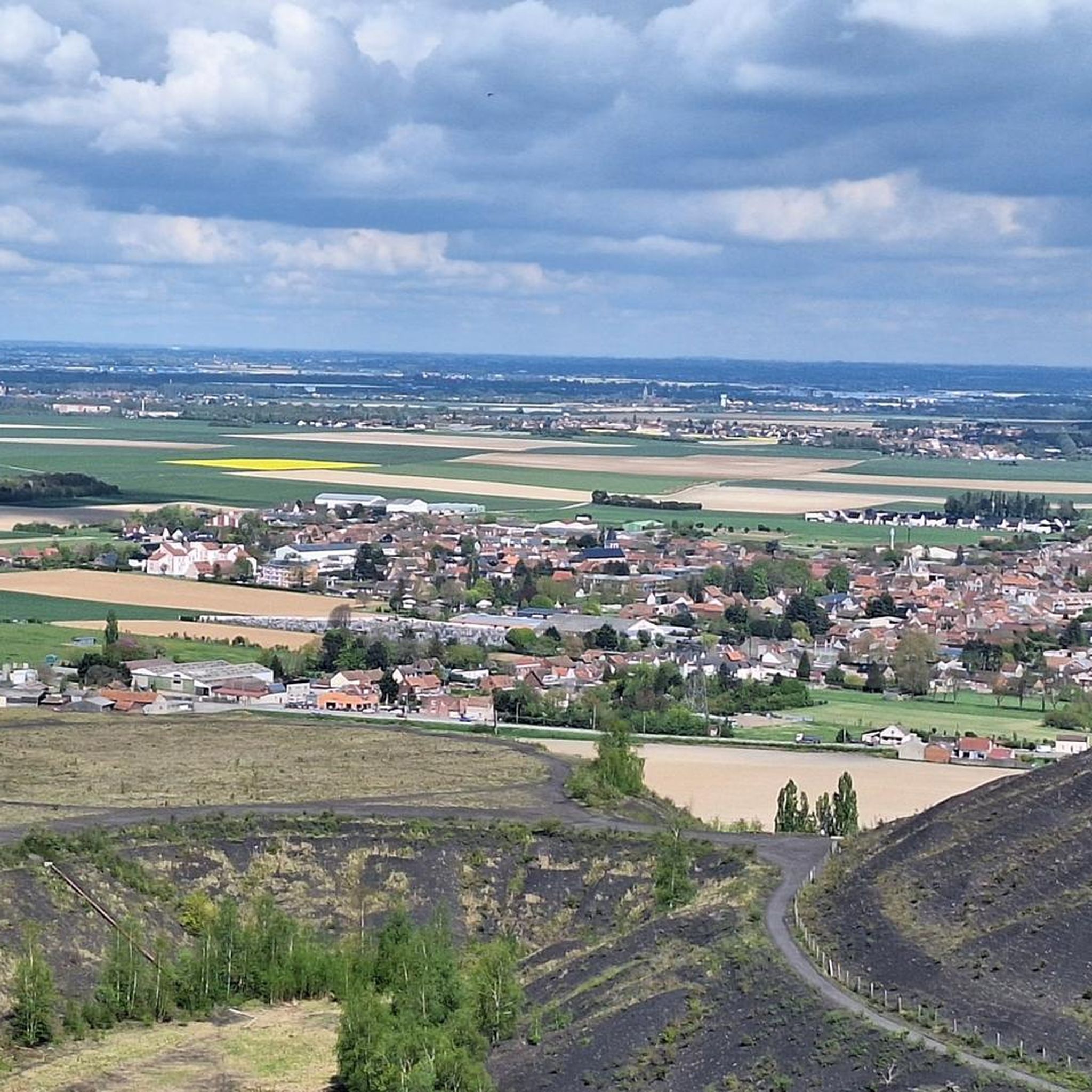
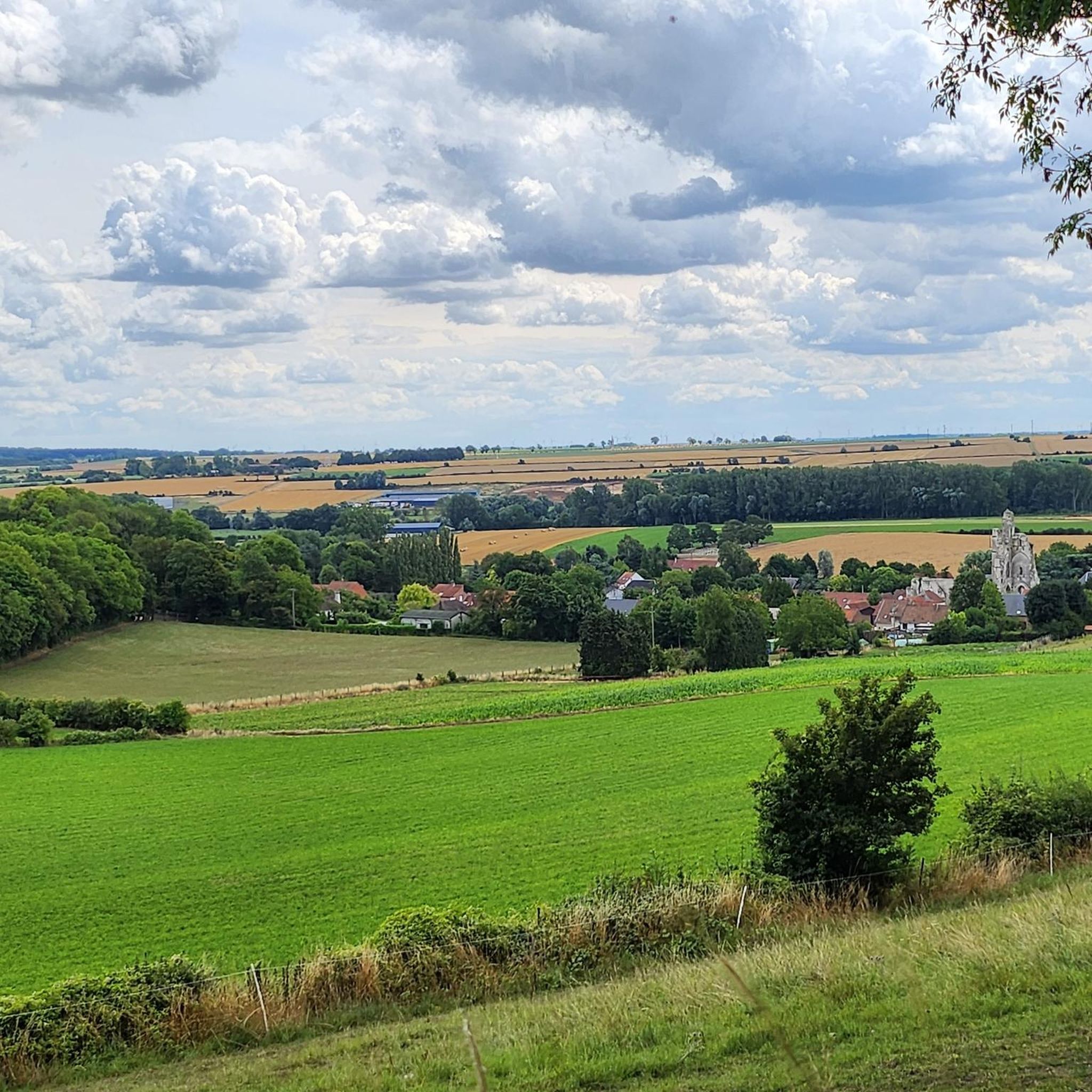
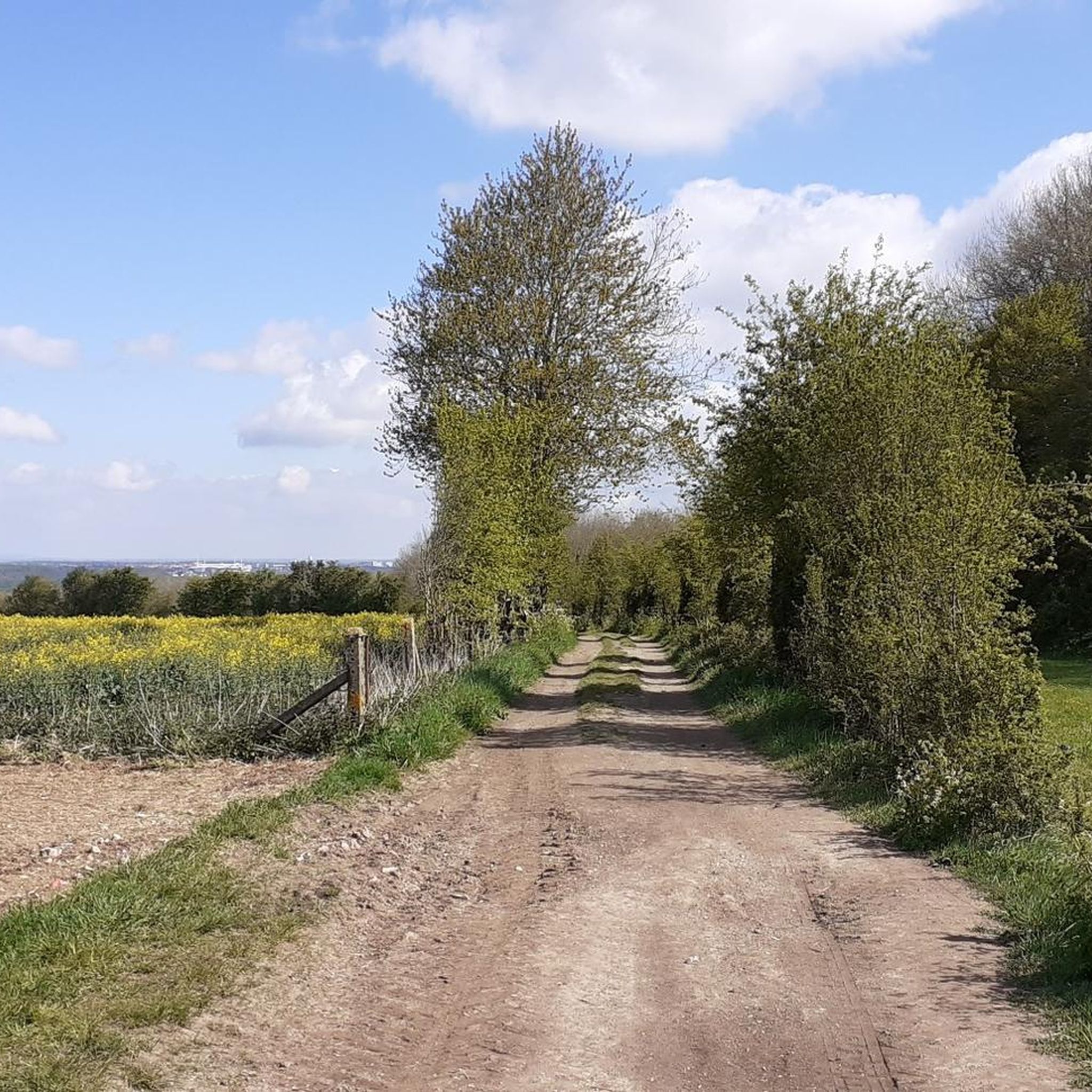
Hiking around Vimy offers trails through a landscape shaped by history, featuring rolling terrain and agricultural fields. The area is notable for its preserved historical sites, including the Canadian National Vimy Memorial, which provides a unique backdrop for outdoor exploration. Paths often traverse open countryside and memorial parks, with generally low elevation changes.
Best hiking trails around Vimy
- The most popular hiking route is The Canadian Memorial of Vimy — loop from Givenchy-en-Gohelle, a 3.7 miles (5.9 km) trail that takes 1 hour 32 minutes to complete. This easy loop explores the memorial grounds and surrounding area.
- Another top favourite among local hikers is Moroccan monument – Canadian Memorial loop from Vimy, a moderate 5.0 miles (8.0 km) path. This route connects significant historical monuments within the Vimy area.
- Local hikers also love the Canadian Memorial – Canadian Memorial loop from Neuville-Saint-Vaast, a 10.7 miles (17.1 km) trail leading through historical landscapes and open fields, often completed in about 4 hours 35 minutes.
- Hiking around Vimy is defined by historical memorial sites, agricultural fields, and gentle rolling terrain. The network offers options for various ability levels, from easy loops to longer moderate paths.
- The routes in Vimy are highly rated by the komoot community with an average score of 4.5 stars from over 1,100 reviews. More than 8,800 hikers have used komoot to explore Vimy's varied terrain.
Last updated: July 9, 2026
4.4
(33)
234
hikers
5.94km
01:32
30m
30m
Easy hike. Great for any fitness level. Easily-accessible paths. Suitable for all skill levels.
4.5
(36)
237
hikers
8.11km
02:10
90m
90m
Moderate hike. Good fitness required. Easily-accessible paths. Suitable for all skill levels.

Sign up for free
4.6
(17)
64
hikers
10.1km
02:40
100m
100m
Moderate hike. Good fitness required. Easily-accessible paths. Suitable for all skill levels.
4.3
(6)
63
hikers
8.39km
02:17
100m
100m
Moderate hike. Good fitness required. Mostly accessible paths. Sure-footedness required.
4.6
(8)
71
hikers
10.8km
02:54
120m
120m
Moderate hike. Good fitness required. Easily-accessible paths. Suitable for all skill levels.
Get access to more routes and recommendations from other explorers.
Sign up for free
Already have an account?
Our route recommendations are based on thousands of hikes, rides, and runs completed by other people on komoot.
Start today with a free account
Your next adventure awaits.
Login or Signup

Tips from the Community

Before the Canadians captured Vimy Ridge from the Germans in April 1917, other soldiers had already set foot there but were unable to hold their ground due to a lack of reinforcements and sufficient artillery support. These "forerunners" were the Moroccan Zouaves and riflemen, wearing red chechias and baggy trousers, accompanied in the Moroccan Division by Foreign Legion volunteers from 52 countries. To the men of the Moroccan Division who set out to assault Vimy Ridge On the morning of May 9, 1915, they broke through the German lines, crossed Folie Wood, and reached Vimy Ridge. To track their advance and adjust artillery fire, squares of white cloth were sewn to their backs, making them prime targets for the Germans on their flank. Furthermore, the artillery was running low on ammunition, and reinforcements were not forthcoming: the order to withdraw came in the evening. The Moroccan soldiers were forced to abandon the conquered ground at the cost of heavy losses. The riflemen of the Moroccan Division were among the approximately 820,000 men mobilized in French colonies or protectorates during the First World War, including 636,000 sent to France as soldiers or laborers. Of the 449,000 engaged in combat, the majority came from Algeria (150,000), and the rest from sub-Saharan Africa (135,000), Indochina (43,000), Tunisia (39,000), and Morocco (34,000). 70,000 of them would perish on French soil. Plaques affixed to the monument pay tribute to other French army fighters from Greece, Sudan and Czechoslovakia.
0
0
Located right next to the monument, the historical interpretation center presents the Battle of Vimy Ridge in two ways. First, you can discover an exhibition with diagrams, photographs, maps, and some exhibits. You'll learn about the historical context from a political and military perspective, with numerous images showing the lunar landscapes of the trench line and No Man's Land. Books about the Battle of Vimy Ridge are also available for purchase at the reception desk. Next, a superb Sound & Light show, using period videos, recounts the preparation for the offensive, the fighting, the advance of the troops, and the lives of soldiers during the battle. A video table and televisions allow you to relive these moments. Commentary is available in French, English, and German.
0
0
The Vimy Memorial is the most prestigious Canadian monument in Europe. It is located on the very site of the 1917 fighting near Vimy in the Pas-de-Calais region of France. Erected on the highest point of the hill, Hill 145, the objective of the operations that began on April 9, 1917, it overlooks the Douai Plain. In 1921, architect and sculptor Walter S. Allward (1875-1955) won the competition from the Canadian Battlefield Memorials Commission. The significance of the battles at the site and the favorable location at the top of the hill allowed Vimy to receive the most prestigious work. The monument's architecture consists of twenty figures and a massive base topped by two immense pillars. Carved from a single 30-ton block, the main statue, symbolizing the spirit of Canada mourning its fallen, dominates the Douai Plain. At the top, the angels of Justice and Peace stand guard over the gate. At the front of the monument, between the pillars, two statues represent the spirit of sacrifice, one representing the spirit of sacrifice, and the other representing the passing of the torch. The 27-meter-high pylons symbolize both the gates of eternity, as well as France, with the fleur-de-lis, and Canada, with the maple leaves. They are also adorned with representations of Truth, Knowledge, Valor, Sympathy, and the coats of arms of Canada, England, and France. On either side of the façade wall, cannons adorned with laurel and olive branches, symbolizing Victory and Peace, can be seen. Below, figures represent the Breaking of the Saber and Sympathy for the Victims. Each of the monument's statues embodies an ideal: Justice, Peace, Honor, Faith, Charity, Truth, Knowledge, Hope... The following words are engraved on its base: "TO THE VALOR OF HER SONS DURING THE GREAT WAR, AND IN MEMORY OF HER SIXTY THOUSAND DEAD, THE CANADIAN PEOPLE HAVE ERECTED THIS MONUMENT." The names of 11,285 missing persons are also etched in stone for eternity. This list complements those on the monument erected in memory of the Armies of the British Empire at the Menin Gate, Ypres. Indeed, 18,283 Canadian soldiers were never found... Construction work began in 1925. The memorial was inaugurated on July 26, 1932, in the presence of King Edward VII and Albert Lebrun, President of the French Republic.
0
0

The 3rd Canadian Division Memorial in Neuville-Saint-Vaast commemorates the soldiers of the 3rd Canadian Division who fought and gave their lives during the First World War. This memorial is located near the famous Vimy Ridge and pays tribute to the courage and sacrifice of these troops.
6
0

3rd Canadian Division monument erected to the glory and eternal memory of our valiant comrades who gave their lives in defense of the line from October 23, 1916 to February 15, 1917 and in the capture of Vimy Ridge on April 9, 1917.
0
0
Within the 107 hectares of the Vimy Ridge National Historic Site of Canada, near the grandiose memorial erected in honor of the 66,000 Canadian soldiers who died in the Great War, a more modest building is dedicated "to the memory (...) of the officers, non-commissioned officers, and soldiers of the Moroccan Division who fell gloriously here on May 9, 10, and 11, 1915." Before the Canadians captured Vimy Ridge from the Germans in April 1917, other soldiers had already set foot there but were unable to hold their ground due to a lack of reinforcements and sufficient artillery support. These "forerunners" were the Moroccan Zouaves and riflemen, wearing red chechias and baggy trousers, accompanied in the Moroccan Division by Foreign Legion volunteers from 52 countries. To the men of the Moroccan Division who set out to assault Vimy Ridge On the morning of May 9, 1915, they broke through the German lines, crossed Folie Wood, and approached Vimy Ridge. To monitor their advance and adjust artillery fire, squares of white cloth were sewn to their backs, making them prime targets for the Germans on their flank. Furthermore, the artillery was running low on ammunition, and reinforcements were not forthcoming: the order to withdraw came with the evening. The Moroccan soldiers were forced to abandon the conquered ground at the cost of heavy losses. The riflemen of the Moroccan Division were among the approximately 820,000 men mobilized in the French colonies or protectorates during the First World War, including 636,000 sent to France as soldiers or laborers. Among the 449,000 engaged in the fighting, the majority came from Algeria (150,000) and the others from sub-Saharan Africa (135,000), Indochina (43,000), Tunisia (39,000), Morocco (34,000). 70,000 of them died on French soil.
0
0
The Vimy Memorial is the most prestigious Canadian monument in Europe. It is located on the very site of the 1917 fighting near Vimy in the Pas-de-Calais region of France. Erected on the highest point of the hill, Hill 145, the objective of the operations that began on April 9, 1917, it overlooks the Douai Plain. In 1921, architect and sculptor Walter S. Allward (1875-1955) won the competition from the Canadian Battlefield Memorials Commission. The significance of the battles at the site and the favorable location at the top of the hill allowed Vimy to receive the most prestigious work.
1
0
Frequently Asked Questions
How many hiking trails are available in Vimy?
Vimy offers a wide selection of hiking opportunities, with over 390 routes to explore. These trails traverse a landscape rich in history, featuring rolling terrain and agricultural fields, with generally low elevation changes.
What types of hiking trails can I find in Vimy?
The trails in Vimy cater to various skill levels. You'll find a significant number of easy routes, with 175 trails suitable for casual walks, and 184 moderate paths for those looking for a bit more challenge. There are also 33 more difficult trails for experienced hikers.
Are there any circular hiking routes in Vimy?
Yes, Vimy features several circular routes that allow you to start and end your hike in the same location. For example, the The Canadian Memorial of Vimy — loop from Givenchy-en-Gohelle is an easy 5.9 km loop that explores the memorial grounds. Another option is the moderate Moroccan monument – Canadian Memorial loop from Vimy, covering 8.0 km.
What are some family-friendly hiking options in Vimy?
Many of Vimy's trails are suitable for families, especially the easier, shorter loops with minimal elevation gain. The The Canadian Memorial of Vimy — loop from Givenchy-en-Gohelle is an excellent choice, offering an easy 5.9 km walk through historical sites that can be completed in under two hours.
What historical sites can I see along the hiking trails in Vimy?
Vimy's hiking trails are intertwined with significant historical sites. You can explore the iconic Canadian National Vimy Memorial, the Notre-Dame-de-Lorette National Cemetery, and even the ruined church of Ablain-Saint-Nazaire. Many routes, like the Canadian Memorial – Canadian Memorial loop from Neuville-Saint-Vaast, lead directly through these historical landscapes.
Are there any natural attractions or unique landscapes to discover in Vimy?
Beyond the historical significance, Vimy offers interesting natural and man-made landscapes. You can visit the Vimy Ridge Shell Craters, a poignant reminder of the past, or explore the Marais de Maroeuil, a natural marshland. Other unique features include the Loos-en-Gohelle slag heap and the Bray Chalk Quarry.
What do other hikers enjoy most about hiking in Vimy?
The hiking experience in Vimy is highly regarded by the komoot community, with an average score of 4.5 stars from over 1,100 reviews. Hikers often praise the unique combination of historical memorial sites with the peaceful, rolling agricultural fields and gentle terrain.
What is the typical length and duration of hikes in Vimy?
Hikes in Vimy vary in length and duration. You can find shorter, easy loops like the The Canadian Memorial of Vimy — loop from Givenchy-en-Gohelle, which is 5.9 km and takes about 1 hour 32 minutes. For longer excursions, the Canadian Memorial – Canadian Memorial loop from Neuville-Saint-Vaast spans 17.1 km and typically takes around 4 hours 35 minutes.
Are there any longer, more challenging hikes in Vimy?
While Vimy is known for its gentle terrain, there are longer routes for those seeking more distance. The Canadian Memorial – Canadian Memorial loop from Neuville-Saint-Vaast is a moderate 17.1 km trail that offers a substantial walk through historical landscapes and open fields. There are also 33 routes classified as 'difficult' for experienced hikers.
Is parking available near the Vimy hiking trails?
While specific parking information for every trailhead is not detailed, the primary access points for trails around the Canadian National Vimy Memorial typically offer designated parking areas for visitors to the memorial and surrounding parks.
Can I reach the Vimy hiking trails using public transport?
Information on direct public transport links to every trailhead in Vimy is not readily available. However, the Vimy Memorial area is generally accessible by local bus services from nearby towns, which may require a short walk to reach specific trail starting points.
Most popular attractions around Vimy

Get inspired with the komoot mobile app


Explore more
Browse the best Hikes in other regions.
