Attractions and Places To See around Algringen - Top 20
Best attractions and places to see around Algringen include a variety of historical sites, industrial heritage, and cultural landmarks. The region offers insights into its past, from mining and steel production to border town history. Visitors can explore significant historical monuments and museums that reflect the area's diverse heritage.
Best attractions and places to see around Algringen
- The most popular attractions is National Mining Museum of Luxembourg, a historical site and museum that details the underground mining of iron…
Last updated: May 5, 2026
U4 - Blast Furnace Park (Uckange)
Highlight • Other
Translated by Google •
Tip by

National Mining Museum of Luxembourg
Highlight • Historical Site
Translated by Google •
Tip by

Sign up now to discover places like this
Get recommendations on the best single tracks, peaks, & plenty of other exciting outdoor places.
Sign up for free
Thionville
Highlight • Other
Thionville (German: Diedenhofen) is located in northeastern France, not far from the borders with Germany and Luxembourg. The city …
Translated by Google •
Tip by

Fort de Guentrange
Highlight • Other
Tip by

The Pilgrims' Cross
Highlight • Religious Site
Translated by Google •
Tip by

Sign up for free to discover even more attractions around Algringen.
Sign up for free
Already have an account?
Start today with a free account
Your next adventure awaits.
Login or Signup
Tips from the Community

Great little museum with many exhibits from the black gold mining era.
2
0

🛡️ **Fort de Guentrange – German Fortification above Thionville** The **Fort de Guentrange** was built between 1899 and 1906 by the German Reich Army when Thionville (then Diedenhofen) was part of the German Empire. It is one of the best-preserved forts along the Moselle River and part of the so-called **Moselstellung** – a defensive line against France. 🔩 The fortress is strategically located above the town, overlooking the Moselle Valley. It consists of underground passages, casemates, ammunition depots, and observation towers – some still with their original furnishings. 🎖️ Today, the fort is a museum (accessible only with a guided tour) and offers fascinating insights into military technology, the daily lives of soldiers, and European border history. **Tip:** Tours usually take place on Sundays – check in advance! The path to the fort already offers great views and is a good hiking stage with a historical destination.
3
0
🏰 Thionville – A Border Town with History on the Moselle Thionville (German: Diedenhofen) is located in northeastern France, not far from the borders with Germany and Luxembourg. The city looks back on a turbulent past – between the Romans, the Lorrainers, the Prussians, and the French. Numerous buildings still bear witness to this turbulent history: the medieval fortress, the Tour aux Puces (a former keep, now a museum), and the neoclassical buildings in the city center. 🚶♂️ Thionville is a starting point for exploring the Moselle Valley, visiting castles like the Château de Malbrouck, or natural sites like the Stromberg with its caves and rock formations. 🛤️ Due to its location on the Moselle River and its proximity to Luxembourg, Thionville is also an important transportation hub today – but as soon as you leave the city, you're immersed in a tranquil, green landscape full of cultural and historical discoveries.
3
0
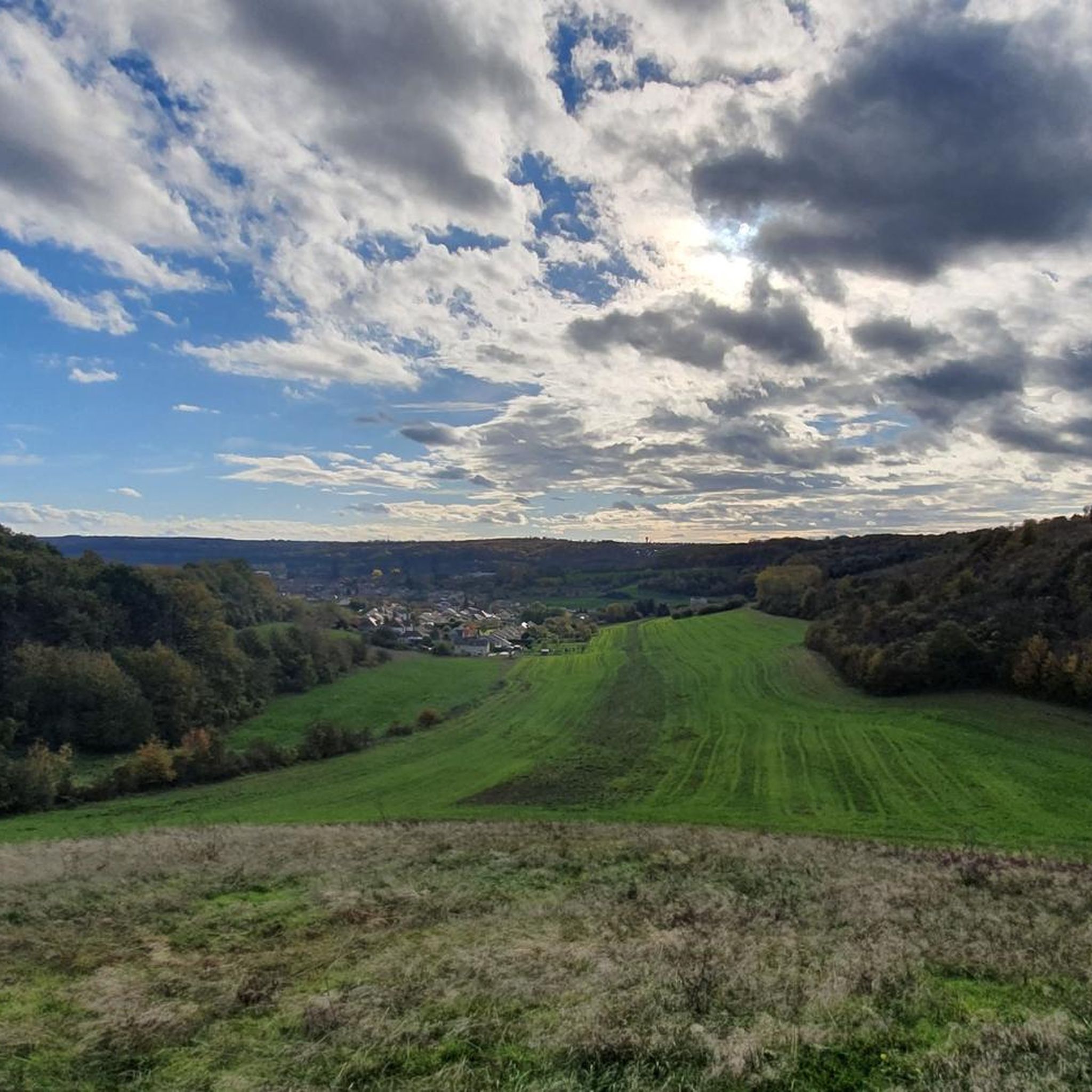
✝️ Pilgrim's Cross near Thionville (1721) An impressive wayside cross from 1721 – simple yet powerful, framed by an ornately wrought iron railing. It stands on a small hill overlooking the hilly landscape near Thionville and invites you to pause for a moment – in keeping with the ancient pilgrimage tradition. Tip: Come early in the morning – then the cross lies still in the light, and the place exudes a special sense of tranquility. Ideal for a quiet moment on your route through Grand Est.
1
0

You are in the middle of the pithead of the former "Walert" mine. For almost a century, from the 1880s to 1963, iron ore was mined here, both in the opencast and in galleries. At the time, the mine mainly supplied the factories of Rodange and Seraing in Belgium, where the ore was transported by rail. The site became a museum in 1973 and the use of the pithead facilities was changed: the first offices were converted into a brewery; the locomotive shed now houses the visitor reception; the playground occupies the former wood stock, while the red rocks of the opencast mine are slowly being reclaimed by vegetation. The most spectacular part of the mine is underground (44.5 ha concession). The guided tour begins in the Museum reception building. The train will then take you underground for a walking tour through the galleries, among the tools and machines of three generations of miners.
1
0

Super shaded, pleasant during the heat wave.
2
0

The tour takes you through the tunnels of the "Walert" mine, which was in operation from 1891 to 1963. Discover more than 70m underground large tunnels on two levels and impressive cavities in which your museum guide brings the time of the miners to life again. The machines and tools on display testify to iron ore mining in the region from the 1860s to the closure of the last mine in Lorraine in 1997. https://www.mnm.lu/de/ The museum is open to individual visitors: April-June and September : Thursday - Sunday 2:00 p.m. - 6:00 p.m Guided tour of the mine and mine train at 2:30 p.m., 3:30 p.m. and 4:30 p.m July-August: Tuesday – Sunday 2:00 p.m. – 6:00 p.m Guided tour of the mine and mine train at 2:30 p.m., 3:30 p.m. and 4:30 p.m October-March : every 2nd Sunday of the month 2:00 p.m. – 5:30 p.m. (by reservation) Guided tour of the mine and mine train at 2:30 p.m. and 3:30 p.m
2
0

The Musée National des Mines de Fer Luxembourgeoises is definitely worth a visit! Here you take the mine train into the tunnel and immerse yourself in the world of the miners. During the guided tour underground you will get a detailed insight into the hard and dangerous work of the miners. Visit www.mnm.lu for more information.
3
0
Frequently Asked Questions
What kind of attractions can I find around Algringen?
The area around Algringen is rich in historical sites, industrial heritage, and cultural landmarks. You can explore significant monuments and museums that reflect the region's past, including its history in mining and steel production, as well as its role as a border town.
Are there any family-friendly attractions in the Algringen area?
Yes, the National Mining Museum of Luxembourg is a great family-friendly option. It offers a unique experience where visitors can take a mine train into the tunnels to learn about the history of iron ore mining, making it an engaging and educational outing for all ages.
Where can I learn about the industrial history of the region?
To delve into the region's industrial past, visit U4 - Blast Furnace Park (Uckange). This preserved blast furnace symbolizes the area's steel industry and offers guided tours to discover its history. Additionally, the National Mining Museum of Luxembourg provides insights into underground iron ore mining.
What historical sites are there to explore near Algringen?
Beyond the industrial heritage, you can explore the historic border town of Thionville, which features medieval fortresses and neoclassical buildings. Another significant historical site is Fort de Guentrange, a well-preserved German fortification offering insights into military technology and European border history.
Are there opportunities for outdoor activities like hiking or cycling near Algringen's attractions?
Yes, the area offers various outdoor activities. You can find numerous running trails, MTB trails, and road cycling routes around Algringen. These routes often pass by or are close to many of the historical and cultural sites, allowing you to combine sightseeing with active exploration.
What is the best time to visit the National Mining Museum of Luxembourg?
The National Mining Museum of Luxembourg is open from April to June and in September from Thursday to Sunday, 2:00 p.m. - 6:00 p.m. In July and August, it's open Tuesday to Sunday during the same hours. From October to March, it's open on the second Sunday of each month by reservation. Guided tours with the mine train are offered at specific times during opening hours.
Can I visit Fort de Guentrange?
The Fort de Guentrange operates as a museum and is accessible only with a guided tour. Tours typically take place on Sundays, so it's advisable to check in advance for current schedules and availability. The path to the fort also offers scenic views.
Are there any quiet places for reflection or historical contemplation?
For a moment of quiet reflection, consider visiting The Pilgrims' Cross near Thionville. This impressive wayside cross from 1721 stands on a small hill, inviting visitors to pause and connect with an ancient pilgrimage tradition. It's ideal for a tranquil moment on your route.
What do visitors enjoy most about the attractions around Algringen?
Visitors particularly appreciate the unique insights into the region's rich history, from the underground mine train experience at the National Mining Museum to the majestic industrial heritage of U4 - Blast Furnace Park. The blend of historical monuments and the opportunity to explore a historic border town like Thionville is also highly valued.
What is Thionville known for, and what can I do there?
Thionville is a historic border town on the Moselle River, known for its turbulent past reflected in medieval fortresses and neoclassical buildings. It serves as an excellent starting point for exploring the wider Moselle Valley, including visiting castles like the Château de Malbrouck or natural sites such as the Stromberg with its caves.
Most popular routes around Algringen

Get inspired with the komoot mobile app


Explore more
Still not found the Highlight you’re looking for? See guides of the top attractions in other regions:
