Attractions and Places To See around Duvy - Top 20
Best attractions and places to see around Duvy. Duvy, a commune in the Oise department of France, is situated within the Hauts-de-France region, offering a blend of historical sites and natural landscapes. The area is characterized by its authentic nature, including forests, rivers, and valleys. Visitors can explore a variety of landmarks and cultural experiences in the surrounding region.
Best attractions and places to see around Duvy
- The most popular attractions is Montépilloy Castle, a castle that was built in the 12th century. It features an imposing keep, a polygonal enclosure, and an entrance gate, offering panoramic views of the countryside.
- Another must-see spot is The Gallo-Roman ruins of Champlieu, a historical site located in Orrouy, about 15 km south of Compiègne. The site includes ruins of a temple, a theater, and a bathing establishment from the Roman Empire.
- Visitors also love Gallo-Roman Church of Champlieu, a religious building constructed in the 11th and 12th centuries on the site of an ancient Gallo-Roman villa. The church, now in ruins, showcases elegant architecture and carved capitals.
- Duvy is known for its historical sites, religious buildings, and natural features. The region offers a variety of castles, ancient ruins, and churches to explore.
- The attractions around Duvy are appreciated by the komoot community, with more than 40 upvotes and 18 photos shared by visitors.
Last updated: May 11, 2026
Montépilloy Castle
Highlight • Castle
Translated by Google •
Tip by

The Gallo-Roman ruins of Champlieu
Highlight • Historical Site
Translated by Google •
Tip by

Sign up now to discover places like this
Get recommendations on the best single tracks, peaks, & plenty of other exciting outdoor places.
Sign up for free
Gallo-Roman Church of Champlieu
Highlight • Religious Site
Translated by Google •
Tip by
Douye Castle
Highlight • Historical Site
Translated by Google •
Tip by
Pondron Church
Highlight • Religious Site
Translated by Google •
Tip by
Sign up for free to discover even more attractions around Duvy.
Sign up for free
Already have an account?
Start today with a free account
Your next adventure awaits.
Login or Signup




Tips from the Community


This architectural ensemble included thermal baths, a performance building and a temple. To have !
0
0

The oldest building within the grounds of the Château de la Douye is what appears to be part of the “Grand Hôtel” built by King John II the Good in 1344 and partially destroyed during the 100 Years' War. John II liked Bethisy which he called his “desert”. He made numerous stays there. The Château de la Douye is more recent. It is described as a composite manor, made up of two buildings at right angles: one very simple, is from the 17th century; the other contains the chapel whose window with flamboyant tracery retains stained glass. At the intersection a 15th century staircase turret. The history of the castle is little known. The first owners seem to have been the Anthonis, lords of Douye. Around 1475, Gilles Anthonis, Lord of Douye, Baron and Vémars, was Notary and Secretary to King Louis XI and hereditary Gruyer of Béthisy, in the forest of Cuise. Subsequently, for example, it was the turn of Berthelemy (1570), Le Doux (1655) and Beaurain (1762). More recently, La Douye welcomed the Missionary Sisters of the Holy Spirit. Numerous works have now completely transformed the interiors. The stained glass window is also more modern. Around 1820 the arms of Charles VI and VII were visible on the turret and in the chapel. Charles VI, the beloved or the madman, king of France from 1380 to 1422. Charles VII, the victorious, king of France from 1422 to 1461.
0
0

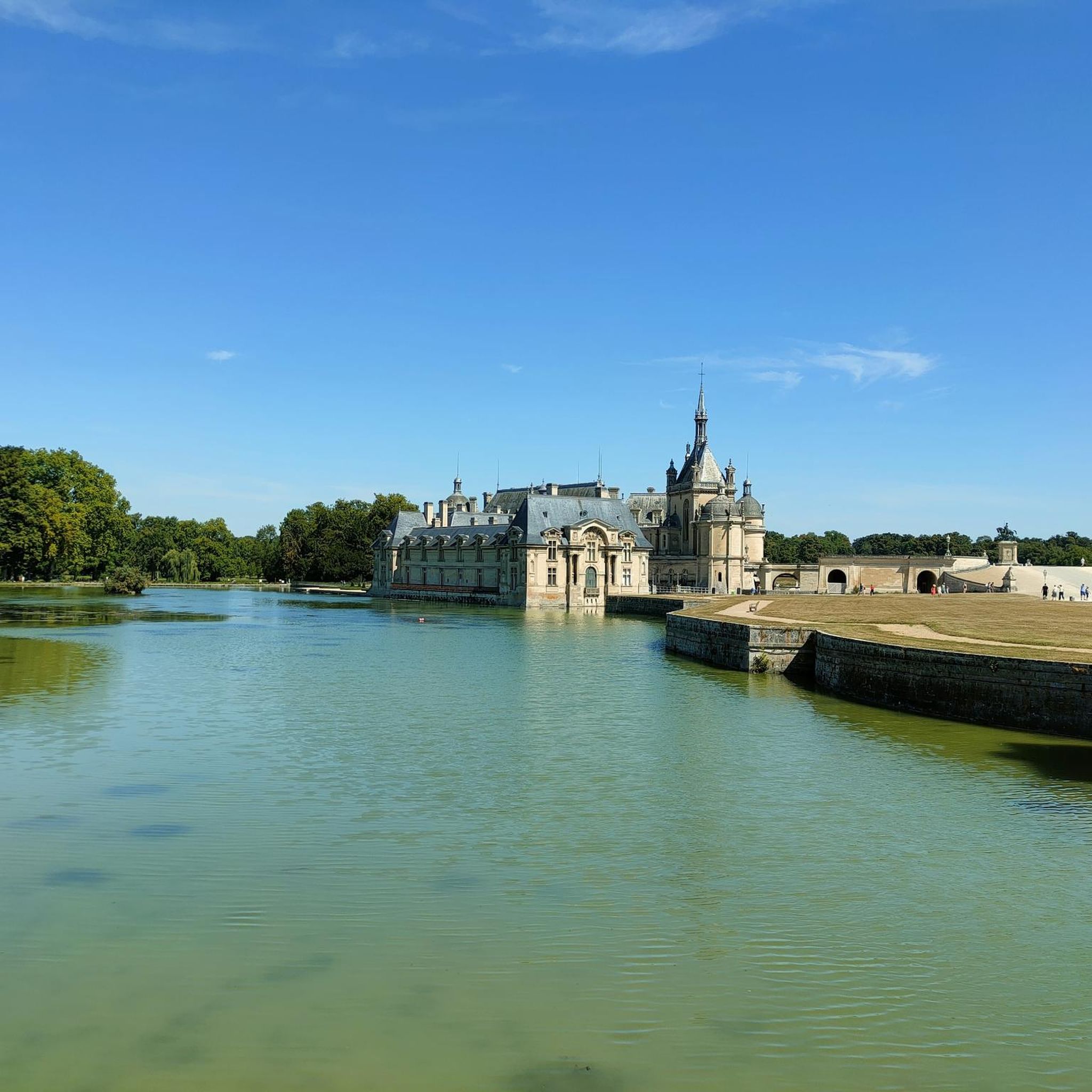
The Château de la Douye in Béthisy-Saint-Pierre is a composite manor, formed by two buildings at right angles: one very simple, from the 17th century; the other contains the chapel with flamboyant windows and stained glass. At the intersection there is a 15th century stair turret. The Château de la Douye is surrounded by a large park and faces the two turrets that remain from the medieval castle of King John II the Good, who built the "Grand Hôtel" in 1344 and partially destroyed it during the Hundred Years' War. You can also admire the old mill on the Automne river, which crosses the territory of the commune.
2
0
The Château de Montépilloy is a medieval castle in ruins which was built in the 12th century by Guy III le Bouteiller de Senlis, a nobleman in the service of the kings of France. It was the scene of several battles and sieges during the Hundred Years' War and the Wars of Religion. You will be able to discover the remains of the imposing keep, the polygonal enclosure, the entrance gate and the unfinished “new castle” which date from different periods in the history of the castle. The castle is surrounded by forests and offers panoramic views of the countryside. You can also enjoy the charm of the neighboring village of Montépilloy, which has a church, a fountain and an old washhouse. The castle is open to the public from June to September.
2
0
The Saint Pondron church dates from the 12th and 13th centuries. It combines Romanesque and Gothic elements, such as the walls of the old nave, the square choir, the side bell tower and the flamboyant chapel. You can admire the stone heads carved on the corbels, the original stained glass windows and the covered well in front of the portal. Don't miss this charming example of rural architecture in the Automne Valley.
2
0
The Gallo-Roman site of Champlieu is located on a plateau near the Compiègne forest. The site offers the ruins of a temple, a theater and a bathing establishment dating from the first centuries of the Roman Empire. You can explore the remains of these ancient buildings and imagine how they looked in their original splendor. You can also admire the medieval church of Champlieu, located nearby and built in the 11th and 12th centuries. The site is open all year round and has information panels and a digital tool to help you better understand its history. By browsing this site, you will immerse yourself in the past and the present and you will have a good sports session.
3
0
The Champlieu Chapel, also known as Notre-Dame-de-la-Nativite, is a Romanesque church that was built in the 11th and 12th centuries on the site of an ancient Gallo-Roman villa. The church is now in ruins, but you can still admire its elegant architecture and carved capitals. The church is surrounded by a peaceful forest and a cemetery, where there are ancient tombs and crosses. The Champlieu Chapel is a hidden treasure that offers insight into the medieval history of Picardy.
3
0
Frequently Asked Questions
What historical sites can I visit near Duvy?
The region around Duvy is rich in history. You can explore the medieval ruins of Montépilloy Castle, which offers panoramic views and insights into the Hundred Years' War. Further south, discover The Gallo-Roman ruins of Champlieu, featuring remains of a temple, theater, and bathing establishment. The nearby Gallo-Roman Church of Champlieu, built on an ancient villa site, also showcases elegant Romanesque architecture.
Are there any castles to visit in the Duvy area?
Yes, several impressive castles are within easy reach. Besides the medieval Montépilloy Castle, you can visit Douye Castle in Béthisy-Saint-Pierre, a composite manor with a 15th-century stair turret and remnants of a medieval royal castle. Further afield, the magnificent Château de Pierrefonds (approx. 16 km northeast) and the extensive Château de Chantilly (approx. 27 km west) are also notable.
What natural features can I explore around Duvy?
Duvy is nestled within the authentic landscapes of the Pays de Valois, characterized by forests, rivers, and valleys. A significant natural highlight is the Oise-Pays de France Regional Nature Park, a vast protected area with diverse environments including the forests of Halatte, Chantilly, and Ermenonville, as well as rivers, ponds, and meadows. This park is home to wildlife and offers over 1,000 km of hiking trails. You can find more information about the park on visitparisregion.com.
Are there family-friendly attractions near Duvy?
Many historical sites like The Gallo-Roman ruins of Champlieu and Douye Castle are suitable for families to explore. The Oise-Pays de France Regional Nature Park also offers numerous easy walking trails and opportunities for children to discover nature. For a theme park experience, La Mer de Sable in Ermenonville (about 17 km west-south-west) is a popular choice.
What outdoor activities can I do near these attractions?
The region around Duvy is excellent for outdoor enthusiasts. You can find numerous routes for cycling, gravel biking, and mountain biking. For example, there are many cycling tours available, such as the 'View of Pierrefonds Castle' loop from Crépy-en-Valois. Explore more options on the Cycling around Duvy guide page, the Gravel biking around Duvy guide, or the MTB Trails around Duvy guide.
Are there hiking trails near Duvy?
Yes, the Oise-Pays de France Regional Nature Park, which encompasses the area around Duvy, boasts over 1,000 km of hiking trails suitable for various skill levels. You can find trails that lead through forests, along rivers, and past historical sites. Many of the highlights mentioned, like the Champlieu ruins, are accessible via walking paths.
What religious buildings are worth visiting?
The area features several historical churches and abbeys. The Gallo-Roman Church of Champlieu is a fascinating ruin from the 11th and 12th centuries. The Pondron Church, dating from the 12th and 13th centuries, combines Romanesque and Gothic elements. Other notable sites include Morienval Abbey (Romanesque, 8 km northeast), Abbaye de Chaalis (16 km), and Abbaye Saint-Jean-Baptiste du Moncel (17 km).
What do visitors enjoy most about the attractions around Duvy?
Visitors frequently appreciate the blend of historical depth and natural beauty. The medieval ruins like Montépilloy Castle offer a captivating glimpse into the past with impressive architecture and panoramic views. The Gallo-Roman sites provide a unique historical immersion. Many also enjoy the peaceful forest settings surrounding these sites, making for a pleasant combination of culture and nature.
What is the best time to visit Duvy and its attractions?
The region is generally pleasant to visit from spring through early autumn (April to October) when the weather is mild and conducive to exploring historical sites and enjoying outdoor activities. Some attractions, like Montépilloy Castle, have specific opening seasons (June to September), so it's advisable to check individual site schedules.
Are there any local markets to visit near Duvy?
Yes, you can experience local life by visiting markets in nearby towns. Crépy-en-Valois, just 2 km away, hosts a market on Wednesdays. Nanteuil-le-Haudouin (11 km) has a market on Saturdays, and the larger town of Compiègne (19 km) features markets on both Wednesdays and Saturdays.
Where can I find information about the Oise-Pays de France Regional Nature Park?
You can find detailed information about the Oise-Pays de France Regional Nature Park, including its natural environments and hiking trails, on several tourism websites. Useful resources include visitparisregion.com and chantilly-senlis-tourisme.com.
What are some other notable towns or cities to visit near Duvy?
Beyond Duvy, several charming towns offer additional attractions. Senlis (about 20 km west) is known for its ruined castle, cathedral, and cobbled streets. Compiègne (also 20 km west) features a palace and various museums. La Ferté-Milon (about 20 km east-southeast) has a distinctive 14th-century castle façade.

Get inspired with the komoot mobile app


Explore more
Still not found the Highlight you’re looking for? See guides of the top attractions in other regions:
