Attractions and Places To See around La Bazouge-De-Chemeré - Top 7
Best attractions and places to see around La Bazouge-De-Chemeré include a blend of historical sites, natural features, and cultural points of interest. The village is situated in the Mayenne bocage, above the Vaige river valley, offering diverse landscapes. Visitors can explore designated Sensitive Natural Areas known for their biodiversity, alongside ancient churches and historical mills. The region provides opportunities for hiking and discovering local heritage.
Best attractions and places to see around La Bazouge-De-Chemeré
- The most popular attractions is Saulges…
Last updated: May 3, 2026
Saulges Caves and Prehistory Museum
Highlight • Gorge
Translated by Google •
Tip by

Catholic Church - Saints Cyr and Julitte of Argentré ⛪️✨🙏🏻
Highlight • Other
Translated by Google •
Tip by
Sign up now to discover places like this
Get recommendations on the best single tracks, peaks, & plenty of other exciting outdoor places.
Sign up for free
Saint Cénéré Oratory
Highlight • Other
Translated by Google •
Tip by
Old Bridge of Parné-sur-Roc
Highlight • Bridge
Translated by Google •
Tip by
Moulin de Gô
Highlight • Monument
Translated by Google •
Tip by
Sign up for free to discover even more attractions around La Bazouge-De-Chemeré.
Sign up for free
Already have an account?
Start today with a free account
Your next adventure awaits.
Login or Signup



Tips from the Community

The Catholic Church - Saints Cyr and Julitte d'Argentré dates from Roman times and is dedicated to Saint Cyr and Saint Julitte, two martyrs of the early Christian church. You can admire the fresco in the vault above the main altar, which features geometric patterns from the 12th century. You can also admire the marble altarpieces from the 17th and 18th centuries, the clock from 1875, the paintings and stained glass windows from the 20th century. The church is open to visitors during Heritage Days which take place every year in September.
2
0
If you are looking for a hike combining nature, history and art, you can visit the Caves of Saulges and the prehistory museum. This site offers a unique opportunity to explore the caves and shelters that were occupied by humans around 25,000 years ago, during the Paleolithic period. Some caves are decorated with rock art, such as paintings, carvings and graffiti. You can also visit the Prehistory Museum, which features archaeological collections and interactive exhibits related to prehistoric life in Mayenne. The site is located in the Erve valley, which is a protected natural area with rich biodiversity. The hiking trails allow you to admire the landscapes of the valley and the limestone cliffs. The site is open from April to November. You can check opening hours and prices on the website. Don't forget to bring comfortable shoes, a flashlight and a camera to immortalize your experience.
2
0
The Gô mill is a water mill which dates from the 15th or 16th century. It is located on the Erve, between the old Moulin aux Moines and the Moulin du Pont, in the town of Saint-Pierre-sur-Erve. You can admire the architecture and mechanism of the mill, which was renovated with the help of volunteers and won an award for its restoration in 2018. The mill is also surrounded by a beautiful natural environment, with green hills, forests and streams. You can follow the hiking trails along the river or explore the surrounding villages and castles. Le Moulin de Gô is a place where you can enjoy culture and nature in a peaceful setting.
2
0
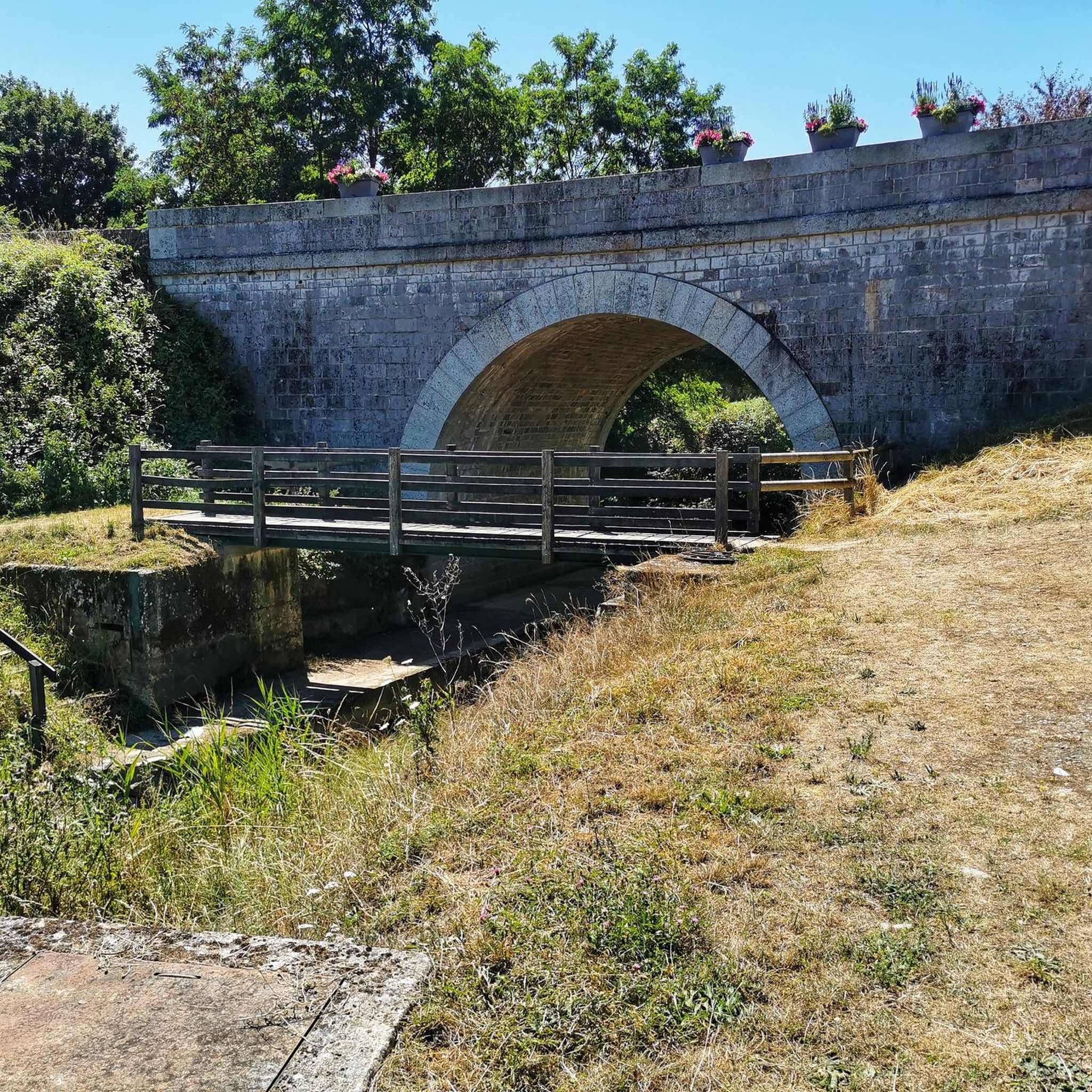
The old bridge at Parné-Sur-Roc is a medieval bridge which spans the Ouette in the village of Parné-sur-Roc. This bridge dates from the 13th century or the 14th century and has seen illustrious people such as King Charles VIII and Madame de Sévigné pass through it. You can start your hike with the church of Parné-sur-Roc, which has a unique tower covered in stones and remarkable murals. The old bridge at Parné-Sur-Roc is a great place to take a break and admire the architecture and nature.
2
0
This fascinating edifice was built on top of a cave in 1849 to protect the statue of the saint therein, Céneré, a 7th-century Benedictine monk. He would have caused the manifestation of the source which springs from the rock at this place. This continuous stream of water from the spring gave the saint the nickname "saint who pisses".
3
0

Cyr and Julitte are figures of saints who have marked Christianity for more than a millennium. Cyr is a 5-year-old child, very mature for his age, who lived in Tarsus, near Antioch (in present-day Turkey), in the 3rd century AD, when the Roman Empire massacred Christians en masse. . During one of those horrific trials where Christians were sentenced to death, Cyr snuck into court running and shouting "I'm a Christian too!". When the judge caught him, he smashed his head against a wall. His mother, Juliette, was also martyred. The horror of their treatment and the heroic hope they demonstrated made them popular as far away as Gaul, especially around Versailles and Nevers. 42 villages bear the name of "Saint-Cyr". see https://nominis.cef.fr/contenus/saint/1329/Saints-Cyr-et-Julitte.html
0
0

The oratory of Saint Céneré is located on the banks of the Erve, one kilometer from the town of Saulges. For 13 centuries, without stopping, the inhabitants of Maine and Anjou come to Saulges around August 15 to celebrate their protector. A spring has been flowing since the 7th century in this oratory built over the cave of its former hermitage. SourceWikipedia
1
0

Open Monday to Sunday from 10 a.m. to 6 p.m.
0
0
Frequently Asked Questions
What historical and cultural sites can I explore in the region?
The area around La Bazouge-de-Chémeré is rich in history. You can visit the 12th-century Church of St. Gervais and St. Protais in the village, known for its unique 16th-century mural. Other notable sites include the Catholic Church - Saints Cyr and Julitte of Argentré, dating from Roman times with a 12th-century fresco, and the Saint Cénéré Oratory, an edifice built in 1849 over a cave with a continuous spring. Don't miss the medieval Old Bridge of Parné-sur-Roc, a 13th or 14th-century structure spanning the Ouette.
Are there natural areas or features to visit near La Bazouge-de-Chémeré?
Yes, the region boasts significant natural beauty. The Espace Naturel Sensible (ENS) of La Bazouge-de-Chémeré is an exceptional site with dry calcareous grasslands and wetlands, home to rare flora like the spider orchid and the last known station of the man orchid in Mayenne. It's also a great place for observing numerous butterfly species and amphibians. The village is also picturesquely situated above the Vaige River Valley, which offers scenic landscapes.
What kind of outdoor activities can I do around La Bazouge-de-Chémeré?
The area is well-suited for various outdoor activities. You can find several hiking circuits that explore the Mayenne countryside and the banks of the Vaige, such as the 'Circuit de Chémerette' and the 'Circuit des Rochers'. For more options, explore hiking routes around La Bazouge-De-Chemeré. There are also running trails and gravel biking routes available.
Are there any family-friendly attractions or activities?
Families can enjoy exploring the Saulges Caves and Prehistory Museum, which offers a unique opportunity to learn about human history from 25,000 years ago and see rock art. The 'Circuit des Rochers' is a 5.98 km hiking loop ideal for families, showcasing local fauna and flora along the Vaige riverbanks. Additionally, the Moulin de Gô, a renovated 15th or 16th-century water mill, provides an interesting cultural and natural setting for all ages.
Where can I go hiking near La Bazouge-de-Chémeré?
You'll find several hiking opportunities. The 'Circuit de Chémerette' is an 8.17 km loop that crosses the Chémerette stream, while the 'Circuit des Rochers' is a 5.98 km loop perfect for families along the Vaige river. For a wider selection of trails, including the 'Oratory Circuit' and routes around the Saint Cénéré Oratory, refer to the hiking guide for La Bazouge-De-Chemeré.
What is the best time to visit La Bazouge-de-Chémeré for outdoor activities?
The Espace Naturel Sensible (ENS) is particularly vibrant during spring and summer when rare orchids bloom and numerous butterfly species are active. Hiking trails are generally enjoyable from spring through autumn, offering pleasant weather for exploring the countryside and riverbanks. Some attractions like the Saulges Caves and Prehistory Museum are open from April to November.
Are there any unique artistic or architectural features in the village?
Beyond the historical church, La Bazouge-de-Chémeré has connections to the Italian-born painter TRIBUS, who resided here after WWII. You can find one of his notable paintings exhibited at the town hall, and a fresco in the former cinema-theater. The village streets themselves offer a charming stroll with perpetual vegetable gardens, orchards, and seasonal flowers.
Can I find any ancient mills in the area?
Yes, the Moulin de Gô is a notable water mill dating from the 15th or 16th century, located on the Erve river. It has been beautifully renovated and is surrounded by a natural environment of green hills, forests, and streams, offering a peaceful setting to enjoy culture and nature.
What do visitors enjoy most about the attractions around La Bazouge-de-Chémeré?
Visitors appreciate the blend of history, nature, and culture. The opportunity to explore ancient sites like the Saulges Caves and historical churches, combined with the natural beauty of the Vaige Valley and the Espace Naturel Sensible, makes for a diverse experience. The hiking trails are also highly valued for their scenic views and connection to local heritage.
Are there any dog-friendly walking options in the region?
Many of the natural trails and circuits around La Bazouge-de-Chémeré, such as those along the Vaige riverbanks, are suitable for walks with dogs. Always ensure your dog is on a leash, especially in sensitive natural areas, and respect local regulations regarding wildlife and other visitors. For specific routes, check the hiking guide for details on individual trails.
What kind of wildlife can I spot in the Espace Naturel Sensible?
The Espace Naturel Sensible (ENS) of La Bazouge-de-Chémeré is a biodiversity hotspot. You might spot rare plant species like the spider orchid and man orchid. The area is also ideal for observing numerous butterfly species, including the rare Alcon blue. Amphibians such as the common spadefoot and midwife toad are present, and in sun-exposed areas, you might even encounter the asp viper.
Most popular routes around La Bazouge-De-Chemeré

Get inspired with the komoot mobile app


Explore more
Still not found the Highlight you’re looking for? See guides of the top attractions in other regions:
