Top 3 Castles around Gilocourt
Castles around Gilocourt are primarily found in the surrounding region, as the village itself features a private 19th-century château and a historically destroyed feudal castle. Gilocourt is a village in the Oise department of France, known for its historical context. The area offers a blend of historical sites and natural landscapes, with notable castles located within a short distance. Visitors seeking grand castles will explore nearby towns.
Best castles around Gilocourt
- The most popular castles is Pierrefonds Castle, a…
Last updated: July 1, 2026
Pierrefonds Castle
Highlight • Castle
Translated by Google •
Tip by

Douye Castle
Highlight • Historical Site
Translated by Google •
Tip by

Sign up now to discover places like this
Get recommendations on the best single tracks, peaks, & plenty of other exciting outdoor places.
Sign up for free
Compiègne Palace - Les Beaux Monts
Highlight (Segment) • Castle
Translated by Google •
Tip by

Start today with a free account
Your next adventure awaits.
Login or Signup



Tips from the Community

This castle is simply magnificent and worth a visit too!!!!
1
0

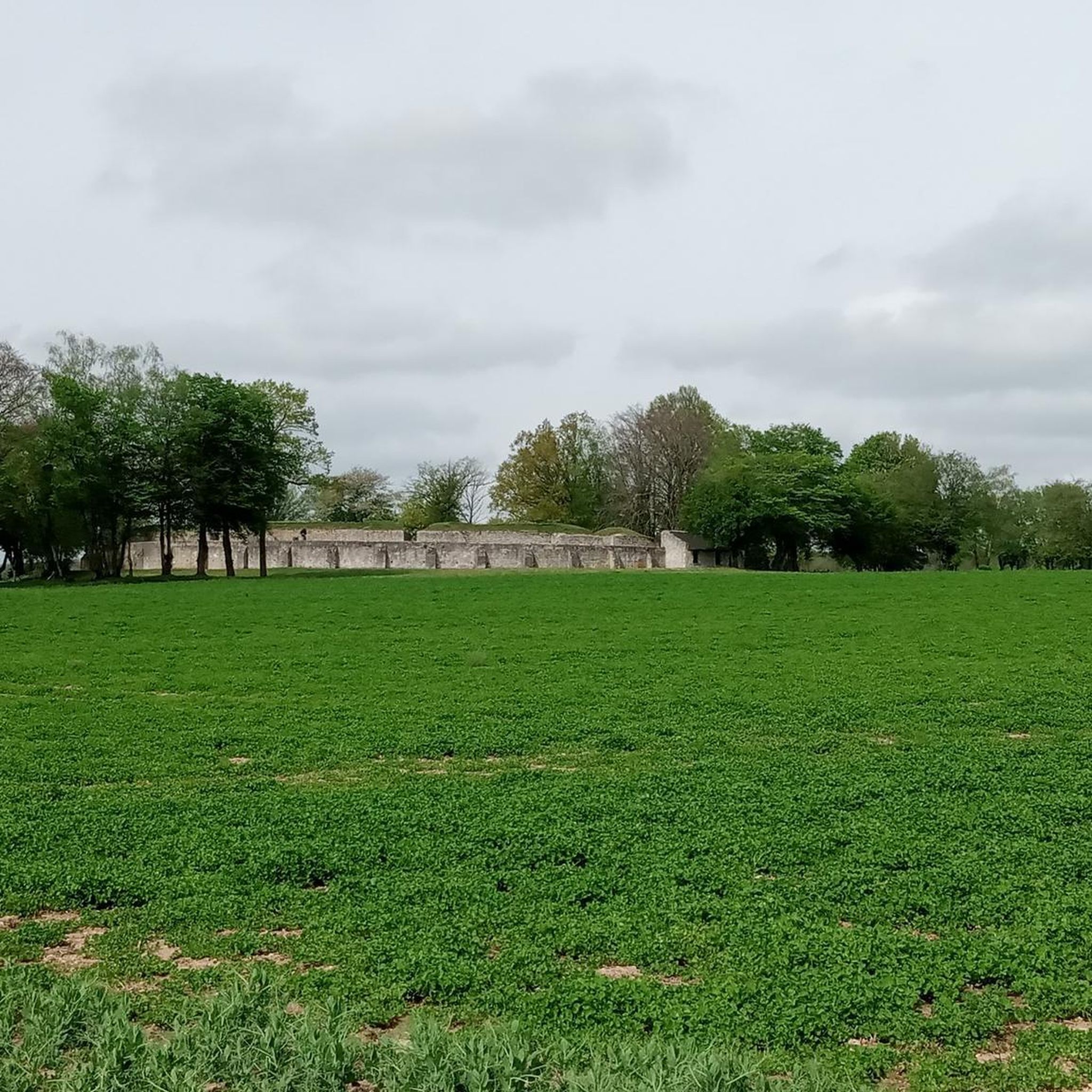
The oldest building within the grounds of the Château de la Douye is what appears to be part of the “Grand Hôtel” built by King John II the Good in 1344 and partially destroyed during the 100 Years' War. John II liked Bethisy which he called his “desert”. He made numerous stays there. The Château de la Douye is more recent. It is described as a composite manor, made up of two buildings at right angles: one very simple, is from the 17th century; the other contains the chapel whose window with flamboyant tracery retains stained glass. At the intersection a 15th century staircase turret. The history of the castle is little known. The first owners seem to have been the Anthonis, lords of Douye. Around 1475, Gilles Anthonis, Lord of Douye, Baron and Vémars, was Notary and Secretary to King Louis XI and hereditary Gruyer of Béthisy, in the forest of Cuise. Subsequently, for example, it was the turn of Berthelemy (1570), Le Doux (1655) and Beaurain (1762). More recently, La Douye welcomed the Missionary Sisters of the Holy Spirit. Numerous works have now completely transformed the interiors. The stained glass window is also more modern. Around 1820 the arms of Charles VI and VII were visible on the turret and in the chapel. Charles VI, the beloved or the madman, king of France from 1380 to 1422. Charles VII, the victorious, king of France from 1422 to 1461.
0
0

The Château de la Douye in Béthisy-Saint-Pierre is a composite manor, formed by two buildings at right angles: one very simple, from the 17th century; the other contains the chapel with flamboyant windows and stained glass. At the intersection there is a 15th century stair turret. The Château de la Douye is surrounded by a large park and faces the two turrets that remain from the medieval castle of King John II the Good, who built the "Grand Hôtel" in 1344 and partially destroyed it during the Hundred Years' War. You can also admire the old mill on the Automne river, which crosses the territory of the commune.
2
0

What a powerful facility! No wonder Napoleon III set up his private residence here. Violet le Duc expanded the medieval fortress into a magnificent castle and if you want to experience it on film, you can see it in "The Man with the Iron Mask" (Leonardo the Caprio). Very worthwhile, and of course surrounded by crowds of tourists.
2
0

Pierrefonds Castle has many stories to tell. It was built towards the end of the 14th century by the Duke of Orléans. Dismantled in the 17th century and left in ruins for years, it was rebuilt on the orders of Napoleon III. The result is a castle with a medieval and defensive appearance.
2
0
A powerful castle complex that has often served as a film set. It towers above the small town by far, but you should rest here and enjoy the atmosphere at the lake, e.g. with an ice cream. A lot of tourism, therefore, one should estimate the time of day well. There is a postcard view on the opposite side of the lake.
3
1

After a period in which public interest declined, the activity has now grown strongly, partly through the acquisition of new works of art and renovation of the park. The castle has served as a film set several times, including for Les Visiteurs and The Messenger: The Story of Joan of Arc. In 2007 the castle was on the route of the Tour de France (3rd stage). Pierrefonds Castle was also used as the setting for the BBC series Merlin as the castle of 'Camelot'.
2
0
The Château de Pierrefonds (French: Château de Pierrefonds) is an imposing fortress near Pierrefonds on the southwest edge of the Forest of Compiègne, north of Paris between Villers-Cotterêts and Compiègne, in the department of l'Oise. The castle shows the main characteristics of the medieval defensive architectural style. The castle of Pierrefonds has been listed as a French historical monument since 1862.
2
0
Frequently Asked Questions
What types of castles can I explore near Gilocourt?
While Gilocourt itself features a private 19th-century château and the historical site of a destroyed feudal castle, the surrounding region offers a diverse range of historical fortifications. You can visit formidable medieval fortresses like Pierrefonds Castle, grand palaces such as Compiègne Palace - Les Beaux Monts, and composite manors like Douye Castle with its 15th-century stair turret.
Are there any family-friendly castles in the Gilocourt area?
Yes, several castles in the region are suitable for families. Pierrefonds Castle is a popular choice, known for its dramatic medieval architecture and history. Douye Castle, with its park and historical remnants, also offers an engaging visit for all ages. Additionally, the viewpoint at Lac de Pierrefonds provides a beautiful, accessible perspective of the castle.
What is the history behind Pierrefonds Castle?
Pierrefonds Castle was originally built in the late 14th century by the Duke of Orléans. After being dismantled in the 17th century and left in ruins, it was extensively rebuilt on the orders of Napoleon III in the 19th century. This restoration resulted in the impressive medieval and defensive appearance you see today, making it a popular filming location.
Can I visit the Château de Gilocourt?
The current Château de Gilocourt is a 19th-century construction and remains a private residence, not accessible to the public. Historically, Gilocourt had a significant feudal castle, but it was destroyed during the French Revolution. For castle visits, you'll need to explore the notable examples in the surrounding towns.
What outdoor activities can I do near these castles?
The area around Gilocourt and its castles offers various outdoor activities. You can find numerous routes for road cycling, gravel biking, and running. For example, there are road cycling routes like the 'View of Pierrefonds Castle – What a castle! loop from Morienval' (Road Cycling Routes around Gilocourt), gravel biking routes such as the 'Champlieu Roman Ruins – Douye Castle loop from Béthisy-Saint-Martin' (Gravel biking around Gilocourt), and running trails like 'The Gallo-Roman ruins of Champlieu — loop — running from Béthancourt-en-Valois' (Running Trails around Gilocourt).
Are there any castles with significant historical gardens or parks nearby?
Yes, the region boasts castles with notable grounds. The Château de la Douye is surrounded by a large park and features remnants of a medieval castle. Further afield, the renowned Château de Chantilly is famous for its extensive grounds and the Jean-Jacques Rousseau park at Château d'Ermenonville.
What is unique about Compiègne Palace - Les Beaux Monts?
Compiègne Palace - Les Beaux Monts is notable for the grand alley created by Napoleon I for Empress Marie-Louise. This impressive pathway offers breathtaking views of Compiègne and its surrounding forest, making it a must-see spot for its historical significance and scenic beauty.
What do visitors appreciate most about the castles in this region?
Visitors frequently appreciate the dramatic architecture and rich history of castles like Pierrefonds Castle, which often serves as a film set. The blend of medieval fortresses, 19th-century châteaux, and historical palaces offers a variety of experiences, from exploring defensive structures to enjoying scenic views and historical parks. The komoot community has shared 40 photos and given 124 upvotes to these highlights.
Are there any viewpoints to admire the castles from a distance?
Yes, the View of Château de Pierrefonds and Saint-Sulpice Church from Lac de Pierrefonds offers a beautiful perspective of Pierrefonds Castle across the lake. It's a great spot to relax and enjoy the atmosphere, perhaps with an ice cream, while taking in the picturesque scene.
Where can I find more information about Gilocourt village itself?
For more details about the charming village of Gilocourt and its local attractions, you can visit the Pays de Valois tourism website: paysdevalois-tourisme.fr.
What is the best time of year to visit the castles around Gilocourt?
While specific opening hours vary by castle, visiting during spring or autumn generally offers pleasant weather for exploring the castle grounds and surrounding areas. These seasons often provide comfortable temperatures for outdoor activities and fewer crowds than peak summer months.
Are there any hidden gem castles in the Gilocourt region?
While not a 'hidden gem' in the sense of being unknown, Douye Castle offers a unique blend of 17th-century architecture and 15th-century elements, including remnants of a medieval castle built by King John II the Good. Its composite nature and historical depth make it a fascinating visit beyond the more widely known sites.
Most popular routes around Gilocourt
Most popular attractions around Gilocourt

Get inspired with the komoot mobile app


Explore more
Looking for the best castles somewhere else? Discover other guides around Gilocourt:
