Attractions and Places To See around Saint-Suliac - Top 20
Best attractions and places to see around Saint-Suliac encompass a range of historical sites and coastal features. The region provides access to significant monuments, including castles and ramparts, alongside scenic beaches. Visitors can explore well-preserved historical structures and enjoy diverse coastal landscapes. Saint-Suliac serves as a starting point for discovering the rich heritage and natural beauty of the area.
Best attractions and places to see around Saint-Suliac
- The most popular attractions is Môle Beach, a beach that offers views of Dinard and nearby islands. It is situated at the foot of the ramparts, providing a location for relaxation.
- Another must-see spot is Saint-Malo Castle, a castle built between the 15th and 18th centuries. This historical monument now houses a museum and is integrated into the city wall.
- Visitors also love Saint-Vincent Gate, a man-made monument providing access to the old town. This double gate, with parts dating from the 18th and 19th centuries, is located near the castle.
- Saint-Suliac is known for its historical sites, beaches, and man-made monuments. The area offers a variety of attractions to see and explore, including family friendly activities.
- The attractions around Saint-Suliac are appreciated by the komoot community, with 448 upvotes and 192 photos contributed by visitors.
Last updated: August 30, 2026
Môle Beach
Highlight • Beach
Showing Translation
Tip by

Saint-Vincent Gate
Highlight • Monument
Translated by Google •
Tip by
Sign up now to discover places like this
Get recommendations on the best single tracks, peaks, & plenty of other exciting outdoor places.
Sign up for free
Saint-Malo Castle
Highlight • Castle
Translated by Google •
Tip by

Esplanade Saint Vincent
Highlight • Other
Translated by Google •
Tip by
Saint-Malo's ramparts
Highlight • Monument
Translated by Google •
Tip by
Sign up for free to discover even more attractions around Saint-Suliac.
Sign up for free
Already have an account?
Start today with a free account
Your next adventure awaits.
Login or Signup

Tips from the Community

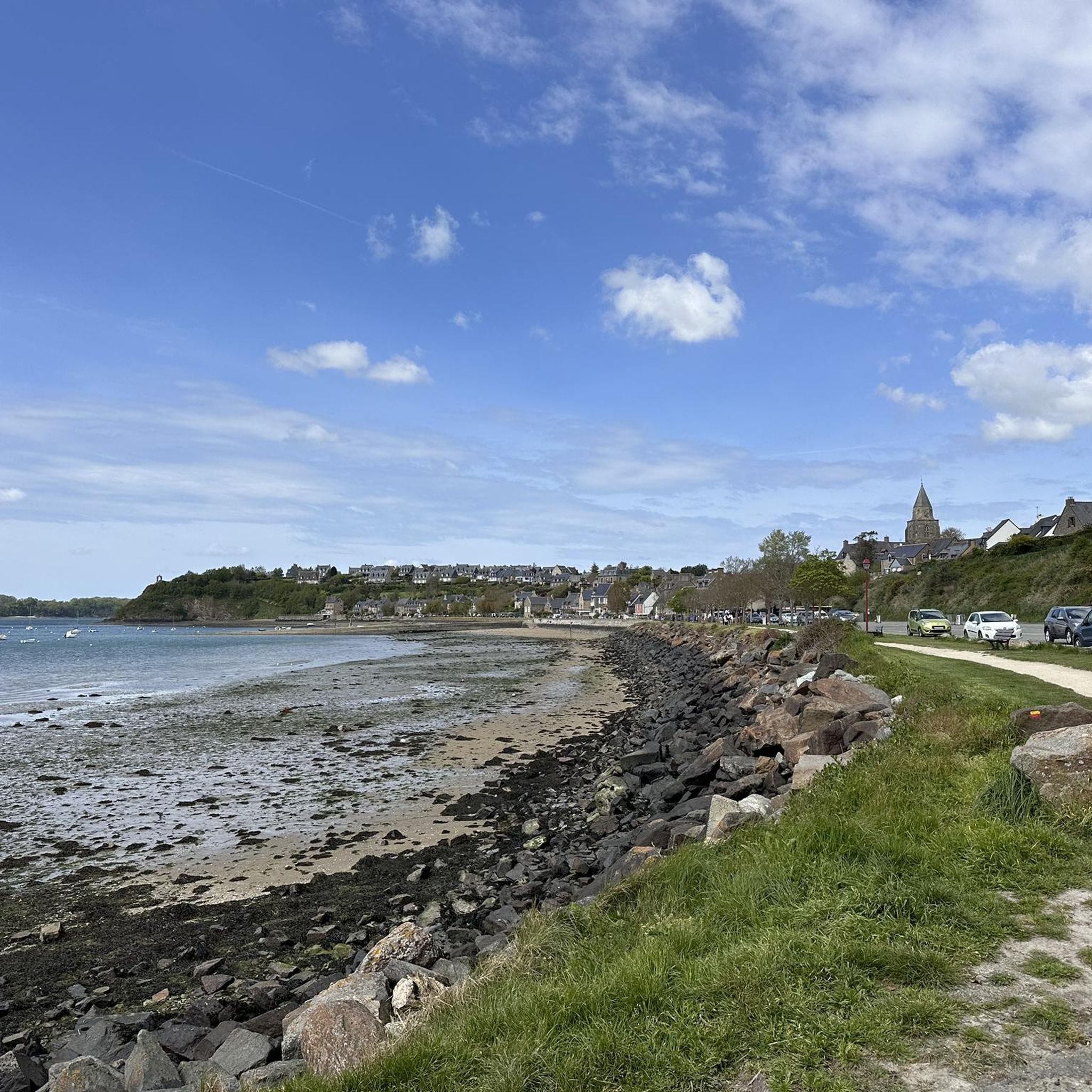
Plage du Môle is a popular sandy beach below the Intra-Muros of Saint-Malo. It is located at the southwestern tip of the fortified city, right at the foot of the mighty city wall and the Saint-Philippe bastion.
1
0

The city walls are among the most important historical structures in the Breton port city. The fortifications that still exist today were built mainly between the 12th and 18th centuries and were expanded and reinforced several times. The approximately two-kilometer-long wall circuit encloses the old town ("Intra-Muros") and offers impressive views of the sea, the offshore islands, and the Breton coast. The defensive walls are reminiscent of the time when Saint-Malo played an important role as a fortified port city and a major center of seafaring.
12
0

Very impressive. Part of the fortification.
1
0
The Porte Saint-Vincent is the main gate to the old town and was built between 1708 and 1710. It is a double-towered Baroque building bearing two coats of arms: one for the Duchy of Brittany and the other for the city of Saint-Malo. The gate connects the city walls to the Esplanade Saint-Vincent and serves as the main entrance to the old town. From here, you can enjoy beautiful views of the harbor, coast, and historic buildings.
14
0
The Esplanade Saint-Vincent is the central square at the main entrance to the Old Town. It is located directly in front of the historic Porte Saint-Vincent and connects the city walls to the Plage du Sillon beach. The square serves as an important meeting point for visitors and locals and is the starting point for many city tours. It houses the Tourist Information Office, a large parking garage (Q-Park Saint-Vincent), public restrooms, charging stations for electric cars, bus stops, and a taxi stand. The esplanade is barrier-free and therefore easily accessible for people with limited mobility. It is also frequently used for markets, concerts, and cultural events.
19
0
The Château de Saint-Malo, also known as the Château de la Duchesse Anne, is located in the heart of the old town (intra-muros). Built between the 15th and 17th centuries, it served both as a military defense and as a representative office for the Dukes of Brittany. It was further fortified under Vauban. The castle suffered damage throughout its history, including during the French Revolution and World War II, but has been restored. Today, it houses the city hall and, until 2019, was home to the Musée d'Histoire de la Ville et du Pays Malouin.
25
0
The Plage du Môle is located at the foot of the mighty fortress walls, in the southwestern part of the historic old town. It is situated in close proximity to the Môle des Noires, a mole approximately 500 meters long that extends far into the sea and protects the harbor. The mole owes its name to the "Roches Noires", the black rocks on which it was built. To the north, the Plage du Môle is bordered by a rock and the walls of the Bastion de la Hollande from the neighboring Plage de Bon Secours.
28
0

The Esplanade Saint-Vincent is a central square in Saint-Malo, stretching between the main entrance to the old town, the Porte Saint-Vincent, and the Plage du Sillon. It serves as a major access point to the historic old town (intra-muros) and houses the Saint-Malo Tourist Office.
9
0
Frequently Asked Questions
Are there family-friendly attractions around Saint-Suliac?
Yes, several attractions are suitable for families. Môle Beach and Sillon Beach are great for relaxation and play. Historical sites like Saint-Malo Castle, Saint-Vincent Gate, and Saint-Malo's ramparts also offer engaging experiences for all ages, often with museums or scenic walks.
What historical sites can I explore near Saint-Suliac?
The region is rich in history. You can visit Saint-Malo Castle, a 15th to 18th-century fortress now housing a museum. The impressive Saint-Malo's ramparts offer historical walks with panoramic views. Don't miss the Saint-Vincent Gate, which provides access to Saint-Malo's old town and dates back to the 18th and 19th centuries.
Are there good walking or hiking trails near Saint-Suliac?
Absolutely. Saint-Suliac is an excellent base for walking and hiking. You can find a variety of trails, including the moderate 13 km "Saint-Suliac Peninsula Trail" or easier options like the 5.5 km "Mont Garrot Vineyards – Moustache ice cream loop". For more options, explore the Hiking around Saint-Suliac guide.
What natural features or viewpoints should I visit?
The area boasts beautiful coastal natural features and viewpoints. Môle Beach offers views of Dinard and nearby islands. Sillon Beach is a vast sandy expanse with a long promenade. The Saint-Malo's ramparts provide remarkable views over the port and the city.
Can I find easy walks suitable for all fitness levels?
Yes, there are easy walking options available. The "Mont Garrot Vineyards – Moustache ice cream loop" is an easy 5.5 km trail starting from Saint-Suliac. Another easy option is the "Virgin of Grainfollet – Saint-Suliac loop" at 3.3 km. These are perfect for a relaxed stroll. You can find more details in the Hiking around Saint-Suliac guide.
What outdoor activities can I do near Saint-Suliac?
Beyond hiking, Saint-Suliac offers opportunities for various outdoor activities. You can explore numerous MTB Trails, ranging from moderate to difficult, such as the "Beauchet Tidal Mill – Saint-Suliac loop". There are also several Running Trails, including loops around Saint-Suliac itself.
What is the best time to visit Saint-Suliac attractions?
The best time to visit Saint-Suliac and its surrounding attractions is generally during the spring (April-June) and early autumn (September-October). During these periods, the weather is pleasant for exploring, and the crowds are typically smaller than in the peak summer months. Summer (July-August) is also popular, especially for beach activities, but can be busier.
Are there any circular walks around Saint-Suliac?
Yes, there are several circular walks. For instance, the "Saint-Suliac – Saint-Suliac loop" is a moderate 7.3 km running trail that can also be enjoyed as a walk. Another option is the "Vierge de Grainfollet – La Pointe du Puits loop" for hiking, which is about 12.9 km. Check the Hiking around Saint-Suliac guide for more circular routes.
What do visitors enjoy most about the attractions near Saint-Suliac?
Visitors particularly appreciate the blend of historical charm and natural beauty. The well-preserved Saint-Malo's ramparts offer stunning views and a sense of history. The beaches, like Môle Beach, are loved for their scenic locations at the foot of ramparts and views of the surrounding islands. The overall atmosphere of the old town accessed via Saint-Vincent Gate is also highly rated.
Are there any hidden gems or less-known spots worth visiting?
While the main attractions are well-known, exploring the smaller coastal paths and villages along the Rance estuary can reveal charming, less-crowded spots. The village of Saint-Suliac itself, recognized as one of France's most beautiful villages, offers a picturesque experience away from the larger crowds of Saint-Malo. Discovering local markets and small chapels in the countryside can also be rewarding.
What should I wear for hiking or walking in the Saint-Suliac area?
For hiking and walking, it's advisable to wear comfortable, layered clothing suitable for varying weather conditions, as coastal weather can change quickly. Sturdy walking shoes or hiking boots are recommended, especially for longer trails or uneven terrain. A waterproof jacket is also a good idea, even outside of winter, due to potential rain or sea spray.
Are there options for day trips from Saint-Suliac?
Saint-Suliac is ideally located for day trips to explore more of Brittany. Saint-Malo, with its walled city and beaches, is just a short drive away. Dinard, known for its elegant villas and seaside promenade, is also easily accessible. Further afield, you could visit Dinan, a medieval town, or even Mont Saint-Michel, a UNESCO World Heritage site, though that would be a longer day trip.
Most popular routes around Saint-Suliac
Most popular attractions around Saint-Suliac

Get inspired with the komoot mobile app


Explore more
Still not found the Highlight you’re looking for? See guides of the top attractions in other regions:
