The best road cycling routes around Saint-Mard
4.1
(22)
691
riders
83
rides
Road cycling around Saint-Mard offers a network of routes through the French countryside, characterized by rolling hills and historical landmarks. The region features a mix of open fields, small villages, and areas with moderate elevation changes, providing varied terrain for road cyclists. Routes often pass by significant sites such as abbeys and churches, integrating cultural interest with the natural landscape.
Best road cycling routes around Saint-Mard
- The most popular road cycling route is Ruins of Vauclair Abbey – Vauclair Abbey…
Last updated: May 8, 2026
4.8
(4)
174
riders
64.9km
03:13
790m
790m
Moderate road ride. Good fitness required. Some segments of this route may be unpaved and difficult to ride.
2.0
(1)
17
riders
51.0km
02:20
540m
540m
Moderate road ride. Good fitness required. Mostly well-paved surfaces and easy to ride.

Sign up for free
4.8
(4)
16
riders
54.1km
02:14
320m
320m
Moderate road ride. Good fitness required. Mostly well-paved surfaces and easy to ride.
6
riders
48.7km
02:07
440m
440m
Moderate road ride. Good fitness required. Some segments of this route may be unpaved and difficult to ride.
5
riders
76.0km
03:20
650m
650m
Moderate road ride. Good fitness required. Mostly well-paved surfaces and easy to ride.
Get access to more routes and recommendations from other explorers.
Sign up for free
Already have an account?
Our route recommendations are based on thousands of hikes, rides, and runs completed by other people on komoot.
Start today with a free account
Your next adventure awaits.
Login or Signup
Tips from the Community

An Art Deco church, particularly representative of the revival of sacred art in the 1920s. A masterpiece among the churches of the Reconstruction period, visitors will be captivated by the frescoes, mosaics, stained-glass windows and superb bell tower supported by angels. Built between 1928 and 1932 under the direction of architect Paul-Albert Müller, the church is both modern and back to basics. The use of reinforced concrete, a material already used by some architects before the war, is combined with early Christian symbols such as the fish or the pelican
0
0

Marcel Duquenoy; Small memorial stone along the D18 between the Ferme de la Royère and the Ferme de Malval. It commemorates Marcel Duquenoy, a 20-year-old aspiring officer from Calais in the 350th Infantry Regiment, who was killed in the wood opposite the monument on 6 May 1917 during the Battle of La Malmaison. The inscription is from his parents: “En souvenir de notre fils disparu dans le bois en face” – a personal tribute in a landscape marked by collective loss.
6
0
Jean Dauly Memorial; This sober monument commemorates Jean Dauly, a soldier in the 350th Infantry Regiment, who was killed on 6 May 1917 at the age of 20 during heavy fighting in the forest opposite the current location. It stands along the D18 between the Ferme de La Royère and the Ferme de Malval. The inscription bears witness to the personal loss: “Regretté de sa mère, de toute sa famille et de ses comarades. Priez pour lui”.
7
0
During the First World War, Cerny-en-Laonnois was a strategic point along the Chemin des Dames, a ridge fiercely contested by French and German troops. In September 1914, the village was taken by the Germans, who used it as a defensive post. They dug deep underground networks in the limestone, which served as shelters and munitions stores. In the spring of 1917, the area became the scene of the Nivelle Offensive, a large-scale French attack that resulted in heavy losses and eventually led to mutinies within the French army. Cerny-en-Laonnois was completely destroyed by artillery fire and fighting. After the war, the village was rebuilt a little further south. Today, the military cemeteries, the memorial chapel and the “Lanterne des Morts” bear witness to the immense human suffering that took place here.
6
0

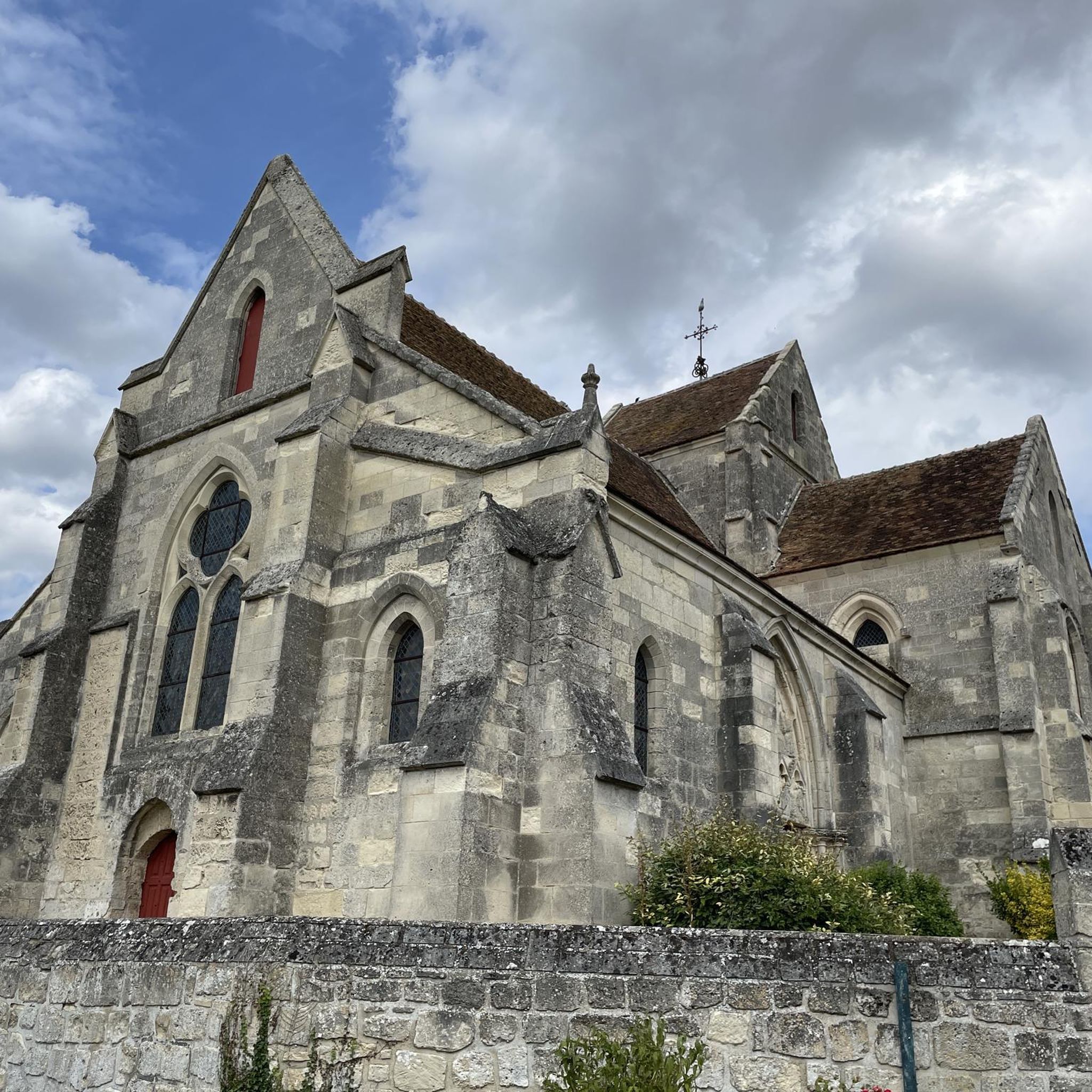
A superb church to see, at the top of a good climb.
0
0

Magnificent and impressive church to discover and for mountain bikers there are marked routes.
0
0

Frequently Asked Questions
How many road cycling routes are available around Saint-Mard?
There are over 80 road cycling routes around Saint-Mard, offering a wide variety of options for different skill levels and preferences.
Are there easy road cycling routes suitable for beginners in Saint-Mard?
Yes, Saint-Mard offers 17 easy road cycling routes. These routes typically feature gentler terrain, making them ideal for beginners or those looking for a relaxed ride through the French countryside.
What kind of terrain can I expect on road cycling routes in Saint-Mard?
Road cycling around Saint-Mard is characterized by rolling hills and open countryside. The region features a mix of open fields, small villages, and areas with moderate elevation changes, providing varied terrain for cyclists.
Are there any long-distance road cycling routes near Saint-Mard?
Several routes offer longer distances. For example, the Saint-Médard Church loop from Braine is a moderate 41.2 miles (66.3 km) path, and the Ruins of Vauclair Abbey – Vauclair Abbey loop from Moussy-Verneuil covers 40.5 miles (65.2 km).
What historical landmarks can I see along the road cycling routes?
Many routes pass by significant historical sites. You might encounter abbeys, churches, and other cultural points of interest. For instance, the Saint-Médard Church – Military cemetery loop from Les Septvallons leads through historical sites and rural landscapes.
What do other road cyclists enjoy most about cycling in Saint-Mard?
The area is highly rated by the komoot community, with an average score of 4.2 stars from over 19 reviews. Cyclists often praise the varied terrain, the integration of historical landmarks, and the scenic views of the countryside.
Are there any challenging road cycling routes for experienced riders?
Yes, Saint-Mard also offers 2 difficult road cycling routes for those seeking a greater challenge. These routes typically feature more significant elevation gains and more demanding terrain.
Can I find circular road cycling routes in Saint-Mard?
Many of the routes around Saint-Mard are designed as loops, allowing you to start and finish at the same point. Examples include the Viewpoint – Bike shop - Cycle Fossé loop from Braine and the Village Church loop from Bourg-et-Comin.
What are some notable attractions to explore near the cycling routes?
Beyond the routes themselves, you can explore attractions like the Cerny-en-Laonnois, chapelle & Lanterne des Morts, the Fort of Condé, or the Malmaison German Cemetery, which are all accessible from the Saint-Mard area.
What is the typical duration for road cycling routes in this region?
Route durations vary depending on distance and difficulty. For instance, a moderate route like the Ruins of Vauclair Abbey – Vauclair Abbey loop from Moussy-Verneuil typically takes around 3 hours 11 minutes, while shorter routes can be completed in less time.
Are there routes that pass through villages or offer opportunities for cafe stops?
Yes, many routes are designed to pass through small villages, offering opportunities to stop for refreshments or to experience local life. The region's network integrates cultural interest with the natural landscape, making such stops a natural part of the ride.
Most popular attractions around Saint-Mard

Get inspired with the komoot mobile app


Explore more
Browse the best Road cycling routes in other regions.
