The best cycling routes around Rouilly-Saint-Loup
4.3
(1173)
6,690
riders
308
rides
Touring cycling routes around Rouilly-Saint-Loup are primarily situated within the expansive Forêt d'Orient Regional Natural Park, characterized by diverse landscapes including forests, hedged farmland, and rolling hills. The region features three major artificial lakes: Lac d'Orient, Lac Amance, and Lac du Temple, which offer picturesque and tranquil environments. Cycling paths, such as the Vélovoie, wind around these lakes and through the surrounding forests, providing varied terrain for cyclists. The Aube Valley also contributes to the area's natural beauty, offering routes…
Last updated: October 18, 2026
4.0
(4)
33
riders
Easy bike ride. Mostly paved surfaces.
4.1
(8)
37
riders
Easy bike ride. Mostly paved surfaces.

4.5
(2)
20
riders
15.7km
00:53
30m
30m
Easy bike ride. Mostly paved surfaces.
3.0
(2)
19
riders
Easy bike ride. Mostly paved surfaces.
4.5
(2)
13
riders
Easy bike ride. Mostly paved surfaces.
Get access to more routes and recommendations from other explorers.
Already have an account?
Our route recommendations are based on thousands of hikes, rides, and runs completed by other people on komoot.
Start today with a free account
Your next adventure awaits.


Tips from the Community

and the garden is also worth a stop. Many plants are very well labeled.
0
0

The Abbey of Notre Dame aux Nonnains (French: Abbaye de Notre-Dame-aux-Nonnains: Abbey of Our Lady of the Nuns), also called the Royal Abbey of Our Lady of Troyes (French: Abbaye royale de Notre-Dame de Troyes), was a convent founded before the 7th century in Troyes, France. The non-cloistered canonesses became wealthy and powerful in the Middle Ages. In 1266–68 they defied the pope and used force to delay construction of the collegiate Church of St Urbain. They were excommunicated as a result. Later the abbey adopted a strictly cloistered rule and the nuns became impoverished. Work started on building a new convent in 1778 but was only partially completed before the French Revolution (1789–99). The abbey was closed in 1792 and the church was demolished. The convent became the seat of the prefecture of Aube. (Wikipedia)
1
0

Sculpture by the Hungarian sculptor Andreas Lapis (2012).
1
0
The 12th century Hôtel de Ville is located in the heart of the historic district of Troyes and was built by Pierre Cottard. The building is built in the style of Louis XIII and the façade with the statue of a "helmeted Minerva" has been listed as a monument historique since 1932.
3
0
In 1482, King Louis XII agreed to entrust the management of the city of Troyes to a mayor, assisted by aldermen. These functions were carried out by magistrates or merchants, usually on a voluntary basis. The first mayor of Troyes was Edmond Le Boucherat. Before him, an advisory council sat occasionally in various places in the heart of the city, such as the chapter of Saint-Pierre or the former convent of Cordeliers. In 1479, the council moved out of this aristocratic district to live permanently in the "corps du bouchon" and rented a house near the church of Saint-Urbain, then known as the Chambre de l'Échevinage, which was equipped with a bell to call meetings. In 1494, the city council bought the Hôtel de Mesgrigny, a large building from the 15th century, and in the 17th century decided to build a new city hall. Louis XIII gave permission to use a small part of the income from the tax on wine and salt. The building was therefore built gradually and was not finished until around 1672. In 1933 and 1937, two wings were added to the back by the architect F. Balley. The central facade, with its blue Tournai marble columns, has a niche with a helmeted Minerva, replacing a statue of Louis XIV that was destroyed during the French Revolution. On the monumental mantelpiece in the council chamber, there is still a large wooden medallion with the effigy of this king, sculpted in 1687 by the Trojan François Girardon (1628-1715). Another memorable trace of the Revolution on the facade is the revolutionary motto that was displayed on all French town halls at the time: "Unité, Indivisibilité de la République, Liberté, Égalité, Fraternité ou la Mort" ("Unity, Indivisibility of the Republic, Liberty, Equality, Fraternity or Death").
3
0
"Wait for me" - Between Rue de la Cité and Rue Clemenceau This humorous and poetic work by the same sculptor as "La Ribambelle joyeuse", the Belgian artist Tom Frantzen, known for his creations that cross the line between the real and the fantastic, was installed on the old swing bridge at the end of 2018 and shows a small dog scaring a group of birds, causing them to fly away. The group is reminiscent of the cranes that fly over the Aube department every year. The artist has worked in harmony with the site, so that the movement fits in and adds lightness to these heavy bronze sculptures.
3
0
Troyes Cathedral (in French: Cathédrale Saint-Pierre-et-Saint-Paul de Troyes) is the main religious building in the French city of Troyes. The cathedral is dedicated to the holy apostles Peter and Paul. Construction of the cathedral began in 1208 and was not completed until the 17th century, in the Gothic style. The church is the seat of the bishopric of Troyes in the Roman Catholic Church. In 1420, the cathedral was the solemn meeting place for the signing of the Treaty of Troyes. Nine years later, Joan of Arc visited the cathedral when she accompanied King Charles VII to Reims. The building was protected as immovable heritage and was given the status of a French classified monument historique in 1862.
3
0

The impressive Troyes Cathedral was begun in the 12th century and completed in the 17th century. The structure is truly impressive. Don't miss a visit to the interior.
1
0
Frequently Asked Questions
How many touring cycling routes can I find around Rouilly-Saint-Loup?
There are over 300 touring cycling routes available around Rouilly-Saint-Loup. These routes offer a variety of experiences, from easy lakeside loops to more challenging paths through forests and farmland within the Forêt d'Orient Regional Natural Park.
What makes touring cycling around Rouilly-Saint-Loup unique?
The touring cycling experience in Rouilly-Saint-Loup is unique due to its setting within the expansive Forêt d'Orient Regional Natural Park. Cyclists can explore diverse landscapes, including humid Champagne regions, hedged farmland, and rolling hills, all while enjoying the picturesque views of the three major artificial lakes: Lac d'Orient, Lac Amance, and Lac du Temple. The dedicated Vélovoie cycling path around the lakes is a particular highlight.
What do other cyclists say about the touring routes in this area?
The touring cycling routes around Rouilly-Saint-Loup are highly regarded by the komoot community, with an average rating of 4.3 stars from over 550 reviews. Cyclists often praise the tranquil environment, the well-maintained paths, and the scenic beauty of the lakes and forests.
Are there touring cycling routes suitable for beginners or families?
Yes, the region offers many easy touring cycling routes perfect for beginners and families. The paths around the lakes of the Forêt d'Orient, such as the Velovoie – Historic Center of Troyes loop from Saint-Parres-aux-Tertres, are particularly popular for their gentle terrain and dedicated cycling infrastructure, ensuring a safe and enjoyable experience for all ages.
Can I find circular touring cycling routes in the region?
Absolutely. Many touring cycling routes around Rouilly-Saint-Loup are designed as loops, allowing you to start and finish at the same point. An example is the Velovoie loop from Ruvigny, which takes you through the local countryside.
What is the best time of year for touring cycling around Rouilly-Saint-Loup?
The best time for touring cycling around Rouilly-Saint-Loup is generally from spring to early autumn. During these seasons, the weather is pleasant, and the natural beauty of the Forêt d'Orient Regional Natural Park and its lakes is at its peak. Summer offers warm conditions ideal for combining cycling with water activities on the lakes.
Are there options for parking near the cycling routes, especially around Lac d'Orient?
Yes, there are various parking options available, particularly around the major lakes within the Forêt d'Orient Regional Natural Park, such as Lac d'Orient. These areas are well-equipped to accommodate visitors looking to access the cycling paths and other outdoor activities.
Is public transport available to access the cycling trails around Rouilly-Saint-Loup?
While Rouilly-Saint-Loup itself is a smaller commune, public transport options to access the wider cycling network in the Aube department, especially around the Forêt d'Orient Regional Natural Park, may be limited. It's advisable to check local bus schedules or consider driving to a starting point with ample parking, such as near the lakes or larger towns like Troyes, which are well-connected to the cycling routes.
Are there any touring cycling routes that pass by interesting historical sites or landmarks?
Yes, several touring cycling routes offer a blend of natural beauty and historical exploration. For instance, the Old half-timbered houses – Historic Center of Troyes loop from Verrières takes you through the historic center of Troyes, where you can admire traditional half-timbered houses and visit landmarks like the Cathedral of Saint Peter and Saint Paul or the Cats' Alley.
Can I find places to eat or stay near the cycling routes?
The area around the Forêt d'Orient Regional Natural Park and its lakes offers various options for refreshments and accommodation. You'll find cafes and restaurants in nearby villages and towns, especially around Lac d'Orient, catering to cyclists and other visitors. For accommodation, there are guesthouses, hotels, and campsites available throughout the region.
Are there any touring cycling routes that offer views of the lakes?
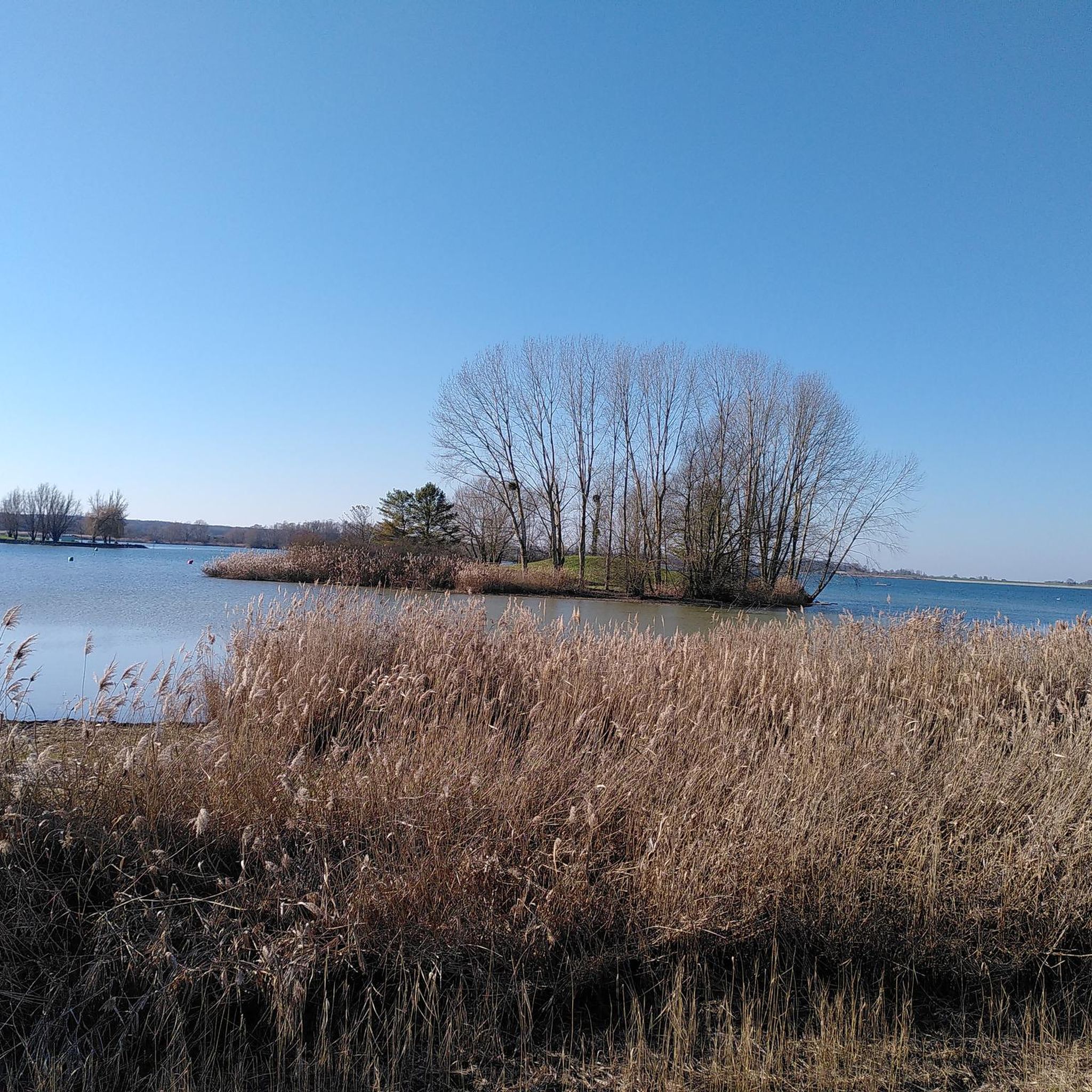
Many touring cycling routes in the region provide stunning views of the lakes. The dedicated Vélovoie path, in particular, winds around Lac d'Orient, Lac Amance, and Lac du Temple, offering continuous scenic vistas of the water and surrounding forests. The Lac du Temple is especially known for its unspoiled natural setting and birdwatching opportunities.
Are the touring cycling trails around Rouilly-Saint-Loup dog-friendly?
Many of the natural paths and greenways within the Forêt d'Orient Regional Natural Park are suitable for cycling with dogs, provided they are kept on a leash and you adhere to local regulations regarding protected areas. It's always recommended to check specific trail rules and ensure your dog is comfortable with the distance and terrain.
Most popular routes around Rouilly-Saint-Loup
Most popular attractions around Rouilly-Saint-Loup

Get inspired with the komoot mobile app


Explore more
Browse the best Cycling routes in other regions.
