The best cycling routes around Creney-Près-Troyes
4.4
(499)
3,218
riders
275
rides
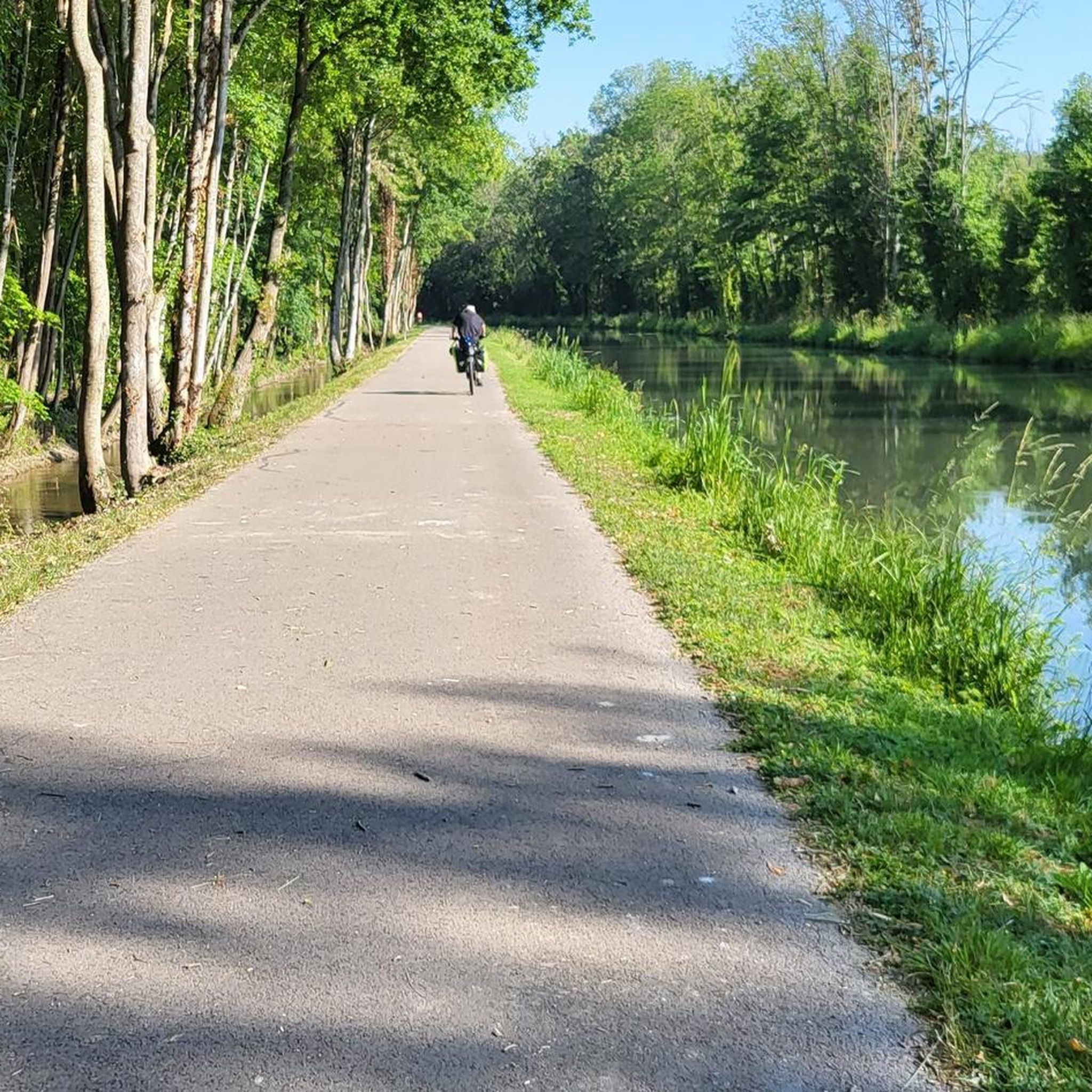
Touring cycling around Creney-Près-Troyes offers routes through the agricultural plains of Champagne, featuring traditional villages and minimal elevation changes. The area provides well-developed cycling infrastructure, including greenways along the Haute-Seine canal. These paths extend towards the expansive lakes of the Orient Forest Regional Nature Park, offering varied scenery from tranquil tree-lined routes to open landscapes.
Best touring cycling routes around Creney-Près-Troyes
- The most popular touring cycling route is Beautiful half-timbered houses – Historic Center of Troyes loop from Troyes,…
Last updated: July 18, 2026
4.4
(7)
31
riders
Easy bike ride. Great for any fitness level. Mostly paved surfaces. Suitable for all skill levels.
3.0
(2)
34
riders
6.18km
00:22
20m
20m
Easy bike ride. Great for any fitness level. Mostly paved surfaces. Suitable for all skill levels.

Sign up for free
3.0
(1)
15
riders
5.29km
00:18
10m
10m
Easy bike ride. Great for any fitness level. Mostly paved surfaces. Suitable for all skill levels.
4.0
(2)
5
riders
22.1km
01:19
70m
70m
Easy bike ride. Great for any fitness level. Mostly paved surfaces. Suitable for all skill levels.
5.0
(1)
10
riders
Easy bike ride. Great for any fitness level. Mostly paved surfaces. Suitable for all skill levels.
Get access to more routes and recommendations from other explorers.
Sign up for free
Already have an account?
Our route recommendations are based on thousands of hikes, rides, and runs completed by other people on komoot.
Start today with a free account
Your next adventure awaits.
Login or Signup


Tips from the Community

The 12th century Hôtel de Ville is located in the heart of the historic district of Troyes and was built by Pierre Cottard. The building is built in the style of Louis XIII and the façade with the statue of a "helmeted Minerva" has been listed as a monument historique since 1932.
3
0
In 1482, King Louis XII agreed to entrust the management of the city of Troyes to a mayor, assisted by aldermen. These functions were carried out by magistrates or merchants, usually on a voluntary basis. The first mayor of Troyes was Edmond Le Boucherat. Before him, an advisory council sat occasionally in various places in the heart of the city, such as the chapter of Saint-Pierre or the former convent of Cordeliers. In 1479, the council moved out of this aristocratic district to live permanently in the "corps du bouchon" and rented a house near the church of Saint-Urbain, then known as the Chambre de l'Échevinage, which was equipped with a bell to call meetings. In 1494, the city council bought the Hôtel de Mesgrigny, a large building from the 15th century, and in the 17th century decided to build a new city hall. Louis XIII gave permission to use a small part of the income from the tax on wine and salt. The building was therefore built gradually and was not finished until around 1672. In 1933 and 1937, two wings were added to the back by the architect F. Balley. The central facade, with its blue Tournai marble columns, has a niche with a helmeted Minerva, replacing a statue of Louis XIV that was destroyed during the French Revolution. On the monumental mantelpiece in the council chamber, there is still a large wooden medallion with the effigy of this king, sculpted in 1687 by the Trojan François Girardon (1628-1715). Another memorable trace of the Revolution on the facade is the revolutionary motto that was displayed on all French town halls at the time: "Unité, Indivisibilité de la République, Liberté, Égalité, Fraternité ou la Mort" ("Unity, Indivisibility of the Republic, Liberty, Equality, Fraternity or Death").
3
0
Address: 16 Rue Aristide Briand, 10000 Troyes, France Phone: +33 3 25 82 62 70 Opening hours: Tuesday 09:00–18:00 Wednesday 09:00–18:00 Thursday 09:00–18:00 Friday 09:00–18:00 Saturday 09:00–18:00 Sunday 10:00–13:00, 14:00–18:00 Monday 09:00–18:00
3
0
This Gothic church was built in the 13th century and rebuilt in the 16th century. It is 77 m long, with a 17.3 m wide nave and a 9 m high aisle. The choir is 24.7 meters wide and 21 meters high. It has three naves and eight bays, the first three dating from the 16th century and the next five from the 13th century. It is the site of an important historical event, as it was in this church that King Henry V of England married Catherine of Valois, daughter of King Charles VI of France and Isabeau of Bavaria. It was partially destroyed, the south and west, by the fire of 1524 and rebuilt after this event. The clock on the eponymous tower dates from 1789. It lost the top of its tower during the night of August 23-24, 1911, when it collapsed onto the buildings on Rue Mignard. The Guillemette bell had been cast in 1524, and the other dated from 1902. The church was weakened and had to be supported by wooden and plaster props on the pillar legs. The building was listed as a historic monument in 1840.[1]
3
0
Troyes Cathedral (in French: Cathédrale Saint-Pierre-et-Saint-Paul de Troyes) is the main religious building in the French city of Troyes. The cathedral is dedicated to the holy apostles Peter and Paul. Construction of the cathedral began in 1208 and was not completed until the 17th century, in the Gothic style. The church is the seat of the bishopric of Troyes in the Roman Catholic Church. In 1420, the cathedral was the solemn meeting place for the signing of the Treaty of Troyes. Nine years later, Joan of Arc visited the cathedral when she accompanied King Charles VII to Reims. The building was protected as immovable heritage and was given the status of a French classified monument historique in 1862.
3
0

The impressive Troyes Cathedral was begun in the 12th century and completed in the 17th century. The structure is truly impressive. Don't miss a visit to the interior.
1
0

The cathedral in Troyes was dedicated to Saints Peter and Paul (SAINTS PIERRE et PAUL), also known as the "Prince of the Apostles." Their common feast day in the calendar of saints is June 29th. * Simon, nicknamed Peter (Rock), was a fisherman on the Sea of Galilee when he, along with his brother Andrew, was called by Jesus Christ to be a "fisher of men." According to Catholic understanding, he is the highest apostle, and the two-millennia-long line of popes—currently Francis—follows his succession. In statues and paintings, Peter is almost always depicted with two keys in his hand; this attribute refers to the biblical passage in Matthew: "I will give you the keys of the kingdom of heaven; whatever you bind on earth will be bound in heaven, and whatever you loose on earth will be loosed in heaven." (Chapter 16, Verse 19). * Paul was initially an opponent of the Christian movement and, unlike the other apostles, was not called to the apostleship by Jesus Christ during his lifetime. Instead, he was converted later with the famous "Damascus Experience." His attribute is the sword with which he was executed. According to Roman law at the time, such a sentence was a "privilege" (a quick death, not a long, painful death struggle like other forms of execution) reserved for the citizens of Rome.
3
1

Troyer is famous for its half-timbered houses. Some of these houses are incredibly crooked. You have to see them! A feast for the eyes!
1
0
Frequently Asked Questions
How many touring cycling routes are available around Creney-Près-Troyes?
There are over 260 touring cycling routes in the Creney-Près-Troyes area. These routes offer a variety of experiences, from leisurely rides through agricultural plains to paths along greenways and canals.
What is the general difficulty level of touring cycling routes in the area?
The majority of touring cycling routes around Creney-Près-Troyes are considered easy or moderate. Specifically, there are over 130 easy routes and more than 100 moderate routes, making the area accessible for various skill levels. About 37 routes are rated as difficult for those seeking a greater challenge.
What do other touring cyclists say about the routes in Creney-Près-Troyes?
The touring cycling routes in Creney-Près-Troyes are highly regarded by the komoot community, holding an average rating of 4.4 stars from nearly 400 reviews. Over 2,800 touring cyclists have used komoot to explore the diverse terrain, often praising the tranquil greenways and scenic paths.
Are there any easy or beginner-friendly touring cycling routes suitable for families?
Yes, the region is well-suited for families and beginners, with many easy routes. The greenways, such as those along the Haute-Seine canal or leading to the Great Lakes of the Orient Forest, offer tranquil, dedicated paths with minimal elevation changes, ideal for leisurely rides. An example of an easy route is the Mooie vakwerkhuizen – Old half-timbered houses loop from Pont-Sainte-Marie, which is just over 3 miles (5.6 km) long.
Are there any circular touring cycling routes around Creney-Près-Troyes?
Many of the touring cycling routes in the area are designed as loops, allowing you to start and end in the same location. For instance, the Trevois Canal – Beautiful half-timbered houses loop from Troyes is an easy 13.4 miles (21.6 km) circular route that takes you along the canal and past historic architecture.
What kind of landscapes can I expect to see while cycling in this region?
Touring cyclists in Creney-Près-Troyes can expect diverse landscapes. You'll ride through the fertile agricultural plains of Champagne, characterized by traditional villages. Routes also lead to the expansive lakes within the Orient Forest Regional Nature Park and along the tranquil, tree-lined Haute-Seine canal, where you might spot local wildlife.
What are some notable attractions or landmarks I can see along the touring cycling routes?
While cycling, you can explore several cultural and historical points of interest. In nearby Troyes, you can visit the impressive Cathedral of Saint Peter and Saint Paul, wander through the charming Cats' Alley, or admire the Saint-Jean-au-Marché Church and the Church of Saint Mary Magdalene. The Troyes Town Hall is also a notable landmark.
Are there any themed cycling circuits available?
Yes, for those interested in cultural and historical themes, cycling circuits are available in the 'Renoir country' of the Côte des Bar. This area is known for its connection to the artist, local history, and Champagne production, offering a unique blend of cycling and cultural exploration.
What is the best time of year for touring cycling in Creney-Près-Troyes?
The region is generally pleasant for cycling from spring through autumn. Summer offers warm weather ideal for exploring the greenways and lakes, while spring and early autumn provide milder temperatures and beautiful scenery, especially through the agricultural plains and vineyards.
Is public transport available to access the cycling routes?
Creney-Près-Troyes is located near Troyes, which serves as a hub for the region. While specific public transport options directly to every route starting point may vary, Troyes itself is well-connected, and many routes can be accessed from or near urban centers.
Are there any challenging touring cycling routes for experienced riders?
While the area is predominantly easy to moderate, there are approximately 37 routes rated as difficult. These routes may include unpaved sections or more significant elevation changes, particularly as you venture into the hillsides of Champagne, offering a greater challenge for experienced touring cyclists.
Can I find places to eat or drink along the cycling routes?
Many routes pass through or near traditional farming villages and towns like Troyes, where you can find cafes, restaurants, and local shops. The themed circuits in the 'Renoir country' and Champagne production areas also offer opportunities to stop and enjoy local specialties.
Most popular routes around Creney-Près-Troyes
Most popular attractions around Creney-Près-Troyes

Get inspired with the komoot mobile app


Explore more
Browse the best Cycling routes in other regions.
