Attractions and Places To See around Penol - Top 20
Best attractions and places to see around Penol include a range of historical sites, castles, and natural viewpoints. The region offers opportunities to explore medieval architecture and scenic landscapes. Visitors can discover sites with significant historical backgrounds and panoramic views. Penol provides a diverse selection of places for those interested in history and outdoor exploration.
Best attractions and places to see around Penol
- The most popular attractions is Revel washhouse, an other man-made structure and historical site. This site is part of a former medieval village, offering a glimpse into its historical occupation and architecture.
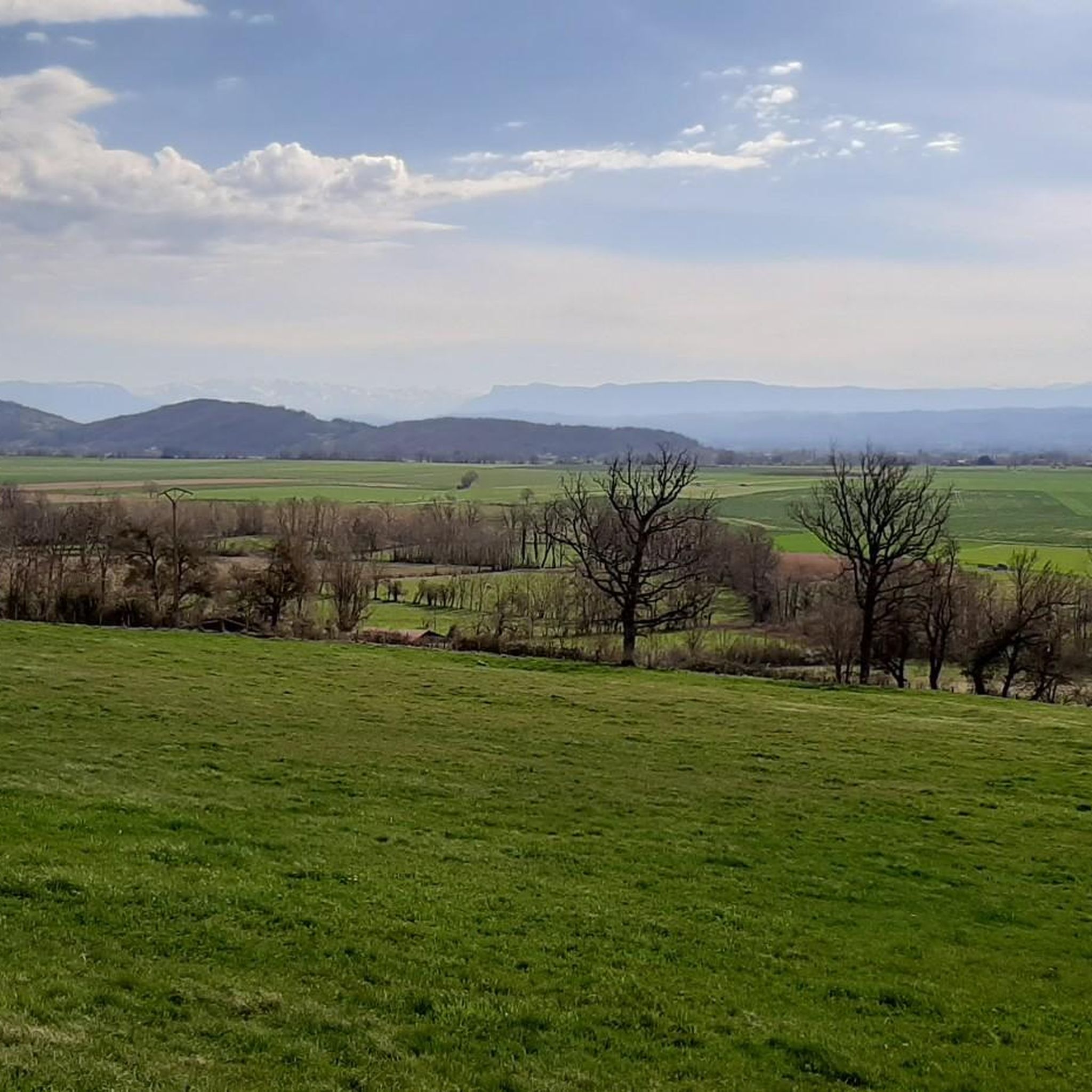
- Another must-see spot is Notre-Dame-du-Mont Chapel, a religious building and viewpoint. The site provides a panorama, especially noted for its views of the Chartreuse and Vercors mountains.
- Visitors also love Château Louis XI, a castle with a rich history. This castle now houses a music school and offers views of the surrounding area from its grounds.
- Penol is known for its historical sites, castles, and religious buildings. The region offers a variety of attractions to see and explore, from medieval villages to scenic viewpoints.
- The attractions around Penol are appreciated by the komoot community, with 40 upvotes and 26 photos shared by visitors.
Last updated: May 9, 2026
Revel washhouse
Highlight • Structure
Château de Revel: Located on a hill overlooking the plain of Valloire, the Château der Revel is mentioned at the end of the 11th century.
In 1402, Master Jacques de Beaujeu, master builder of the Dauphins, reported major repairs to be carried out on the large tower of the castle, probably the keep, as well as the small tower and its prison, called ratier.
Fearing that they would serve as a fortified point for unscrupulous people, the towers and hovels of the castle were demolished in 1623. Only the base of a circular tower is preserved, probably the small tower, from which two perpendicular walls emerge.
Translated by Google •
Tip by

Notre-Dame-du-Mont Chapel
Highlight • Religious Site
Translated by Google •
Tip by

Sign up now to discover places like this
Get recommendations on the best single tracks, peaks, & plenty of other exciting outdoor places.
Sign up for free
Château Louis XI
Highlight • Castle
The castle now houses a music school and meeting rooms. Many areas are vacant. The Ministry and the public agency for cultural cooperation (aida) conducted a feasibility study for the establishment of a European Cultural Exchange Center in the building.
If you take a walk in the park in the afternoon, you can hear the musicians practicing.
Translated by Google •
Tip by

Château de Montgontier
Highlight • Castle
Located on the GR 65, facing south, Espace Montgontier dominates the plain of Bièvre.
A large building of character, carrying a historical past, welcomes you in a court of honor surrounded by its wrought iron gates of the 18th.
Here you can organize your festive or ceremonial events: weddings, concerts, seminars, family reunions, cousinades, green class ...
A park lined with trees can receive games, tents and walks.
Large rooms, dormitories fitted out in boxes and a kitchen of community make it possible to organize your receptions without having the worry to find another site for the lodging.
Many locations allow to plan the parking of vehicles.
Translated by Google •
Tip by

Lavoir
Highlight • Other
The construction of washhouses was usually financed from the respective municipal coffers, as the washerwomen's often overly open and promiscuous behavior was to be discouraged or at least hidden behind walls and low-hanging roofs.
(According to the opinion of ecclesiastical and governmental authorities, from whom else?)
The history of covered washhouses, according to current knowledge, dates back to the 18th century. In the Middle Ages and the early modern period, women washed their laundry on stones by streams or rivers. In the wake of the Industrial Revolution and the associated pollution, covered structures began to appear in large numbers towards the end of the 18th century. This was also intended to reduce the risk of epidemics.
Translated by Google •
Tip by
Sign up for free to discover even more attractions around Penol.
Sign up for free
Already have an account?
Start today with a free account
Your next adventure awaits.
Login or Signup

Tips from the Community

The faithful trust in the help of the Mother of God – who in France is always venerated under the title “Notre-Dame” (which corresponds to the German name “Our Lady”) – was expressed by the French nun, mystic and Doctor of the Church, Saint Thérèse of Lisieux (religious name Thérèse of the Child Jesus and the Holy Face, 1873 to 1897) as follows: “In trials or difficulties I turn to Mother Mary, whose gaze alone is enough to dispel all fear.”
0
0

In 1869, the Marist Brothers purchased the castle and its grounds. They raised the body of the central building by one floor. The castle was then acquired by the city in 1906. In 1914, it became a military hospital and from 1940 to 1960, a modern college. The castle now houses a music school and meeting rooms. Many areas are vacant. The Ministry and the public agency for cultural cooperation (aida) conducted a feasibility study for the establishment of a European Cultural Exchange Center in the building. If you take a walk in the park in the afternoon, you can hear the musicians practicing.
6
0
In French-speaking countries, a washhouse refers to a public, usually covered, washing place. In German-speaking countries, the term "Waschhaus" is more commonly used. The construction of washhouses was usually financed from the respective municipal coffers, as the washerwomen's often overly open and promiscuous behavior was to be discouraged or at least hidden behind walls and low-hanging roofs. (According to the opinion of ecclesiastical and governmental authorities, from whom else?) The history of covered washhouses, according to current knowledge, dates back to the 18th century. In the Middle Ages and the early modern period, women washed their laundry on stones by streams or rivers. In the wake of the Industrial Revolution and the associated pollution, covered structures began to appear in large numbers towards the end of the 18th century. This was also intended to reduce the risk of epidemics.
5
0
In this area the villages are rather deserted, here you can still find an Aubergers and a bakery, the village has beautifully decorated its places of interest.
5
0
At guests' disposal: reception rooms for 20 to 170 people, accommodation for up to 102 beds and a shared kitchen, a 500 m2 terrace equipped with tables, arbors and parasols with an exceptional view of the Bièvre plain and a large park of approximately 4000 m2 for an outdoor reception.
9
0

great tour I'm very happy with it
1
0

Magnificent place with views of the Chartreuse and the Vercors, several picnic tables, and a charming little chapel accessible to the public.
2
0
Discover the Notre-Dame-du-Mont Chapel and its breathtaking view of Vercors and Chartreuse, with the small chapel you can enter, numerous picnic tables, large green space... A perfect place! ---------- This chapel was built in the 13th century on the hill overlooking the Bièvre plain, an exceptional panorama of the Alps and the Chambaran plateau. With an orientation table. According to legend, the chapel was founded by a Lord of Bressieux, who, returning from a crusade, was surprised at sea by a violent storm. He made a vow if he survived to build a chapel to the Saint Virgin on the hillside, opposite his castle, which is also located just opposite the castle of Bressieux to the north of the Bièvre plain. Source: Terres de Berlioz
0
0
Frequently Asked Questions
What are the most popular attractions around Penol?
Visitors frequently enjoy the historical sites and viewpoints. Among the most popular are the Revel washhouse, a former medieval village, and the Notre-Dame-du-Mont Chapel, which offers a sublime panorama of the Chartreuse and Vercors mountains.
Are there historical sites to visit in Penol?
Yes, Penol is rich in history. You can explore the Revel washhouse, part of a former medieval village, or visit Château Louis XI, a castle with a long history that now houses a music school. Another significant historical site is Château de Montgontier, which dates back to the Knights Templar.
What kind of viewpoints can I find around Penol?
For breathtaking views, the Notre-Dame-du-Mont Chapel is highly recommended. It provides a magnificent panorama, especially noted for its views of the Chartreuse and Vercors mountains. The grounds of Château Louis XI also offer beautiful views of La Côte-Saint-André.
Are there any castles to visit near Penol?
Absolutely. You can visit Château Louis XI, which has been transformed into a music school, or the historic Château de Montgontier, a large building with a rich past that can host events. There's also Bonnevaux Castle, located in the Bonnevaux Forest, offering a tranquil retreat.
What outdoor activities can I do near these attractions?
The Penol region offers a variety of outdoor activities, particularly cycling. You can find numerous MTB trails, road cycling routes, and touring bicycle routes. These routes often pass by or are near the historical sites and offer diverse landscapes.
Are there family-friendly attractions around Penol?
Yes, several attractions are suitable for families. The Notre-Dame-du-Mont Chapel is considered family-friendly, offering picnic tables and charming views. Château de Montgontier also welcomes families and has a large park suitable for walks and games.
What do visitors enjoy most about Penol?
Visitors appreciate the blend of history and scenic beauty. Many enjoy the sublime panoramas from places like the Notre-Dame-du-Mont Chapel, especially at sunset. The historical charm of medieval villages like Revel and the impressive architecture of the castles also receive high praise.
Are there any wheelchair-accessible attractions?
Yes, the Revel washhouse is noted as being wheelchair accessible, allowing more visitors to explore this historical site.
Where can I find places to relax or stay near the attractions?
For a relaxing stay, Bonnevaux Castle offers a tranquil environment with antique furniture, a pool, and homemade meals. Château de Montgontier also provides accommodation options and reception rooms for events.
Can I find cafes or restaurants near the attractions?
While specific cafes and restaurants are not detailed for every highlight, the village of Revel, home to the Revel washhouse, is noted to still have an Auberge and a bakery. For Bonnevaux Castle, homemade jams are served for breakfast, and a 4-course evening menu is prepared by the hosts.
What kind of religious buildings can I visit?
The Notre-Dame-du-Mont Chapel is a charming religious building that is accessible to the public and offers stunning views. It's a significant historical site in the region.

Get inspired with the komoot mobile app


Explore more
Still not found the Highlight you’re looking for? See guides of the top attractions in other regions:
