The best cycling routes around Sers
4.5
(100)
669
riders
61
rides
Touring cycling routes around Sers are situated in a region characterized by varied terrain, including rolling hills and river valleys. The area offers a mix of open landscapes and sections through wooded areas, providing diverse cycling environments. Elevations are generally moderate, with some routes featuring more significant climbs. The landscape is suitable for touring cyclists seeking both longer distances and shorter, more accessible paths.
Best touring cycling routes around Sers
- The most popular touring cycling route is Old station portico…
Last updated: June 29, 2026
14
riders
48.6km
04:04
700m
700m
Hard bike ride. Very good fitness required. Mostly paved surfaces. Suitable for all skill levels.
4.5
(2)
6
riders
26.4km
01:36
200m
200m
Moderate bike ride. Good fitness required. Mostly paved surfaces. Suitable for all skill levels.

Sign up for free
6
riders
38.1km
02:28
310m
310m
Moderate bike ride. Good fitness required. Mostly paved surfaces. Suitable for all skill levels.
4.0
(1)
6
riders
25.7km
02:09
280m
280m
Moderate bike ride. Good fitness required. Mostly paved surfaces. Suitable for all skill levels.
4
riders
21.9km
01:21
230m
230m
Moderate bike ride. Good fitness required. Mostly paved surfaces. Suitable for all skill levels.
Get access to more routes and recommendations from other explorers.
Sign up for free
Already have an account?
Our route recommendations are based on thousands of hikes, rides, and runs completed by other people on komoot.
Start today with a free account
Your next adventure awaits.
Login or Signup



Tips from the Community

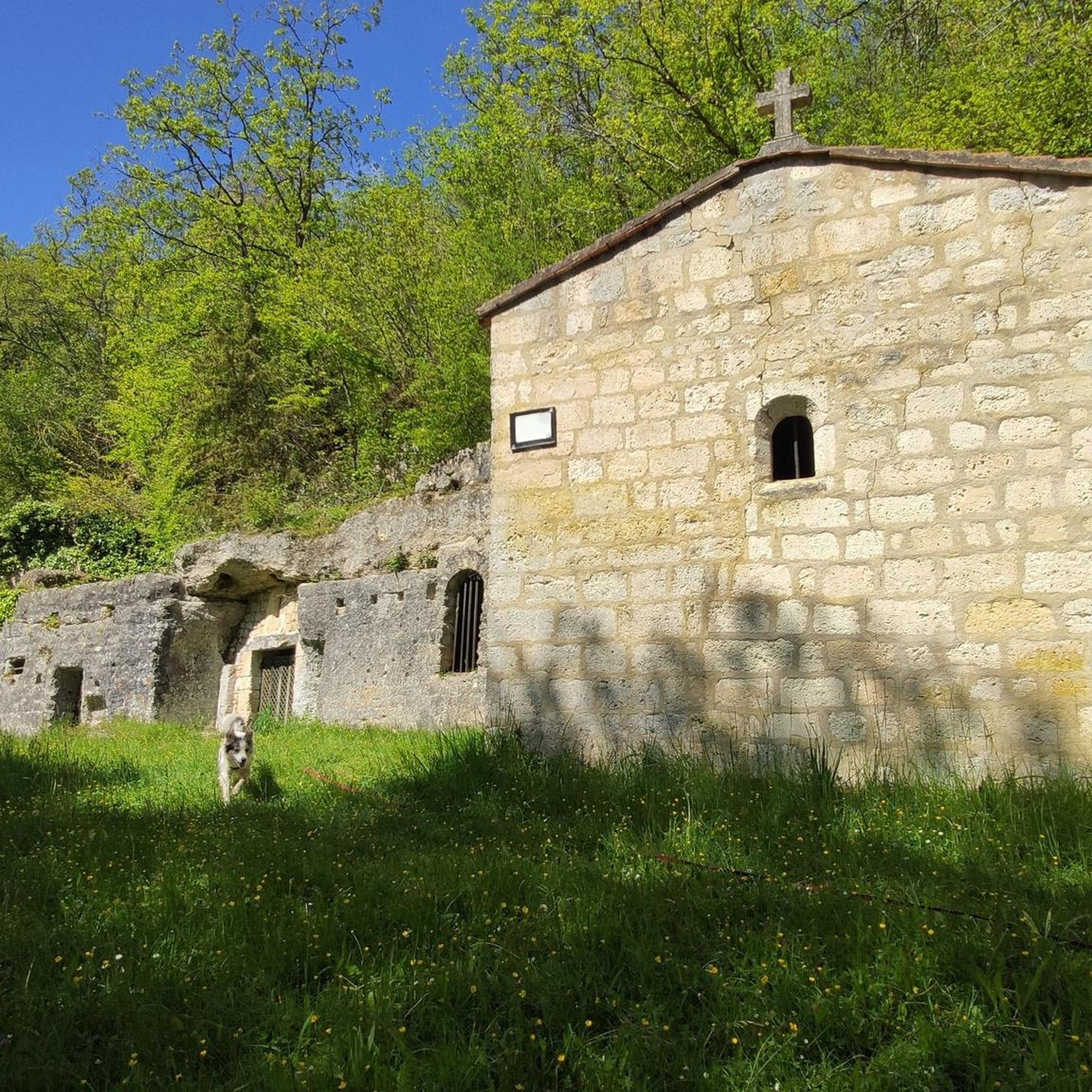
Its location, near the city walls and an old city gate, corresponds to that of a primitive sanctuary, predating Christianity, probably a temple dedicated to Jupiter. A first cathedral was built during the 4th century, dedicated to Saint Saturninus. The building disappeared when Clovis captured Angoulême in 508, after he drove out the Visigoths following the victory at Vouillé in 507. Clovis and then King Charibert ordered the cathedral's reconstruction in honor of Saint Peter.[2] This second cathedral was consecrated in 566 by Saint Germain, Bishop of Paris, and Saint Euphronius, Bishop of Tours, and is mentioned in Gregory of Tours' History of the Franks.[Note 1] It was burned down, probably by the Normans. The third cathedral was the work of Grimoard of Mussidan, Bishop of Angoulême (991-1018). He was also Abbot of Brantôme in Périgord and used the abbey's revenues to finance its construction. Begun around 991 and consecrated in 1015, it lasted only a century, its dimensions being too small. Only the north wall remains in the second and third bays of the nave, beneath the windows.
0
0

The biblical accounts of the New Testament, which describe the events in the life of Jesus and his disciples, paint a very nuanced picture of the Apostle Peter (Saint-Pierre), to whom the church of Angoulême is dedicated: On the one hand, he is a convinced and determined disciple of Jesus, but also not free from human weakness and fear. In the Garden of Gethsemane, he falls asleep (like the other disciples) when Jesus turns to God the Father after the Last Supper and asks the disciples to pray as well; and after Jesus' arrest, Peter denies three times that he even knows him. But he also weeps over his weakness and, upon encountering the risen Christ, professes his love and loyalty to him. His real name is Simon, but Jesus gives him the name Peter (which means rock), upon which the church is to be built, and he gives him—according to the account of the Evangelist Matthew—the "keys to the kingdom of heaven."
0
0

The building, constructed in the 12th century, was enlarged in the 15th century by the north and south aisles dedicated to the Virgin and Saint John the Baptist. It was restored in 1875-1876. It has a basilica plan with a single nave, on which is grafted to the east a false square surmounted by a dome on pendentives and which ends in a vaulted apse. Side chapels with flat chevet were added, to the north and south, in the 15th century. The facade is pierced by a door with a triple projection and an open window. The building was fortified at the time of the Hundred Years' War. The whole is surmounted, to the east, at the level of the dome, by a square bell tower on two levels. The base is decorated with three blind arcades; The upper floor is decorated, on each side, with three semicircular arches mounted on small columns, highlighted by a circular stringcourse and enclosing twin bay windows. https://www.dignac.fr/histoire-et-patrimoine/ https://monumentum.fr/monument-historique/pa00104355/dignac-eglise-saint-cybard
0
0
The Tower is difficult to visualize; you must stay in the castle, which offers guest rooms, to access it.
0
0
The architecture of this church is modeled on the Greek temples popular in the early 19th century. This neoclassical architecture is the work of Paul Abadie Père. https://www.angouleme-tourisme.com/patrimoine-culturel/eglise-saint-jacques-de-lhoumeau/
1
0
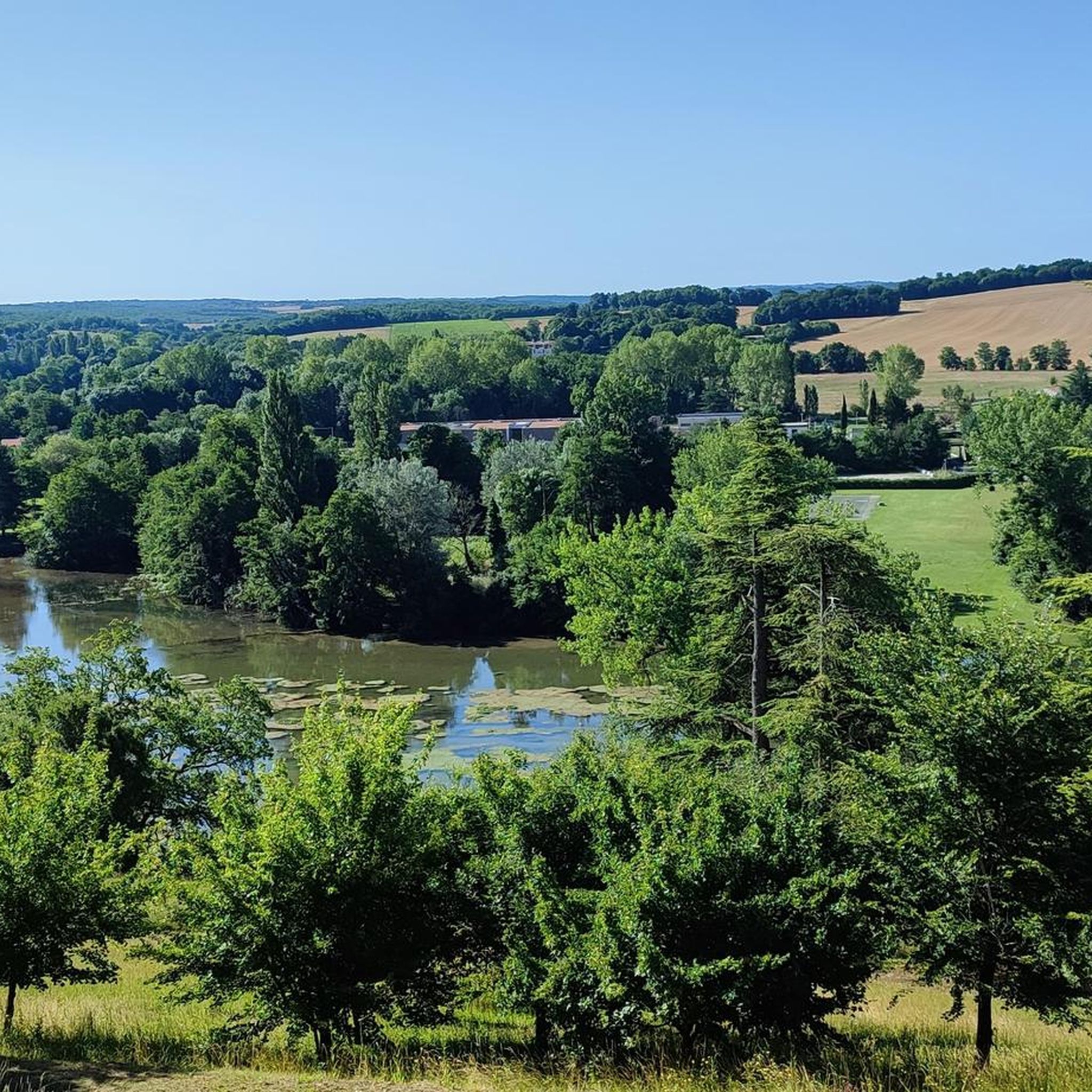
Arched bridge over the Charente, with views to the west over Ile aux Vaches, and to the east over Ile Marquet.
0
0
After the Blessed Virgin Mary, "Sainte MARIE MADELEINE" is the woman most frequently mentioned in the writings of the New Testament. Originally called "Mary of Magdala" after her place of origin on the Sea of Galilee, over time the name "Mary Magdalene" has been formed. According to the biblical accounts, she is one of the women and men who followed Jesus of Nazareth. According to the testimony of the evangelists, Mary Magdalene is also one of the three women who, after the crucifixion and burial of Jesus Christ, wanted to anoint the body on Easter morning after the Sabbath rest, and the very first person who ever met the Risen Christ. In theology, she is therefore also known as the "Apostle of the Apostles". The feast day of Sainte Marie-Madeleine in the calendar of saints is July 22nd.
0
0

Church in the Houmeau district, it has been listed as a Historic Monument since 2001. Built from 1840 to 1843 in a neoclassical style by Paul Abadie, it replaced an old church located on the road to Compostela from Montignac. Built in local limestone, it dominates the square bearing the same name and the many shops around it.
1
0
Frequently Asked Questions
How many touring cycling routes are available in Sers?
There are over 60 touring cycling routes available around Sers, offering a wide range of options for different skill levels and preferences. The region's varied terrain, including rolling hills and river valleys, provides diverse cycling environments.
What is the best time of year for touring cycling in Sers?
The region around Sers, nestled in the Pyrenees foothills, generally offers pleasant conditions for touring cycling from spring through autumn. While specific data isn't provided, the mountainous landscape suggests that late spring, summer, and early autumn would be ideal to avoid extreme cold or heat, and to enjoy the natural beauty.
What interesting landmarks or attractions can I see along the touring cycling routes in Sers?
Many routes around Sers pass by historical sites and natural beauty. You can explore several castles, such as Château de la Tranchade, Château de la Mercerie, and Château de Torsac. The Saint-Martial Church – Château de Torsac loop from Bouëx is one route that includes a castle. Additionally, you might encounter charming churches like Saint Martin's Church, Mornac, and the scenic Vallée des Eaux claires.
Are there circular touring cycling routes available in Sers?
Yes, many of the touring cycling routes around Sers are designed as loops, allowing you to start and end at the same point. For example, the popular Old station portico – Foulpougne Viaduct loop from Bouëx is a 52.6 km circular route. Another option is the Touvre – La Lèche Washhouse loop from Bouëx, which is 26.4 km.
How challenging are the touring cycling routes around Sers?
The touring cycling routes in Sers offer a range of difficulties. You'll find moderate paths, such as the Saint-Cybard Church of Dignac – The Breuil Tower loop from Vouzan, which covers 22.4 km with moderate elevation. For more experienced cyclists, there are challenging routes like the Vouzan Castle – Château de Vouzan loop from Vouzan, a 37.9 km ride with significant elevation gain. Overall, there are 7 easy, 30 moderate, and 27 difficult routes.
Are there family-friendly touring cycling routes in Sers?
While specific 'family-friendly' designations are not provided, Sers offers 7 easy touring cycling routes that could be suitable for families. These routes typically have less elevation gain and shorter distances, making them more accessible for riders of varying ages and abilities. It's always recommended to check the route details for distance and elevation before heading out with children.
Are the touring cycling routes around Sers suitable for cycling with dogs?
The suitability of touring cycling routes for dogs depends on various factors like terrain, traffic, and local regulations. While the region offers diverse natural landscapes, specific information regarding dog-friendly cycling trails is not available. It's advisable to keep dogs on a leash, especially in areas with wildlife or other cyclists, and to ensure they are comfortable with the distance and terrain.
Is there parking available near the touring cycling routes in Sers?
Many touring cycling routes in Sers start from towns like Bouëx or Vouzan, where public parking facilities are generally available. While specific parking locations for each trailhead are not detailed, these starting points are typically chosen for their accessibility, often including options for vehicle parking.
Can I access touring cycling routes in Sers using public transport?
Sers is located in a region with charming towns like Luz-Saint-Sauveur and Lourdes nearby. While specific public transport options for accessing trailheads directly with a bicycle are not detailed, larger towns in the Hautes-Pyrénées department often have bus services. It's recommended to check local public transport schedules and policies regarding bicycle carriage for the most up-to-date information.
What do other touring cyclists say about the routes in Sers?
The touring cycling routes around Sers are highly rated by the komoot community, with an average score of 4.8 stars from over 100 reviews. More than 700 touring cyclists have used komoot to explore Sers's varied terrain. Reviewers often praise the diverse landscapes, which include rolling hills, river valleys, and wooded sections, offering a mix of open views and sheltered paths.
Are there places to stop for refreshments or accommodation along the touring cycling routes?
The region around Sers includes several towns and villages such as Luz-Saint-Sauveur (4 km from Sers) and Lourdes (24 km from Sers), which offer amenities like cafes, pubs, and accommodation. While specific stops along each route are not listed, planning your ride to pass through these settlements will provide opportunities for refreshments and breaks.
Most popular attractions around Sers

Get inspired with the komoot mobile app


Explore more
Browse the best Cycling routes in other regions.
