The best road cycling routes around Le Temple
4.6
(13)
125
riders
64
rides
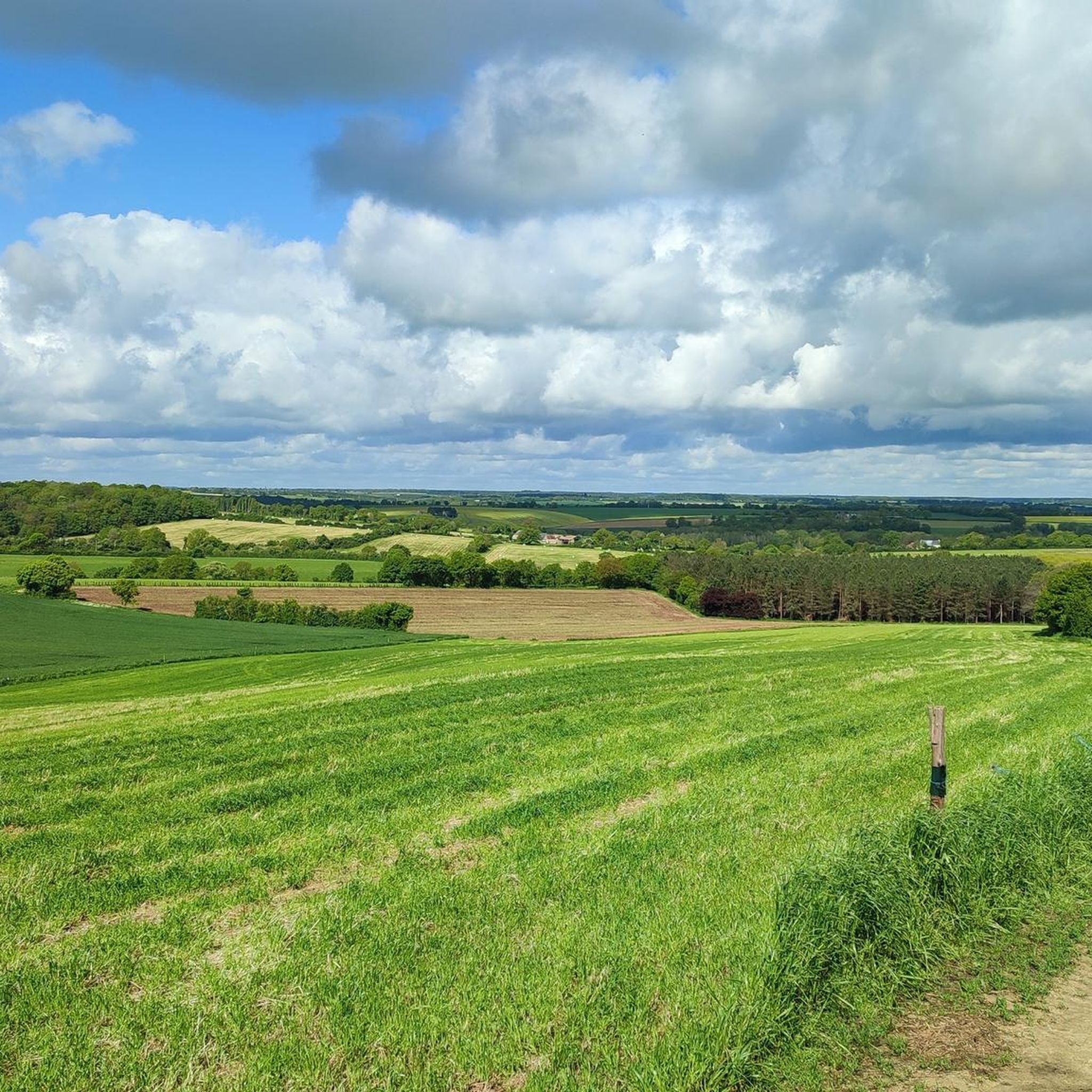
Road cycling routes around Le Temple, located in the Lot-et-Garonne region of Nouvelle-Aquitaine, France, are characterized by their gentle, rolling countryside and scenic river valleys. The area features a network of well-maintained roads that connect picturesque villages and agricultural landscapes. Cyclists can expect routes that traverse open fields, pass through woodlands, and often follow the curves of local waterways. The terrain is generally accessible, offering varied elevation gains suitable for different fitness levels.
Best road cycling routes around Le Temple
…Last updated: July 18, 2026
9
riders
45.4km
01:58
350m
350m
Moderate road ride. Good fitness required. Mostly well-paved surfaces and easy to ride.
7
riders
50.7km
02:06
290m
290m
Moderate road ride. Good fitness required. Mostly well-paved surfaces and easy to ride.

Sign up for free
5
riders
70.8km
02:57
360m
360m
Moderate road ride. Good fitness required. Mostly well-paved surfaces and easy to ride.
5.0
(2)
6
riders
36.9km
01:31
220m
220m
Easy road ride. Great for any fitness level. Mostly well-paved surfaces and easy to ride.
4
riders
57.2km
02:18
310m
310m
Moderate road ride. Good fitness required. Mostly well-paved surfaces and easy to ride.
Get access to more routes and recommendations from other explorers.
Sign up for free
Already have an account?
Our route recommendations are based on thousands of hikes, rides, and runs completed by other people on komoot.
Start today with a free account
Your next adventure awaits.
Login or Signup



Tips from the Community

In 1960, Father Jacques Lepage, then vicar in the city center, was sent to prospect and begin to bring the Christian Community to life in the new Rottes district. A plot of land was found and an architect was chosen, Mr. Michel Marconnet. On October 19, 1962, the temporary chapel, the current Jacques Lepage hall, was opened. First baptism, on October 21, 62. There would be 10 more at the end of the calendar year and a hundred or so each year that followed. The population of the district was very young and growing. In 1966, while in the city center the 2 parishes of the Trinity and the Madeleine were merged, that of NDR was erected. Father Lepage became the first priest. The church was not finished. The interior design was entrusted to a local artist, Prix de Rome, Mr. Louis Leygue, who expressed himself in the choir, the baptismal font, the chapel of the Blessed Sacrament and the crypt. Mrs. Anne Huet created the stained glass windows. Father Lepage would make a large part of them in his garage. At Christmas 1967, the first mass was celebrated. On May 12, 1968, Bishop Joseph Goupy came to consecrate the altar and bless the building. Work would continue and the history of the church did not end there.
0
0
This is a church dating from the 12th and 15th centuries. The nave of the church was paneled in the 15th century. A statue representing Saint Martin on horseback, sharing his cloak, was placed in a niche above the portal.
0
0
This church contains 14th century wall paintings. These paintings were discovered in 1895. They formerly occupied the entire width of the western wall of the nave. The central part was destroyed following the renovation of the door. The left side represented paradise. Of the bust of Christ, in a trilobed medallion, which occupied the center, there remains only a fragment of the cruciform halo. The rest of the composition is divided into rectangular compartments, each enclosing, in the surviving part, a figure of a crowned chosen one. On the right, hell is represented by a cauldron in which several characters are immersed, including a pope, a bishop, a monk, a king, a queen. Above, a woman with her legs apart. On the right, an enormous horned demon sticks out its tongue. On the left, another carries a basket filled with the damned and is about to plunge a woman into the cauldron. Construction periods: 14th century
0
0
This church was originally supposed to be a simple chapel of the commandery, founded in the 12th century by the Templars, forming one side of the courtyard that groups the buildings. The monumental 15th century porch is flanked by two brick towers. The nave ends with a semi-circular apse covered in a cul-de-four. Construction periods: 12th century, 13th century, 15th century
0
0

Between 1030 and 1046, a charter mentions the donation by a lady Berthe and her children to the Saint-Père abbey of Chartres, of the estate and the church of Chapelle-Royale. Part of the western facade of the Notre-Dame church and the eaves walls pierced with tiny Romanesque windows appear to date back to this foundation. Towards the end of the 15th century, between 1460 and 1500, four large windows with flamboyant tracery were opened in the choir; the glass windows, which dated from the 17th century, have disappeared with the exception of a medallion representing Christ on the cross with the Virgin and a holy woman at his feet. The building is a simple rectangle measuring 28 m by 10 m, covered with a wooden vault with tie beams; the entrance closest to the altar is fluted and has devouring monsters at its ends. In the north wall opened a door with a lowered arch, decorated with sculptures (cherubs and flowers), which was walled up. A small niche, made in the pillar next to this door, once housed a statue of Saint Blaise. On the roof of the nave rises the octagonal spire of the bell tower, made of wood covered with slate. The Safeguarding of French Art contributed in 1992 for 10,000 F to the repair of the roof damaged by a storm.
0
0
The parish church dedicated to Saint Anne, perhaps more anciently to the Virgin, depended on the diocese of Chartres. This former possession of Ganelon, treasurer of Saint-Martin de Tours in the 11th century, was undoubtedly part of the important donation made by his descendants Eudes and Rahier de Montigny for the benefit of the chapter of Chartres Cathedral around 1160. This Romanesque building, 35 m long, with a single nave and flat apse, reinforced with buttresses and lit by round-arched windows splayed internally and simply chamfered towards the outside, was never vaulted in stone: it is covered with 'a paneled vault. The masonry is entirely made of Grison stone, including the frames, giving an austere appearance specific to this region of Perche. We enter to the west through a semi-circular door with a double arch into the lower room of a bell tower-porch established later inside the original nave. The upper part of this bell tower was pierced with semi-circular bays. The eastern one was obstructed during the installation of the high roof of the nave and the bells were placed above in a belfry under a frame. The interior of the building was in fact covered as a whole by a paneled vault with molded beams and punches from the 16th century. In the 17th century, the entire back of the choir was decorated with a large altarpiece with columns and pilasters, paintings and sculptures, of great decorative effect. A curious set of carpentry from the same period presents above a confessional a paneled pulpit surmounted by a large sounding board. Note in the furniture a carved Gothic canopy from the beginning of the Renaissance and on the glory beam a carved wooden calvary from the same period. The 19th century. added a gallery, repainted the vault and provided the windows with stained glass.
0
0
The church has a very pretty Renaissance-style choir entrance. Certain stained glass windows, the woodwork of the choir, the altarpieces and the font are classified. The current church, rectangular in plan, replaced a 12th century building. The flat bedside and the north wall, equipped with Romanesque windows and slightly projecting buttresses, date from this period. It was rebuilt and probably enlarged in the first half of the 16th century. It was then covered with beautiful paneling, the beams of which bear the arms of the Vove, lords of Saint-Agil. The church is also flanked to the south by a seignorial chapel of two bays opening onto the nave with two molded semi-circular arches: its ribbed vaults, with eight ribs leading to the four peaks of a central diamond, are each decorated with four sculpted pendant keys, one of which also bears the arms of the Vove; the date 1547 can be read on its door. The church is currently preceded by a bell tower built in 1886 by Mr. Travaillard, an architect in Saint-Calais. A window to the south of the choir has preserved a partly restored 16th century stained glass window, representing Saint-Agil and Saint-Fiacre, and one of the windows of the seigneurial chapel has another, representing the Nativity, the Adoration of the Shepherds and the Adoration of the Magi; the other window of this chapel has a modern stained glass window retaining some old fragments in the speckles. The choir was decorated with woodwork including an entrance arcade surmounted by a crucifix, stalls, a communion table and an altarpiece, the latter dated 1734. We can also point out a font decorated with balusters and of a skull (1552), the poetic epitaph of Catherine-Geneviève de Verthamont (1740), a painting representing a martyr (17th century), a Louis XV console and a Venetian glass chandelier.”
0
0
Frequently Asked Questions
How many road cycling routes are available around Le Temple?
There are over 60 road cycling routes in the Le Temple area, offering a diverse range of options for cyclists. These include 12 easy routes, 50 moderate routes, and 1 difficult route, catering to various skill levels.
What is the typical terrain like for road cycling in Le Temple?
Road cycling around Le Temple is characterized by gentle, rolling countryside and scenic river valleys. You'll find well-maintained roads that traverse open fields, pass through woodlands, and often follow the curves of local waterways. The terrain is generally accessible, with varied elevation gains.
Are there any circular road cycling routes in Le Temple?
Yes, many routes in Le Temple are circular. For example, the Saint-Denis Church – Saint John the Baptist Church loop from Mondoubleau is a popular 45.4 km circular route that connects historic churches through the gentle countryside.
What kind of landmarks or attractions can I see along the road cycling routes?
The routes often pass by charming villages and historical sites. You can explore places like the Ruins of Guériteau Chapel, Saint Fiacre Church, or the Church of Notre-Dame de l'Assomption of Chauvigny. Many routes also connect various local churches, offering glimpses into the region's heritage.
What do other road cyclists enjoy most about cycling in Le Temple?
The area is highly rated by the komoot community, with an average score of nearly 5 stars. Reviewers often praise the open countryside, scenic river valleys, and charming village roads that define the cycling experience in Le Temple.
Are there any longer road cycling routes for experienced riders?
Yes, for those seeking a longer ride, the Montmirail Castle – Château de Montmirail loop from Mondoubleau is a moderate 75.2 km route with significant elevation gain, offering a more challenging experience.
Can I find routes that are suitable for a moderate fitness level?
Absolutely. The majority of routes in Le Temple, 50 out of 63, are classified as moderate. An example is the Saint-Lubin Church – Notre-Dame-des-Rottes Church loop from Épuisay, a 50.7 km path featuring well-paved roads through agricultural landscapes and small villages.
Are there any easy road cycling routes for beginners or families?
Yes, there are 12 easy routes available, perfect for beginners or families looking for a more relaxed ride. These routes typically feature less elevation gain and shorter distances, allowing for a comfortable cycling experience.
What is the best time of year for road cycling in Le Temple?
The region's gentle countryside and varied landscapes are enjoyable throughout much of the year. Spring and autumn generally offer pleasant temperatures and beautiful scenery, while summer can be warm but still suitable for early morning or late afternoon rides.
Are there routes that offer scenic viewpoints or natural features?
The routes often traverse river valleys and open countryside, providing picturesque views of the agricultural landscapes and local waterways. While specific named viewpoints aren't highlighted, the overall scenery is a key feature of cycling in Le Temple.
Are there any routes that pass by castles or historical buildings?
Yes, some routes incorporate historical elements. For instance, the Montmirail Castle – Château de Montmirail loop from Mondoubleau is a route that includes a castle, offering a blend of cycling and historical exploration.
Most popular attractions around Le Temple

Get inspired with the komoot mobile app


Explore more
Browse the best Road cycling routes in other regions.
