Attractions and Places To See around Choue - Top 13
Best attractions and places to see around Choue include historical religious buildings and natural landscapes. Choue is located in the Loir-et-Cher department of the Centre region, characterized by rural French life and agricultural spaces. The area offers opportunities for nature exploration within or near the Perche Regional Natural Park. Visitors can explore a variety of historical sites and natural features in this region.
Best attractions and places to see around Choue
- The most popular attractions is Ruins of Guériteau Chapel…
Last updated: June 29, 2026
Notre-Dame Church of Chapelle-Guillaume
Highlight • Religious Site
Translated by Google •
Tip by

Saint Anne Church
Highlight • Religious Site
Translated by Google •
Tip by
Sign up now to discover places like this
Get recommendations on the best single tracks, peaks, & plenty of other exciting outdoor places.
Sign up for free
Ruins of Guériteau Chapel
Highlight • Historical Site
Translated by Google •
Tip by
Saint Peter's Church
Highlight • Other
Translated by Google •
Tip by
Saint Fiacre Church
Highlight • Other
The current church, rectangular in …
Translated by Google •
Tip by
Sign up for free to discover even more attractions around Choue.
Sign up for free
Already have an account?
Start today with a free account
Your next adventure awaits.
Login or Signup



Tips from the Community

This church contains 14th century wall paintings. These paintings were discovered in 1895. They formerly occupied the entire width of the western wall of the nave. The central part was destroyed following the renovation of the door. The left side represented paradise. Of the bust of Christ, in a trilobed medallion, which occupied the center, there remains only a fragment of the cruciform halo. The rest of the composition is divided into rectangular compartments, each enclosing, in the surviving part, a figure of a crowned chosen one. On the right, hell is represented by a cauldron in which several characters are immersed, including a pope, a bishop, a monk, a king, a queen. Above, a woman with her legs apart. On the right, an enormous horned demon sticks out its tongue. On the left, another carries a basket filled with the damned and is about to plunge a woman into the cauldron. Construction periods: 14th century
0
0
The parish church dedicated to Saint Anne, perhaps more anciently to the Virgin, depended on the diocese of Chartres. This former possession of Ganelon, treasurer of Saint-Martin de Tours in the 11th century, was undoubtedly part of the important donation made by his descendants Eudes and Rahier de Montigny for the benefit of the chapter of Chartres Cathedral around 1160. This Romanesque building, 35 m long, with a single nave and flat apse, reinforced with buttresses and lit by round-arched windows splayed internally and simply chamfered towards the outside, was never vaulted in stone: it is covered with 'a paneled vault. The masonry is entirely made of Grison stone, including the frames, giving an austere appearance specific to this region of Perche. We enter to the west through a semi-circular door with a double arch into the lower room of a bell tower-porch established later inside the original nave. The upper part of this bell tower was pierced with semi-circular bays. The eastern one was obstructed during the installation of the high roof of the nave and the bells were placed above in a belfry under a frame. The interior of the building was in fact covered as a whole by a paneled vault with molded beams and punches from the 16th century. In the 17th century, the entire back of the choir was decorated with a large altarpiece with columns and pilasters, paintings and sculptures, of great decorative effect. A curious set of carpentry from the same period presents above a confessional a paneled pulpit surmounted by a large sounding board. Note in the furniture a carved Gothic canopy from the beginning of the Renaissance and on the glory beam a carved wooden calvary from the same period. The 19th century. added a gallery, repainted the vault and provided the windows with stained glass.
0
0
The church has a very pretty Renaissance-style choir entrance. Certain stained glass windows, the woodwork of the choir, the altarpieces and the font are classified. The current church, rectangular in plan, replaced a 12th century building. The flat bedside and the north wall, equipped with Romanesque windows and slightly projecting buttresses, date from this period. It was rebuilt and probably enlarged in the first half of the 16th century. It was then covered with beautiful paneling, the beams of which bear the arms of the Vove, lords of Saint-Agil. The church is also flanked to the south by a seignorial chapel of two bays opening onto the nave with two molded semi-circular arches: its ribbed vaults, with eight ribs leading to the four peaks of a central diamond, are each decorated with four sculpted pendant keys, one of which also bears the arms of the Vove; the date 1547 can be read on its door. The church is currently preceded by a bell tower built in 1886 by Mr. Travaillard, an architect in Saint-Calais. A window to the south of the choir has preserved a partly restored 16th century stained glass window, representing Saint-Agil and Saint-Fiacre, and one of the windows of the seigneurial chapel has another, representing the Nativity, the Adoration of the Shepherds and the Adoration of the Magi; the other window of this chapel has a modern stained glass window retaining some old fragments in the speckles. The choir was decorated with woodwork including an entrance arcade surmounted by a crucifix, stalls, a communion table and an altarpiece, the latter dated 1734. We can also point out a font decorated with balusters and of a skull (1552), the poetic epitaph of Catherine-Geneviève de Verthamont (1740), a painting representing a martyr (17th century), a Louis XV console and a Venetian glass chandelier.”
0
0
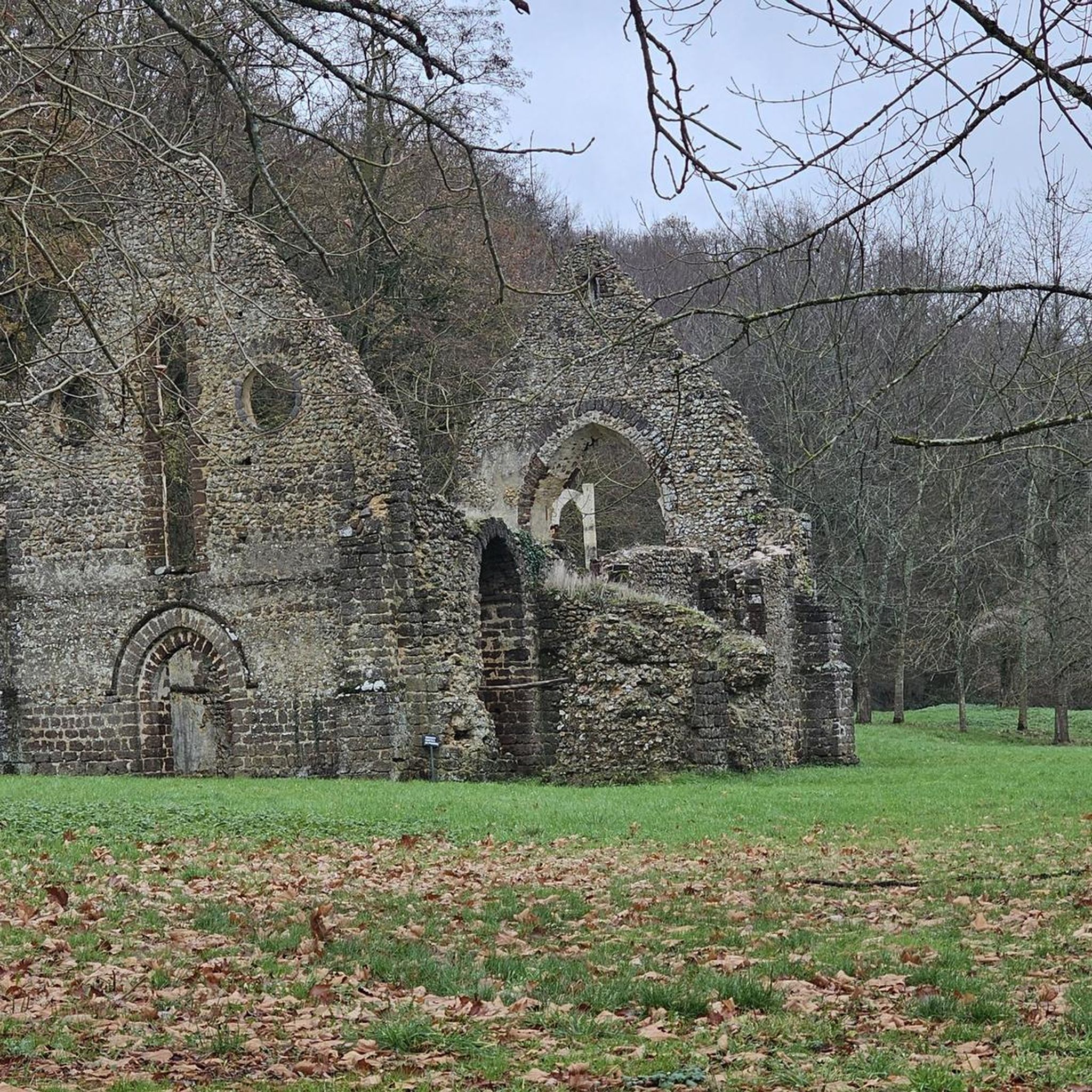
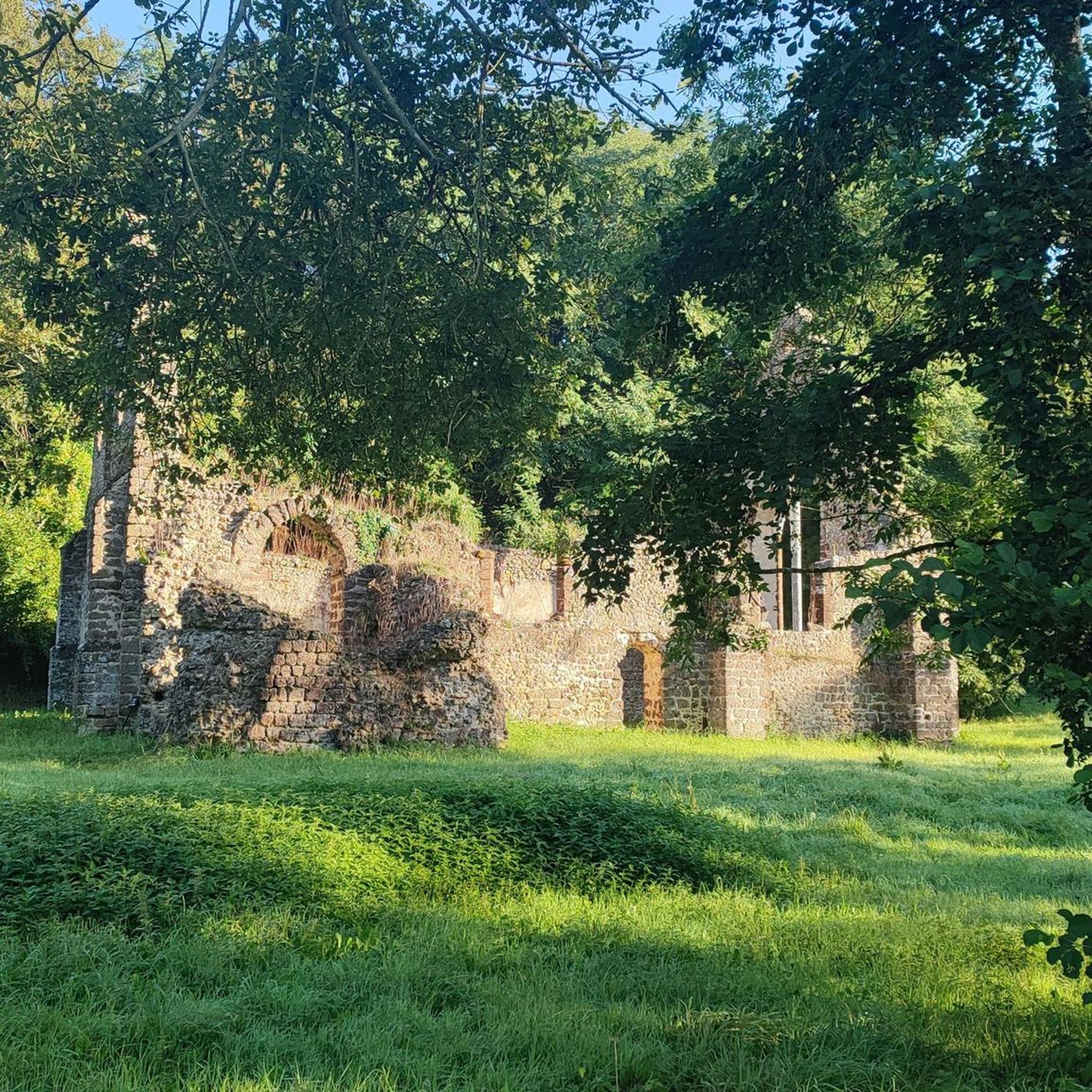
Around 1240, the Benedictines, who had a priory within the walls of the castle of Mondoubleau, having had to abandon it, settled near Choue. Of the buildings, only the chapel remains. The western gable is pierced with a double archivolt door in third point and projecting cord, chamfered. Above, a bay was flanked by two six-lobed oculi. On the western part of the southern gutter wall, a door gave access to a small room which could have been the lower room of a square tower, perhaps a bell tower. Inside, the walls were plastered.
0
0
The robust grison pillars of the church of Chapelle-Guillaume reveal its distant roots in the beautiful country of Perche-Gouët, and even if it is often difficult to fix with precision the date of construction of a church, at least It seems obvious to her that she has been watching over the small village that surrounds her for many centuries – probably not far from ten… It owes her name to Guillaume Gouët. In any case, the last two hundred years have given it many alterations and restorations. Thus the bell tower that a hurricane had brought down was rebuilt in 1827, while the capital which adorned the entrance disappeared a few decades later, serving as a narthex, or more simply as a “caquetoire”. Everything here announces the joy of welcome and the simple peace that a place of prayer requires. The interior is distinguished by the great care taken in maintaining the warm furnishings: painted vault, gallery, benches, paneling, statues and choir woodwork. The altarpiece is illustrated by a pretty painting of the Annunciation. A great harmony emerges from the whole and invites prayer. There was also not far from there near the church a Notre-Dame priory dependent on Marmoutier, where Saint Martin resided.
0
0
Frequently Asked Questions
What kind of attractions can I expect to find around Choue?
Choue, located in the Loir-et-Cher department, offers a blend of historical religious buildings and natural landscapes. You'll discover ancient churches, historical ruins, and the peaceful countryside of the Perche Regional Natural Park.
Are there historical religious buildings to visit near Choue?
Yes, the area is rich in historical religious architecture. Notable examples include Notre-Dame Church of Chapelle-Guillaume with its robust grison pillars, and Saint Anne Church, a Romanesque building with a single nave. You can also find Saint Fiacre Church, known for its Renaissance-style choir entrance, and the 12th-century Saint Bartholomew Church.
What historical sites are there besides churches?
Beyond the churches, you can explore the Ruins of Guériteau Chapel. This site was once a Benedictine priory, with the chapel being the main remaining structure from the Benedictines who settled near Choue around 1240.
Are there any famous castles or cathedrals accessible from Choue?
While not directly in Choue, the region is known for its impressive châteaux. The grand Château de Chambord, the largest castle in the Loire Valley, is approximately 61 km away, and the Château de Blois is about 55 km distant. For cathedrals, the renowned Chartres Cathedral, a 13th-century masterpiece, is about 65 km from Choue.
What natural features characterize the landscape around Choue?
Choue is situated within or near the Perche Regional Natural Park, offering a peaceful countryside experience. The local landscape features agricultural and natural spaces, including valleys, plateaus, and hills. The area is also drained by rivers such as the Loir, Bourboule, and Boulon.
Are there opportunities for hiking near Choue?
Yes, there are various hiking opportunities around Choue. You can find trails like the 'Étang de Boisvinet loop from Couëtron-au-Perche' or the 'Château de la Cour loop from Souday'. For more options, explore the Hiking around Choue guide.
Can I go cycling around Choue?
Absolutely. The region offers several cycling routes. You can try the 'Châteaux and Seigneuries of Perche Loop' or the 'Saint Anne Church – Saint Fiacre Church loop from Mondoubleau'. Discover more routes in the Road Cycling Routes around Choue guide.
Are there mountain biking trails available near Choue?
Yes, mountain biking enthusiasts will find trails such as the 'Mountainbike loop from Saint-Avit' or the 'Taillefer Waterway loop from Valennes'. For a comprehensive list, check the MTB Trails around Choue guide.
Are there family-friendly attractions around Choue?
Many of the historical religious buildings, such as Notre-Dame Church of Chapelle-Guillaume, are suitable for family visits. Additionally, the natural parks and easy hiking trails offer pleasant outdoor activities for families.
What is the best time of year to visit Choue for outdoor activities?
The spring and summer months are generally ideal for outdoor activities like hiking and cycling, when the weather is mild and the natural landscapes are in full bloom. Autumn also offers beautiful scenery with changing foliage.
Are there local markets to visit near Choue?
Yes, you can experience local culture at nearby markets. Mondoubleau hosts markets on Saturdays and Mondays, Souday on Wednesdays, and Droue on Tuesdays.
Are there dog-friendly walking options in the Choue area?
Many of the natural trails and paths within the Perche Regional Natural Park are suitable for dog walking, provided dogs are kept on a leash and owners clean up after them. Always check local signage for specific restrictions.

Get inspired with the komoot mobile app


Explore more
Still not found the Highlight you’re looking for? See guides of the top attractions in other regions:
