Attractions and Places To See around Hanches - Top 20
Best attractions and places to see around Hanches, a commune in the Eure-et-Loir department of France, offers a tranquil setting. This region serves as a gateway to several notable attractions, with many significant sites located in its immediate vicinity. Visitors can explore a range of historical, cultural, and natural offerings within the surrounding Centre-Val de Loire region. Its strategic location places it within reach of iconic French treasures.
Best attractions and places to see around Hanches
- The most popular attractions…
Last updated: May 5, 2026
Pont Rouge on the Louis XIV Canal
Highlight • Bridge
Translated by Google •
Tip by

Saint-Piat Mill
Highlight • Monument
Translated by Google •
Tip by

Sign up now to discover places like this
Get recommendations on the best single tracks, peaks, & plenty of other exciting outdoor places.
Sign up for free
Saint-Sulpice Church of Châteaudun
Highlight • Religious Site
Translated by Google •
Tip by
Guiperreux Toad Crossing
Highlight • Natural Monument
Each year, during the thaw (roughly from February to April), …
Translated by Google •
Tip by

Saint Peter's Church, Épernon
Highlight • Religious Site
Translated by Google •
Tip by

Sign up for free to discover even more attractions around Hanches.
Sign up for free
Already have an account?
Start today with a free account
Your next adventure awaits.
Login or Signup


Tips from the Community

According to tradition, the church choir covers the remains of an older building, possibly dating back to the 6th century, which was built to house the saint's body. According to current knowledge, the commune of Saint-Piat (Sanctus Piatus in Latin) officially appeared in 1087, mentioned in a charter of the Nottonville Priory (Eure-et-Loir), on which it depended. The current building was rebuilt during the time of Francis I, as suggested by the date 1535 engraved on two buttresses of the apse and the date 1542 engraved on a piece of wood from the vault. This is according to a study by the SAEL (Eure-et-Loir Archaeological Society). The three-sided apses, the dripstone towers (horizontal members projecting from a wall), and the sculpted roof structures are a testament to the importance of the reconstructions carried out in the department during the 16th century. The church of Saint-Piat is one of them. While the church has not been officially recognized, it nevertheless contains objects that have attracted attention both for their antiquity and quality, but not always for good reason. Their artistic value, far from attracting only religious or aesthetic interest, has also aroused a covetousness that, unfortunately, remains for some of them. Fortunately, those still in place are carefully cared for and offer the curious a story to discover, a beauty to slowly ponder as they progress toward the choir.
0
0

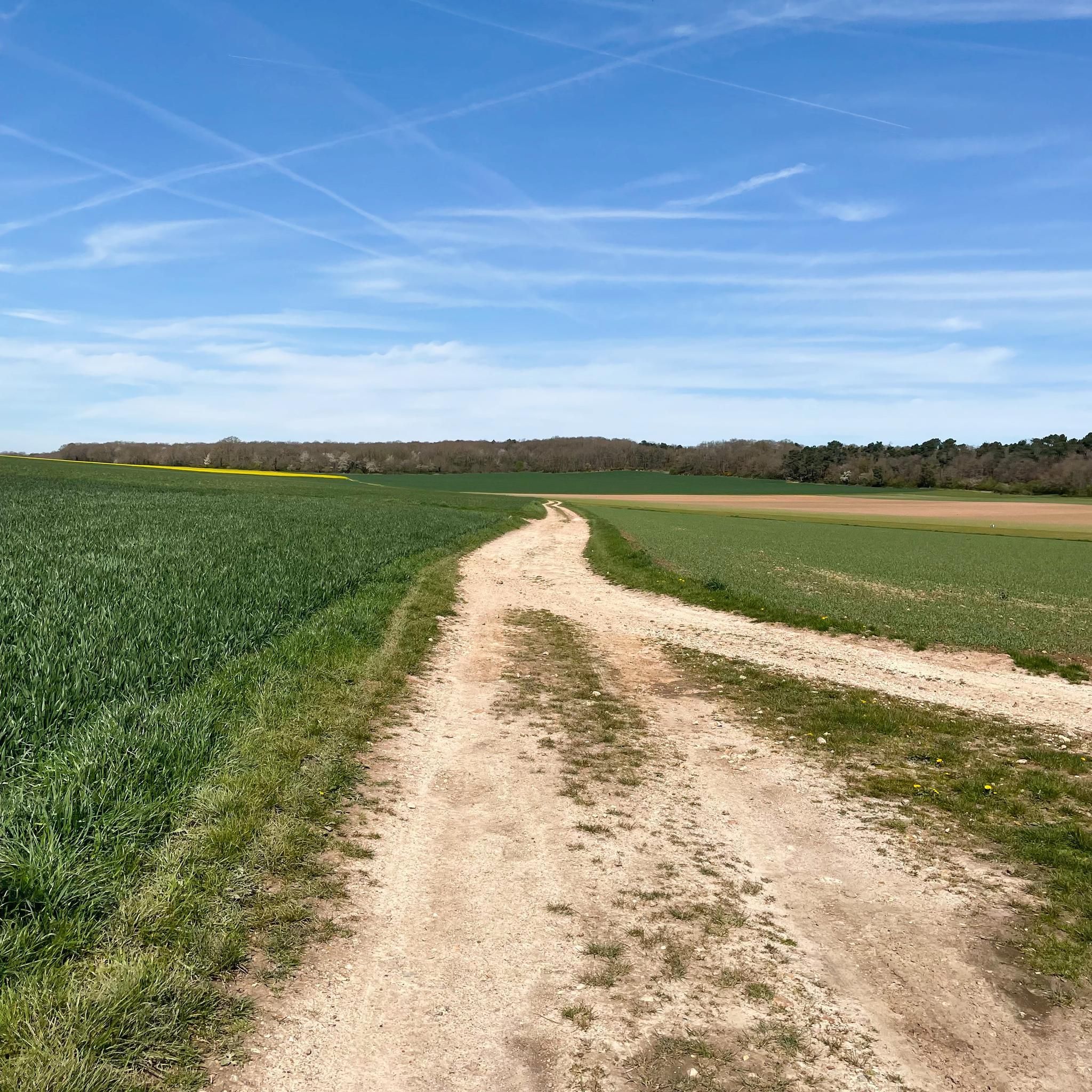
more road and fields than forest areas but still nice
0
0

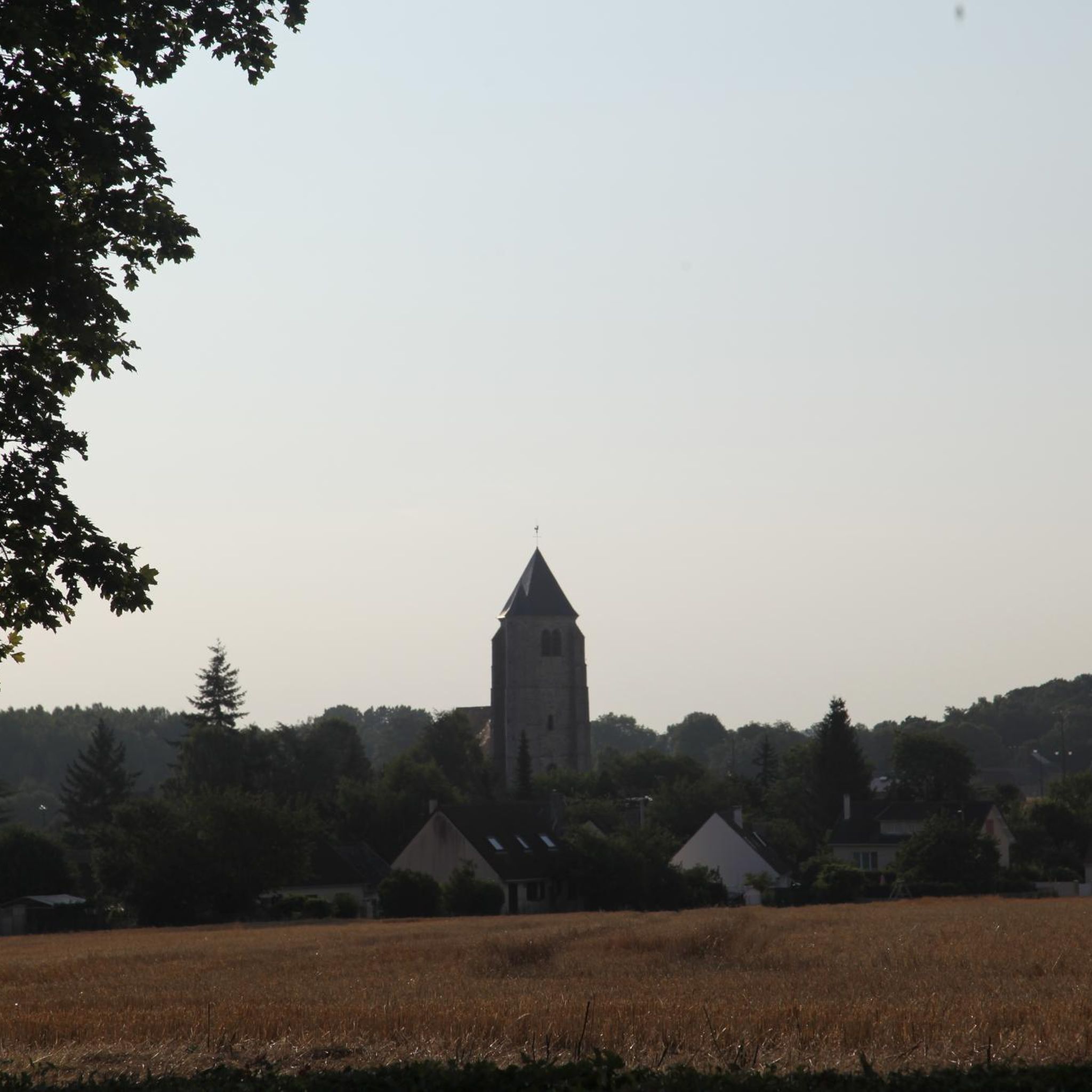
With its curiously crowned square tower, this charming church boasts a flamboyant Gothic style. Built between the 15th and 17th centuries, it preserves a remarkable collection of 16th-century stained-glass windows dedicated to Eucharistic miracles.
0
0

The Saint-Sulpice church in Nogent-Le-Roi is an impressive church built in the 15th century and which was part of the defensive wall which protected the entrance to the town. You can admire its beautiful stained glass windows and its wrought iron choir inside, as well as its original tower outside. The church is located in the heart of Nogent-Le-Roi, a charming town with old half-timbered houses and a castle.
2
0
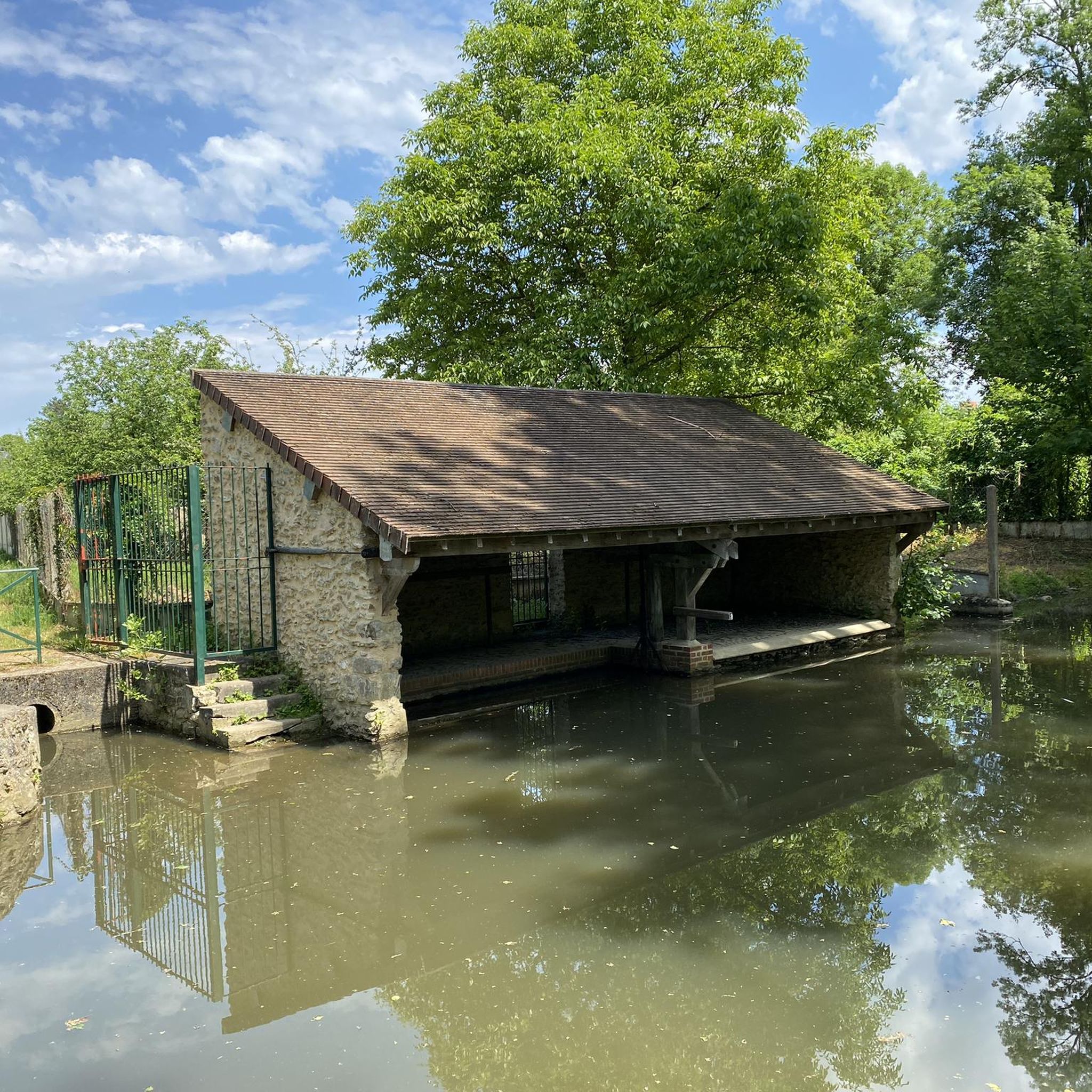
The Moulin de Saint-Piat is a water mill located on the Eure and dating from the 11th century where it was once used for the production of flour and the extraction of oil. You can admire the architecture of the mill, which was extended in 1865, and enjoy the view of the river and the nearby church. The mill is also a good place for birdwatching, as you may be able to see herons, kingfishers and ducks along the water.
4
0
The Church of Saint-Sulpice in Nogent-Le-Roi is an impressive church built in the 15th century and which formed part of the defensive wall that protected the entrance to the town. You can admire its beautiful stained glass windows and its wrought iron choir screen inside, as well as its original tower outside. The church is located in the heart of Nogent-Le-Roi, a charming town with old half-timbered houses and a castle.
2
0

The church in Epernon was dedicated to Saint Peter (SAINT-PIERRE). Simon, nicknamed Peter (rock), was a fisherman on the Sea of Genesareth when he – together with his brother Andrew – was called by Jesus Christ to be the "fisher of men". According to Catholic understanding, he is the supreme apostle, and the two millennia-long line of popes – currently Francis – are his successors. On statues and paintings Peter is almost always depicted with two keys in his hand, this attribute refers to the Bible passage in Matthew: “I will give you the keys of the kingdom of heaven; what you bind on earth will be bound in heaven, and what you loose on earth will be loosed in heaven” (chapter 16, verse 19). Peter is also known along with Paul as the "Princes of the Apostles", their common feast day in the calendar of saints is June 29th.
1
0

Pretty mill to contemplate for a refreshing break along the Eure. Its construction is estimated at the 11th century, but its existence is attested only at the end of the 15th century.
1
0
Frequently Asked Questions
What historical sites can I visit around Hanches?
The region around Hanches is rich in history. You can explore the Pont Rouge on the Louis XIV Canal, a medieval bridge built as part of the Maintenon aqueduct project in the late 17th century. Another significant site is the Saint-Piat Mill, an 11th-century water mill on the Eure river, which was once used for flour production. Additionally, the Saint-Sulpice Church of Châteaudun in Nogent-Le-Roi, a 15th-century church with beautiful stained glass, offers a glimpse into the area's past.
Are there any natural attractions or outdoor features to explore near Hanches?
Yes, the area offers several natural features. The Saint-Piat Mill provides lovely views of the Eure river and is a good spot for birdwatching. For a unique natural experience, visit the Guiperreux Toad Crossing, a protected natural area with a pond and forest, known for its amphibian migration during spring.
What are some family-friendly attractions around Hanches?
Many attractions around Hanches are suitable for families. The Pont Rouge on the Louis XIV Canal, the Saint-Piat Mill, and the Saint-Sulpice Church of Châteaudun are all categorized as family-friendly. The Guiperreux Toad Crossing also offers an interesting educational experience for children, especially during the amphibian migration season.
What outdoor activities can I do near Hanches?
Hanches is a great base for outdoor activities. You can find numerous routes for hiking, running, and cycling. For hiking, explore trails like the 'Maintenon - Eure Loop' or the 'Moulin de Saint-Piat — loop from Maintenon'. Runners can enjoy routes such as the 'Running loop from Hanches'. Cyclists have options like the 'Maintenon – Maintenon Castle loop'. You can find more details on these and other routes in the dedicated guides for hiking, running, and cycling around Hanches.
Are there any religious buildings of interest in the Hanches area?
Yes, there are notable religious buildings. The Saint-Sulpice Church of Châteaudun in Nogent-Le-Roi is an impressive 15th-century church known for its beautiful stained glass windows. Also, the Saint Peter's Church, Épernon, built in the 15th century, is a historically significant monument that was designated a monument historique in 1942.
What is the best time to visit attractions around Hanches?
The region around Hanches can be enjoyed throughout the year. Spring (February to April) is particularly interesting for the amphibian migration at the Guiperreux Toad Crossing. Summer and early autumn offer pleasant weather for exploring historical sites and enjoying outdoor activities like hiking and cycling.
What do visitors enjoy most about the attractions around Hanches?
Visitors appreciate the rich historical context of sites like the Pont Rouge and the architectural beauty of the Saint-Piat Mill. The tranquil river views and opportunities for birdwatching at the mill are also highly rated. The impressive stained glass windows of the Saint-Sulpice Church are another highlight.
Are there any unique or unusual attractions near Hanches?
A truly unique spot is the Guiperreux Toad Crossing. This protected natural area features a 'toad-drome' where volunteers help amphibians cross the road safely during their migration to the pond for breeding, typically from February to April.
Can I find viewpoints or scenic spots in the Hanches area?
Yes, the Saint-Piat Mill offers pleasant views of the Eure river. The surrounding natural areas and routes also provide scenic landscapes, particularly along the riverbanks and through the local forests.
What are some of the most popular attractions around Hanches?
Among the most popular attractions are the Pont Rouge on the Louis XIV Canal, known for its historical significance, and the picturesque Saint-Piat Mill. The Saint-Sulpice Church of Châteaudun is also highly appreciated by visitors for its architecture and history.
Are there any castles or grand residences near Hanches?
While not directly within Hanches, the region is close to several magnificent châteaux. The historic Château de Rambouillet is approximately 14 kilometers away, and the globally recognized Palace of Versailles, with its elaborate gardens, is about 43 kilometers from Hanches, offering a glimpse into French monarchical grandeur.
Where can I find local markets near Hanches?
To experience local life and find fresh produce, you can visit nearby towns with markets. Maintenon hosts a market on Thursdays, Nogent-le-Roi on Saturdays, Auneau on Fridays, Chartres on Saturdays, and Houdan on Fridays.
What is the significance of the Pont Rouge on the Louis XIV Canal?
The Pont Rouge was built in the late 17th century as a crucial part of Louis XIV's ambitious project to construct the Maintenon aqueduct, intended to supply water to the Palace of Versailles. This medieval bridge historically served as the main entry point into Maintenon.
Most popular routes around Hanches
Most popular attractions around Hanches

Get inspired with the komoot mobile app


Explore more
Still not found the Highlight you’re looking for? See guides of the top attractions in other regions:
