Attractions and Places To See around Meigné - Top 20
Attractions and places to see around Meigné offer a blend of historical heritage and natural landscapes. Situated on the edge of the State Forest of Milly, the area provides opportunities for outdoor activities. The region features historical sites, unique troglodyte dwellings, and significant natural features like lakes and forests. Meigné and its surroundings present a diverse range of points of interest for exploration.
Best attractions and places to see around Meigné
- The most popular attractions is Château de Saumur,…
Last updated: July 6, 2026
Château de Saumur
Highlight • Castle
Translated by Google •
Tip by

Saumur
Highlight • Other
Translated by Google •
Tip by

Sign up now to discover places like this
Get recommendations on the best single tracks, peaks, & plenty of other exciting outdoor places.
Sign up for free
Notre Dame des Ardillieres
Highlight • Religious Site
In 1454, while ploughing his field, a farmer discovered in the "ardille" (clay, a word that according to legend gave its name to Notre-Dame-des-Ardilliers) a stone statuette about thirty …
Translated by Google •
Tip by

Étang de Joreau
Highlight • Lake
Translated by Google •
Tip by

Saint-Pierre Church of Montsoreau
Highlight • Religious Site
Translated by Google •
Tip by
Sign up for free to discover even more attractions around Meigné.
Sign up for free
Already have an account?
Start today with a free account
Your next adventure awaits.
Login or Signup

Tips from the Community

A castle-palace of the Dukes of Anjou in the 19th and 19th centuries, the Château de Saumur, where King René resided, is the last example of the princely palaces built by the Valois dynasty. It served as the residence of the city's governors, a prison, and later an arms and ammunition depot. It was purchased by the city in 1906 to house the municipal museum, now the Musée de France. Today, we discover the rich collections scattered throughout the former apartments of the Dukes of Anjou in an educational museography. Want to know more? Click here: https://www.ot-saumur.fr/en/castles-and-country-houses/Saumurcastle-5261718/
3
0
The Place Saint-Pierre in Saumur has traditionally been a haven for bistros. This is where social life meets. Sit down and enjoy the bustling life.
3
0
Behind the classical 17th-century facade lies a magnificent building that combines both Romanesque and Plantagenet Gothic styles. Saint Peter's Church is a representative example of Plantagenet Gothic (12th-13th centuries), particularly due to its strongly curved vaults. Among the furnishings is a remarkable set of 15th-century choir stalls. (Organ concerts are regularly held here). Restoration of the west facade began in November 2008. A team of stonemasons consolidated and restored this classical facade in a "composite" style. This facade had closed off the nave since the 17th century following the collapse of the first Gothic facade. The building was then completely restored! Source: https://www.ville-saumur.fr/patrimoine-architectural/l-eglise-saint-pierre-2
2
0
History: In 1454, while ploughing his field, a farmer discovered in the "ardille" (clay, a word that according to legend gave its name to Notre-Dame-des-Ardilliers) a stone statuette about thirty centimetres high representing a Pietà. The farmer took it home. Twice he discovered that the Pietà returned to its place of discovery, near a fountain that was already known for its healing properties. From that moment on, devotions developed around this statuette, which was placed in a niche under a stone arch. Jean Olivier, Bishop of Angers, laid the foundations of the Notre-Dame-des-Ardilliers chapel. Bishop Gabriel Bouvery, Bishop of Angers, opened the new church on 30 July 1553. It was a place of pilgrimage. The fountain was said to perform miracles. In 1614, thanks to the support of Marie de Medici, the management of the sanctuary was entrusted to the Order of Oratorians. In 1619, they settled in Ardilliers and founded a royal college in 1624. Louis XIII granted it the status of royal chapel and, from 1628 to 1643, the Oratorians built the buildings to the east of the chapel that would house their community, the classrooms and the students' dormitories. From 1634, Richelieu had a chapel built on the north wall of the chapel for votive and funeral purposes. The chapel was closed during the Revolution. The Oratorian house became a barracks and the rotunda was converted into an ammunition store. In 1796, the Sisters of Sainte-Anne-de-la-Providence opened a hospice there for the expelled. In 1798, the hospice became the property of the city of Saumur. The chapel was put back into use in 1799, but was damaged by damp. From 1849, architect Charles Joly-Leterme began restoring the building. The Sisters of Sainte-Anne-de-la-Providence became the owners of the former Oratorian House in 1866. During the Battle of the Cadets, in June 1940, the bombing destroyed the roof structures of the chapel and the Oratorian House. The vault of the nave collapsed. The buildings were restored between 1947 and 1957. The oak frame of the dome was replaced by a concrete shell to reduce the pressure on the walls. The Oratorian House was converted into a school in 1953. In February 2025, a fire broke out. Source Wikipedia
4
0
History: In 1454, while ploughing his field, a farmer discovered in the "ardille" (clay, a word that according to legend gave its name to Notre-Dame-des-Ardilliers) a stone statuette about thirty centimetres high representing a Pietà. The farmer took it home. Twice he discovered that the Pietà returned to its place of discovery, near a fountain that was already known for its healing properties. From that moment on, devotions developed around this statuette, which was placed in a niche under a stone arch. Jean Olivier, Bishop of Angers, laid the foundations of the Notre-Dame-des-Ardilliers chapel. Bishop Gabriel Bouvery, Bishop of Angers, opened the new church on 30 July 1553. It was a place of pilgrimage. The fountain was said to perform miracles. In 1614, thanks to the support of Marie de Medici, the management of the sanctuary was entrusted to the Order of Oratorians. In 1619, they settled in Ardilliers and founded a royal college in 1624. Louis XIII granted it the status of royal chapel and, from 1628 to 1643, the Oratorians built the buildings to the east of the chapel that would house their community, the classrooms and the students' dormitories. From 1634, Richelieu had a chapel built on the north wall of the chapel for votive and funeral purposes. The chapel was closed during the Revolution. The Oratorian house became a barracks and the rotunda was converted into an ammunition store. In 1796, the Sisters of Sainte-Anne-de-la-Providence opened a hospice for the expelled. In 1798, the hospice became the property of the city of Saumur. The chapel was put back into use in 1799, but was damaged by damp. From 1849, architect Charles Joly-Leterme began restoring the building. The Sisters of Sainte-Anne-de-la-Providence became the owners of the former Oratorian House in 1866. During the Battle of the Cadets, in June 1940, the bombing destroyed the roof structures of the chapel and the Oratorian House. The vault of the nave collapsed. The buildings were restored between 1947 and 1957. The oak frame of the dome was replaced by a concrete shell to reduce the pressure on the walls. The Oratorian House was converted into a school in 1953. A fire broke out in February 2025. Source Wikipedia
4
0
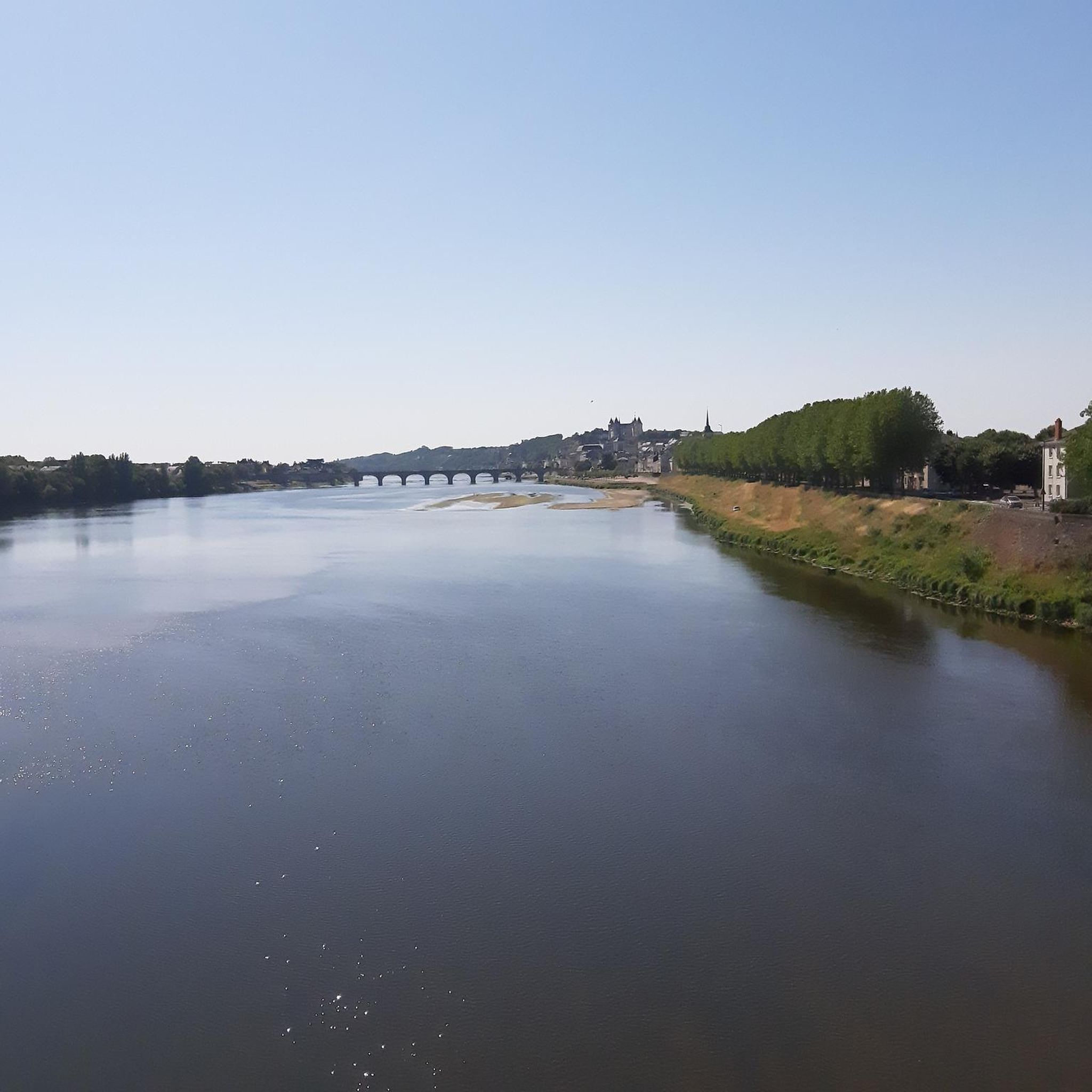
City on the banks of the Loire with dazzling white walls and iridescent blue roofs, Saumur tells the chapters of its history to the powerful and majestic rhythm of the river. Royal city and princely castle, place of security and Protestant intellectual centre, equestrian capital with the evocative name of fine bubbles or still wines, it is all these events and all this know-how that the river serenely reflects at the foot of the limestone hill.
3
0


This is the historic center of old Saumur, where you'll pass several times if you visit the town. You'll admire several half-timbered houses as well as the Saint-Pierre church. There's a local produce market on Saturday mornings and many restaurants.
1
0
Frequently Asked Questions
What historical sites can I explore in and around Meigné?
Meigné and its surroundings are rich in history. You can visit the Saint-Pierre Church in Meigné, which features 12th-century vestiges and a 15th-century bell tower. The village also preserves traces of unique Troglodyte or Semi-Troglodyte Habitats. Nearby, don't miss the ancient Menhir de Vaujours, a leaning megalithic stone from the Neolithic era. Further afield, the magnificent Château de Saumur, built from the 10th century, offers a deep dive into Renaissance and Medieval history, complete with art collections and stunning views. Another significant site is Notre Dame des Ardillieres, a historical religious site with a fascinating pilgrimage history.
What natural attractions are there to visit near Meigné?
The region around Meigné boasts beautiful natural landscapes. Meigné is situated on the edge of the State Forest of Milly, offering extensive opportunities for outdoor activities. You can also visit Val Joyeux Lake, a landscaped area perfect for leisure activities and walks, and Lake Mousseaux, a 198-hectare lake known for its wild nature and birdwatching opportunities. The Étang de Joreau, created by monks for fish farming, is another lovely spot with picnic areas, fishing, and walking paths through surrounding woods.
Are there opportunities for hiking or walking around Meigné?
Absolutely! The State Forest of Milly, bordering Meigné, provides numerous trails for hiking and walking. The Étang de Joreau also features easy and pleasant walks through its surrounding woods. For more structured routes, you can explore various running trails, such as the 'Butte de Pufujuin loop from Les Ulmes' or the 'Marson Castle loop from Rou-Marson'. Find more details on these and other routes in the Running Trails around Meigné guide.
Can I go cycling near Meigné?
Yes, the area around Meigné is well-suited for cycling. The State Forest of Milly offers paths for cycling, and the general region provides diverse terrain. For road cyclists, routes like the 'View of Île du Buisson Rouge – Marson Castle loop' or the 'Historic Center of Saumur – Bouvet Ladubay Cellar loop' are available. Gravel biking enthusiasts can find routes such as the 'Loire Riverside at Turquant – Troglodyte houses loop'. You can discover more options in the Road Cycling Routes around Meigné guide and the Gravel biking around Meigné guide.
Are there family-friendly activities or attractions in the Meigné area?
Meigné offers several family-friendly options. The Étang de Joreau is ideal for families, with picnic areas, fishing spots, and easy walking paths. The State Forest of Milly is also great for family walks and exploring nature. A visit to the Château de Saumur can be engaging for all ages, with its historical exhibits, gardens, and panoramic views.
Where can I enjoy birdwatching or observe wildlife?
For birdwatching and wildlife observation, Lake Mousseaux is an excellent choice. It's classified as a site of European interest for birds due to its abundant flora and gently sloping banks. There's a small wooden hut serving as a viewing platform, perfect for using binoculars. The Wildlife Observatory near Lake Mousseaux also provides opportunities to observe birds inhabiting swampy areas. The Étang de Joreau is another spot where you can observe swans, ducks, and other birds.
What is the best time of year to visit Meigné's attractions?
The best time to visit Meigné's attractions largely depends on your interests. For outdoor activities like hiking and cycling in the State Forest of Milly or around the lakes, spring and autumn offer pleasant temperatures and beautiful scenery. Summer is ideal for enjoying leisure activities at Val Joyeux Lake and Étang de Joreau. Historical sites like the Château de Saumur and churches can be visited year-round, though some may have reduced hours in winter.
Are there any unique historical dwellings in Meigné?
Yes, Meigné preserves fascinating traces of Troglodyte or Semi-Troglodyte Habitats. These unique cave dwellings, ranging from modest to seigniorial, offer a glimpse into a distinctive historical way of life in the region.
What is the significance of the Château de La Tremblaye?
The Château de La Tremblaye is a historically significant seigniorial castle in Meigné. Though rebuilt in the 16th century and remodeled in the 17th, it retains its historical importance. It is currently undergoing restoration with plans to develop a new tourist and cultural role, potentially hosting exhibitions and concerts in the future.
What do visitors particularly enjoy about the attractions around Meigné?
Visitors to the Meigné area appreciate the blend of historical heritage and natural beauty. The Château de Saumur is highly popular for its historical depth and exceptional views. The tranquil setting of Étang de Joreau is loved for relaxation and walks, while the charm of religious sites like Saint-Pierre Church of Montsoreau also draws interest. The komoot community has shared over 290 photos and given more than 500 upvotes to the attractions, highlighting their appeal.
Are there any easy walks suitable for all abilities near Meigné?
Yes, several easy walks are available. The shaded path around Val Joyeux Lake is suitable for a leisurely stroll. The Étang de Joreau also offers easy and pleasant walking paths through its surrounding woods, perfect for all ages and abilities. These locations provide gentle terrain and scenic views without requiring strenuous effort.
Can I find places to eat or drink near the attractions?
While specific cafes and restaurants in Meigné itself are not detailed, the nearby Saint-Pierre Church of Montsoreau is located in an area traditionally known for bistros, where social life thrives. The wider region, especially around larger attractions like the Château de Saumur, will offer various dining options.
Most popular attractions around Meigné

Get inspired with the komoot mobile app


Explore more
Still not found the Highlight you’re looking for? See guides of the top attractions in other regions:
