The best cycling routes around Saint-Georges-De-Montaigu
4.3
(222)
1,393
riders
20
rides
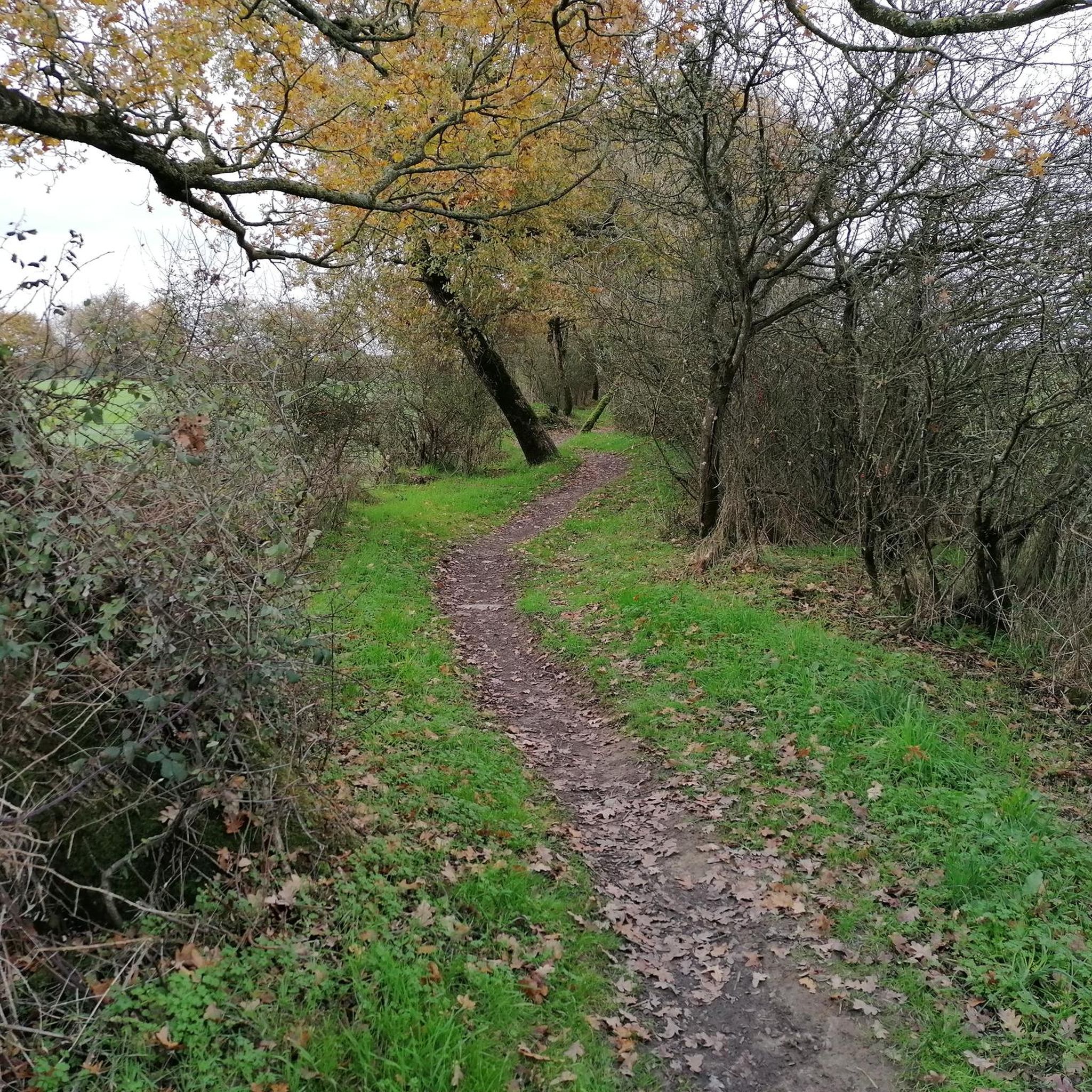
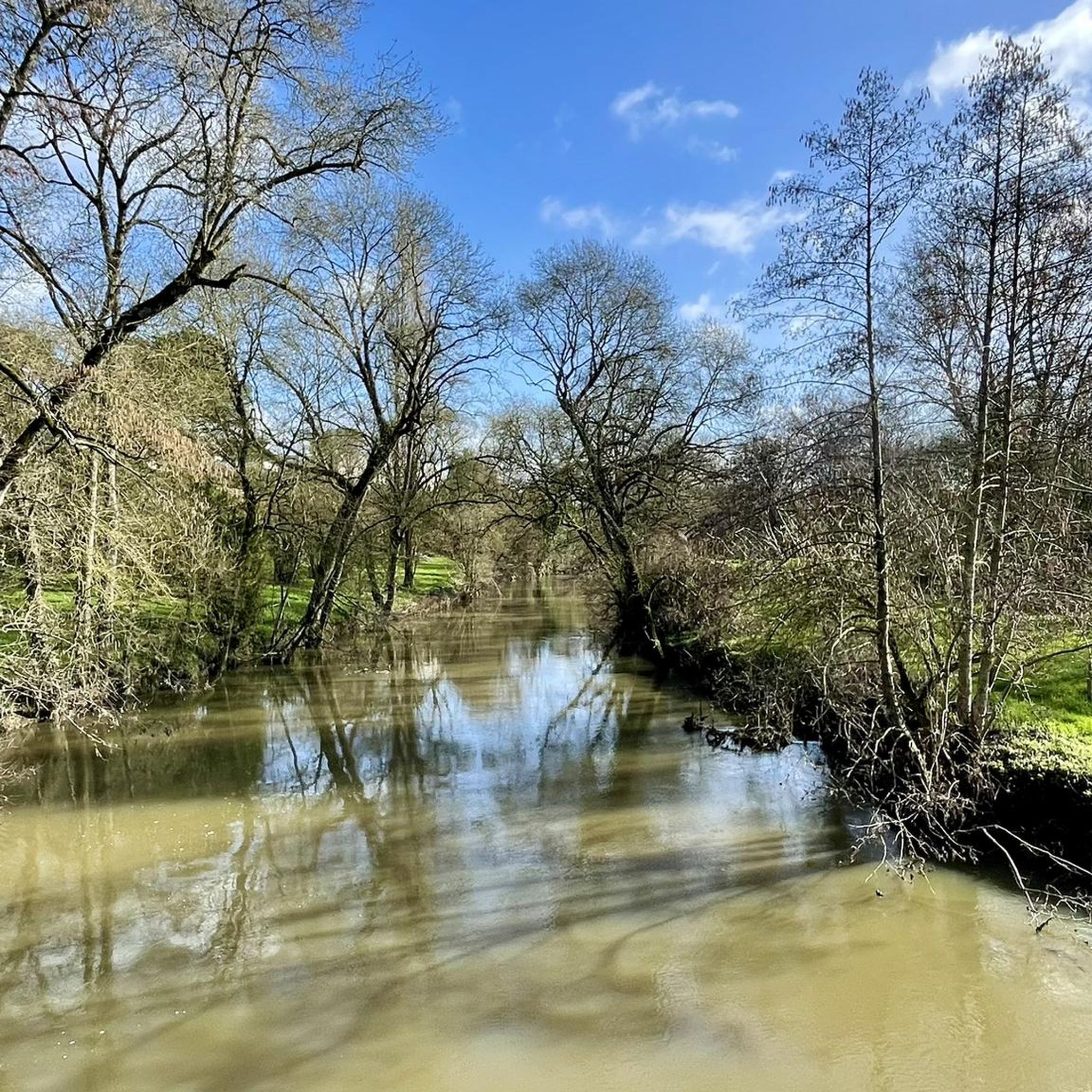
Touring cycling routes around Saint-Georges-De-Montaigu are set within a varied landscape, characterized by a low-altitude bocage plateau in Vendée, generally between 50 and 70 meters. The region features open agricultural areas interspersed with villages and farms. Deeply incised valleys of the Grande Maine and Petite Maine rivers offer gently sloping terrain, lush woodlands, and abundant water. These natural features create picturesque scenery for cyclists.
Best touring cycling routes around Saint-Georges-De-Montaigu
- The most popular touring cycling route is Le Moulin Gros…
Last updated: May 8, 2026
4.8
(16)
22
riders
15.8km
00:58
110m
110m
Easy bike ride. Great for any fitness level. Mostly paved surfaces. Suitable for all skill levels.
6
riders
57.2km
03:37
320m
320m
Moderate bike ride. Good fitness required. Mostly paved surfaces. Suitable for all skill levels.

Sign up for free
3.0
(3)
6
riders
Easy bike ride. Great for any fitness level. Mostly paved surfaces. Suitable for all skill levels.
4.0
(4)
3
riders
18.4km
01:06
110m
120m
Easy bike ride. Great for any fitness level. Mostly paved surfaces. Suitable for all skill levels.
5.0
(1)
8
riders
Easy bike ride. Great for any fitness level. Mostly paved surfaces. Suitable for all skill levels.
Get access to more routes and recommendations from other explorers.
Sign up for free
Already have an account?
Our route recommendations are based on thousands of hikes, rides, and runs completed by other people on komoot.
Start today with a free account
Your next adventure awaits.
Login or Signup



Tips from the Community

A beautifully restored old watermill, in the heart of a beautiful natural site.
0
0
19th century church whose unfinished bell tower was topped with a slate spire which clashes a little - a lot - with the rest of the monument.
0
0

The River House is a preserved natural setting spanning over 10 hectares where art and nature blend together. Imagine a river and its watermill, surrounded by 10 hectares of nature... Boat trips on the Grande Maine, family treasure hunts, twilight strolls, onboard drinks, and an art exhibition with free access on the shaded banks and in the old mill.
0
0
. Originally, there was an ovoid-shaped enclosure flanked by about ten towers and a gatehouse, located to the northeast. The fortified town was located to the north of the fortress and extended a little to the east. A dry moat separated the fortified town from the fortress. A barbican protected the gatehouse. A Romanesque keep of the Niort type, with its courtyard and small enclosure, was located in the castle courtyard, roughly in the middle in the north-south direction and located to the west. The fortified city extended from the rue de Gaulle, a gate was located at the level of the Carré de l'Europe (the porte de Nantes), then the ramparts continued along the rue de la Place du Champ de Foire, then went back down the Esplanade des Olivettes, where a gate was located towards the roundabout of the rue des Jardins (porte de Tiffauges) then the ramparts ran along the Asson to go up the rue du Pont Jarlet and around the barbican not far from the Presbytery The dry moats surrounding the city were 16 meters deep in the 15th century, today they are flowered and are the subject of different colored squares decorating this part of the ramparts.
0
0
In the 9th century, a castrum, a wooden castle built on a mound of earth, was built to counter the Viking raids that had previously sacked the city of Durivum (Saint-Georges-de-Montaigu). For strategic reasons, this fortress was built on a rocky spur at the junction between the Maine and Asson rivers. Maurice I of Montaigu, the first known lord, witnessed the consecration of the church of Saint-Nicolas de la Chaize-le-Vicomte in 1099. His successor until 1174 was Brient I of Commequiers, married to his daughter, Agathe de Montaigu. Later, his grandchildren, Brient II, Maurice II "the Younger," and Marguerite, succeeded him. It was perhaps this Brient II who had the Romanesque keep built in 1218, a large square tower with flat corner towers. He also removed the wooden palisade, replacing it with a wide moat extending to the Saint-Georges Gate. The Montagues (also known as Belleville by marriage around 1180) pledged allegiance to the Plantagenets, Henry II, Richard the Lionheart, and John Lackland. Margaret of Belleville-Montaigu, daughter of Brient de Montaigu and Agnes de Belleville, granddaughter of Maurice I de Montaigu, sister of Maurice II de Belleville-Montaigu, married Hugh of Thouars in 1203. In 1227, the couple submitted to Philip Augustus through the ceremony of homage. Hugh of Thouars died in 1229, and Margaret remarried in 1235 to the Duke of Brittany, Mauclerc, whose real name was Pierre de Dreux. Marguerite de Montaigu died in 1241, childless. The lordship of Montaigu fell to her nephew, Maurice III de Belleville-Montaigu (d. c. 1297; son of Maurice II). He became lord of Montaigu upon the death of Mauclerc in 1250[2], and his son Maurice IV (d. c. 1292) ensured the succession through his children Jeanne (d. 1284 Geoffroy II David de La Flocellière) and Maurice V de Belleville-Montaigu (he married 1° Sibylle, daughter of Geoffroy VI de Châteaubriant, then 2° Isabelle/Létice de Parthenay, daughter of Guillaume V Larchevêque de Parthenay). Jeanne de Belleville (c. 1300-c. 1359), daughter of Maurice V of Montaigu and Létice of Parthenay, married Olivier IV of Clisson for the second time in 1328. Olivier IV was executed by beheading after being suspected of "felony" against the English, during the Hundred Years' War. Jeanne became a privateer with her children Olivier V and Jeanne de Clisson, in revenge, and was banished from the kingdom of France. While she attacked French ships, the fortress of Montaigu was held by the English, according to the Treaty of Brétigny-Calais, a garrison of which engaged in pillaging the surrounding area. Jeanne lost her ship and withdrew with her children to England. Olivier V, having grown up, rallied to the king of France, recovered his property in 1362 and fought the English with Bertrand du Guesclin. In 1373, Olivier and Bertrand succeeded in driving the English out of Montaigu, and Olivier ceded the lordship to his sister Jeanne, who had married an English captain, Jean Harpedenne. The latter sided with the King of France in 1373 and became Jean de Belleville. His grandson, Jean III, married Charles VII's half-sister, Marguerite de Valois, in 1433. Louis I de Belleville succeeded Jean III. King Louis XI advised him to fortify the town between 1464 and 1468 to protect it from the Bretons.
0
0
The church of Saint-Georges-de-Montaigu, in Vendée, Pays de la Loire, is part of the parish of Saint Martin de Montaigu in the deanery of Montaigu in the diocese of Luçon. In many regions, Saint George is considered the patron saint of knights, particularly thanks to the legend recounting his miraculous intervention in Antioch during the First Crusade. June 15, 2012
0
0
We stayed at the Durivum during this trip. This renovated house offers five spacious and bright bedrooms, featuring high-end bedding and hotel-like amenities. In addition, a small apartment for two people, located on the other side of the interior courtyard, allows you to feel right at home. To relax, a wellness area (private use €20/hour) equipped with a jacuzzi, a traditional sauna, a bathroom, a lounge with a billiards table is available year-round, as is the swimming pool, but only during peak season. Contact them directly; they are very friendly and attentive. 07 52 06 84 03
0
0

This chapel is the remaining remnant of a commandery (a branch of the order) of the community often referred to as the "Order of the Templars" or "Knights Templar", whose full name is "Poor Knights of Christ and of Solomon's Temple in Jerusalem". The association gained notoriety due to the fact that in 1312 this order was dissolved by the French king and the pope and many members were burned at the stake as alleged heretics. The main reason for the dissolution was not the human and religious misconduct/heresy of the members, which was claimed as the motive, but the legendary wealth of this order. With his meticulously planned approach, King Philip IV of France primarily wanted to secure their possessions in order to improve his coffers.
4
0
Frequently Asked Questions
How many touring cycling routes are available in Saint-Georges-De-Montaigu?
There are over 20 touring cycling routes around Saint-Georges-De-Montaigu, offering a variety of options for exploring the region's landscapes.
What is the general terrain like for touring cycling in Saint-Georges-De-Montaigu?
The terrain primarily features a low-altitude bocage plateau, generally between 50 and 70 meters, with open agricultural areas. The deeply incised valleys of the Grande Maine and Petite Maine rivers offer gently sloping paths through lush woodlands, creating picturesque scenery for cyclists.
Are there routes suitable for beginners or less experienced cyclists?
Yes, the majority of routes in Saint-Georges-De-Montaigu are considered easy. Out of the over 20 available routes, 14 are rated as easy, making them ideal for beginners or those looking for a relaxed ride.
What natural features or landmarks can I expect to see along the cycling routes?
You can explore the preserved natural area around the Maison de la Rivière, cycle along the banks of the Grande Maine and Petite Maine rivers, and pass by lakes such as Lac de la Bultière. Many routes also offer views of the local bocage landscape and woodlands.
Are there any historical sites accessible by touring bike?
Yes, you can encounter historical elements like the 13th-century Pont Boisseau, known for its ogival arches. Routes such as the Church of St Georges – Durivum, a haven of peace loop from Saint-Georges-de-Montaigu also pass by the Church of St Georges, hinting at the region's Gallo-Roman and medieval past.
What do other cyclists say about the touring routes in Saint-Georges-De-Montaigu?
The routes in Saint-Georges-De-Montaigu are highly rated by the komoot community, with an average score of 4.3 stars from nearly 200 reviews. Over 1200 touring cyclists have used komoot to explore the varied terrain, often praising the scenic river valleys and accessible paths.
Are there any circular touring cycling routes in the area?
Yes, many of the touring cycling routes in Saint-Georges-De-Montaigu are circular. For example, the Château and Étang d'Asson – Lake Chausselière loop from Saint-Georges-de-Montaigu offers a pleasant 28.3 km loop, and the Church of St Georges – Durivum, a haven of peace loop from La Guyonnière is another great circular option.
Are there any routes that are part of a larger cycling network?
Yes, Saint-Georges-De-Montaigu is part of the broader Vendée Vélo Tour. This network guides cyclists along the banks of the Grande Maine River, utilizing well-laid-out cycle paths and quiet country roads. You can find more information about the Vendée Vélo Tour on France Vélo Tourisme.
What are some longer touring cycling routes for a more extended ride?
For a longer ride, consider the Château and Étang d'Asson – Lake Chausselière loop from Saint-Georges-de-Montaigu, which is 28.3 km long. This route allows you to explore the Lac de la Chausselière and local châteaux.
Are there family-friendly cycling options in Saint-Georges-De-Montaigu?
The region's generally easy terrain and dedicated cycle paths make it suitable for families. Many routes, like the 18.5 km Lake Chausselière – River House loop from Saint-Georges-de-Montaigu, are relatively flat and pass through scenic, safe areas, perfect for a family outing.
What is the best time of year for touring cycling in Saint-Georges-De-Montaigu?
The region's mild climate generally makes spring and autumn ideal for touring cycling, with comfortable temperatures and vibrant natural scenery. Summer can also be pleasant, especially when cycling along the shaded river valleys.
Most popular routes around Saint-Georges-De-Montaigu
Most popular attractions around Saint-Georges-De-Montaigu

Get inspired with the komoot mobile app


Explore more
Browse the best Cycling routes in other regions.
