The best cycling routes around Caussiniojouls
4.7
(299)
2,487
riders
172
rides
Touring cycling around Caussiniojouls offers a diverse landscape for cyclists, characterized by a mosaic of terrain. The region features the Orb valley, the Caroux massif, and the Coteaux Viticoles du Faugérois, providing varied topography from steep escarpments to gentle valleys. Cyclists can navigate through Serres, basins, and small causses, with routes often passing through vineyards and alongside waterways like the Canal du Midi. This area provides a range of environments for touring cyclists.
Best touring cycling routes around Caussiniojouls
- The…
Last updated: August 28, 2026
24
riders
67.1km
04:32
1,080m
1,080m
Hard bike ride. Very good fitness required. Mostly paved surfaces. Suitable for all skill levels.
18
riders
35.7km
03:18
820m
820m
Hard bike ride. Very good fitness required. Mostly paved surfaces. Suitable for all skill levels.

Sign up for free
14
riders
24.6km
02:33
760m
750m
Hard bike ride. Very good fitness required. Mostly paved surfaces. Suitable for all skill levels.
4.0
(1)
9
riders
19.4km
01:18
340m
340m
Moderate bike ride. Good fitness required. Mostly paved surfaces. Suitable for all skill levels.
6
riders
30.6km
03:05
910m
910m
Hard bike ride. Very good fitness required. Mostly paved surfaces. Suitable for all skill levels.
Get access to more routes and recommendations from other explorers.
Sign up for free
Already have an account?
Our route recommendations are based on thousands of hikes, rides, and runs completed by other people on komoot.
Start today with a free account
Your next adventure awaits.
Login or Signup
Tips from the Community

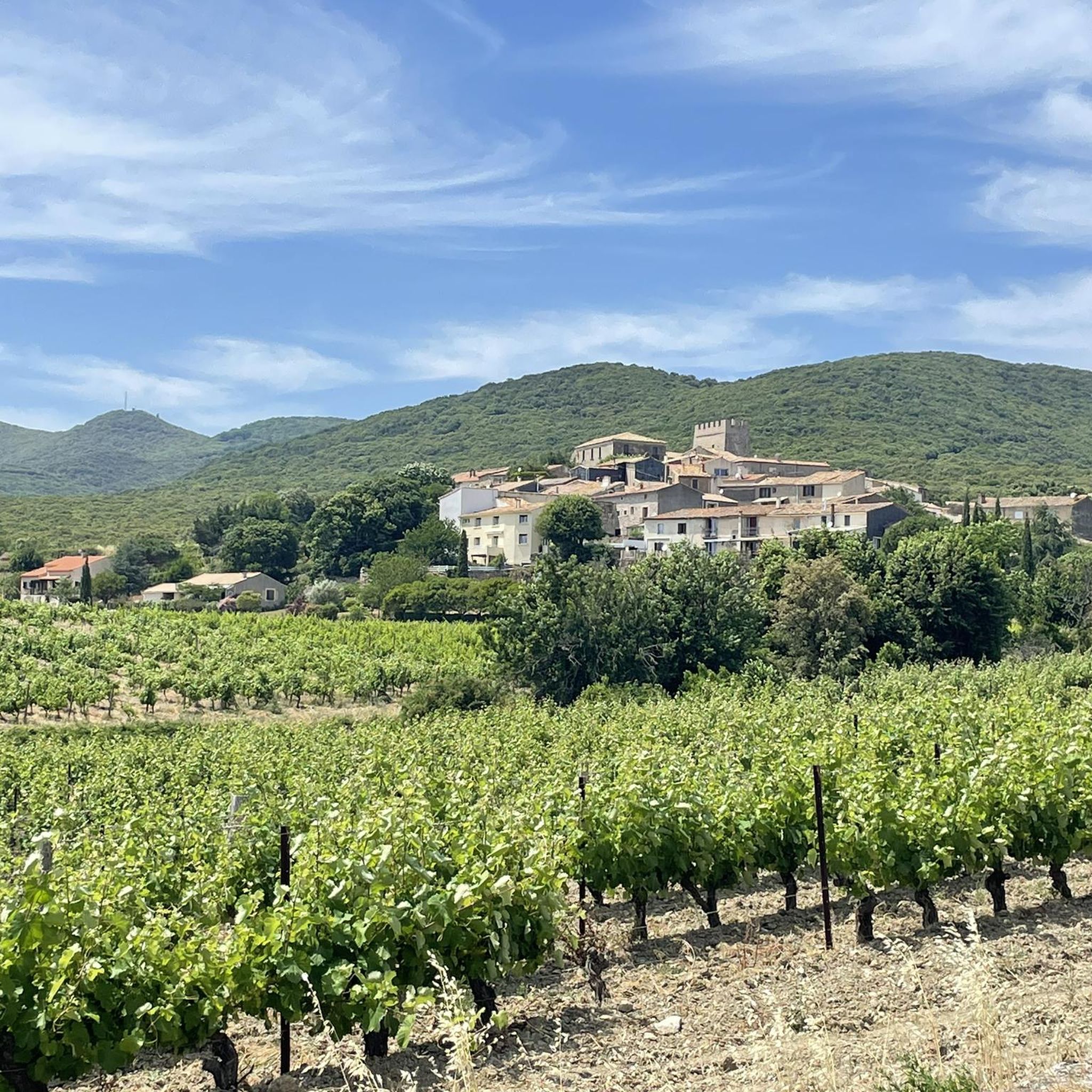
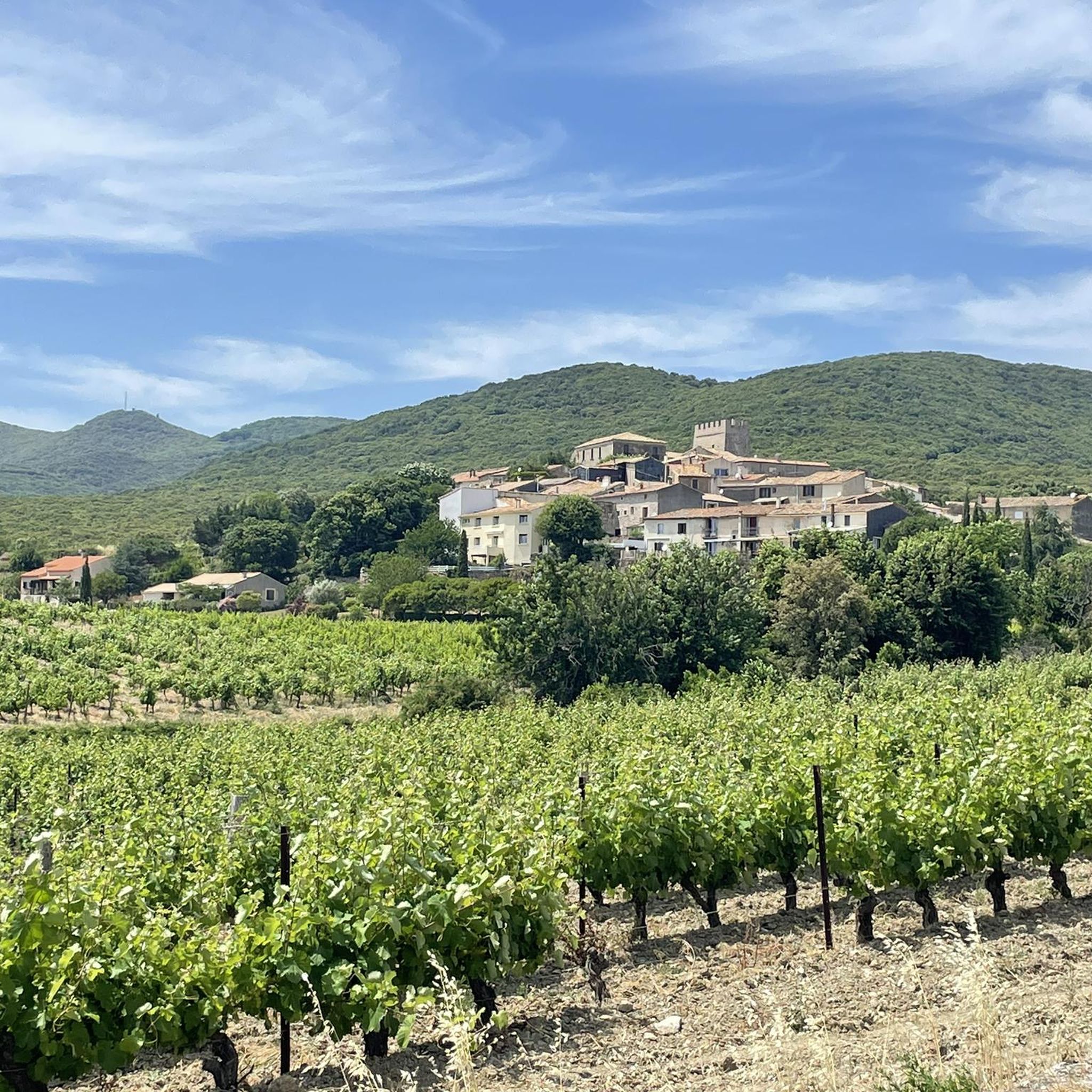
The castle overlooks Pézènes-les-Mines from the upper part of the village. This castle is private, but its facades, roofs, and enclosure have been protected as historical monuments since 1981. Its history is ancient, but the ensemble we see today is the result of several construction and transformation campaigns. The Romanesque chapel, integrated into the castle, dates back to the 12th century. Its apse was later raised in the 14th century to take on a defensive function. The castle itself underwent significant alterations in the 14th, 16th, and 17th centuries. Two gates were notably built into the enclosure in the 17th century. The defensive elements are still very legible: two gates with arrow slits controlled access to the courtyard and were once protected by a drawbridge. Two towers flank the ensemble, while the enclosure follows the natural irregularities of the terrain. The chapel also retains a rather remarkable detail: its door and some of its bays are decorated with basalt inlays, giving the building a discreet but original polychromy. Pézènes-les-Mines was not always the small village one might imagine today. Pézènes was the capital of a marquisate that grouped the communities of Pézènes, Montesquieu, and Valmascle. The castle was therefore at the heart of a larger seigneurial territory. Little-known information: A plan from 1800 shows that behind the castle stretched a long terrace of about 270 meters, arranged as a garden, promenade, and belvedere overlooking the Peyne valley.
1
0
The landscape opens onto the hamlet of Ceps, nestled on the banks of the Orb river. This village boasts a Romanesque church from the 12th century, a testament to ancient human presence in this enclosed area. Behind it, the wooded reliefs of the Haut-Languedoc form a natural backdrop that seems to protect the village.
1
0
From this developed viewpoint, the Orb valley reveals all its richness. Below, the river draws large meanders between the wooded reliefs of the Haut-Languedoc. In the heart of the valley appears the domain of Graïs, while in the distance the villages of Boissezon and Vieussan integrate into this mountain landscape. This view offers a true reading of the territory: water, rock, and forest have shaped a valley where humans have established their villages by adapting to the terrain.
1
0
Roquebrun is much more than a pretty village on the banks of the Orb. Occupied since the Neolithic period, it is dominated by a Carolingian tower built around 900 to watch over the valley. But what makes it truly unique is its microclimate: sheltered from the north winds, it hosts orange, lemon, palm, and cactus trees in the open ground, a very rare phenomenon in the Hérault hinterland. This mildness has earned it the nickname of the "Nice of the Hérault" and has allowed the creation of a remarkable Mediterranean Garden on the terraces overlooking the village. An essential detour, as much for its history as for its atmosphere.
0
0

Very picturesque village of Roquebrun
0
0
A magnificent view of the reliefs around Plaussenous. On the horizon, the Caroux massif stands out in particular, a true emblem of the region. Its characteristic silhouette, nicknamed “the reclining lady”, is easily recognizable in the landscape: the ridge line evokes the profile of a woman lying stretched out facing the sky.
2
0
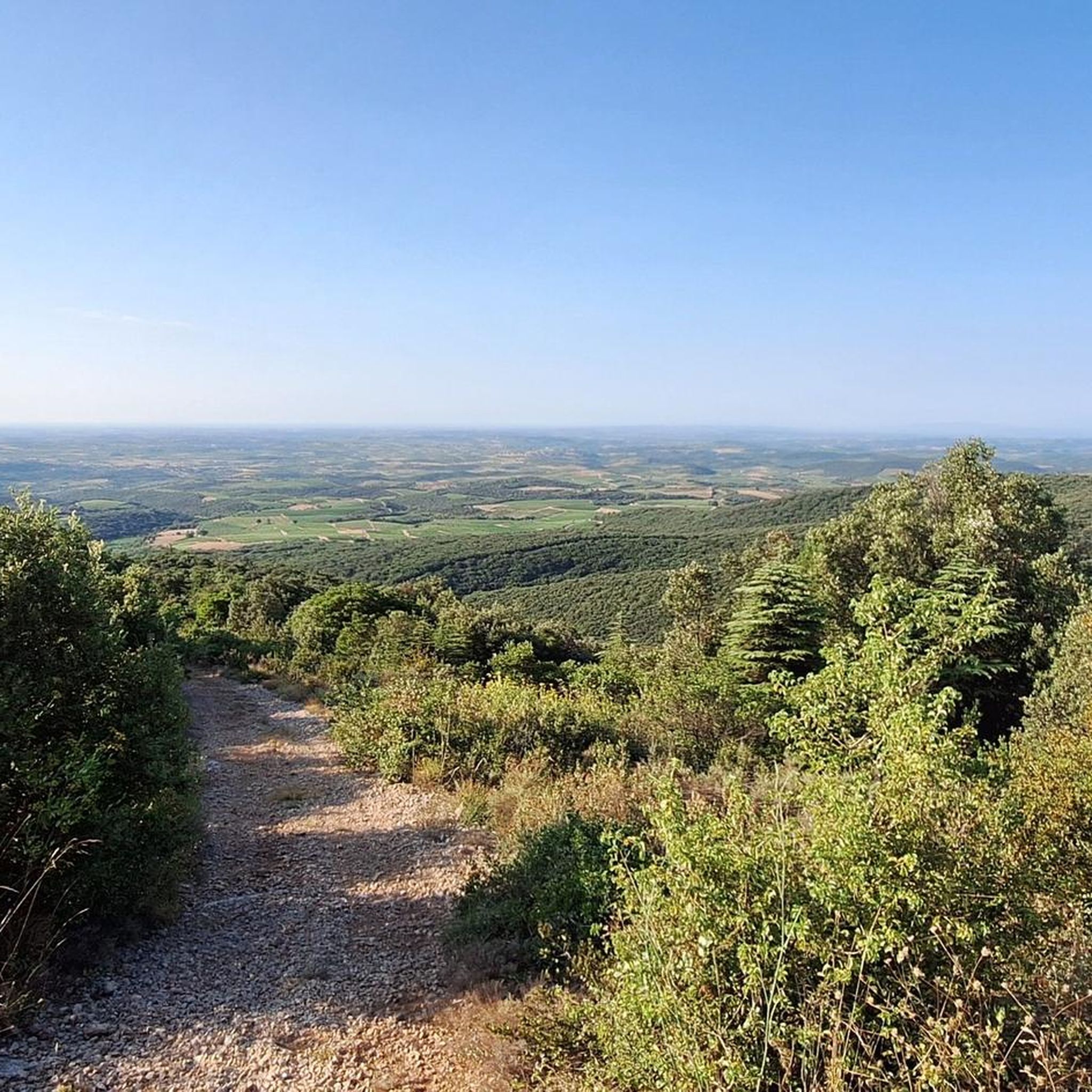
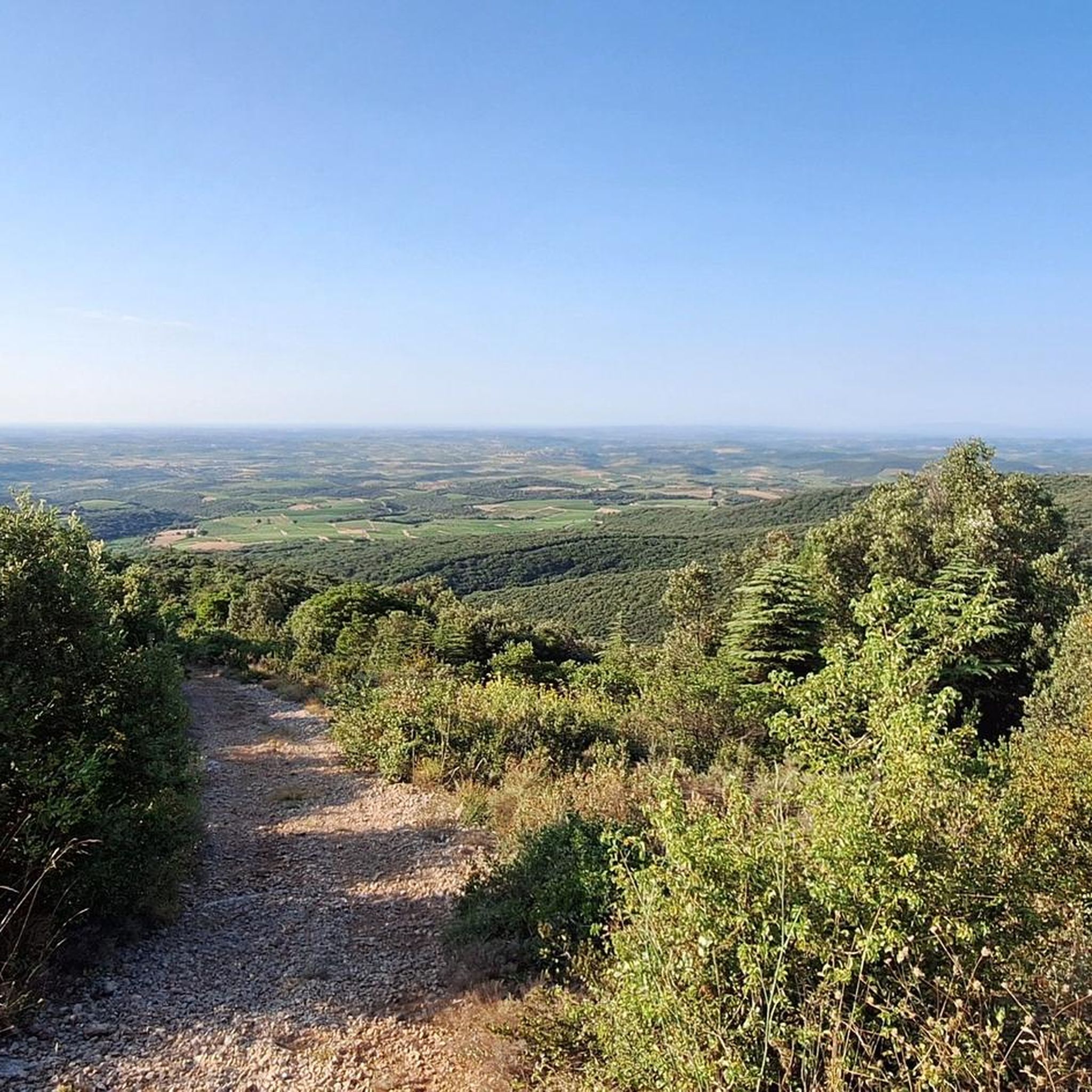
A pleasant gravel route to reach its summit (690m). Clear view of the Orb valley and the Caroux-Espinouse massif.
2
0

Beautiful river valley around Roquebrunes
0
0
Frequently Asked Questions
What kind of terrain can I expect when touring cycling around Caussiniojouls?
The region around Caussiniojouls offers a diverse landscape for touring cyclists. You'll encounter a mosaic of terrain, including the Orb valley, the Caroux massif, and the Coteaux Viticoles du Faugérois. This provides varied topography, from steep escarpments to gentle valleys, with routes often passing through extensive vineyards, alongside waterways like the Canal du Midi, and through areas known as Serres, basins, and small causses.
Are there routes suitable for beginners or those looking for an easier ride?
Yes, while many routes in the area are challenging, there are options for all skill levels. Out of over 150 touring cycling routes, 15 are classified as easy, and 49 are moderate. These routes often traverse the gentler slopes of the vineyards or follow flatter sections along river valleys, providing a more relaxed experience.
What are some notable natural features or landscapes I'll encounter on the routes?
You'll frequently cycle through scenic vineyards, especially in the Faugères area, known for its AOP wines. The air is often scented with aromatic herbs, and routes are lined with olive trees, arbutus trees, holm oaks, cork oaks, and chestnut trees. The Orb valley is a prominent feature, and you'll find routes offering views of the surrounding landscape, including the slopes of the Caroux massif. The region is also close to the Haut-Languedoc Regional Natural Park, offering deep forests and wild heathlands.
Are there any dedicated cycling paths or greenways in the area?
Yes, the Passa Païs is a notable greenway (voie verte) in the Hérault, built on a former railway line. It's ideal for relaxed touring cycling through picturesque scenery, often following the Orb valley and passing through tunnels. The V84 / Véloccitanie also traverses the Haut-Languedoc Regional Natural Park, offering varied terrain through vineyards and hills.
What historical sites or charming villages can I visit along the touring cycling routes?
Many routes lead through enchanting medieval villages. For example, you can explore Boussagues Medieval Village, known for its well-preserved heritage. The town of Faugères is also a frequent point of interest on several routes, offering historical charm. Other nearby picturesque villages include Roquebrun, set on the River Orb, and Olargues, known for its medieval center.
Are there any circular touring cycling routes available?
Yes, many of the touring cycling routes around Caussiniojouls are designed as loops. For instance, the challenging View of Roquebrun – Roquebrun loop from Laurens covers 65.4 km, and the Faugères loop from Faugères is a moderate 19.4 km ride through vineyards and hills.
What do other touring cyclists say about the routes in Caussiniojouls?
The touring cycling routes around Caussiniojouls are highly rated by the komoot community, with an average score of 4.6 stars from over 200 reviews. Cyclists often praise the diverse terrain, from the challenging climbs in the Caroux massif to the scenic rides through the vineyards and charming villages.
Can I find routes that offer significant elevation gain for a challenging ride?
Absolutely. The region is well-suited for cyclists seeking a challenge. Routes like Pic de la Coquillade – Coquillade Peak loop from Caussiniojouls feature over 740 meters of elevation gain over 23.5 km. Another demanding option is Moulin - Les Trois Tours – Faugères loop from Faugères, which includes over 1000 meters of climbing.
Are there any specific attractions or points of interest along the routes near Caussiniojouls?
Beyond the natural beauty, you can find several points of interest. The Faugères – Bédarieux via the D13E8 trail offers scenic views, and the Chemin des Fleysses is another highlight. Many routes pass through or near the historic village of Faugères, which features a notable religious building.
What is the best time of year for touring cycling in Caussiniojouls?
The region benefits from its Mediterranean climate. Spring and autumn generally offer the most pleasant conditions for touring cycling, with milder temperatures and less intense sun than the peak summer months. During these seasons, the vineyards are particularly beautiful, and the aromatic herbs are vibrant.
Are there any routes that follow rivers or canals?
Yes, the Orb valley is a prominent feature, and routes like the Passa Païs greenway often follow the river. While further afield, the Canal du Midi is also accessible in the broader Hérault region, providing flat, waterside routes that are ideal for relaxed touring.
What kind of geological formations can I see while cycling in the area?
The area boasts unique geological attractions. While cycling, you might be within reach of the dramatic rock formations of the Cirque de Mourèze or the distinctive red earth around Lac du Salagou. The Gorges de l'Hérault are also within reach, offering impressive natural scenery.
Most popular routes around Caussiniojouls
Most popular attractions around Caussiniojouls

Get inspired with the komoot mobile app


Explore more
Browse the best Cycling routes in other regions.
