Attractions and Places To See around Saint-Romain-De-Benet - Top 20
Best attractions and places to see around Saint-Romain-De-Benet include a blend of historical landmarks, cultural sites, and access to natural beauty within the Charente-Maritime department of France. This area is situated on an ancient Roman road, offering a rich historical context. Visitors can explore Romanesque architecture, ancient ruins, and local traditions. The surrounding landscape features forests, fields, and vineyards, providing opportunities for outdoor activities.
Best attractions and places to see around Saint-Romain-De-Benet
- The most popular attractions is Riberou Port,…
Last updated: May 11, 2026
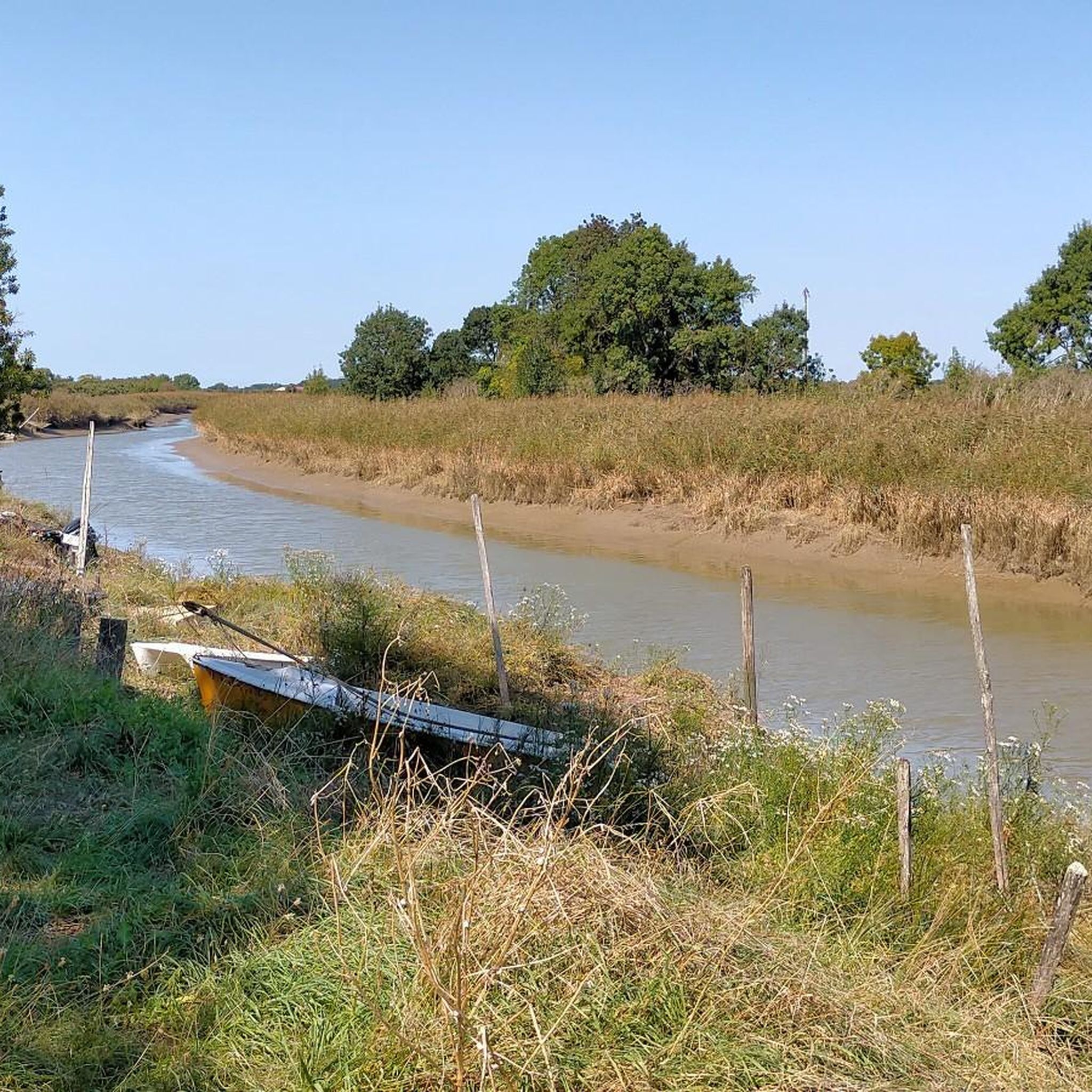
Riberou Port
Highlight • Settlement
Translated by Google •
Tip by

You can spot a church by its steeple,
Highlight • Other
Translated by Google •
Tip by

Sign up now to discover places like this
Get recommendations on the best single tracks, peaks, & plenty of other exciting outdoor places.
Sign up for free
Notre-Dame Church of Corme-Écluse
Highlight • Religious Site
Translated by Google •
Tip by
Saint-Romain Church of Saint-Romain-de-Benet
Highlight • Religious Site
Translated by Google •
Tip by
Saint Sulpice Church, Saint-Sulpice-d'Arnoult
Highlight • Religious Site
Tip by
Sign up for free to discover even more attractions around Saint-Romain-De-Benet.
Sign up for free
Already have an account?
Start today with a free account
Your next adventure awaits.
Login or Signup

Tips from the Community

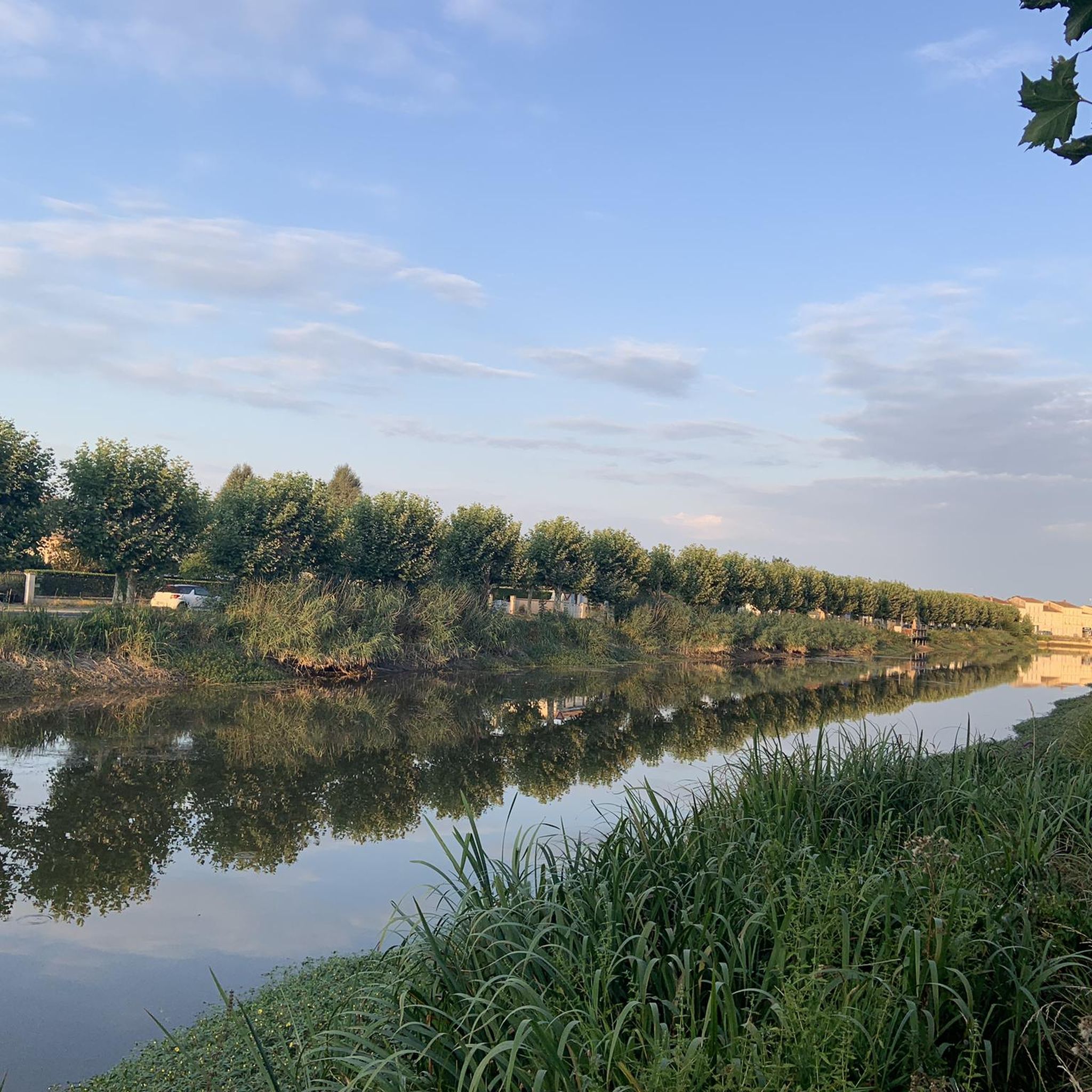
The port of Ribérou is a major heritage site in Saujon, bearing witness to a prosperous maritime past linked to the salt and wine trade. Transformed in the 19th century by ambitious works, it has now been reinvented as a place for living, relaxation, and preserving local history. 🛶 Origins and the Middle Ages The port of Ribérou takes its name from the Latin word ripa ("riverbank") or the Occitan word ribèira ("river"). It is located at the head of the Seudre estuary. It existed as early as the 11th century and became an important river and sea port thanks to its strategic position at the head of the estuary, used particularly for the salt trade—then called "white gold"—a highly sought-after product for preserving food. 🚢 Medieval Period and International Trade With the opening of British markets during the reigns of Eleanor of Aquitaine and Henry II Plantagenet, ships laden with wool, salt, wine, and other goods flocked to Ribérou. In the 16th century, the port exported local wines (such as cognac and pineau) throughout Europe. In 1577, during the Wars of Religion, the port was a strategic site: troops were stationed there, and battles took place. 🏗️ Decline, Reconstruction, and the 19th Century The estuary gradually silted up, making navigation difficult. By 1691, only smaller vessels could dock there. During the French Revolution, the sale of the tidal mill, which helped remove sediment, worsened the silting, leading to the port's decline. A modernization project began in 1822, but it wasn't until 1839 that an ambitious program was launched under the impetus of Jules Dufaure—a native of Saujon and Minister of Public Works—with the construction of sturdy quays, slipways, a lock bridge (marking the boundary between fresh and salt water), and reception facilities. In 1842, the work was completed, and the main quay was named Quai Dufaure in honor of this political support. 📉 Gradual Decline and Modernization The arrival of the railway in 1876 and the persistent problems of silting led to a decline in the port's traditional commercial activity, already facing competition from other transport networks. In the 20th century, the port gradually lost its economic importance but remained active for traditional fishing and became a place for pleasure boating, leisure, and local culture. Urban and tourism development projects (particularly in 2011–2012) modernized the port while preserving its historical charm. 🌊 Today The port of Ribérou is now a small fishing and pleasure port, much appreciated for its walks along the Seudre River, water sports (canoeing, kayaking, paddleboarding, etc.), and seasonal events.
0
0

The church suffered little damage during the Hundred Years' War and the Wars of Religion. From the end of the 18th century, maintenance work was undertaken mainly inside the church. In 1822, the reconstruction of the bell tower framework began, followed in 1852 by the restoration of the west facade. A further restoration took place around 1860, and the sacristy was enlarged by the construction of a semicircular annex extending the Romanesque apse. Beginning in 1880, a roof repair campaign began, and a new belfry was installed in the bell tower. From 1890 to 1900, the cemetery surrounding the church was moved to the "Fief des Rentes," and the former burial site was transformed into a public square. Starting in 1926, the choir roof was replaced and the bell tower was made watertight. In 1971, the work program included the renovation of the exterior walls, the demolition of the false apse and the sacristy that concealed the apse of the south transept. In 1990, the main door was replaced with oak leaves, the stones were repointed, and the collapsed arch keystone was reinstalled. In the 2000s, the municipality repaired the mechanism of the two belfry bells, and the building was illuminated and maintenance work was carried out.
0
0
The Church of Our Lady of Corme-Écluse, the seat of a former Benedictine priory of the Abbey of the Ladies of Saintes, was donated around 1104 by Ramnulfus Focaudi (Bishop of Saintes between 1083 and 1106) to the Royal Abbey of Saint-Jean-d'Angély "so that he might always enjoy it and possess it in perpetuity." This abbey was thus responsible for the reconstruction of the sanctuary in the mid-12th century in the Romanesque style. A plaque affixed to the south wall of the nave contains a few historical snippets, still legible: 1200, the Benedictines completed the construction and adorned the church with an oak statue of the Blessed Virgin; 1327, the Abbot of Saint-Jean-d'Angely and an envoy of Pope John XXII prayed before the venerated image; In 1628, a pilgrimage was established to venerate the statue; In 1733, the statue was mutilated. The desecrator was punished. The church's plan is a slightly asymmetrical Latin cross (the north arm of the transept is longer than the south arm). The nave consists of two bays covered by pointed barrel vaults. It is lit by three symbolic windows rebuilt in the 13th century. A transverse arch separates the nave from the transept, whose crossing, under the bell tower, is covered by a cupola on squinches. The south arm of the transept opens onto an apse with a semi-dome vault. However, the north arm, rebuilt in the 17th century in the Romanesque style, is slightly longer than the south arm, and is designed on a rectangular plan without an apse. This arm has a portal with columns and toric rollers. After passing the triumphal arch, the choir begins with a straight bay covered with a semi-circular barrel vault and ends with a semi-circular vaulted arch.
0
0
Upon arriving in Corme-Écluse, it's only natural to stop at the church square, the heart of the Cormillon village. On this square, facing the town hall, stands the Church of Notre-Dame. Walk around it to admire the architectural details characteristic of the 12th-century Saintonge Romanesque style. The church was the seat of a former Benedictine priory of the Abbey of the Ladies of Saintes. The sculpted decoration of the Abbey of the Ladies certainly inspired that of the church of Corme-Écluse. This was often the case; mother abbeys were taken as examples by the priories that depended on them in terms of architecture and sculpture. In some cases, it is even assumed that the sponsors, artists, or craftsmen were the same people or at least from the same circle, sometimes descendants. Since the 13th century, the monument has been the destination of numerous pilgrimages that continue to this day. The pilgrimage takes place on the third Sunday of July in the convent gardens, followed by a procession to the Church of Our Lady.
0
0
The port of Ribérou is a fishing and pleasure port located at the end of the Seudre estuary, in Saujon. It is one of the two ports in the city, along with that of Breuil, a little downstream. Active since the 11th century, it took on its current appearance from 1842, under the impetus of the Minister of Public Works at the time, Jules Dufaure, a "local boy", who thus attempted to revive maritime trade and fishing activities, which were then in decline. Ideally located, on the edge of the city center, the La Lande leisure center and the preserved areas of the Seudre marshes (towpaths transformed into walking trails), it has become one of the major tourist attractions in Saujon, where theme evenings and the July 14 fireworks are organized. In 2011, the municipality began a renovation program for the port site, entrusted to the architect-urban planner Sophie Blanchet. It consists of transforming the old car parks into a pedestrian esplanade, a real meeting place with modern street furniture and, in the long term, green spaces. From the quays, lined with bourgeois buildings, small picturesque streets lined with hollyhocks allow you to crisscross the district and reach the city centre. The Ribérou lock bridge, known as the "bridge of opposing waters", was renovated in 2010. It marks the separation between the waters of the estuary (port side: brackish water) and the waters of the river (retention basin side: fresh water). Ribérou is a starting point for certain water sports (canoeing and kayaking). It is approximately 250 metres long and 40 metres wide. From Ribérou, it is possible to reach successively the ports of Breuil (Saujon), L'Éguille, Mornac, Chaillevette, Chatressac (Chaillevette), Grandes Roches and Orivol (Étaules), La Grève in Duret and Coux (Arvert), La Grève (La Tremblade) and La Cayenne (Marennes).
0
0

small round trip between the éguille and Ribérou
0
0
Of the first church built in the 12th century, only the apse, the transept, the Gothic chapels and the bell tower remain, which is one of the best preserved and most elegant in Saintonge. It rises on three square floors supported by a powerful stump, and each face is decorated with a slender arcade with five arches supported by columns with capitals. The upper floor is pierced on each side by three elegant semi-circular twin bays. Of the church, entrusted to the Chaise-Dieu Abbey in 1084 by Robert de Pons, only the eastern part remains, the nave having disappeared during the Wars of Religion (16th century). Inside, note the dome divided into eight compartments as well as very beautiful capitals in the original sanctuary, decorated with acanthus leaves and palmettes. An ossuary crypt, from the end of the 12th or beginning of the 13th century, located under the chapel, extends the northern arm of the transept. It is accessible by a small staircase. It is covered with a primitive ribbed cross. A stone bench goes around the crypt about 50 centimeters from the current floor. Open on request at the town hall.
0
0
Frequently Asked Questions
What are some unique historical landmarks to visit in Saint-Romain-de-Benet?
The region is rich in history. You can explore the ancient Saint-Romain Church, a Romanesque church known for its distinctive domes and centuries of reconstructions. Another significant site is the 25-meter-high Gallo-Roman Pirelonge Tower, believed to be a funerary monument, which can be reached via a 7 km hiking trail from the church square. Don't miss the vestiges of Caesar's Camp, likely an ancient motte-and-bailey castle with traces of a keep and fortifications.
Are there any cultural sites or events unique to Saint-Romain-de-Benet?
Yes, Saint-Romain-de-Benet continues the tradition of the Rosières festival, held annually on the second Sunday of June, honoring deserving young women. For a unique experience, visit the Alpaca Farm (Les Alpaguettes), which also features donkeys and hens. Nearby towns also host local markets throughout the week, offering a taste of local life and produce.
What kind of natural beauty can I explore in the Saint-Romain-de-Benet region?
Saint-Romain-de-Benet is surrounded by tranquil forests, fields, and vineyards, perfect for leisurely strolls. For broader natural beauty, the Charente-Maritime department offers diverse landscapes including the oyster beds along the Seudre, salt marshes, and the beaches of the Charente-Maritime coast and Île d'Oléron. Notable natural sites within a short drive include Pointe de Suzac and Forêt de Suzac.
What outdoor activities can I do near these attractions?
The area is ideal for outdoor activities like hiking and cycling. A popular hiking trail, the PR25, leads to the Pirelonge Tower. You can also find various cycling routes, such as the Saujon mountain bike circuit N°14, which passes near the abbey, the old fountain, and the Pirelonge Tower. For more options, explore the cycling routes or gravel biking routes around Saint-Romain-de-Benet.
Are there family-friendly attractions around Saint-Romain-de-Benet?
Absolutely! The Riberou Port in Saujon is a great family-friendly spot, offering a pedestrian esplanade and opportunities for water sports like canoeing and kayaking. The Saint-Romain Church of Saint-Romain-de-Benet and Notre-Dame Church of Corme-Écluse are also listed as family-friendly historical sites. The Alpaca Farm (Les Alpaguettes) provides an engaging experience for children and adults alike.
What are some charming nearby villages or towns worth visiting?
Several attractive towns and villages are a short drive away. Saintes, about 17 km away, is rich in Roman history with an ancient amphitheater. Mornac-sur-Seudre, designated as one of France's 'Most Beautiful Villages,' is known for its pleasant center. Royan offers a lively seaside resort experience, and Talmont-sur-Gironde, another 'Most Beautiful Village,' features the imposing 12th-century Romanesque Church Sainte-Radegonde on a clifftop.
What do visitors enjoy most about the attractions around Saint-Romain-de-Benet?
Visitors particularly appreciate the blend of historical significance and natural beauty. The Riberou Port is noted for its quiet atmosphere and pleasant terraces. The Saint-Romain Church is admired for its unique architecture and historical depth. The overall region offers diverse exploration opportunities, from ancient Roman roads to charming village churches, making it appealing to those interested in history, culture, and outdoor activities.
Are there any running trails available near Saint-Romain-de-Benet?
Yes, there are several running trails in the vicinity. You can find routes like the 'L'Éguille-sur-Seudre loop' or the 'Saujon Seudre loop'. These trails offer varying distances and difficulties, suitable for different fitness levels. For detailed information and more options, check out the running trails guide for the area.
What is the best time of year to visit Saint-Romain-de-Benet for outdoor activities?
The Charente-Maritime region generally enjoys a mild climate. Spring (April-May) and early autumn (September-October) are often ideal for outdoor activities like hiking and cycling, as the weather is pleasant, and the landscapes are vibrant. Summer months are also popular, especially for visiting coastal areas and enjoying local festivals, though it can be warmer.
Are there any dog-friendly trails or places to visit in the area?
While specific dog policies for every trail or attraction are not always listed, the natural surroundings of Saint-Romain-de-Benet, including its forests, fields, and vineyards, generally offer opportunities for walks with dogs. When visiting specific sites or villages, it's always advisable to check local regulations regarding pets. Many hiking and cycling paths in natural areas are typically dog-friendly, provided dogs are kept on a leash.
Where can I find parking facilities near the main attractions?
Parking is generally available in the villages and near popular attractions. For instance, when visiting the Saint-Romain Church, you can typically find parking in the village square. For the Pirelonge Tower, parking is usually available at the starting point of the hiking trail from the church square. In towns like Saujon or Royan, public parking lots are common near the ports and town centers.
Are there any hidden gems or less-known spots to discover in the Saint-Romain-de-Benet region?
Beyond the main highlights, consider seeking out the Old Fountain towards the north of the village, a simple yet historically significant site that once served as a washhouse and for retting hemp. Exploring the smaller, picturesque streets in villages like Mornac-sur-Seudre can also reveal charming, less-trafficked spots. The quiet paths through the local vineyards and forests often lead to serene, overlooked viewpoints.
Most popular routes around Saint-Romain-De-Benet

Get inspired with the komoot mobile app


Explore more
Still not found the Highlight you’re looking for? See guides of the top attractions in other regions:
