Attractions and Places To See around Rouvray-Sainte-Croix - Top 5
Attractions and places to see around Rouvray-Sainte-Croix offer a tranquil experience within the rural Loiret department of France. This commune is situated in the Natura 2000 zone "Beauce et vallée de la Conie," providing natural landscapes for exploration. The region, known as "Petite Beauce," features historical elements such as megaliths and calvaries. Visitors can explore a variety of cultural and historical sites in the surrounding area.
Best attractions and places to see around Rouvray-Sainte-Croix
- The most popular attractions is Lignerolles…
Last updated: July 14, 2026
Aerotrain test track
Highlight • Other
Translated by Google •
Tip by

Lignerolles Mill
Highlight • Viewpoint
Translated by Google •
Tip by

Sign up now to discover places like this
Get recommendations on the best single tracks, peaks, & plenty of other exciting outdoor places.
Sign up for free
Saint-André Church of Patay
Highlight • Religious Site
In the 7th century, the Benedictine abbey of Bonneval created a priory-curate. Its existence is confirmed by a bull from Pope Gregory second half of the 16th century.
Translated by Google •
Tip by

Artenay Mill
Highlight • Monument
Translated by Google •
Tip by
Church of the Très-Sainte-Trinité
Highlight • Other
Translated by Google •
Tip by
Sign up for free to discover even more attractions around Rouvray-Sainte-Croix.
Sign up for free
Already have an account?
Start today with a free account
Your next adventure awaits.
Login or Signup
Popular around Rouvray-Sainte-Croix

Tips from the Community

We might believe it to be a classic viaduct when we pass under this construction but it is ultimately an 18km long track, built in 1968 to carry out experiments on monorail transport, the skytrain of the French engineer Jean Bertin. A prototype set a world speed record there in 1974, with 430.4 km/h on the clock. Due to a lack of investors or customers, the tests were stopped in 1977 and the track was decommissioned. Its dismantling being estimated at 13 million euros, the viaduct remained there, in the middle of the Beauceron countryside.
3
0

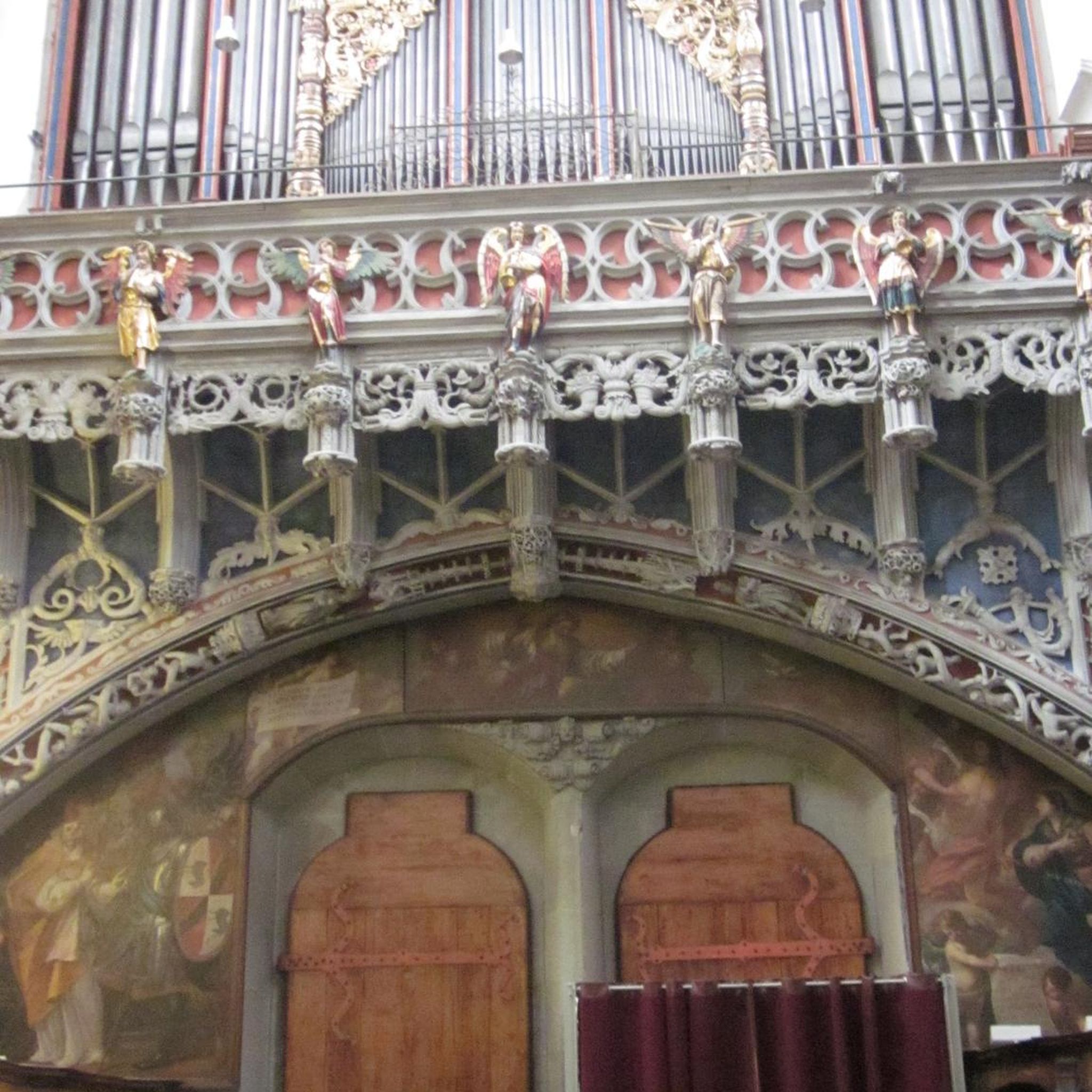
The Saint André church (13th-15th-16th centuries) In the 7th century, the Benedictine abbey of Bonneval created a priory-curate. Its existence is confirmed by a bull from Pope Gregory second half of the 16th century. In 1793 the church was desecrated and transformed into wine and spirits warehouses. In 1801, the church was returned to worship and changed diocese: from the diocese of Chartres, to which it belonged before the Revolution, it passed to the diocese of Orléans, notably for reasons of distance: Chartres is 48 km from Patay then that Orléans is only 27 km away. The church is 30 m long and 17 m wide. The oldest parts are located near the large porch (13th century). One of the pillars of the nave is decorated with a vestige of Danse Macabre from the mid-15th century. A small masonry door on the right communicated with the old priory, of which ruins remain to the south of the church. The choir dates from the 14th century; the apse wall was decorated with paintings at the end of the 19th century, the chapels were then redeveloped and equipped with new stained glass windows. The keystones of the large nave were made from casts taken from the figurines which adorn the Thesis Room of the University of Orléans, built in 1411. The bell tower, located to the north of the choir, would be an old watchtower. Its pinnacles and eight openings were made after the Wars of Religion. The four bells were melted in 1868. The largest was cracked by a Prussian shell in 1870 and was recast in 1871. Since that year, Ernestine (809 kg, 1 m 12 in diameter at the base, sounding the F), Gabrielle (550 kg, 0.981 m in diameter, sounding the ground), Anne (398 kg, 0.573 m in diameter) and Marie (222 kg, 0.724 m in diameter, sounding the C) give rhythm to the daily life of the small town of Patay, old Beauceron railway junction. On August 15, 1944, an ammunition train was blown up at Patay station. The station was blown up, except for the carriage shed, and all the windows in the town were shattered. Luckily, a providential storm limited the damage. The only two stained glass windows that survived the explosion are those on the right side aisle which date from 1930 and relate the communion of Joan of Arc in the Patay church in 1429. The church was listed as a Historic Monument in 1925 by decree of October 6, 1925.
0
0
The first church, dating from the 13th century, was partly demolished and remodeled several times over the centuries. Placed under the name of the Most Holy Trinity, it took its current form at the end of the 15th century, but was most certainly rebuilt in the 19th century. Extensive renovation work was undertaken at the start of the 21st century.
0
0

If you are looking for a unique and historic hiking destination in the Loiret, you can visit the Moulin d'Artenay, a stone windmill dating from 1849. This impressive monument, which stands 16 meters high high and has wings 22 meters long, is one of the rare examples of this type in the Beauce region. You can visit the interior of the mill and discover its machinery, its production of fine flour and the life of the millers. You can also admire a collection of old agricultural equipment at the neighboring farm. The Moulin d'Artenay is open to the public every third Sunday of the month from April to September, from 2 p.m. to 6 p.m. Don't miss this opportunity to discover an element of local heritage.
2
0
The Moulin de Lignerolles is one of the last pivotal windmills in the Loiret department. Built in 1848, this wooden mill belonged to Louis-Joseph Soulas, famous painter and director of the Orléans School of Fine Arts. You can admire the restored mill and its ingenious mechanism, as well as the panoramic view of the plain. The mill is open to the public on Sundays from 2:30 p.m. to 6 p.m., and also hosts various events throughout the year, such as a flea market, concerts and exhibitions. Visiting the Moulin de Lignerolles is an excellent way to discover the heritage and charm of the Beauceron countryside.
2
0
Frequently Asked Questions
What unique historical attractions can I explore near Rouvray-Sainte-Croix?
You can visit the Lignerolles Mill, one of the last pivotal windmills in the Loiret department, built in 1848. It offers panoramic views and showcases its restored mechanism. Another unique site is the Aerotrain test track, a railroad structure built in 1968 for monorail transport experiments, where a prototype set a world speed record.
Are there any notable religious buildings to visit in the area?
Yes, the Church of the Très-Sainte-Trinité, dating from the 13th century, took its current form at the end of the 15th century and underwent extensive renovation in the 21st century. Additionally, the Saint-André Church of Patay, with parts from the 13th century, is also nearby and features historical elements like a vestige of Danse Macabre.
What natural features or protected areas can I discover around Rouvray-Sainte-Croix?
Rouvray-Sainte-Croix is situated within the Natura 2000 zone "Beauce et vallée de la Conie." This area offers opportunities for walks amidst unique flora and fauna, allowing visitors to explore the natural beauty of the "Petite Beauce" region.
Are there family-friendly activities or attractions suitable for children?
Several attractions are considered family-friendly. The Lignerolles Mill and Artenay Mill offer insights into historical machinery and rural life. The Aerotrain test track can also be an intriguing sight for those interested in engineering history.
What kind of cycling routes are available near Rouvray-Sainte-Croix?
The area offers various cycling opportunities. You can find road cycling routes, including moderate loops like the 'Saint Martin Church – Saint-Sulpice Church loop from Patay' (60.5 km). For touring bicycles, there are options like the 'Forêt domaniale d'Orléans par le moulin de Lignerolles' loop (74.6 km) or easier routes like 'La Générale loop from Boulay-les-Barres' (18.9 km). You can explore more options on the Road Cycling Routes around Rouvray-Sainte-Croix and Cycling around Rouvray-Sainte-Croix guide pages.
Are there walking or running trails to enjoy the outdoors?
Yes, there are several running and walking trails. For example, you can find moderate running loops from Coinces (9.6 km) or Saint-Péravy-la-Colombe (7.7 km). The Natura 2000 zone also provides opportunities for walks. More details can be found on the Running Trails around Rouvray-Sainte-Croix guide page.
Where can I learn about local history and culture beyond the main attractions?
Beyond the main attractions, you can explore the historical significance of the Stone Cross in Rouvray-Sainte-Croix, which is the sole remnant of the Saint-Jean-Baptiste church. For a broader cultural experience, the Musée du Théâtre Forain (Fairground Theater Museum) in Artenay, about 11.5 km away, showcases a unique collection of stage décors and costumes. The Maison de la Polyculture also offers insights into local agricultural heritage.
Is there a castle or château I can visit nearby?
Yes, the Château et Parc de Chevilly is located approximately 11 km from Rouvray-Sainte-Croix, offering another historical site to explore in the vicinity.
What is the best time of year to visit Rouvray-Sainte-Croix for outdoor activities?
The Loiret department, where Rouvray-Sainte-Croix is located, is known for its natural sites and waterways. Spring and summer are generally ideal for outdoor activities like walking, cycling, and exploring the Natura 2000 zone, when the flora and fauna are most vibrant.
What is the significance of the Stone Cross in Rouvray-Sainte-Croix?
The Stone Cross is a unique historical landmark in Rouvray-Sainte-Croix. It is the only remaining vestige of the Saint-Jean-Baptiste church, which was abandoned after the parishes of Rouvray and Patay merged in 1806. The cross stands as a symbol of the village's past and its religious heritage.
Are there any other windmills to visit besides Lignerolles Mill?
Yes, you can also visit the Artenay Mill, a stone windmill dating from 1849. It stands 16 meters high with 22-meter-long wings and is one of the rare examples of its type in the Beauce region. It's open to the public on specific Sundays from April to September.

Get inspired with the komoot mobile app


Explore more
Still not found the Highlight you’re looking for? See guides of the top attractions in other regions:
