Attractions and Places To See around Étainhus - Top 16
Best attractions and places to see around Étainhus include a blend of historical sites and natural features within the Seine-Maritime department of Normandy, France. The commune itself hosts historical landmarks, while the surrounding region offers access to significant natural formations and cultural attractions. Visitors can explore impressive architectural feats, ancient castles, and expansive forests. The area provides diverse opportunities for those interested in history, nature, and outdoor exploration.
Best attractions and places to see around Étainhus
- The most popular attractions…
Last updated: July 7, 2026
Mirville Viaduct
Highlight • Bridge
Translated by Google •
Tip by

Saint-Valery Church of Fontaine-la-Mallet
Highlight • Religious Site
Translated by Google •
Tip by

Sign up now to discover places like this
Get recommendations on the best single tracks, peaks, & plenty of other exciting outdoor places.
Sign up for free
Château du Bec
Highlight • Castle
Translated by Google •
Tip by
Bois de Tancarville
Highlight • Forest
Translated by Google •
Tip by
Rouelles Park
Highlight • Other
Translated by Google •
Tip by

Sign up for free to discover even more attractions around Étainhus.
Sign up for free
Already have an account?
Start today with a free account
Your next adventure awaits.
Login or Signup


Tips from the Community


A magnificent hike, alone in the world, with lush vegetation and plenty of wildlife. Very enjoyable!
1
0
Close to the castle of Baron Pierre de Coubertin
0
0

Saint Valery is the monk Walaric who is said to have celebrated baptisms to the north of the village, near a spring. He was nicknamed the evangelist of the cliffs for having been the first missionary on the Channel coast in the 7th century. At the beginning of the 12th century, Guillaume Malet de Graville donated the Saint-Valery church to the monks of the Graville priory. On September 10, 1944, the village of Fontaine-la-Mallet was 99% destroyed during Operation Astonia intended to liberate Le Havre. Placed under the aegis of the Ministry of Reconstruction and Urban Planning, the reconstruction of the town was implemented by architects who participated, in parallel, in the construction of the city center of Le Havre. The church was entrusted to the architect Serge Zoppi. The first stone having been laid on October 25, 1954, the church, which is distinguished by its 31 m high concrete spire in the shape of wheat ears, was completed in 1957. The church has a single-volume nave preceded by a porch with a bell tower on the side. The building is traditional in its shape and regionalist style: the exterior facing is made of materials from the Pays de Caux (bricks and pebbles) while the design of the spire in the shape of wheat ears recalls local agricultural production. On the other hand, the use of reinforced concrete allows for the development of a modern aesthetic, of which the bell tower offers a remarkable example with its openwork lacework. Since November 26, 2001, the church, its presbytery, the staircase, the terrace and enclosure walls have been listed in the supplementary inventory of historic monuments.
0
0

The Parc de Rouelles in Le Havre is a beautiful 198-hectare urban park, laid out on the site of a former farm. It retains its 17th-century manor house and dovecote, and also features a perennial garden, a deciduous tree park, themed exhibitions on nature, and a collection of tools and traditional objects from rural life. Since 2010, Scottish oxen have been used to maintain the meadows, and there are three playgrounds, a sports field, a petanque court, 22 km of footpaths and picnic areas.
1
0

The Mirville Viaduct is an impressive brick viaduct built in 1846 by the English engineer Joseph Locke to pass the Paris-Le Havre railway line over the Ru de Bolbec valley. It is made up of 48 arches and has a length of 530 meters and a height of 32 meters. You can admire its elegant curves and its red color which contrasts with the green landscape. The viaduct was partially destroyed during the Franco-Prussian War of 1870 and World War II, but it was quickly restored and is still in use today. You can access the viaduct from the village of Mirville, where you can also visit the 12th century Saint-Martin church and the 16th century Mirville castle.
3
0
The Château du Bec is a thousand-year-old castle surrounded by a wooded park and ponds. You can explore the architecture of the castle, which combines the Louis XIII style and the regional Cauchois style, and admire its geometric and colorful decoration. You can also learn about the history of the castle, which spans from the Norman Conquest of England to the World Wars. Château du Bec offers rural lodgings and guest rooms.
3
0
Frequently Asked Questions
What historical landmarks can I explore in and around Étainhus?
Étainhus itself is home to the Church of St. Jacques, an 11th-century historical landmark with an ogival cross and Romanesque choir. Nearby, you can visit the impressive Mirville Viaduct, a 19th-century railway bridge, and the 12th-century Saint-Martin church and 16th-century Mirville castle in the village of Mirville. The thousand-year-old Château du Bec also offers a glimpse into the region's rich history.
Are there any natural attractions or reserves near Étainhus?
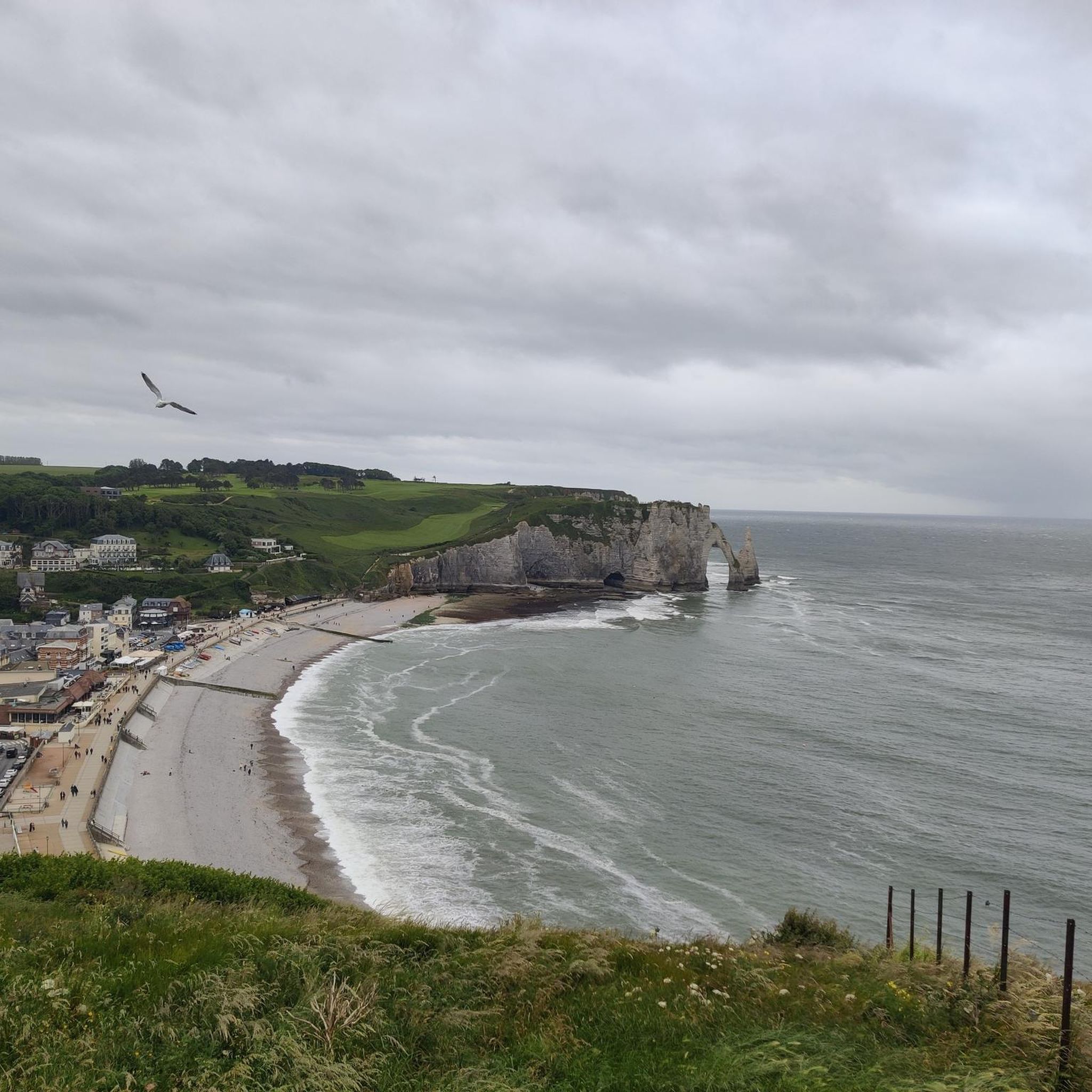
Yes, the region boasts several natural attractions. The Bois de Tancarville offers peaceful walks and is home to the Vallon du Vivier, a regional nature reserve known for rare plants and animals. Further afield, about 17 km north-west, are the dramatic Cliffs of Étretat, part of the stunning Côte d'Albâtre, featuring famous formations like Porte d'Aval and Porte d'Amont. The Seine Estuary Nature Reserve also provides opportunities to observe local wildlife.
What are some family-friendly activities available in the Étainhus area?
Many attractions around Étainhus are suitable for families. The Mirville Viaduct and Château du Bec are both considered family-friendly historical sites. The Bois de Tancarville offers easy walks in nature. Additionally, Rouelles Park in Le Havre features three playgrounds, a sports field, and 22 km of footpaths, making it an excellent choice for a family outing.
Where can I go hiking or cycling near Étainhus?
The area around Étainhus is ideal for outdoor enthusiasts. You can find numerous routes for hiking and cycling. For hiking, explore options like the 'Abbaye de Montivilliers – The Lézarde loop from Épouville' or 'Hiking loop from Notre-Dame-du-Bec'. Cyclists can enjoy routes such as 'Étretat – Fréfossé Castle (Le Tilleul) loop from Étainhus-Saint-Romain'. You can find more detailed routes and guides for hiking and cycling around Étainhus.
What is the Bois de Tancarville and what can I do there?
The Bois de Tancarville is a forest offering peaceful walks and a blend of historical and natural attractions. Within the forest, you can find the 19th-century Château de Bellevue, which now houses an agricultural school, and the Vallon du Vivier, a regional nature reserve. It's a great spot for enjoying clean air, lush vegetation, and wildlife.
What is the Mirville Viaduct and why is it significant?
The Mirville Viaduct is an impressive brick railway bridge built in 1846 by engineer Joseph Locke. It spans 530 meters, stands 32 meters high, and features 48 arches, carrying the Paris-Le Havre railway line over the Ru de Bolbec valley. Its elegant curves and red brickwork against the green landscape make it a notable architectural and historical landmark in the region.
Are there any urban attractions or cities worth visiting near Étainhus?
Yes, two significant cities are within approximately 17 km of Étainhus. Honfleur is a highly recommended cultural site known for its picturesque harbor and historic buildings. Le Havre, another nearby city, has a city center recognized as a UNESCO World Heritage site for its distinctive post-war concrete architecture. You can also visit Rouelles Park in Le Havre.
What is the Château du Bec and is it open to visitors?
The Château du Bec is a thousand-year-old castle surrounded by a wooded park and ponds. It combines Louis XIII and regional Cauchois architectural styles. While it is classified as a historic monument and serves as a guest house, it is generally not open to public visitors for tours, but you can appreciate its exterior and historical significance.
What do visitors particularly enjoy about the attractions around Étainhus?
Visitors appreciate the blend of historical sites and natural beauty. The impressive architecture of the Mirville Viaduct and the serene, lush vegetation of the Bois de Tancarville are frequently highlighted. The area's appeal is also noted through the numerous photos and upvotes from the komoot community, indicating a strong appreciation for its diverse offerings.
Can I find trails suitable for running near Étainhus?
Absolutely. The region offers several running trails. You can find routes like 'Running loop from Manéglise' or 'Running loop from Étainhus-Saint-Romain', which are typically moderate in difficulty and range from 9 to 11 km. For more options, refer to the running trails guide around Étainhus.
What is the Bois de Beaurepaire Trail like?
The Bois de Beaurepaire Trail is a beautiful bucolic path, part of the GR 21, ideal for relaxing in nature. It features a slight incline, making it suitable for stretching your legs. It's recommended to do it as a loop from Gonneville-la-Mallet through Beaurepaire and Sainte-Marie-au-Bosc to fully enjoy the varied terrain. It's also suitable for mountain biking.
What is the best time to visit the Normandy coast for hiking and exploring the cliffs?
The best time to visit the Normandy coast, including the Cliffs of Étretat, for hiking and exploring is generally during the spring (April to June) and early autumn (September to October). During these periods, the weather is typically milder and more pleasant for outdoor activities, and the crowds are usually smaller than in the peak summer months.

Get inspired with the komoot mobile app


Explore more
Still not found the Highlight you’re looking for? See guides of the top attractions in other regions:
