Attractions and Places To See around Thénac - Top 20
Attractions and places to see around Thénac, located in Charente-Maritime, offer a blend of Roman history and architectural heritage. The area is characterized by its historical sites, including significant Roman ruins and medieval structures. Visitors can explore a variety of cultural landmarks and natural features that define this region of France.
Best attractions and places to see around Thénac
- The most popular attractions is Abbaye aux Dames de Saintes, a religious building known for its 12th-century Romanesque art and "pinecone" bell tower. This former Benedictine abbey has been restored and now serves as a hotel and music center.
- Another must-see spot is Saint-Martin Church, an 11th-century Romanesque church. Its apse is a notable element, featuring buttresses and semi-engaged columns, with a square bell tower that includes twin Romanesque windows.
- Visitors also love Saint-Pierre Cathedral (Saintes), a religious building dedicated to Saint Peter. Located in the heart of the old town, it is an important historical site with origins potentially dating back to the 6th century.
- Thénac is known for its Roman ruins, historic churches, and châteaux. The region offers a variety of attractions to see and explore, from ancient archaeological sites to medieval architecture.
- The attractions around Thénac are appreciated by the komoot community, with 55 upvotes and 10 photos shared by visitors.
Last updated: May 4, 2026
Saint-Martin Church
Highlight • Other
Translated by Google •
Tip by

Abbaye aux Dames de Saintes
Highlight • Religious Site
After several wars and fires, the place was restored in the 1970s and 1980s and is now a hotel.
When you walk through the long corridors you feel like you have been transported back to the time when the abbey was still alive.
Translated by Google •
Tip by

Sign up now to discover places like this
Get recommendations on the best single tracks, peaks, & plenty of other exciting outdoor places.
Sign up for free
Saint-Pierre Cathedral (Saintes)
Highlight • Religious Site
Together with Paul, Peter is also known as the "princes of the apostles", their common feast day in the saints' calendar is on June 29th.
Translated by Google •
Tip by

You can spot a church by its steeple,
Highlight • Other
Of the church, entrusted to the Chaise-Dieu Abbey in 1084 by Robert de Pons, only the eastern part remains, the nave having disappeared during the Wars of Religion (16th century). Inside, note the dome divided into eight compartments as well as very beautiful capitals in the original sanctuary, decorated with acanthus leaves and palmettes.
An ossuary crypt, from the end of the 12th or beginning of the 13th century, located under the chapel, extends the northern arm of the transept. It is accessible by a small staircase. It is covered with a primitive ribbed cross. A stone bench goes around the crypt about 50 centimeters from the current floor.
Open on request at the town hall.
Translated by Google •
Tip by

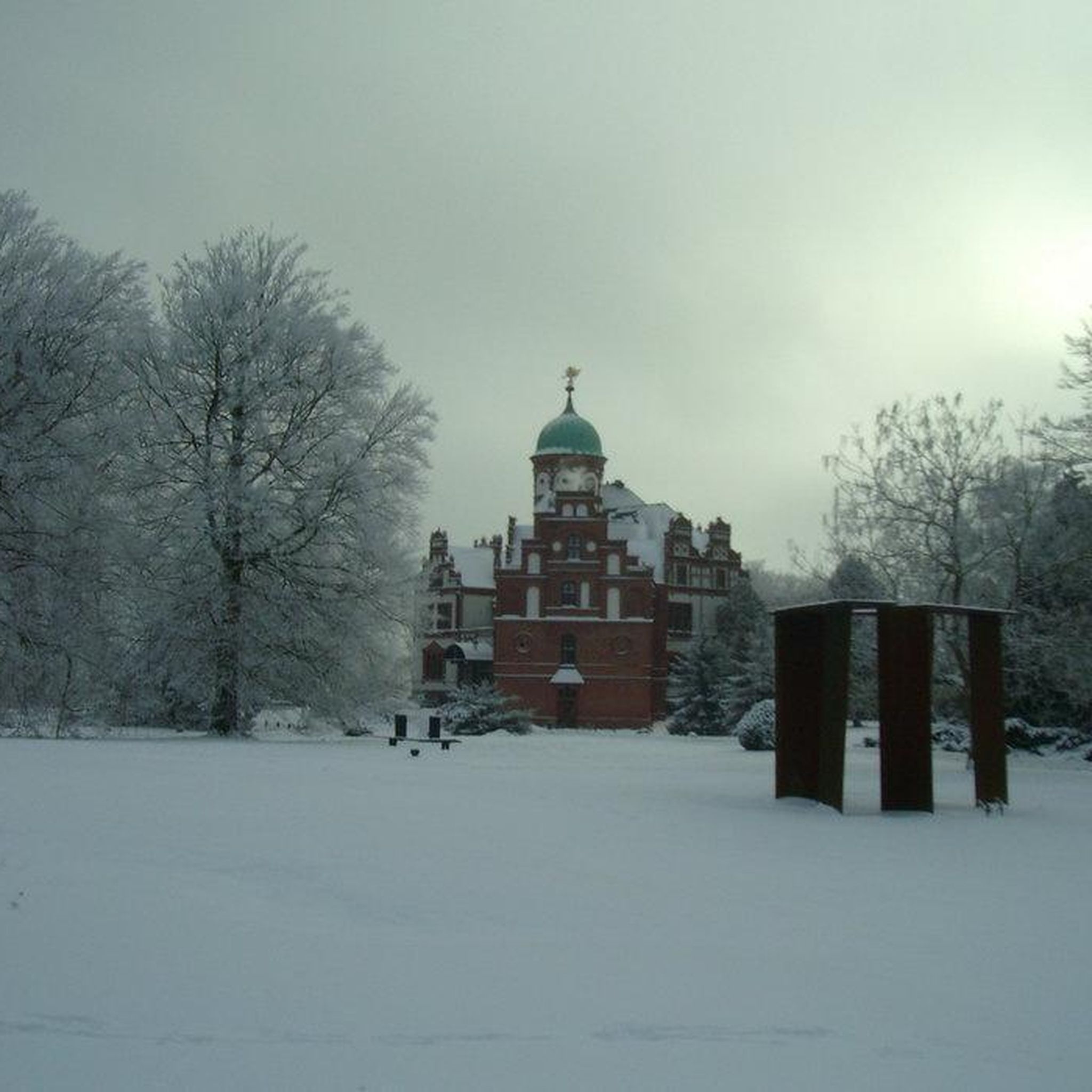
Château de La Dixmerie
Highlight • Other
Château de la Dixmerie 17100 La Chapelle-des-Pots, private property, cannot be visited.
Translated by Google •
Tip by

Sign up for free to discover even more attractions around Thénac.
Sign up for free
Already have an account?
Start today with a free account
Your next adventure awaits.
Login or Signup



Tips from the Community

The Abbaye-aux-Dames is built around the church of Sainte-Marie, built in the twelfth century. Famous for its facade and its characteristic "pinecone" bell tower, it is one of the emblematic monuments of Saintonge's Romanesque art. After several wars and fires, the place was restored in the 1970s and 1980s and is now a hotel. When you walk through the long corridors you feel like you have been transported back to the time when the abbey was still alive.
4
0
The Saint-Pierre Cathedral is located in the heart of the old town on the left bank of the Charente. According to tradition, the founding of this episcopal see goes back to Saint Eutrope. The construction of the first Christian building on the site of the current cathedral could not be dated with any precision. It probably dates back to the 6th century.
5
0

Of the first church built in the 12th century, only the apse, the transept, the Gothic chapels and the bell tower remain, which is one of the best preserved and most elegant in Saintonge. It rises on three square floors supported by a powerful stump, and each face is decorated with a slender arcade with five arches supported by columns with capitals. The upper floor is pierced on each side by three elegant semi-circular twin bays. Of the church, entrusted to the Chaise-Dieu Abbey in 1084 by Robert de Pons, only the eastern part remains, the nave having disappeared during the Wars of Religion (16th century). Inside, note the dome divided into eight compartments as well as very beautiful capitals in the original sanctuary, decorated with acanthus leaves and palmettes. An ossuary crypt, from the end of the 12th or beginning of the 13th century, located under the chapel, extends the northern arm of the transept. It is accessible by a small staircase. It is covered with a primitive ribbed cross. A stone bench goes around the crypt about 50 centimeters from the current floor. Open on request at the town hall.
0
0

A former Benedictine abbey created in 1047, Abbaye-aux-Dames was the first women's monastery in Saintonge. These powerful women were nuns, that is to say, nuns living cloistered and having taken a vow of piety, occupying their lives in contemplation. They carried the crosier, in other words the pastoral staff of a bishop, and minted coins. Richly endowed, the abbey carried its influence well beyond the borders of the county and over time it became one of the most powerful women's monasteries in all of South-West France. With up to a hundred nuns at its peak, it was entrusted with the mission of instructing young girls, often from the French nobility, and counted among its most illustrious residents the future Marquise de Montespan, favorite of Louis XIV. The Abbaye-aux-Dames is structured around the Sainte-Marie church, built in the 12th century, famous for its facade and its characteristic “pine cone” bell tower. The premises were restored during the 1970s and 1980s and now house a Cité de la musique in which the Saintes Festival dedicated to classical music takes place each year. You can also stay in a wing of the building, the cells having been converted into hotel rooms, and leave your bike in a secure room.
0
0

The La Dixmerie estate was once owned by the Brémond d'Ars family. The tradition wants that there would have been then, in this place, a barn with the tithes and a castle. This family seems to have succeeded each other in La Dixmerie for almost two centuries. On the eve of the Revolution, this land would have belonged to Pierre-René-Auguste, knight, lord and baron of Saint-Fort-sur-le-Né, Dompierre and Orlac. Born in 1759, he was the son of Pierre de Brémond d'Ars. Pierre-René-Auguste was deputy of the nobility of Saintonge to the Estates General of 1789. He emigrated in 1792, after having served for some time in the army of the Princes. Defender of the monarchy and religion, he had signed, in 1790 and 1791, the protests against the decrees on the nobility and the clergy and on the forfeiture of the King. Returning to France at the beginning of the 19th century, he would have retired to the Dixmerie where he devoted himself to work in history and numismatics. He had published in 1778, Literary Amusements. Pierre-René-Auguste de Brémond d'Ars married Jeanne-Marie-Élisabeth de La Taste in 1785. In 1809, the La Dixmerie estate belonged to Paul Letors de Larray, former infantry captain, husband of Suzanne Billard. In 1923, La Dixmerie was owned by the Comte de Brémond d'Ars; then it passed to the Comte de Pressac de Lioncel, married in second marriage to Jeanne-Marie-Caroline Goudenoue d'Aldenhove. The latter died there on May 17, 1936. The current castle, dating back to the 1880s, was built near an old mansion. It is a residence of harmonious proportions adopting a rectangular plan and flanked on either side by short slightly projecting wings. Despite a certain architectural unity, it is nonetheless provided with a few decorative fantasies, such as the segmented pediments topped with a ball and surmounting the dormers of each wing, and more particularly the richly worked dormer window which dominates the central bay of the building. Château de la Dixmerie 17100 La Chapelle-des-Pots, private property, cannot be visited.
2
0

The Church of Saint-Martin de Coucoury was built around the 11th century. It is a pretty example of a Romanesque church.
1
0

The current cathedral is the successor to an early Christian sanctuary built under Bishop Palladius in the 6th century (Wikipedia).
0
0

The cathedral in Saintes was dedicated to Saint Peter (Saint Pierre). Simon, nicknamed Petrus (rock), was a fisherman on Lake Genesareth when he - together with his brother Andreas - was called by Jesus Christ to be a "fisherman of men". According to the Catholic understanding he is the highest apostle, and the two millennia long line of popes - currently Francis - are in his successor. On statues and paintings Peter is almost always shown with two keys in his hand, this attribute refers to the Bible verse in Matthew: “I will give you the keys of the kingdom of heaven; what you will bind on earth will be bound in heaven, and what you will loosen on earth will be loosened in heaven ”(Chapter 16, verse 19). Together with Paul, Peter is also known as the "princes of the apostles", their common feast day in the saints' calendar is on June 29th.
5
0
Frequently Asked Questions
What historical sites can I explore in Thénac, Charente-Maritime?
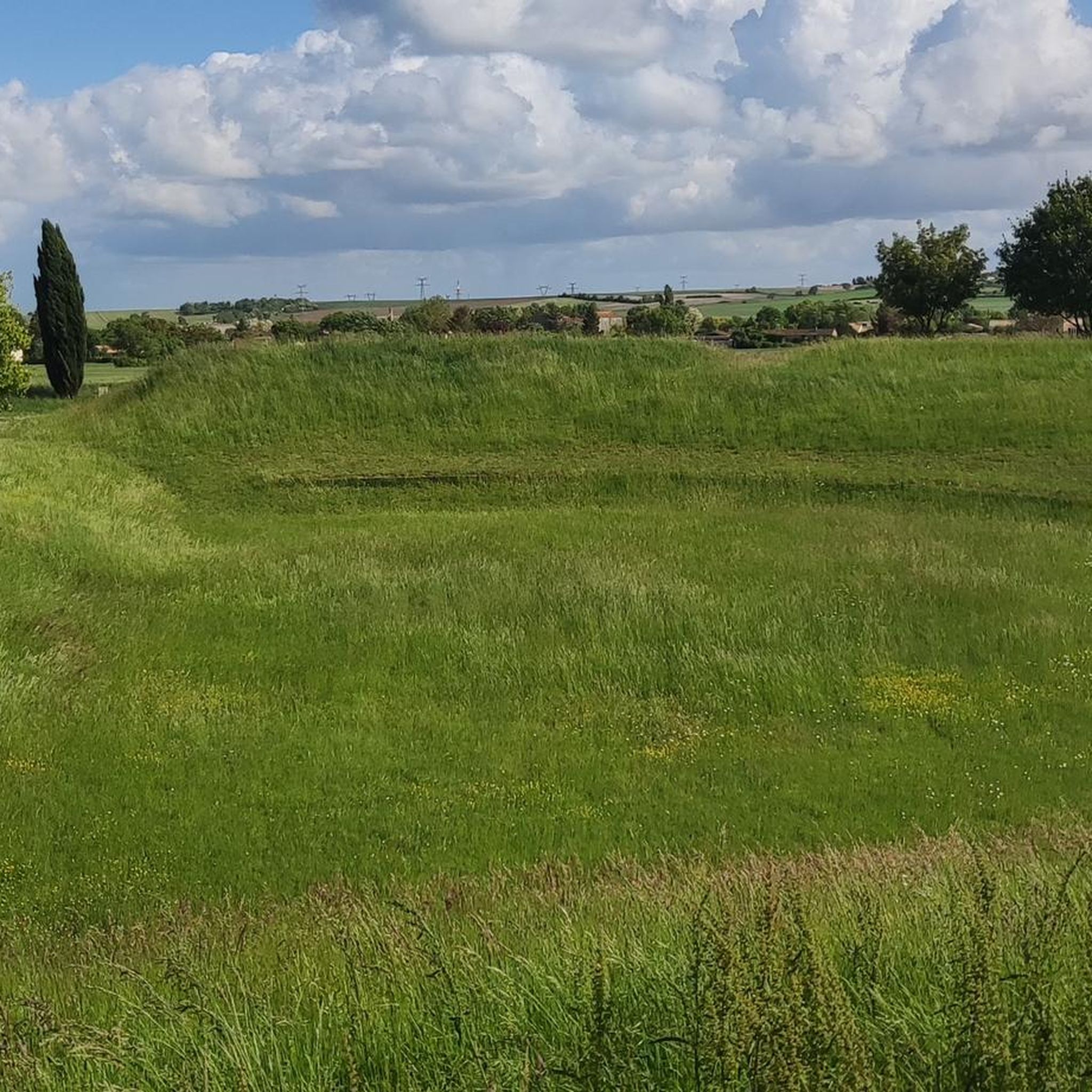
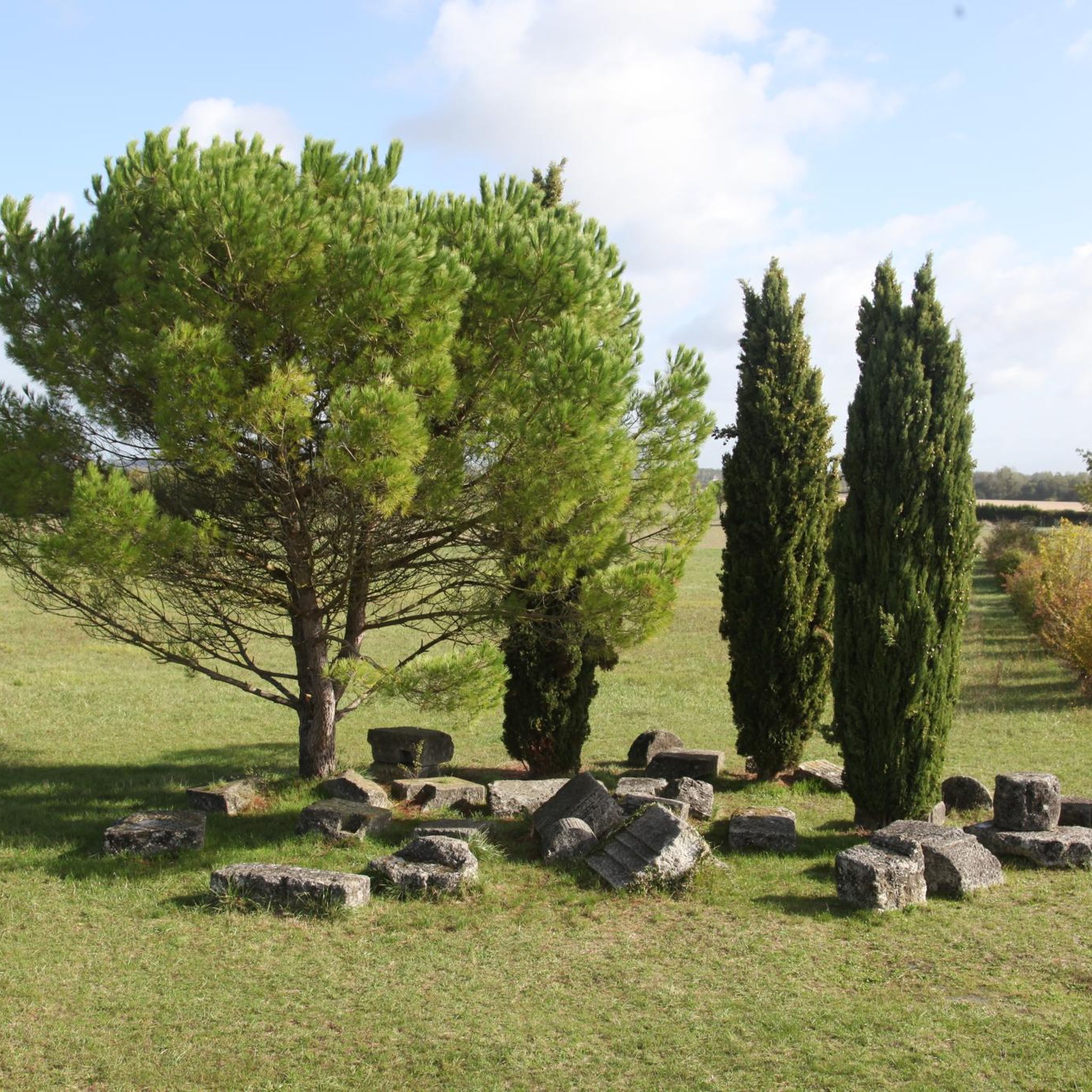
Thénac is rich in history, particularly its Roman past. You can explore significant Roman ruins, including a Roman theater (90 meters in diameter), columns, and thermal baths, which are classified as historical monuments. Additionally, the area features medieval structures like the 11th-century Saint-Martin Church and the grand Abbaye aux Dames de Saintes, a 12th-century abbey known for its Romanesque art.
Are there any family-friendly attractions around Thénac?
Yes, several attractions in the area are suitable for families. The Abbaye aux Dames de Saintes and Saint-Pierre Cathedral (Saintes) are both listed as family-friendly. The nearby city of Saintes also offers a Gallo-Roman amphitheater and other historical sites that can be engaging for all ages.
What kind of outdoor activities can I do near Thénac?
The region around Thénac offers various outdoor activities, especially cycling. You can find numerous road cycling routes, such as the 'Abbaye aux Dames de Saintes – Cathedral of Saintes loop' or the 'Port of the Lys – Saint-Martin Church loop'. For mountain biking, trails like 'Trails and Singletracks Loop' are available. Gravel biking is also popular, with routes like 'View of the Arch of Germanicus – Port of the Lys loop'. You can find more details on these routes in the Road Cycling Routes around Thénac, MTB Trails around Thénac, and Gravel biking around Thénac guides.
What natural features are notable in the Thénac area?
Beyond its historical sites, Thénac is known for its active limestone quarries, which have been exploited since antiquity. The region also features several forests, including Forêt de Pons and Forêt de la Lande, offering opportunities for nature walks. The Charente River, flowing through nearby Saintes, provides attractive scenery and riverside walks.
Where can I see Roman architecture near Thénac?
Thénac itself boasts significant Roman ruins, including a large Roman theater and thermal baths. Just 9 km away, the city of Saintes, once Mediolanum Santonum, offers remarkable Roman sites such as a Gallo-Roman amphitheater (built in the 1st century AD) and the Arc de Germanicus.
Are there any unique religious buildings to visit?
Absolutely. The Abbaye aux Dames de Saintes is a must-see, famous for its 12th-century Romanesque art and distinctive 'pinecone' bell tower. The 11th-century Saint-Martin Church in Coucoury is another beautiful example of Romanesque architecture. In Saintes, the Saint-Pierre Cathedral, with origins potentially dating back to the 6th century, is also a significant historical site.
What is the history behind the Abbaye aux Dames de Saintes?
The Abbaye aux Dames de Saintes was the first women's monastery in Saintonge, founded in 1047. These powerful Benedictine nuns held significant influence, even minting coins. The abbey was a center for instructing young girls from noble families. After several wars and fires, it was restored in the 1970s and 80s and now functions as a hotel and music center, hosting the Saintes Festival dedicated to classical music.
Can I visit any castles or châteaux in the area?
While the Château de La Dixmerie near Thénac is a private property and cannot be visited, the region offers other historical châteaux. For instance, the Château Maguier in Thénac, built in 1872, features an ornate facade and now houses a media library. Further afield, you can find the castle tower in Pons.
What are some picturesque villages or towns near Thénac?
Just 13 km from Thénac, Pons features an ancient hospital for pilgrims, inscribed on the UNESCO World Heritage list, and a castle tower. About 24 km away, Talmont-sur-Gironde is recognized as a 'Most Beautiful Village of France,' known for its imposing 12th-century Romanesque Church Sainte-Radegonde. The fortified city of Brouage, reinforced by Vauban, is another picturesque village in the Charente marshes.
What is special about the Saint-Martin Church?
The Saint-Martin Church in Coucoury is an 11th-century Romanesque church. Its apse is particularly remarkable, featuring buttresses and semi-engaged columns, with a square bell tower that includes beautiful twin Romanesque windows. The interior reveals a mix of styles from different centuries, including an original stone baptismal font from the 17th century and an ossuary crypt from the late 12th or early 13th century.
Are there any markets in the Thénac region?
Yes, the region around Thénac is known for its vibrant local markets. You can find various markets in nearby towns such as Pons, Cozes, and Cognac, offering local produce and goods.
What is the significance of Saintes in the region?
Saintes, located about 9 km from Thénac, is a historically rich city that was once Mediolanum Santonum, one of the largest cities in Roman Gaul. It boasts numerous remarkable sites, including a Gallo-Roman amphitheater, the Arc de Germanicus, thermal baths, and the Saint-Pierre Cathedral. It also hosts the Abbaye aux Dames, a significant historical and cultural center.

Get inspired with the komoot mobile app


Explore more
Still not found the Highlight you’re looking for? See guides of the top attractions in other regions:
