The best cycling routes around Colombiers
4.7
(153)
1,011
riders
65
rides
Touring cycling around Colombiers offers a blend of historical waterways, ancient sites, and varied landscapes. The region is characterized by the flat, tree-lined towpaths of the Canal du Midi, which provide accessible routes. Beyond the canal, the terrain includes open countryside, vineyards, and low hills, offering diverse cycling experiences. Unique landscapes such as the radially drained Étang de Montady and historical sites like the Oppidum d'Ensérune are also features of the area.
Best touring cycling routes around Colombiers
- The most…
Last updated: July 2, 2026
5.0
(1)
63
riders
47.7km
03:51
260m
260m
Hard bike ride. Good fitness required. You may need to push your bike for some segments of this route.
4.7
(19)
101
riders
49.5km
03:41
160m
160m
Moderate bike ride. Good fitness required. Mostly paved surfaces. Suitable for all skill levels.

Sign up for free
4.7
(3)
23
riders
22.6km
01:37
40m
40m
Easy bike ride. Great for any fitness level. Mostly paved surfaces. Suitable for all skill levels.
5.0
(2)
7
riders
42.8km
02:39
230m
230m
Moderate bike ride. Good fitness required. Mostly paved surfaces. Suitable for all skill levels.
4.0
(1)
5
riders
32.5km
01:58
260m
260m
Moderate bike ride. Good fitness required. Mostly paved surfaces. Suitable for all skill levels.
Get access to more routes and recommendations from other explorers.
Sign up for free
Already have an account?
Our route recommendations are based on thousands of hikes, rides, and runs completed by other people on komoot.
Start today with a free account
Your next adventure awaits.
Login or Signup

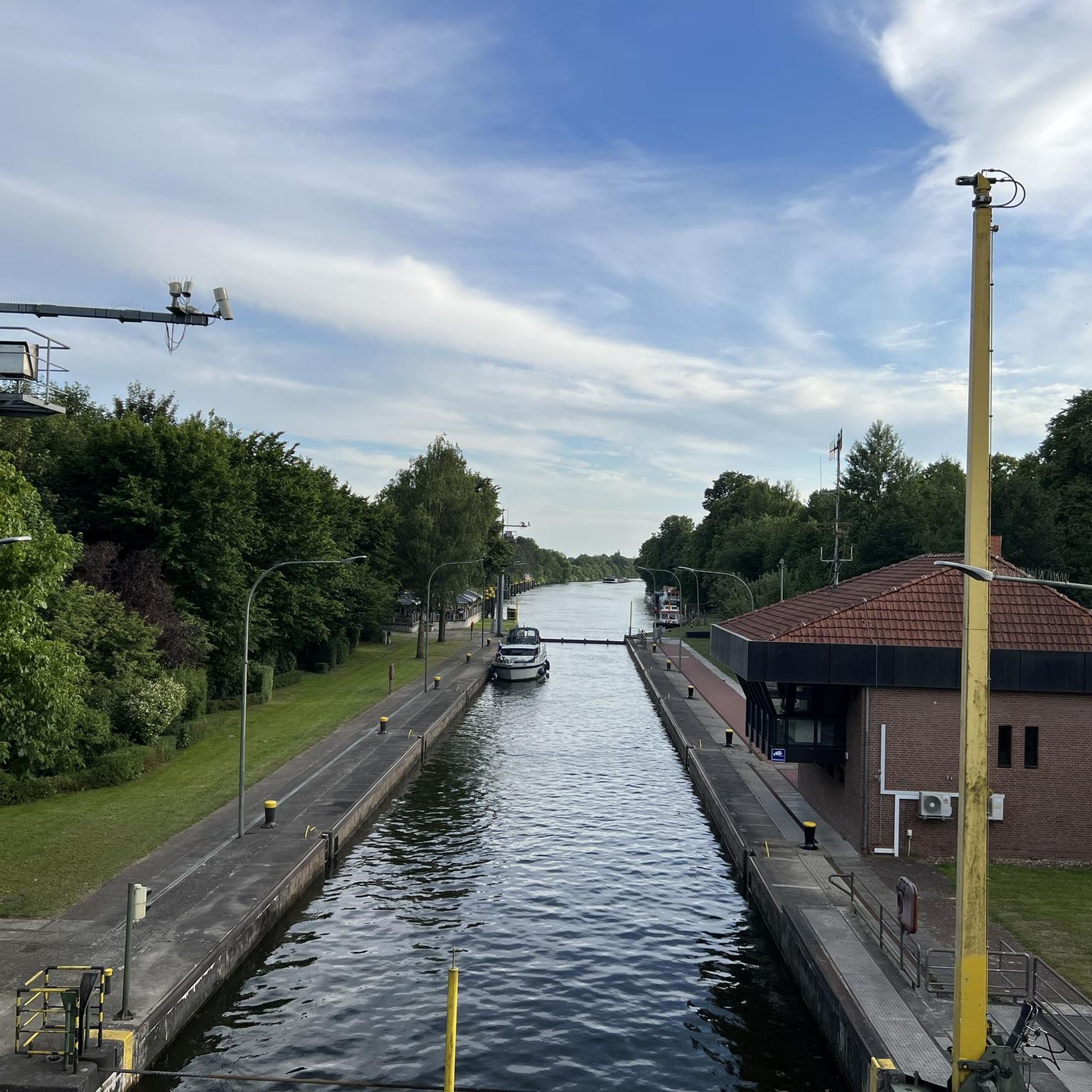


Tips from the Community

beautiful passages along the Charente with pretty monuments and small waterfront cafés in Port d’Envaux and Saintes.
0
0

Courcoury is a natural island surrounded by the Charente and Seugne rivers, giving it a unique landscape setting between marshes and waterways, conducive to biodiversity and outdoor activities. It is also the only village in Charente-Maritime to have been awarded 4 stars by the "Villes et villages étoilés" label, recognizing its efforts to reduce light pollution through intelligent and environmentally friendly public lighting.
1
0
The Gallo-Roman amphitheater of Sainte, also called the Arena of Saintes, is an elliptical monument built between 40 and 50 AD, probably during the reigns of Tiberius and Claudius. It measures approximately 126 meters by 102 meters and could accommodate between 12,000 and 15,000 spectators, making it one of the largest and oldest amphitheaters in Gaul. Located in a natural valley called the "Arènes valley," it takes advantage of the topography to limit construction work, with stands backing onto the hill. The site has two monumental gates, the "Gate of the Living" to the east and the "Gate of the Dead" to the west, and has been the subject of a major restoration project since 2021 to preserve this exceptional heritage. Accessible on foot from the city center, it offers an immersion in Roman history with an educational trail and activities for families
1
0

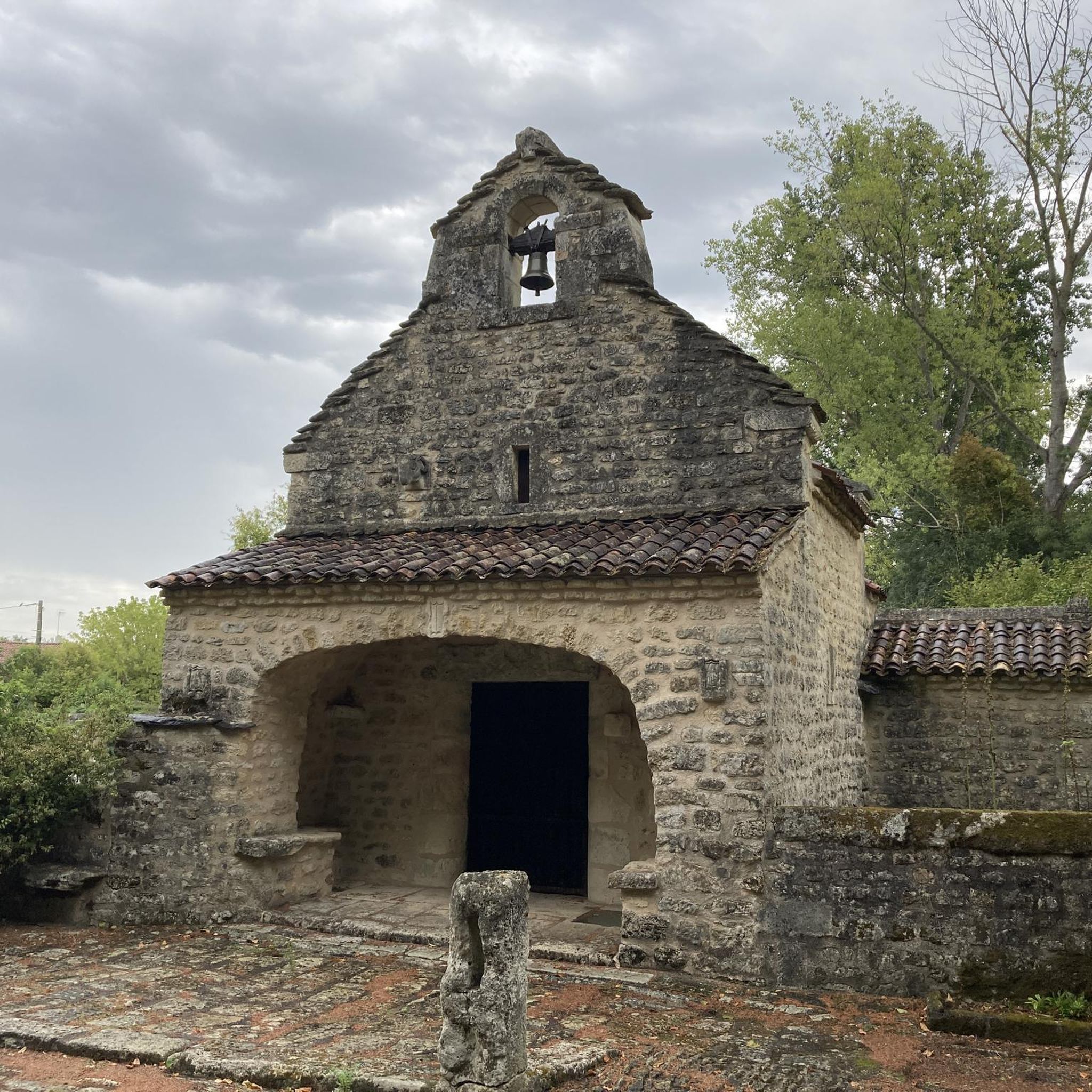
The choir, narrower than the nave, extends over two bays bounded by pointed arches supported by columns with smooth capitals. The apse, with its pure lines and semi-dome vault, has its perimeter adorned with five Romanesque arches with small columns. Double columns separate three arched windows similar to those in the choir. A few specifically Romanesque capitals, apart from those in the square, are noteworthy in this otherwise very interesting church: a head studded with birds, a child teasing a large monster's head, etc. The bell, dated 1583, has been listed in the Historical Furniture. At the end of the right transept, a large marble plaque details the numerous benevolent deeds of "a virtuous man who has been buried in the church since 1782" and who had forbidden in his will that his name be inscribed on his tomb. As the church also bears a coat of arms, that of Guy de Monconseil, who died at that time, it is not impossible to unravel the mystery of this anonymity. In 1877, a Marquis de Monconseil, among other charitable works, founded a large hospice in Tesson where the poor were received. Near the church, on the site of the old cemetery, stands a beautiful 15th-century hosanna cross.
0
0
The church of St. Gregory of Tesson dates, in its core, from the 12th and perhaps the 11th century, but what remains of the visible parts dates from the 13th century, with alterations in the 14th and 15th centuries. The current bell tower was built around 1880 in a Romanesque-Gothic style, where the abundance of pinnacles, awning windows, canted corners, and balustrades replace the absent archaeological interest. It rises on the side of the nave, in the west corner of the left transept. This building, dedicated to Saint Gregory, is built on a classical plan, with a single nave, a transept with apses, a choir, and a semicircular apse. The façade, in pure Saintonge style and with its beautiful lines, includes a vast semicircular portal flanked by two blind bays, a gallery on the first floor, and a gable. The gallery arches no longer exist; When the gable was built in the 18th century, they were removed. This façade, framed by tall, separate columns, is unfortunately obstructed, like too many churches today, by trees planted at the time of the suppression of cemeteries. These trees now obscure, here a façade, there an apse, elsewhere an interesting detail. Municipalities, aware of the honor of having such works of art on their land, should not only maintain them, but also clear them and strive to highlight them. The five arches of the portal, simply adorned with a string of diamond points, rest on columns raised on a bench. Above, unarced columns, single or double, surmounted by crocketed capitals, have very wide abacuses that form as many consoles. At each end of the solid gable wall, topped by a cross with an escutcheon, stands a statue. One did not escape mutilation. The nave has two vaulted bays with crossed ogival arches with three tori which, with the formerets, rest on two strong columns and two smaller ones topped with crocketed or foliate capitals. The smaller ones support lateral arches, each framing a semicircular window. At the top of the walls, curious little oculi of an unusual design also open—a rare detail in Saintonge; one is shaped like a crescent and fits within a circumference; another imitates a four-leaf clover. These openings were added at the time of the vaulting's restoration, that is, in the 14th century. In the square of the transept, four blocks of eight columns are connected by pointed arches. This square, now vaulted like the bays of the nave, was originally covered by a dome surmounted by the old bell tower, destroyed during the war against the English. Each side of this bell tower was adorned with two round-arched windows with stringcourses. The base of the first floor is still visible. The voluminous columns that border the square transept are remarkable. The columns of varying sizes all have capitals whose ornamentation of acanthus leaves or beaded garlands extends onto the flats of the pilasters in a frieze form. This very fine and meticulous decoration produces, despite numerous mutilations, a great artistic effect. The very deep transept gives the whole the shape of a Greek cross. The transepts, vaulted in a pointed barrel, are illuminated by round-arched windows. The apse of the one on the left features two curious small capitals that surmount the small columns of the entrance arch. Their large, well-crafted abacuses extend into a beautifully sculpted cordon around the entire half-circumference and extend into a miter, supporting the base of the semi-domed vault. This apse is externally adorned with four groups of two slender, twin columns forming light buttresses.
0
0

I really enjoyed this ride. I’m 46, I did it on a 40 year old road bike, it’s more suited to a cyclocross bike!
0
0

On the banks of the Charente, the Château de Cognac symbolizes the town's reputation. Today a Cognac House, it welcomes visitors to help them discover its history, but also that of the eaux-de-vie produced there.
0
0

The Saint-Pierre Cathedral is located in the heart of the old town on the left bank of the Charente. According to tradition, the founding of this episcopal see goes back to Saint Eutrope. The construction of the first Christian building on the site of the current cathedral could not be dated with any precision. It probably dates back to the 6th century.
5
0
Frequently Asked Questions
How many touring cycling routes are available around Colombiers?
There are over 60 touring cycling routes around Colombiers, offering a diverse range of experiences. These routes are highly rated by the komoot community, with an average score of 4.6 stars from over 180 reviews.
What is the best time of year for touring cycling in Colombiers?
The Occitanie region, including Colombiers, is generally pleasant for cycling from spring through autumn. The tree-lined towpaths of the Canal du Midi offer shade, which is particularly welcome during warmer months. Winter cycling is possible, but check local weather conditions as some amenities might be reduced.
Are there easy touring cycling routes suitable for beginners in Colombiers?
Yes, Colombiers offers many easy touring cycling routes, with 27 routes specifically categorized as easy. The flat, tree-lined towpaths of the Canal du Midi are ideal for beginners and offer a scenic, accessible ride. These routes often have gentle gradients, making them suitable for various fitness levels.
Are there any challenging touring cycling routes around Colombiers?
While many routes are gentle, there are 8 routes categorized as difficult for those seeking a challenge. For example, the Bois des Graves – Forêt de Pons loop from Berneuil is a difficult 47.7 km trail with over 260 meters of elevation gain, exploring a mix of forest and open countryside.
What historical sites or natural features can I explore along the touring cycling routes?
Colombiers is rich in historical and natural attractions. You can explore the ancient Pons Donjon, the Saint-Martin Church, or the Saint-Pierre Church of Chaniers. The region also features the unique radial pattern of the Étang de Montady, best viewed from its viewpoint, and the impressive engineering of the Orb Canal Bridge along the Canal du Midi.
Are there any scenic viewpoints on the touring cycling routes near Colombiers?
Yes, the region offers several scenic viewpoints. The viewpoint overlooking the Étang de Montady is a popular spot, providing a unique perspective of the drained swamp's radial pattern. Additionally, routes along the Canal du Midi offer picturesque views of tranquil waters and lush greenery, while vineyard routes provide expansive vistas of the countryside.
Is public transport available for cyclists in Colombiers?
Public transport options for cyclists in Colombiers and the surrounding area may vary. While the Canal du Midi is highly accessible, it's advisable to check local bus or train services for their bike carriage policies and schedules, especially if planning to combine cycling with public transport for longer distances.
Where can I park my car when starting a touring cycling route in Colombiers?
The Colombiers river port, a hub for Canal du Midi activities, offers amenities that often include parking facilities. Additionally, many villages and towns along popular cycling routes will have designated parking areas, though it's always good to check local signage.
Are there family-friendly touring cycling routes in Colombiers?
Absolutely. The flat, well-maintained towpaths of the Canal du Midi are particularly suitable for families with children. These routes offer a safe and enjoyable environment away from traffic, with plenty of shade and opportunities to stop and explore along the way.
Can I bring my dog on touring cycling routes in Colombiers?
Many outdoor areas in Colombiers, especially the Canal du Midi towpaths, are generally dog-friendly. However, it's important to keep your dog on a leash, especially in areas with other cyclists, pedestrians, or wildlife. Always carry water for your pet and clean up after them.
Are there circular touring cycling routes available around Colombiers?
Yes, the area around Colombiers features several circular touring cycling routes. Examples include the 'Colombiers – Oppidum of Ensérune loop' and the 'Etang de Montady viewpoint – Colombiers loop,' which allow you to start and finish at the same point, making logistics easier.
Are there places to eat or drink along the touring cycling routes in Colombiers?
Yes, the Colombiers river port and many villages along the Canal du Midi and other routes offer cafes, restaurants, and shops where you can refuel. The region is also known for its vineyards, providing opportunities for local experiences like wine tasting tours.
What is the typical duration for touring cycling routes in Colombiers?
Route durations vary significantly based on distance and difficulty. For example, a moderate route like the University of Laziness – Port of the Lys loop from Beillant, which is 28.1 km, typically takes around 2 hours 28 minutes. Longer, more difficult routes can take upwards of 3-4 hours.
Most popular routes around Colombiers
Most popular attractions around Colombiers

Get inspired with the komoot mobile app


Explore more
Browse the best Cycling routes in other regions.
