Attractions and Places To See around Brossac - Top 10
Best attractions and places to see around Brossac include historical landmarks, natural features, and cultural sites. This charming village in the Charente department of France offers a blend of Romanesque architecture and Gallo-Roman remains. The landscape features forests, hills, and valleys, providing numerous opportunities for exploration. Visitors can discover lakes, historical churches, and local vineyards.
Best attractions and places to see around Brossac
- The most popular attractions is Étang des belettes, a lake that offers a fishing lake environment…
Last updated: May 1, 2026
View of one of the Guizengeard ponds
Highlight • Lake
Translated by Google •
Tip by

Notre-Dame-de-la-Nativité Church of Brossac
Highlight • Religious Site
Translated by Google •
Tip by

Sign up now to discover places like this
Get recommendations on the best single tracks, peaks, & plenty of other exciting outdoor places.
Sign up for free
Étang des belettes
Highlight • Lake
Translated by Google •
Tip by

Saint-Étienne Church of Courgeac
Highlight • Religious Site
Translated by Google •
Tip by
Saint-Sulpice Church in Chillac
Highlight • Other
Translated by Google •
Tip by

Sign up for free to discover even more attractions around Brossac.
Sign up for free
Already have an account?
Start today with a free account
Your next adventure awaits.
Login or Signup

Tips from the Community

Saint-Étienne Church in Courgeac, in Charente, is a 12th-century Romanesque church composed of a single nave made of small cubic rubble (early 12th century), with a barrel vault, a square ribbed vault topped by a rectangular bell tower, and a semicircular Romanesque apse with a cul-de-four vault. In the 15th and 16th centuries, a porch was built in front of the nave and covered with frescoes. Above the apse, an upper chamber was built, probably during the Wars of Religion, for defensive purposes, including a battlement and gun ports. The church displays the architecture typical of modest churches of the early Romanesque period. You must enter the cemetery to get a full view. http://chapiteaux.free.fr/TXT_COURGEAC_16.html https://www.tripadvisor.fr/Attraction_Review-g1932328-d27157425-Reviews-Eglise_Saint_Etienne_a_Courgeac-Montmoreau_Saint_Cybard_Charente_Nouvelle_Aquit.html
0
0
The Church of Our Lady of the Navitiy was built in the 12th century. This Romanesque-style monument was considerably altered with age, so much so that only the foundations are original today. The walls, for example, were raised shortly after the Hundred Years' War to allow refuge rooms to be built under the roof. The Romanesque façade, for its part, was remodeled during the Gothic period. The use of grison, a local grey stone very common in this area of Charente, limited the sculpted decoration to its strictest expression; this stone was unsuitable for sculpture. On the other hand, the church has a painted fresco, rediscovered in the sanctuary during restoration work. Like all medieval churches, Notre-Dame de Brossac was once surrounded by its cemetery, abandoned in 1843. Outside, in the north wall of the nave, there remain two funerary recesses intended to shelter the burial of high-ranking figures. https://www.sauvegardeartfrancais.fr/projets/brossac-eglise-notre-dame-de-la-nativite
0
0

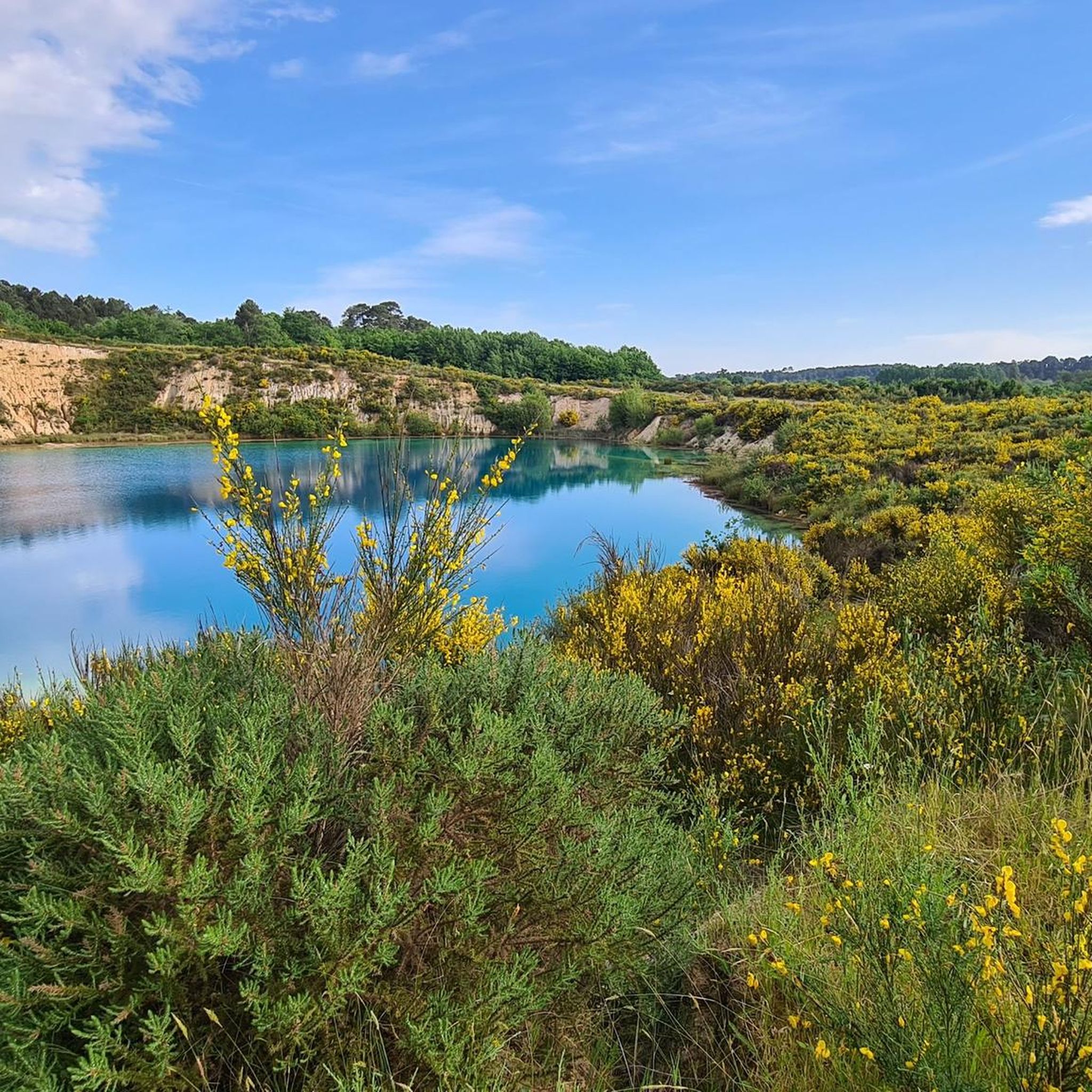
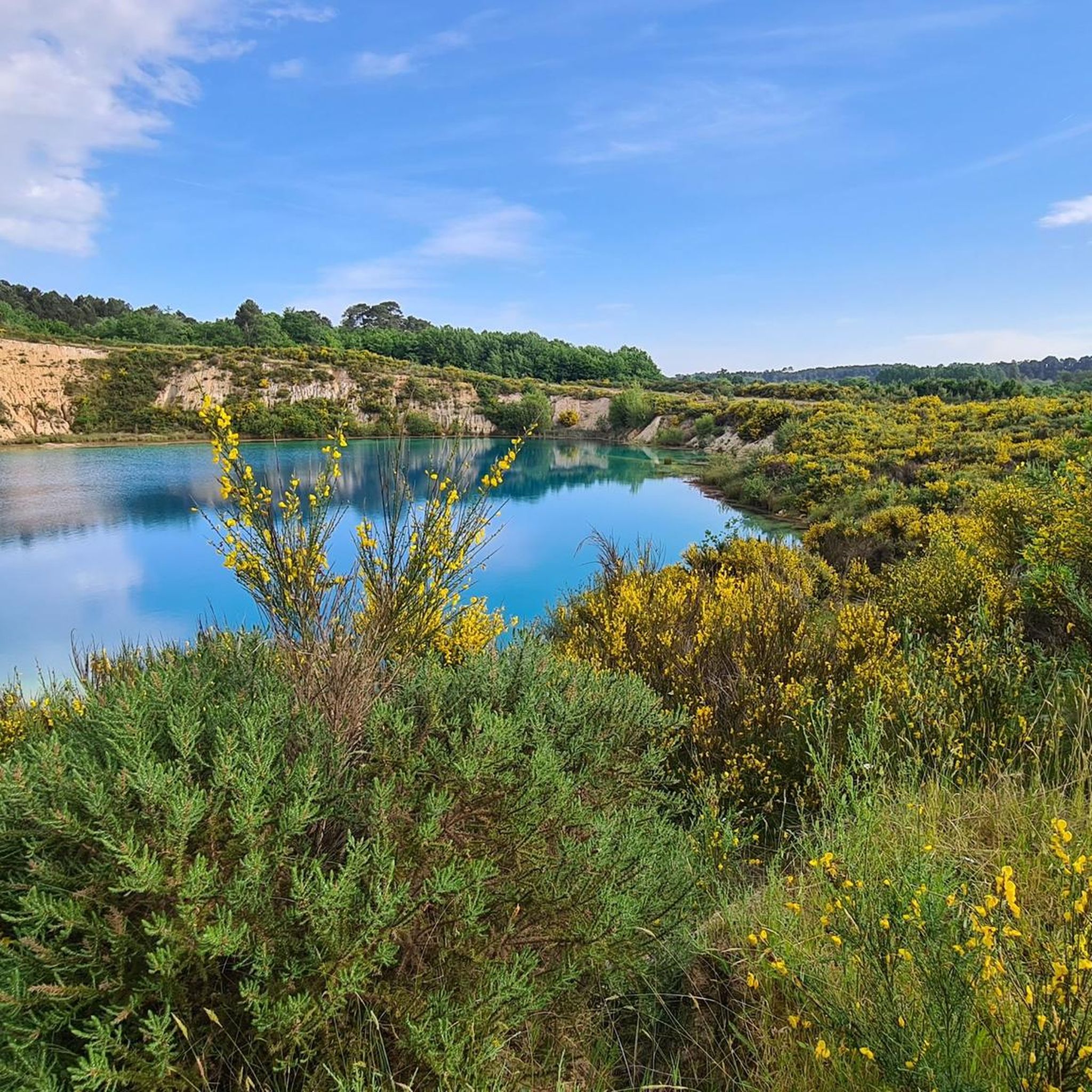
Artificial natural site formed by the exploitation of a clay quarry
2
0

Beautiful route, there is a restaurant at the lake and from Rioux-Martin you can make a nice round trip
0
0

This is a fishing lake. A path allows you to follow the banks in a very nice environment.
0
0
The trail offers a beautiful view of the blue lake of Guizengard. The water takes on a thousand azure hues, creating an almost unreal setting. The site has great ecological value with the presence of numerous plant and animal species. Among the most remarkable, the bee-eater, this beautiful, brightly colored bird has found refuge here to the delight of walkers.
0
0

Church built in the 12th century, having subsequently suffered from wars, in particular that of the Hundred Years. Restored in the 15th century. Single nave plan, ending with a straight apse. The nave is divided into three bays. The walls have large arches resting on very wide pilasters. Ribbed brick vaults were built in 1881 and rest on round columns. The transept is slightly wider. Cupola on pendants. A wall separates the used part of the building from the old chancel, which had three bays of 15th century ribbed vaults. These were destroyed. The bedside wall is straight and lit by three windows. The western facade opens with a semicircular portal with three arches and circular columns of primitive appearance, and is decorated with two blind doors. Two heads adorn the tympanum of the south blind door. The triangular gable has been truncated and ends in a modern campanile. The north side retains the square tower of the old 15th century bell tower.
0
0
Frequently Asked Questions
What natural attractions can I explore around Brossac?
Brossac is rich in natural beauty. You can visit the stunning Guizengeard Quarries and Lakes, known for their amazing turquoise waters and ecological value, offering walking paths. Another popular spot is Étang Vallier, also known as the Village de Vacances, which features an artificially created beach for swimming, pedal boats, and playgrounds. The area is also surrounded by forests and hills, providing numerous hiking trails.
Are there historical sites to visit in Brossac?
Yes, Brossac boasts several historical sites. The Notre-Dame-de-la-Nativité Church of Brossac, originally built in the 12th century, features Romanesque architecture and a rediscovered painted fresco. You can also explore Gallo-Roman remains, including ancient villas and an aqueduct, which are classified as historical monuments. Nearby, the 12th-century Saint-Sulpice Church in Chillac and the Saint-Étienne Church of Courgeac with its 15th and 16th-century frescoes are also worth a visit.
What family-friendly activities are available around Brossac?
For families, Étang Vallier (Village de Vacances) is a central attraction offering swimming, pedal boats, a small harbor, and playgrounds for children. The Étang des belettes is another family-friendly lake with a path along its banks, perfect for a leisurely stroll. The walking paths around the Guizengeard Quarries and Lakes are also suitable for families to explore the unique landscape.
What kind of outdoor activities can I do near Brossac?
The Brossac area is excellent for outdoor enthusiasts. You can enjoy various cycling routes, from moderate to difficult, as detailed in the Road Cycling Routes around Brossac and Cycling around Brossac guides. For runners, there are several Running Trails around Brossac, including an easy loop around the Blue Ponds of Guizengeard. Hiking is also popular, with numerous trails through forests, hills, and valleys.
Are there any vineyards or local produce to discover?
Yes, for those interested in local produce, the Conte et Filles Cognac Vineyard is a notable attraction in Brossac. Additionally, the nearby town of Chalais hosts a vibrant weekly Monday market where visitors can find various local items and experience the regional culture.
What is the best time to visit Brossac for outdoor activities?
Brossac's natural features, like Étang Vallier and the surrounding forests, are ideal for relaxation and nature lovers. Spring and autumn generally offer pleasant temperatures for hiking, cycling, and exploring the natural sites without the peak summer heat. The lakes are particularly inviting for swimming and water activities during the warmer summer months.
Where can I find walking paths with scenic views?
The Guizengeard Quarries and Lakes offer walking paths with beautiful views of the blue lakes, where the water displays a thousand azure hues. The Notre-Dame-de-la-Nativité Church of Brossac, perched on a hill, also provides scenic views of the surrounding area. Many trails through the local forests and hills offer picturesque landscapes.
Can I go fishing in Brossac?
Yes, fishing is a popular activity in Brossac. The Étang des belettes is specifically known as a fishing lake, with a pleasant path along its banks. Étang Vallier also offers opportunities for fishing.
What makes the Guizengeard Quarries and Lakes unique?
The Guizengeard Quarries and Lakes are unique because they are former clay quarries that have transformed into a stunning natural site. The water exhibits 'amazing turquoise waters' and 'a thousand azure hues,' creating an almost unreal setting. The area also holds significant ecological value, hosting diverse plant and animal species, including the colorful European Bee-eater.
Are there any easy walking routes suitable for everyone?
Yes, the path along the banks of the Étang des belettes offers a very nice and easy environment for a walk. The walking paths around the Guizengeard Quarries and Lakes are also generally accessible for exploration. Many of the local forests and hills offer trails of varying difficulty, including easier options.
What is the significance of the Gallo-Roman remains near Brossac?
The Gallo-Roman remains in Brossac, including ancient villas and an aqueduct, are significant as they have been classified as historical monuments since 1875. These ruins are believed to be linked to an ancient Roman road that connected Saintes to Périgueux, offering a glimpse into the region's deep historical past. The Villa gallo-romaine de la Coue d'Auzenat is a notable example.

Get inspired with the komoot mobile app


Explore more
Still not found the Highlight you’re looking for? See guides of the top attractions in other regions:
