Attractions and Places To See around Saint-Just-Luzac - Top 20
Best attractions and places to see around Saint-Just-Luzac, a commune in the Charente-Maritime department of southwestern France, offer a blend of historical sites, natural beauty, and cultural experiences. The region is characterized by its extensive marshes, including the Marais de la Seudre, which are home to diverse flora and fauna and play a role in oyster farming. Visitors can explore significant historical monuments and natural landscapes that highlight the area's rich heritage. The local environment provides opportunities to discover both freshwater and saltwater wetlands.
Best attractions and places to see around Saint-Just-Luzac
- The most popular attractions is Fort Louvois, a maritime fortification that was built on a rock submerged at high tide. It was designed by Vauban to defend the maritime arsenal of Rochefort.
- Another must-see spot is Brouage Citadel, a historic fortified town. Once a significant salt trading port and later a Catholic war port, the citadel is now surrounded by marshes and is considered a possible birthplace of Samuel de Champlain.
- Visitors also love Saint-Pierre Church of Hiers-Brouage, a historical religious building with a Renaissance-style facade. It features stained glass windows depicting episodes from the founding of New France and is a pilgrimage site for Canadians.
- Saint-Just-Luzac is known for its historical sites, natural marshes, and cultural experiences like oyster farming. The area offers a variety of attractions to see and explore, from ancient churches to unique natural wetlands.
- The attractions around Saint-Just-Luzac are appreciated by the komoot community, with over 165 upvotes and 50 photos shared by visitors.
Last updated: August 29, 2026
Brouage Citadel
Highlight • Castle
A military port on the edge of the Atlantic Ocean until the beginning of the 18th century, the town is today inland and surrounded by marshes.
Attention: inside the citadel the streets are almost exclusively paved.
Translated by Google •
Tip by

Saint-Pierre Church of Hiers-Brouage
Highlight • Religious Site
Translated by Google •
Tip by

Sign up now to discover places like this
Get recommendations on the best single tracks, peaks, & plenty of other exciting outdoor places.
Sign up for free
Oléron Island Bridge
Highlight • Bridge
We read everywhere that there is a track and a sidewalk on this bridge. Don't trust it, it's absolutely false...
Translated by Google •
Tip by

Fort Louvois
Highlight • Other
Tip by

The market halls in Mornac-sur-Seudre
Highlight • Historical Site
The open hall is closed by an octagonal tiled roof, which was renewed in the 20th century.
Translated by Google •
Tip by

Sign up for free to discover even more attractions around Saint-Just-Luzac.
Sign up for free
Already have an account?
Start today with a free account
Your next adventure awaits.
Login or Signup
Tips from the Community

The Halles of Mornac first appeared in the Middle Ages. It was only in 1664 that the first written proof attested to their existence. They are likely older and could date back to the 1550s. The Halles are generally timber-framed shelters supported by stone pillars and covered with tiles. It can be assumed that, like those of Cozes and Pisany, they suffered the vicissitudes of the Wars of Religion and were damaged, or even destroyed, then rebuilt when peace returned. The site of the Halles of Mornac was a renowned fairground and allowed the inhabitants to sell their products in exchange for a fee paid to the Lord. It was an important source of income for him, which also obliged him to maintain these Halles in perfect condition. An act engaging the Lord and the seller sealed a contract signifying the rights to sell unpacked goods and the maintenance of the said Halles.
0
0

No secure trail and the entrance to the island is catastrophic for touring cyclists… Not recommended for families with young cyclists!
1
0

fortified village, former port of departure for the Americas, today it is located approximately 1.5km from the shore...
0
0

Fort Louvois accessible by foot at low tide on a very slippery paved path
0
0

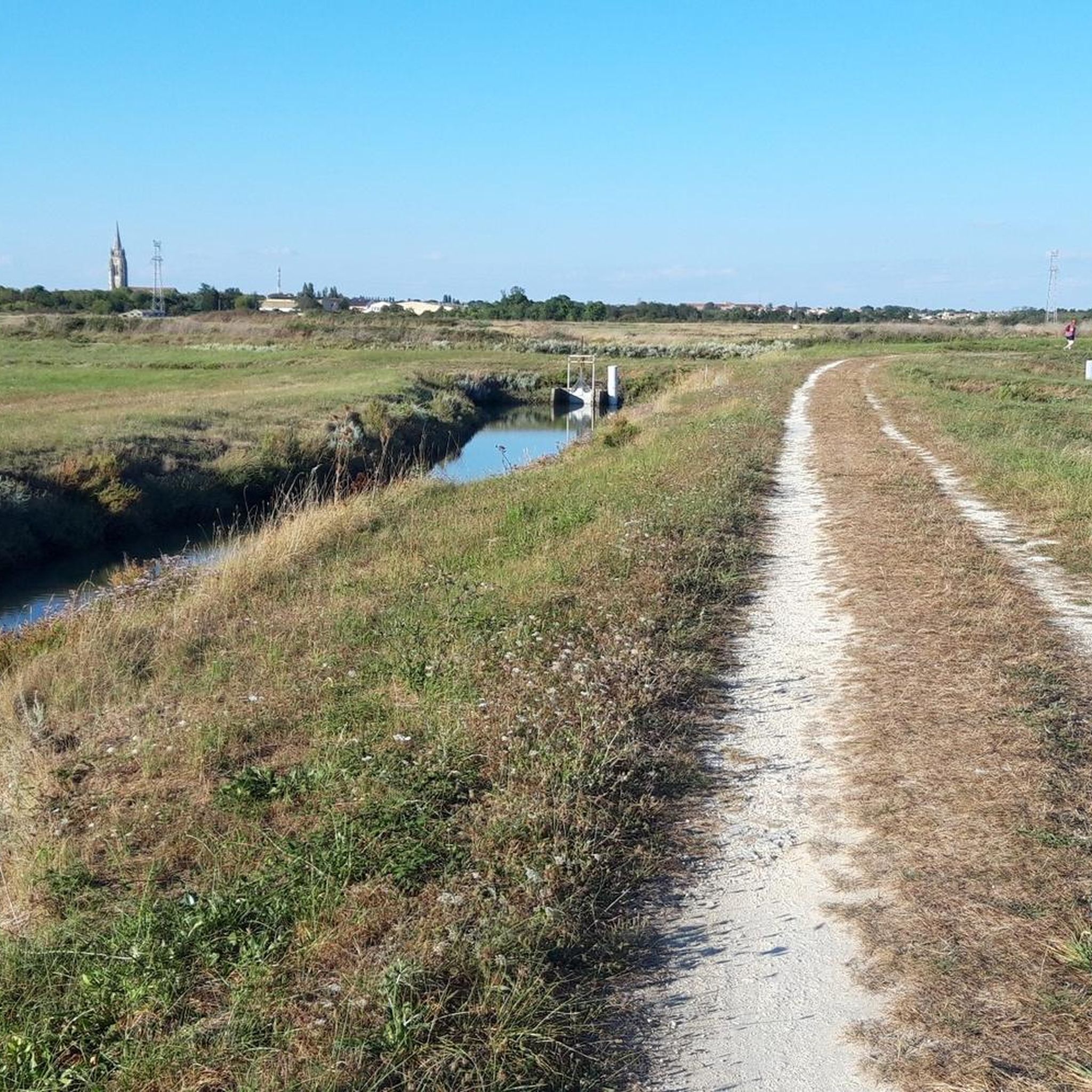
3km of happiness in all weathers
0
1

The market hall on the Place des Halles, which was probably built in the 16th century, consists of three naves that are divided by pillars made of quarry stone masonry. The open hall is closed by an octagonal tiled roof, which was renewed in the 20th century.
2
0

Be careful with cyclists, taking the Ile d'Oleron bridge like the bridge over the Seudre is very dangerous, especially in the event of wind. It is much preferable to favor smuggler boats which for 3 euros allow secure passage
3
2

The bridge does not have a real bike path. We drive, wedged between the railing and the trucks and cars (70km/h). It is not a safe route for cyclists with heavy luggage, children or trailers. We read everywhere that there is a track and a sidewalk on this bridge. Don't trust it, it's absolutely false...
9
1
Frequently Asked Questions
What historical sites can I explore around Saint-Just-Luzac?
The region offers several significant historical sites. You can visit the 15th-century Église de Saint-Just, known for its flamboyant Gothic style. Another notable site is Brouage Citadel, a historic fortified town that was once a major salt trading and war port. Additionally, the Saint-Pierre Church of Hiers-Brouage features a Renaissance-style facade and stained glass windows depicting the founding of New France.
What natural attractions are there to visit near Saint-Just-Luzac?
Saint-Just-Luzac is largely covered by the extensive Marais de la Seudre, a fragile natural heritage of marshes home to diverse flora and fauna, including storks and European pond turtles. You can also explore the Forêt domaniale de la Coubre, located about 14 km away, which offers trails for walking and cycling.
Are there any unique cultural experiences in the Saint-Just-Luzac area?
Yes, the region is renowned for its oyster farming, particularly the Marennes Oléron oysters. Visitors can explore this heritage through tastings and learn about local production. You can also visit Le Moulin des Loges, the region's only tide mill, which operates with the rhythm of the tides to produce flour and hosts demonstrations.
What is the best time of year to visit Saint-Just-Luzac for sightseeing?
The best time to visit Saint-Just-Luzac for sightseeing and outdoor activities is generally during the warmer months, from spring to early autumn. This period offers pleasant weather for exploring the marshes, cycling routes, and historical sites. Summer provides opportunities for seasonal activities and enjoying the nearby coastal areas.
Are there family-friendly attractions around Saint-Just-Luzac?
Many attractions are suitable for families. The Brouage Citadel and Saint-Pierre Church of Hiers-Brouage offer historical exploration. For animal lovers, the Zoo de La Palmyre is approximately 13 km away. The extensive marshes also provide opportunities for nature walks and wildlife spotting, which can be enjoyable for all ages.
What outdoor activities, like hiking or cycling, can I do near Saint-Just-Luzac?
The area around Saint-Just-Luzac is excellent for outdoor activities. You can find numerous cycling routes, including sections of the Vélodyssée in the Coubre Forest. For hiking, there are trails like the 'Marennes Beach – Port of Marennes loop' or the 'Romanesque Church of St. Symphorien loop'. You can find more details and routes on the Hiking around Saint-Just-Luzac and Cycling around Saint-Just-Luzac guide pages.
Are there specific hiking trails suitable for different difficulty levels?
Yes, there are hiking trails catering to various difficulty levels. For an easy walk, consider the 'Marennes Beach – Port of Marennes loop' (6.3 km) or the 'Sculpted Rocks of Pouponnot loop' (2.5 km). More moderate options include the 'Romanesque Church of St. Symphorien loop' (18.7 km) or 'Along the Canals – Hiers loop' (12.5 km). You can explore these and other routes on the Hiking around Saint-Just-Luzac guide page.
What do visitors enjoy most about the attractions near Saint-Just-Luzac?
Visitors particularly appreciate the historical depth and natural beauty. For instance, the Brouage Citadel is loved for its well-preserved fortifications and rich history. The unique maritime setting of Fort Louvois, accessible at low tide or by ferry, also receives high praise for its views and historical significance.
Can I find accessible attractions for visitors with mobility needs?
While specific accessibility information for all sites may vary, some areas offer more accessible experiences. The streets inside Brouage Citadel are almost exclusively paved, which might present challenges for some. However, the Forêt domaniale de la Coubre includes a tarmac section that is part of the Vélodyssée route, offering a smoother path for some visitors.
Are there any picturesque villages or towns to visit nearby?
Absolutely. Just about 10 km from Saint-Just-Luzac, you'll find Mornac-sur-Seudre, which is designated as one of France's 'Most Beautiful Villages.' It offers an attractive and pleasant village center worth exploring.
Where can I go for wildlife spotting around Saint-Just-Luzac?
The Marais de la Seudre, covering two-thirds of the commune's territory, is an excellent spot for wildlife spotting. These wetlands are a haven for diverse species, including storks, white spoonbills, European pond turtles, and coppery butterflies. The area is part of protected natural spaces, making it ideal for observing local fauna.
What are some running routes available near Saint-Just-Luzac?
For runners, there are several routes around Saint-Just-Luzac. Options include the 'Chenal de Reux loop' (14 km), the 'Bois des Pairs loop' (8.1 km), and two 'Château de Feusse loop' options (5 km and 8.8 km). These routes offer moderate difficulty and a chance to explore the local landscape. More details can be found on the Running Trails around Saint-Just-Luzac guide page.
Can I visit any lighthouses or coastal fortifications in the area?
Yes, you can visit Fort Louvois, a 17th-century maritime fortification built on a rock that is submerged at high tide. It was designed by Vauban to defend the maritime arsenal of Rochefort. It's accessible at low tide via a walkway or by a free ferry.
Most popular routes around Saint-Just-Luzac

Get inspired with the komoot mobile app


Explore more
Still not found the Highlight you’re looking for? See guides of the top attractions in other regions:
