The best walks and hikes around Nancras
4.3
(52)
287
hikers
22
hikes
Hiking around Nancras offers access to the diverse landscapes of the Charente-Maritime region in France. The area is characterized by extensive marshlands, such as the Marais de la Seudre, and picturesque forests like Forêt de Suzac. River valleys, including the Charente River, also provide varied terrain for exploration. The region's mild oceanic climate supports a network of trails suitable for different preferences.
Best hiking trails around Nancras
- The most popular hiking route is Hunting lock – Saujon Water Park loop…
Last updated: July 1, 2026
4.5
(2)
30
hikers
5.60km
01:25
10m
10m
Easy hike. Great for any fitness level. Easily-accessible paths. Suitable for all skill levels.
5.0
(3)
21
hikers
6.69km
01:42
10m
10m
Easy hike. Great for any fitness level. Easily-accessible paths. Suitable for all skill levels.

Sign up for free
4.8
(5)
22
hikers
11.6km
02:55
10m
10m
Moderate hike. Good fitness required. Easily-accessible paths. Suitable for all skill levels.
3.8
(5)
22
hikers
6.19km
01:34
10m
10m
Easy hike. Great for any fitness level. Easily-accessible paths. Suitable for all skill levels.
4.5
(2)
13
hikers
9.94km
02:31
20m
20m
Moderate hike. Good fitness required. Easily-accessible paths. Suitable for all skill levels.
Get access to more routes and recommendations from other explorers.
Sign up for free
Already have an account?
Our route recommendations are based on thousands of hikes, rides, and runs completed by other people on komoot.
Start today with a free account
Your next adventure awaits.
Login or Signup


Tips from the Community

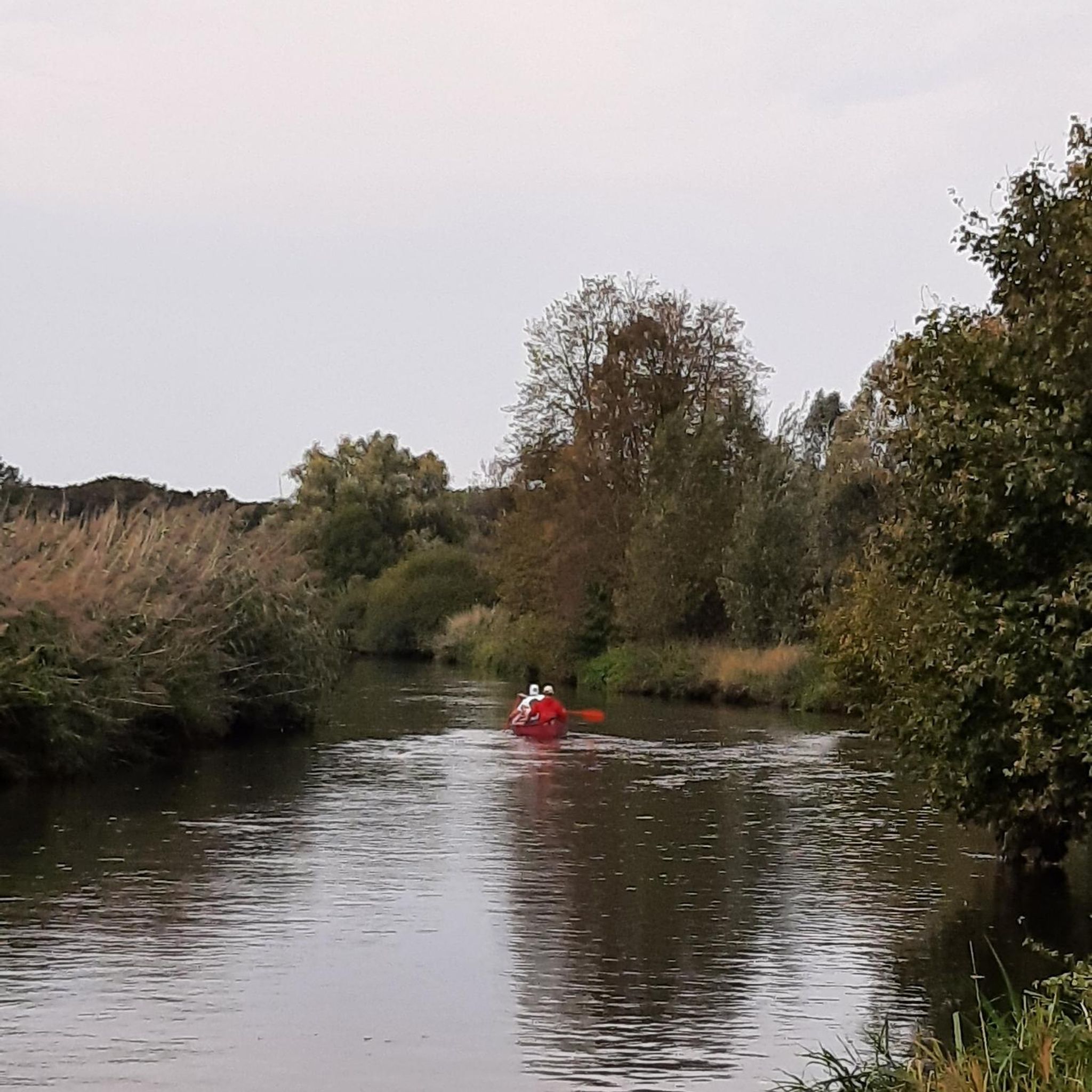
The port of Ribérou is a major heritage site in Saujon, bearing witness to a prosperous maritime past linked to the salt and wine trade. Transformed in the 19th century by ambitious works, it has now been reinvented as a place for living, relaxation, and preserving local history. 🛶 Origins and the Middle Ages The port of Ribérou takes its name from the Latin word ripa ("riverbank") or the Occitan word ribèira ("river"). It is located at the head of the Seudre estuary. It existed as early as the 11th century and became an important river and sea port thanks to its strategic position at the head of the estuary, used particularly for the salt trade—then called "white gold"—a highly sought-after product for preserving food. 🚢 Medieval Period and International Trade With the opening of British markets during the reigns of Eleanor of Aquitaine and Henry II Plantagenet, ships laden with wool, salt, wine, and other goods flocked to Ribérou. In the 16th century, the port exported local wines (such as cognac and pineau) throughout Europe. In 1577, during the Wars of Religion, the port was a strategic site: troops were stationed there, and battles took place. 🏗️ Decline, Reconstruction, and the 19th Century The estuary gradually silted up, making navigation difficult. By 1691, only smaller vessels could dock there. During the French Revolution, the sale of the tidal mill, which helped remove sediment, worsened the silting, leading to the port's decline. A modernization project began in 1822, but it wasn't until 1839 that an ambitious program was launched under the impetus of Jules Dufaure—a native of Saujon and Minister of Public Works—with the construction of sturdy quays, slipways, a lock bridge (marking the boundary between fresh and salt water), and reception facilities. In 1842, the work was completed, and the main quay was named Quai Dufaure in honor of this political support. 📉 Gradual Decline and Modernization The arrival of the railway in 1876 and the persistent problems of silting led to a decline in the port's traditional commercial activity, already facing competition from other transport networks. In the 20th century, the port gradually lost its economic importance but remained active for traditional fishing and became a place for pleasure boating, leisure, and local culture. Urban and tourism development projects (particularly in 2011–2012) modernized the port while preserving its historical charm. 🌊 Today The port of Ribérou is now a small fishing and pleasure port, much appreciated for its walks along the Seudre River, water sports (canoeing, kayaking, paddleboarding, etc.), and seasonal events.
0
0
🪩 The Louis Mérit and Roger Mauret Pétanque Court The Saujon pétanque court, officially named the Louis Mérit and Roger Mauret Pétanque Court, is a municipal facility located on the Voie de la Taillée in Saujon. It consists primarily of a pétanque court with a stabilized/cinder surface, suitable for both pétanque and jeu provençal. 📅 Origins and Development There is no precise official date published by the town hall or readily accessible online local archives, but sports directories indicate that this facility could date from 1965–1974 (estimate based on local data for referenced sports facilities). → This suggests that the courts were already in place in the second half of the 20th century, corresponding to a period when pétanque clubs were becoming more structured in France and dedicated municipal facilities were often created. 🏆 Activity and Functions Over Time The pétanque court hosts local pétanque competitions and events, including competitions open to the public such as those organized as part of community events (for example, a "Pink October" competition in October 2025). It is used by individual players, recreational groups, and the local pétanque club (Pétanque Saujon-Vaux), which organizes official FFPJP competitions—including departmental qualifiers and championships—at its facilities in Saujon and Vaux-sur-Mer. 🏅 Name and Local Recognition The naming of the court after Louis Mérit and Roger Mauret suggests that these two individuals likely made a significant contribution to pétanque or community life in Saujon (such names often honor active members of the local sports community), but online sources do not provide detailed biographies of these individuals. → More detailed information can be obtained by consulting the municipal archives, local association newsletters, or by contacting the Saujon town hall. 🏡 Position in local life The pétanque court is part of the traditional outdoor sports landscape in Saujon, alongside other municipal facilities (stadium, swimming pool, tennis courts, etc.), and testifies to the deep roots of pétanque in local culture for several decades.
0
0
🏊♂️ Origins and Opening The Saujon swimming pool, now known as Espace Aquatique de la Lande, opened on June 22, 1995. It will therefore celebrate its 30th anniversary in 2025, with festive events planned to mark the occasion. ⚙️ Community Management For approximately 30 years, the facility was managed by a Single-Purpose Intermunicipal Syndicate (SIVU), bringing together several municipalities in the local area (including Saujon, Balanzac, Corme-Écluse, L’Éguille-sur-Seudre, etc.). This structure facilitated access to swimming, aquatic activities, and swimming lessons for local residents. 📉 End of the Syndicate and Transfer In 2025, the SIVU was dissolved, marking a new chapter in the swimming pool's history. The financial review and preparations for the transfer were completed at the last delegates' meeting. As of July 1, 2025, the management and responsibility for the swimming pool have been transferred to the Royan Atlantique Agglomeration Community (CARA) as part of a community swimming pool plan aimed at pooling resources, harmonizing services, and preparing for the facility's renovation. 🧠 Role and Local Impact The facility is considered a key leisure and aquatic sports venue for Saujon and the surrounding towns, attracting more than 80,000 visitors annually and offering a variety of activities such as swimming, aquagym, aquabiking, and sessions adapted for people with disabilities. 🛠️ Future Prospects As part of the CARA swimming pool plan, the Saujon swimming pool is slated for future renovation and is expected to be integrated into a larger network of aquatic facilities including other towns (such as Royan, Étaules, and Cozes). 📍 Current Features The aquatic center currently includes: A 25-meter indoor pool with a gradual depth, A paddling pool and outdoor pools with water slides (seasonal), Indoor and outdoor swimming slots depending on the time of year.
0
0

The flushing lock is located at the head of the port, between the north bank's embankment and the south bank's quay. A retention basin, occupying the non-navigable Seudre riverbed as far as Saujon, follows the flushing lock. Within the retention basin, rubble stone embankments extend the lock's return walls for a few meters. The lock itself forms a bridge carrying a road. The lock bridge consists of two piers, forming three arches, each housing two gates. On the upstream side of the lock, the piers have semicircular cutwaters. The three bands are stacked and terminate in clamps. The lock ends with a cornice resting on modillions. The cornice follows the shape of the cutwaters. A metal balustrade, also semicircular in shape, is fixed to the top of the lock. This balustrade is framed by two stone moldings. The sluice gate and its upstream and downstream return walls are constructed of dressed stone. The masonry is of medium and regular quality, except for the coping of the return walls, which features large and regular masonry. The upstream north return wall is lower than the one on the south bank. A small parapet of recently constructed white rubble masonry surmounts it. The sluice gate is equipped with metal gates, the modern racks of which are visible. The first sluice gate was built around 1825 on the site of a former tidal mill. During the works carried out between 1839 and 1842, the sluice gate's embankment was modified to allow the passage of vehicles. Between 1847 and 1853, the lock was enlarged to allow for larger flushes, and the reservoir was excavated. Return walls were also built to connect the flushing lock to the riprap. It was then restored in 1865 and completely rebuilt between 1868 and 1869. The lock is 10.50 m wide, and its gates are each 1.50 m wide. The reservoir is 700 m long and has an average width of 30 m.
0
0

The Lalande lake hosts a watersports center with various games for children and adults, from beginners to experienced paddlers. The joys of sliding on different surfaces. Adult beginners can come and try it without reservation. All the advice they need to get started and progress is available. The modules await even the most experienced. WATER SKIING This is the historic discipline; it needs no introduction! Very easy to access, water skiing provides a quick transition to wakeboarding. KNEEBOARDING Kneeling on a board allows children and beginners to familiarize themselves with the ski lift, easily mastering the start and turning lines. WAKEBOARDING This is the premier discipline of water skiing. Wakeboarding allows for numerous tricks on the water, in the air, and on the modules. WAKESKATING A real skateboard on the water: the feet are not attached to the board. Watersports guaranteed! AQUA GAMES A water-based inflatables course for children and adults. Accessible from age 4, accompanied by an adult. And if you're feeling peckish, the snack bar awaits. You can also enjoy a meal on-site, overlooking the lake. Burgers, paninis, salads, tapas, ice cream... A comprehensive menu to delight the whole family between sessions above, in, or on the water ;)
0
0
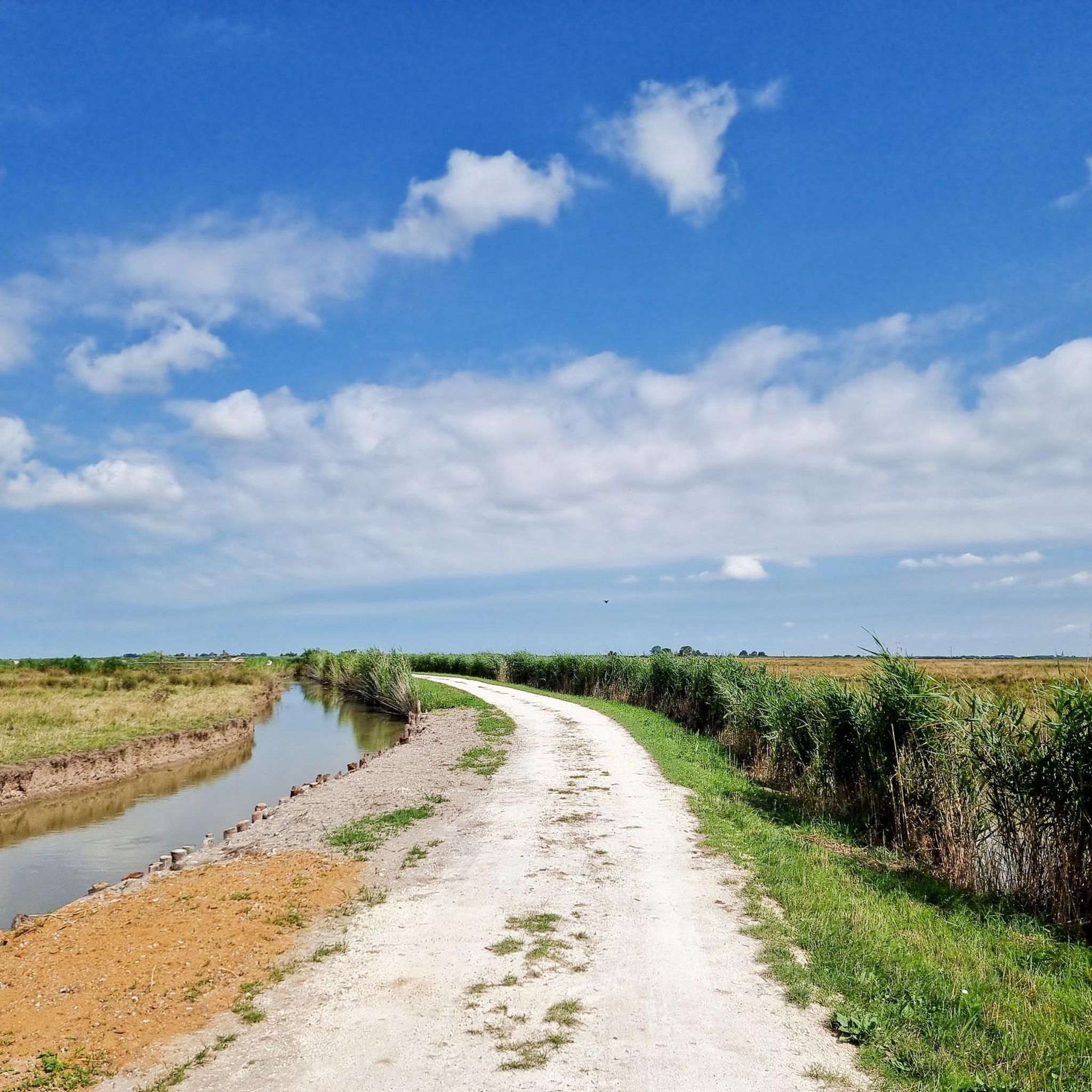
This path starts at the Ribérou port in Saujon (on the right bank, following the current) and continues for a few kilometers, stopping in front of some marshes. It runs alongside the Saujon lake and its aquatic activities, and can even be reached by taking a small bridge on the right. All along the way, you'll find benches (often in the shade) where you can rest if necessary.
0
0
Frequently Asked Questions
How many hiking trails are available around Nancras?
There are over 20 hiking trails around Nancras, offering a variety of experiences. These routes range from easy strolls to more moderate treks, catering to different fitness levels. The komoot community has explored these diverse paths over 240 times.
Are there easy hiking options suitable for beginners near Nancras?
Yes, Nancras offers several easy hiking options perfect for beginners. For instance, the Hunting lock – Saujon Water Park loop from Saujon is an easy 3.5-mile (5.6 km) trail with flat terrain near the water, taking about 1 hour 25 minutes. Another great choice is the Hunting lock – Boulodrome of the pétanque club loop from Saujon, an easy 4.6-mile (7.4 km) path with minimal elevation gain.
What kind of landscapes can I expect to see on hikes around Nancras?
Hiking around Nancras immerses you in the diverse landscapes of the Charente-Maritime region. You'll encounter extensive marshlands, such as the significant Marais de la Seudre, and picturesque forests like Forêt de Suzac. River valleys, including the Charente River, also provide varied terrain, offering a mix of natural beauty.
Are there any circular walks available near Nancras?
Many of the trails around Nancras are designed as circular routes, allowing you to start and end in the same location. An example is the Hiking loop from Saujon, a 4.2-mile (6.7 km) trail through open countryside, typically completed in about 1 hour 40 minutes. Another is the Pointe de l'Éguille loop from L'Éguille, which is 3.4 miles (5.5 km) long.
What is the best time of year to go hiking in Nancras?
The Charente-Maritime region, including Nancras, benefits from a mild oceanic climate, making hiking enjoyable throughout the year. Moderate temperatures and invigorating sea air are common. Spring and autumn offer pleasant conditions with vibrant natural colors, while summer is great for coastal walks. Even winter hikes can be pleasant due to the mild climate.
Are there any historical or cultural landmarks to discover on hikes near Nancras?
Yes, the region around Nancras is rich in history and culture. You can find trails that lead past Romanesque churches and ancient dolmens. For example, the Romanesque Church of St. Symphorien loop from La Gripperie-Saint-Symphorien is a moderate 11.6-mile (18.7 km) hike that takes you past historical sites. You can also explore specific highlights like the Saint-Romain Church of Saint-Romain-de-Benet or Saint Sulpice Church, Saint-Sulpice-d'Arnoult.
What do other hikers say about the trails around Nancras?
The hiking trails around Nancras are highly regarded by the komoot community, holding an average rating of 4.3 stars from over 40 reviews. Hikers often praise the varied terrain, from serene marshlands to open countryside, and the accessibility of routes for different skill levels.
Are there any specific points of interest or attractions near the hiking routes?
Beyond the natural beauty, you can find several points of interest. The Riberou Port offers a charming waterside stop. For those interested in historical architecture, the Maison Forte of Pisany is a notable castle nearby, and various Romanesque churches like Saint-Nazaire Church are scattered throughout the area.
Can I expect to see wildlife while hiking in the Nancras area?
Yes, the marshlands and forests around Nancras, particularly areas like the Marais de la Seudre, are important wetlands and provide unique ecosystems. These areas are excellent for wildlife spotting, especially for various bird species. Keep an eye out for local flora and fauna as you explore the trails.
Are there any moderate difficulty hikes for more experienced hikers?
While many trails are easy, there are also moderate options for those seeking a bit more challenge. The Romanesque Church of St. Symphorien loop from La Gripperie-Saint-Symphorien is a moderate 11.6-mile (18.7 km) route with over 100 meters of elevation gain, offering a longer and more engaging experience.
Most popular attractions around Nancras

Get inspired with the komoot mobile app


Explore more
Browse the best Hikes in other regions.
