The best cycling routes around L'Éguille
4.3
(481)
3,199
riders
191
rides
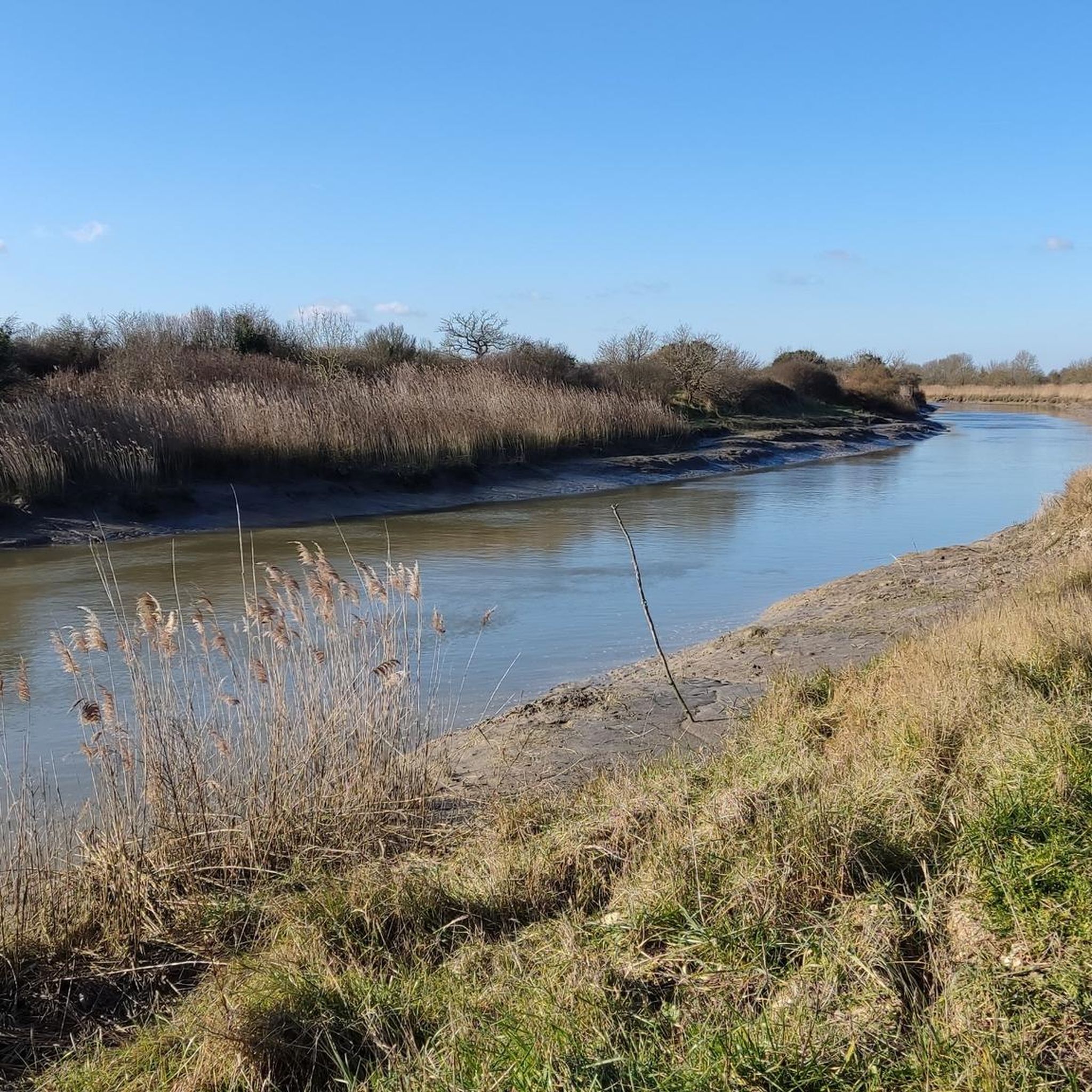
Touring cycling around L'Éguille is characterized by its location on the banks of the River Seudre, offering routes through salt marshes and meadows. The terrain is generally flat, making it suitable for leisurely rides along riverbanks and coastal areas. This region, part of the Charente-Maritime, features a network of waterways and a mild climate conducive to outdoor activities. The landscape provides views of traditional oyster farming ports and diverse birdlife.
Best touring cycling routes around L'Éguille
- The most popular touring…
Last updated: May 15, 2026
4.4
(12)
104
riders
Moderate bike ride. Good fitness required. Mostly paved surfaces. Suitable for all skill levels.
5.0
(1)
53
riders
33.6km
02:34
130m
130m
Hard bike ride. Good fitness required. You may need to push your bike for some segments of this route.

Sign up for free
4.3
(7)
40
riders
16.1km
01:11
20m
20m
Easy bike ride. Great for any fitness level. Mostly paved surfaces. Suitable for all skill levels.
4.5
(4)
20
riders
Moderate bike ride. Good fitness required. Mostly paved surfaces. Suitable for all skill levels.
5.0
(2)
30
riders
Moderate bike ride. Good fitness required. Mostly paved surfaces. Suitable for all skill levels.
Get access to more routes and recommendations from other explorers.
Sign up for free
Already have an account?
Our route recommendations are based on thousands of hikes, rides, and runs completed by other people on komoot.
Start today with a free account
Your next adventure awaits.
Login or Signup

Tips from the Community

The port of Ribérou is a major heritage site in Saujon, bearing witness to a prosperous maritime past linked to the salt and wine trade. Transformed in the 19th century by ambitious works, it has now been reinvented as a place for living, relaxation, and preserving local history. 🛶 Origins and the Middle Ages The port of Ribérou takes its name from the Latin word ripa ("riverbank") or the Occitan word ribèira ("river"). It is located at the head of the Seudre estuary. It existed as early as the 11th century and became an important river and sea port thanks to its strategic position at the head of the estuary, used particularly for the salt trade—then called "white gold"—a highly sought-after product for preserving food. 🚢 Medieval Period and International Trade With the opening of British markets during the reigns of Eleanor of Aquitaine and Henry II Plantagenet, ships laden with wool, salt, wine, and other goods flocked to Ribérou. In the 16th century, the port exported local wines (such as cognac and pineau) throughout Europe. In 1577, during the Wars of Religion, the port was a strategic site: troops were stationed there, and battles took place. 🏗️ Decline, Reconstruction, and the 19th Century The estuary gradually silted up, making navigation difficult. By 1691, only smaller vessels could dock there. During the French Revolution, the sale of the tidal mill, which helped remove sediment, worsened the silting, leading to the port's decline. A modernization project began in 1822, but it wasn't until 1839 that an ambitious program was launched under the impetus of Jules Dufaure—a native of Saujon and Minister of Public Works—with the construction of sturdy quays, slipways, a lock bridge (marking the boundary between fresh and salt water), and reception facilities. In 1842, the work was completed, and the main quay was named Quai Dufaure in honor of this political support. 📉 Gradual Decline and Modernization The arrival of the railway in 1876 and the persistent problems of silting led to a decline in the port's traditional commercial activity, already facing competition from other transport networks. In the 20th century, the port gradually lost its economic importance but remained active for traditional fishing and became a place for pleasure boating, leisure, and local culture. Urban and tourism development projects (particularly in 2011–2012) modernized the port while preserving its historical charm. 🌊 Today The port of Ribérou is now a small fishing and pleasure port, much appreciated for its walks along the Seudre River, water sports (canoeing, kayaking, paddleboarding, etc.), and seasonal events.
0
0
📍 Introducing the Gilet Cove The Gilet Cove is a small, natural beach on the oceanfront, located on Boulevard de la Conche de Gilet / Boulevard de la Falaise, in the town of Vaux-sur-Mer, just before Royan. 🌿 It's a sheltered, rocky cove, appreciated for its tranquility and more intimate setting compared to the larger urban beaches nearby. 🏖️ At high tide, the sea can completely cover this small beach, making the space very limited; at low tide, you can enjoy a patch of sand and rocks for relaxing or swimming. 🧭 Features & Tips 📍 Type of place: small, unsupervised beach, nestled among the rocks with sand and cliffs. 🏖️ Tides: access is best at low tide — at high tide the beach can disappear underwater. 🐶 Animals: prohibited from April 1st to September 30th (subject to municipal regulations). 👣 Access: via stairs from the boulevard above, surrounded by villas with sea views. 🚫 Lifeguard services: no lifeguard station or marked services. 📍 Location La Conche de Gilet is often considered the last small beach in Vaux-sur-Mer before reaching Royan/Pontaillac when following the coastline from Saint-Palais-sur-Mer.
0
0


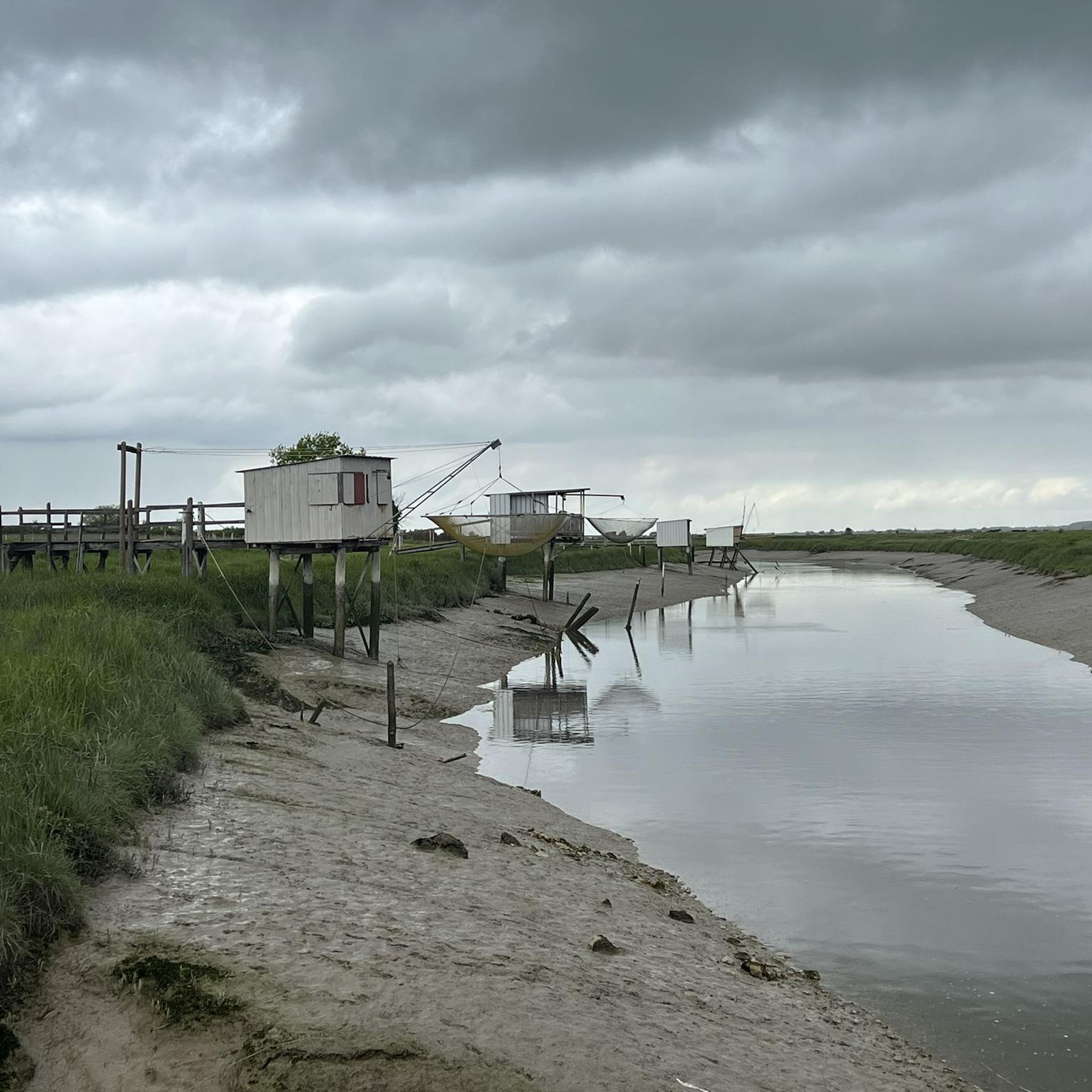
A nice hike to do in spring or autumn to enjoy the peace and quiet of the small roads and cycle paths. Don't hesitate to make a small detour to the Coubre lighthouse and the Pontaillac and Royan cornice. The return is a little less pleasant on a section of main road that can certainly be avoided. BE CAREFUL ⚠️ if it's windy, it can complicate the tour! (experienced).
0
0
The port of Ribérou is a fishing and pleasure port located at the end of the Seudre estuary, in Saujon. It is one of the two ports in the city, along with that of Breuil, a little downstream. Active since the 11th century, it took on its current appearance from 1842, under the impetus of the Minister of Public Works at the time, Jules Dufaure, a "local boy", who thus attempted to revive maritime trade and fishing activities, which were then in decline. Ideally located, on the edge of the city center, the La Lande leisure center and the preserved areas of the Seudre marshes (towpaths transformed into walking trails), it has become one of the major tourist attractions in Saujon, where theme evenings and the July 14 fireworks are organized. In 2011, the municipality began a renovation program for the port site, entrusted to the architect-urban planner Sophie Blanchet. It consists of transforming the old car parks into a pedestrian esplanade, a real meeting place with modern street furniture and, in the long term, green spaces. From the quays, lined with bourgeois buildings, small picturesque streets lined with hollyhocks allow you to crisscross the district and reach the city centre. The Ribérou lock bridge, known as the "bridge of opposing waters", was renovated in 2010. It marks the separation between the waters of the estuary (port side: brackish water) and the waters of the river (retention basin side: fresh water). Ribérou is a starting point for certain water sports (canoeing and kayaking). It is approximately 250 metres long and 40 metres wide. From Ribérou, it is possible to reach successively the ports of Breuil (Saujon), L'Éguille, Mornac, Chaillevette, Chatressac (Chaillevette), Grandes Roches and Orivol (Étaules), La Grève in Duret and Coux (Arvert), La Grève (La Tremblade) and La Cayenne (Marennes).
0
0
This garden was created in 2006 by volunteers from the association “Aux Portes de l’Océan” on land kindly made available by the bishopric of La Rochelle right next to the church. The work of garden lovers and the financial help of sponsors make it possible to offer a free visit throughout the year. It is for everyone a privileged, sheltered place, where one tries according to one’s own aspirations to reestablish the first communion between oneself and nature. In the Middle Ages, the garden has a utilitarian role. It is the place where plants are cultivated that ensure the maintenance of life by providing the basis of remedies and food. It is possible to get an idea of medieval gardens thanks to manuscripts containing ancient treaties, to testimonies of images illustrating texts, to writings. Our garden was created near the church (with a Romanesque bell tower at the foot of which an elegant tripartite façade and a Gothic nave have been rebuilt), thanks to a group of passionate amateurs who were inspired by the achievements and writings of historians, ethnobotanists, horticulturists and landscapers. It is composed of eight raised beds delimited by “plessis” (woven larch slats that replaced the chestnut stems), filled with earth and which form courtyards. These courtyards accommodate: The vegetable garden: the hortus or horlulus (1 square for seeds and roots, 1 square for “potted plants”), The garden of simples (medicinal): the herbularius (2 squares), The aromatics (1 square), The signature and toxic plants (1 square), The textile and dye plants (1 square), The cosmetic plants and the garden of Mary (1 square). These eight squares surround the ninth, thus evoking the shape of a cross whose center is occupied by an octagonal fountain. A place is reserved for pilgrim gourds. We have planted a rose garden, set up a rest area in the shade of the acacias and created a space reserved for cereals. The orchard, vividarius, which adjoins it is planted with trees that are also useful: nourishing or producing materials essential to everyday life
0
0
The SAINT-PIERRE church dominates the village from its fortified bell tower. Original in many ways, the Romanesque building houses a holy water font made of a real shell. From the side, you reach the small garden of the chevet, well hidden. Stone sarcophagi (Merovingian or Carolingian depending on the source) bear witness to the archaeological excavations that the church has undergone. There are many stories in Mornac but that of the fire of August 2, 1943 marked the identity of the village. Indeed, the bell tower has not always had this appearance. It had the more traditional shape of a spire until lightning struck it. Many young students come to Mornac-sur-Seudre to participate in the clearing and the excavations that follow. Seduced by the local atmosphere, many of them stayed and opened the first craft workshops in the village, some of which are still present, such as pottery and leather.
0
0
Frequently Asked Questions
What kind of terrain can I expect when touring cycling around L'Éguille?
L'Éguille is characterized by its location on the banks of the River Seudre, offering generally flat routes through picturesque salt marshes and meadows. This makes it ideal for leisurely rides along riverbanks and coastal areas, with gentle elevation changes.
How many touring cycling routes are available in the L'Éguille area?
There are over 170 touring cycling routes around L'Éguille, catering to various skill levels. You'll find a good mix, with approximately 84 easy routes, 76 moderate routes, and 12 more challenging options.
Are there any family-friendly touring cycling routes in L'Éguille?
Yes, the generally flat terrain of L'Éguille, particularly along the salt marshes and riverbanks, is well-suited for family rides. Many of the 84 easy routes are perfect for cyclists of all ages, offering a relaxed way to explore the scenic landscapes.
What are some notable natural features or landscapes I'll encounter on the routes?
The region is defined by its intricate network of salt marshes and meadows, situated at the confluence of the Seudre and Liman rivers. These areas are not only scenic but also crucial ecosystems, serving as a habitat for various wading birds like herons, egrets, swans, and storks. You'll experience a peaceful and tranquil atmosphere, especially at 'La Pointe' where land and water blend beautifully.
What are some interesting places to see or landmarks along the touring cycling routes?
Many routes offer views of traditional oyster farming ports. You can explore the active fishing and oyster-farming Riberou Port, or pass by coastal attractions like Chay Beach and Fort du Chay. The mid-19th-century Saint-Martin church in L'Éguille also offers a glimpse into the local architectural heritage.
Are there any circular touring cycling routes around L'Éguille?
Yes, many routes in the area are designed as loops, allowing you to start and end in the same location. For example, the The market halls in Mornac-sur-Seudre – Port of La Tremblade loop from Le Train des Mouettes - Mornac sur seudre is a popular circular option exploring the Seudre estuary and its traditional villages.
What is the best time of year to go touring cycling in L'Éguille?
L'Éguille benefits from a mild climate and exceptional sunshine, making it pleasant for cycling for much of the year. Spring and autumn generally offer comfortable temperatures and beautiful scenery, while summer provides long daylight hours for extended rides.
What do other touring cyclists enjoy most about cycling in L'Éguille?
The area is highly rated by the komoot community, with an average score of 4.4 stars from over 900 reviews. Reviewers often praise the tranquil atmosphere, the scenic routes through salt marshes, and the opportunity to discover traditional oyster farming ports and diverse birdlife.
Are there routes that offer coastal views?
Absolutely. Many routes in L'Éguille extend towards the coast, providing beautiful sea views. The Chay Beach – Carrelets de Royan loop from Le Train des Mouettes - Mornac sur seudre is a moderate route specifically known for its coastal vistas and passing by traditional fishing huts.
Can I find routes that take me through varied landscapes, beyond just the salt marshes?
While salt marshes are a defining feature, you can certainly find routes that offer more diverse scenery. For instance, the Bois de la Roche loop from Le Train des Mouettes - Mornac sur seudre leads through varied landscapes, providing a different experience from the typical riverbank and marsh trails.
Are there any longer touring cycling routes for more experienced riders?
Yes, for those looking for longer distances, there are several routes exceeding 40 kilometers. The Côte sauvage loop from Le Train des Mouettes - Mornac sur seudre is a moderate 42.1 km route that offers a substantial ride through the region's diverse terrain.
Most popular routes around L'Éguille
Most popular attractions around L'Éguille

Get inspired with the komoot mobile app


Explore more
Browse the best Cycling routes in other regions.
