Attractions and Places To See around Gainneville - Top 20
Attractions and places to see around Gainneville, located in the Seine-Maritime department of the Normandy region in France, offer a blend of local heritage and convenient access to significant regional attractions. The area provides opportunities to explore historical monuments, unique architectural sites, and impressive natural features. Its strategic location makes it a gateway to discovering the rich cultural and natural landscape of Normandy.
Best attractions and places to see around Gainneville
- The most popular attractions is Normandy Bridge, a…
Last updated: July 6, 2026
Place Général de Gaulle
Highlight • Monument
Translated by Google •
Tip by

Town hall and gardens
Highlight • Monument
Translated by Google •
Tip by
Sign up now to discover places like this
Get recommendations on the best single tracks, peaks, & plenty of other exciting outdoor places.
Sign up for free
Notre-Dame Cathedral, Le Havre
Highlight • Religious Site
Translated by Google •
Tip by

Normandy Bridge
Highlight • Bridge
The Normandy …
Translated by Google •
Tip by

Chain of Containers (Le Havre)
Highlight • Monument
The sculpture is prominently located near the entrance to the port of Le Havre. Created in 2017 by Vincent Ganivet …
Translated by Google •
Tip by

Sign up for free to discover even more attractions around Gainneville.
Sign up for free
Already have an account?
Start today with a free account
Your next adventure awaits.
Login or Signup


Tips from the Community

Notre Dame Cathedral is the Catholic cathedral of the diocese of Le Havre in Le Havre in the Seine-Maritime department and one of the few preserved pre-war buildings in the city center.
2
0

The Volcano is a unique architectural monument designed by Brazilian architect Oscar Niemeyer.
3
0
Place General de Gaulle is located in the heart of the newly rebuilt city centre of Le Havre
4
0

Le Havre, one of the most astonishing cities in France. Almost completely destroyed during the Second World War, it was redesigned and rebuilt by an exceptional architect duo: the Perret brothers. The heart of the city was enriched in 1982 with this sumptuous work by another immense architect: Oscar Niemeyer. Exiled in France since 1964, the architect of Brasilia, the Brazilian federal capital (1960), began designing important buildings: the headquarters of the Communist Party in Paris, the Labor Exchange in Bobigny, the headquarters of the newspaper L' Humanity in Saint-Denis and the Volcano in Le Havre. If there was only one reason to come and visit the city, this would be more than enough.
1
0

Very beautiful cathedral from the outside. Not quite as exciting from the inside.
0
0

During the Second World War, the church was badly damaged by bombing. Most of the church windows were destroyed in August 1941. A bombardment in June 1944 and the devastating bombardment of the city on September 5th and 6th, 1944 completely destroyed five arches of the nave. The reconstruction was finished in 1974. In 1994 the southern aisle threatened to collapse because of the swampy subsoil; therefore wooden buttresses were inserted. The renovation work lasted from 2001 to 2004. The church stands on the original ground level and no longer appears elevated next to the houses built on war debris. The church received an independent parish in 1801. In 1998 the bishop decided to transform it into a larger congregation; the church now belongs to the parish of Saint Yves de la mer. In 1974, Pope Paul VI founded the Diocese of Le Havre. With that, the Church of Notre Dame was elevated to the status of a cathedral on December 7, 1974. Source: https://de.wikipedia.org/wiki/Kathedrale_von_Le_Havre
0
0
In the 12th century fishermen built a chapel dedicated to the Virgin Mary, which was no longer preserved in the 15th century. In 1520, after the port was founded, the parish priest of the Saint Michel church in Ingouville decided to build a wooden chapel with a thatched roof. It was often submerged by the tide and was destroyed on January 15, 1525 by the "Mâle Marée" (Heavy Storm Flood). A solid church with stone pillars was then built. The services in this church "Notre Dame de Grâce" (Our Lady of Grace) were held by the parish priest and the chaplains of Ingouville. In 1540 the construction of a 30 meter high bell tower began, crowned by an octagonal Gothic spire. This tower also served as a lighthouse. During the Wars of Religion, the city was conquered by the Protestants. To defend themselves against the king, they allied themselves with the English. The Notre Dame tower served as a stronghold against the French army in 1562. In retaliation, the authorities decided to demolish the tower, giving it its current form. The construction of the current church was decided in 1575 and directed by the master mason Nicolas Duchemin. The chancel was finished in 1585, the nave without the vault in 1597. King Henry IV granted an annual grant to complete the work. Because of the marshy subsoil, the substructure of the entrance facade had to be renewed. The main part of the church was completed in 1630. The Renaissance and Baroque forms testify to the change in architectural style. The church sustained damage during the siege by the English in July 1694 and later in 1759. During the French Revolution, the church was devastated. It was rededicated to a "Temple of Reason". Then it served as a feed store. From 1801 the church was used again for worship. The renovation, especially the beautification of the western facade, was completed in 1830. Source: https://de.wikipedia.org/wiki/Kathedrale_von_Le_Havre
0
0
Catène de Container is a sculpture in Le Havre, France. The sculpture is prominently located near the entrance to the port of Le Havre. Created in 2017 by Vincent Ganivet to mark the port's 500th anniversary, it consists of colored shipping containers arranged in two arches. One of the arches, composed of 21 containers, is high and steep, bridging a smaller flat arch composed of 15 containers. The shape and color of the containers give the impression of using large building blocks. The sculpture weighs a total of 288 tons and reaches a height of 28.5 meters. It manages without supports and uses the principle of the catenary used by the architect Antoni Gaudí, whereby the forces and tensions within a chain are used for support. The name Catène de Container goes back to the Latin word Catène for chain and means something like container chain in German. It is a double allusion to the construction principle used in the chain and to the supply chain, which also includes the containers and ultimately the port. The inauguration took place on May 27, 2017. Due to its unusual shape, size and striking location, the sculpture quickly became a landmark in Le Havre. Source: https://de.wikipedia.org/wiki/Cat%C3%A8ne_de_Container
2
0
Frequently Asked Questions
What are some unique architectural sites to visit near Gainneville?
The city center of Le Havre, a UNESCO World Heritage site, is renowned for its post-war reconstruction architecture designed by Auguste Perret. You can explore the impressive Town hall and gardens, which features one of Europe's largest town squares with ponds and fountains. Also, don't miss the Place Général de Gaulle, a cultural center with distinctive curved concrete sections, and the symbolic Chain of Containers (Le Havre) sculpture near the port.
Are there any impressive engineering marvels to see in the area?
Absolutely. The Normandy Bridge is a must-see. This impressive engineering feat spans the Seine estuary, connecting Le Havre to Honfleur. It held the record for the longest bridge in the world upon its construction in 1993 and accommodates cars, cyclists, and pedestrians.
What historical monuments can I explore in and around Gainneville?
Gainneville itself has local historical monuments such as the Church (L'église), the War Memorial (Le monument aux morts), and the Former Town Hall-School (L'ancienne mairie-école). In nearby Le Havre, you can visit the Notre-Dame Cathedral, a significant religious edifice with a rich history, combining Gothic and Renaissance styles. The Town hall and gardens in Le Havre also features a memorial sculpture symbolizing deportations and resistance.
Are there family-friendly attractions near Gainneville?
Yes, several attractions are suitable for families. The Place Général de Gaulle in Le Havre is a cultural center that hosts various events. The Notre-Dame Cathedral is also considered family-friendly. Additionally, the Town hall and gardens in Le Havre offers open spaces with ponds and fountains, which can be enjoyable for children.
What natural features or scenic viewpoints can I find close to Gainneville?
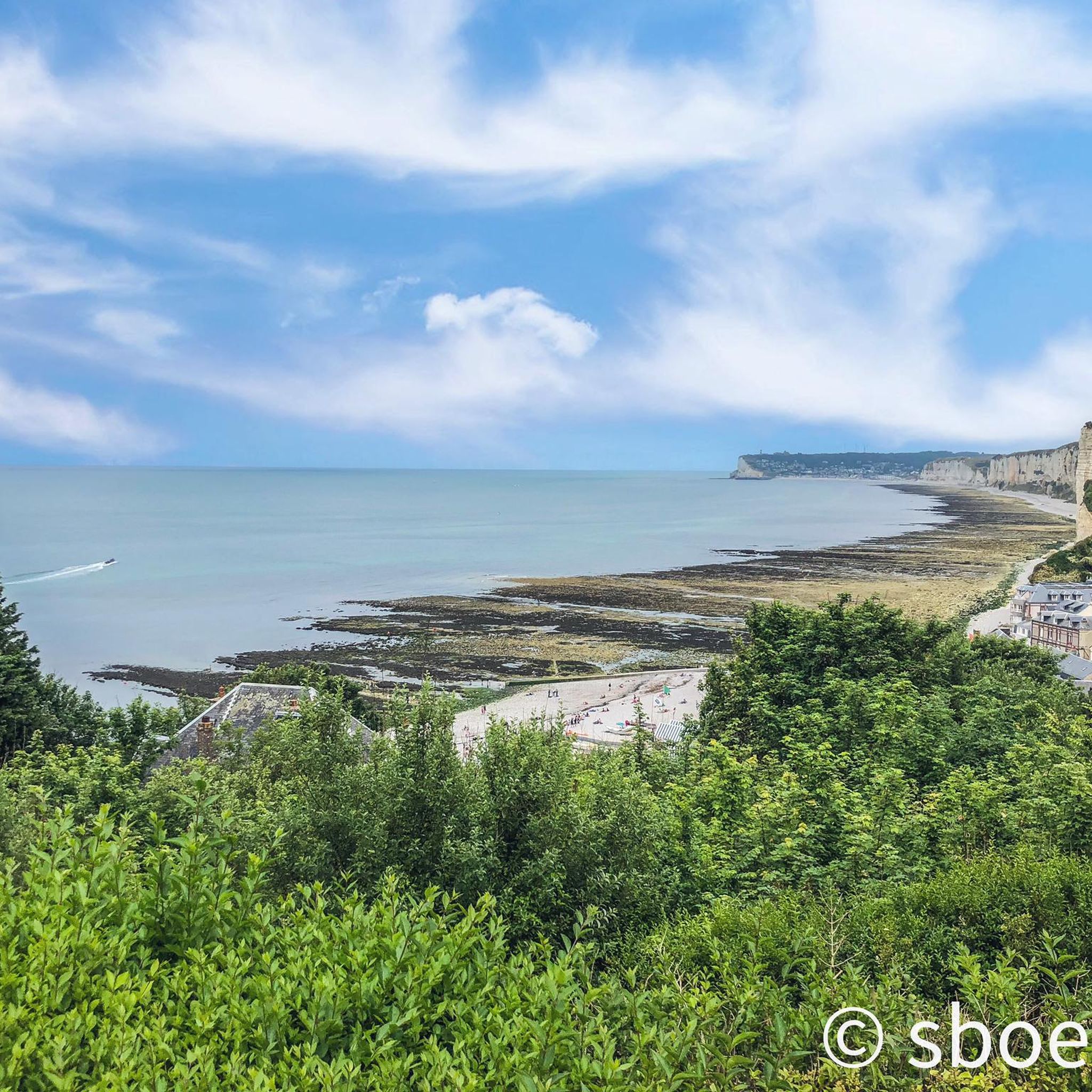
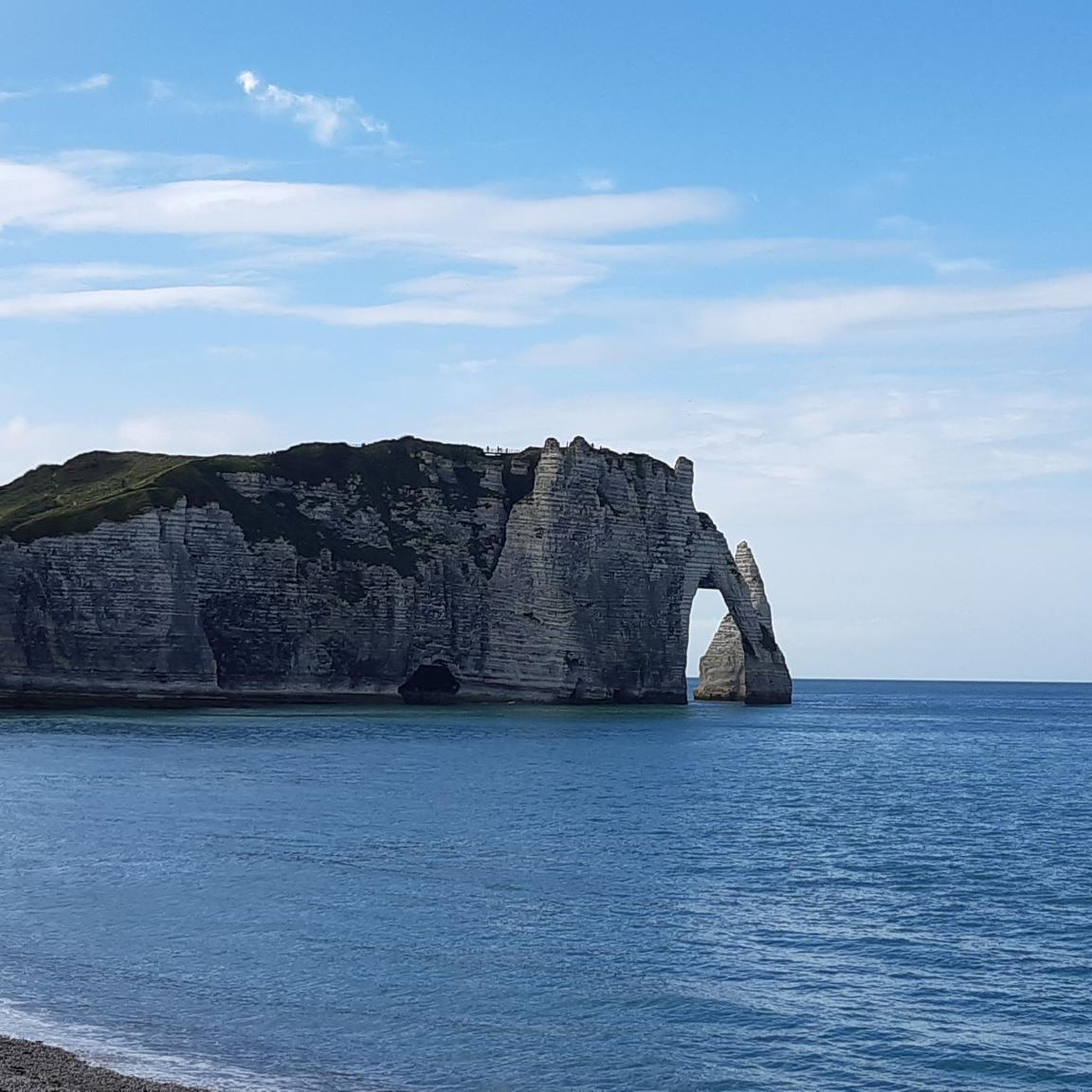
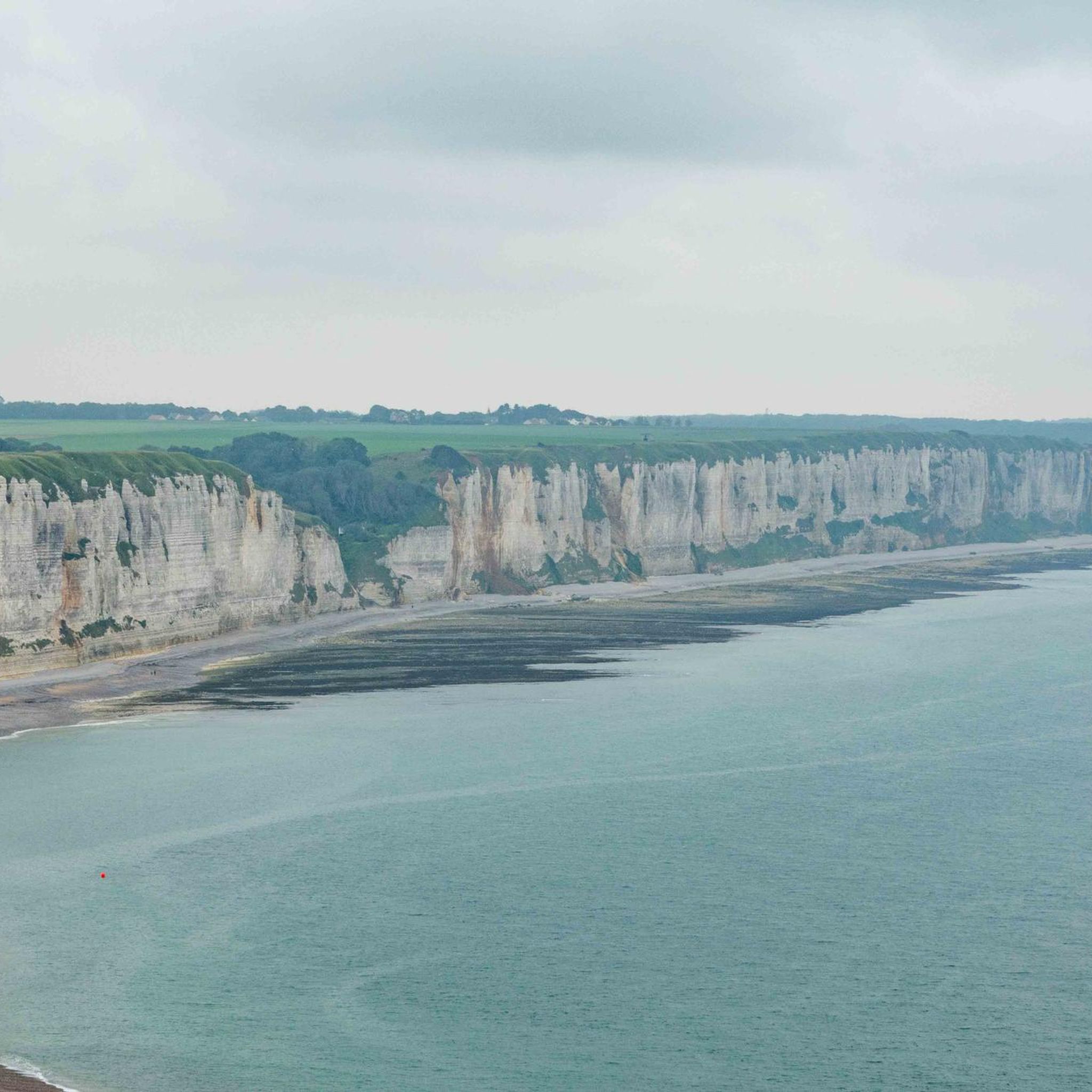
The region is known for its stunning natural beauty. Approximately 22 km from Gainneville, you can visit the spectacular Falaises d'Etretat, famous cliffs along the Alabaster Coast (Côte d'Albâtre), which is about 29 km away. These offer breathtaking views of the English Channel.
What outdoor activities can I do near these attractions?
The area around Gainneville is excellent for various outdoor activities. You can find numerous routes for road cycling, running, and mountain biking. For example, explore the Road Cycling Routes around Gainneville, including loops like the 'Catène de Containers – Parc de Rouelles'. Runners can discover trails such as 'La Mare Dambuc loop' among the Running Trails around Gainneville. Mountain bikers have options like the 'Ascent Under the Trees – Creek crossing' loop in the MTB Trails around Gainneville.
Are there any good places for cycling near Gainneville?
Yes, the region offers several cycling opportunities. The Normandy Bridge itself has dedicated cycle lanes, offering a unique experience. For more extensive rides, you can explore the Road Cycling Routes around Gainneville, which include moderate to difficult loops like the 'Antifer Viewpoint – Viaduc de Mirville loop'.
What are some popular towns to visit near Gainneville?
Gainneville's location provides easy access to several charming towns. Le Havre, with its UNESCO-listed city center and modern architecture, is a major hub. Just 11 km away, Honfleur is a picturesque port town highly recommended for its quaint streets and vibrant atmosphere. Both offer unique experiences and attractions.
Where can I experience local life and markets near Gainneville?
Several surrounding towns host vibrant markets where you can experience local life and find fresh produce. You can visit markets in Harfleur (Sunday), Montivilliers (Thursday), Saint-Romain-de-Colbosc (Saturday), and Honfleur (Saturday). These markets offer a great opportunity to immerse yourself in the regional culture.
What do visitors enjoy most about the attractions around Gainneville?
Visitors particularly appreciate the blend of historical significance and modern architectural marvels. The engineering feat of the Normandy Bridge and the unique design of the Chain of Containers are frequently highlighted. The cultural vibrancy of places like Place Général de Gaulle and the historical depth of sites like Notre-Dame Cathedral also receive high praise. The komoot community has shared over 160 photos and given more than 220 upvotes for these attractions.
Are there any accessible attractions for visitors with mobility considerations?
Yes, some attractions in the area are noted for their accessibility. The Place Général de Gaulle and the Town hall and gardens in Le Havre are listed as wheelchair accessible. The Chain of Containers (Le Havre) sculpture is also wheelchair accessible, allowing a broader range of visitors to enjoy these sites.
Can I find running trails suitable for different fitness levels near Gainneville?
Yes, the Running Trails around Gainneville offer options for various fitness levels. You can find moderate trails like the 'La Mare Dambuc loop from Gonfreville-l'Orcher' (7.5 km) or the 'Running loop from Gainneville' (6.5 km), providing enjoyable routes for a good run.
Most popular attractions around Gainneville

Get inspired with the komoot mobile app


Explore more
Still not found the Highlight you’re looking for? See guides of the top attractions in other regions:
