The best road cycling routes around Commerveil
5.0
(5)
207
riders
106
rides
Road cycling routes around Commerveil traverse a landscape characterized by rolling hills and rural roads, offering varied elevation gains. The region features a mix of agricultural areas, small villages, and some forested sections, providing diverse scenery for cyclists. Routes often connect historical sites and natural points of interest. The terrain supports both shorter, less strenuous rides and longer, more challenging excursions with significant climbs.
Best road cycling routes around Commerveil
- The most popular road cycling route is Saint-Léonard-des-Bois – Saint-Cénéri-le-Gérei…
Last updated: July 15, 2026
13
riders
124km
06:04
1,110m
1,110m
Hard road ride. Very good fitness required. Some segments of this route may be unpaved and difficult to ride.
8
riders
Easy road ride. Great for any fitness level. Mostly well-paved surfaces and easy to ride.

Sign up for free
5
riders
33.2km
01:32
240m
240m
Easy road ride. Great for any fitness level. Mostly well-paved surfaces and easy to ride.
3
riders
76.9km
03:17
620m
620m
Moderate road ride. Good fitness required. Mostly well-paved surfaces and easy to ride.
4
riders
32.1km
01:26
300m
300m
Easy road ride. Great for any fitness level. Mostly well-paved surfaces and easy to ride.
Get access to more routes and recommendations from other explorers.
Sign up for free
Already have an account?
Our route recommendations are based on thousands of hikes, rides, and runs completed by other people on komoot.
Start today with a free account
Your next adventure awaits.
Login or Signup




Tips from the Community

This 11th century medieval bridge is a beautiful place to contemplate Beaumont-sur-Sarthe for a short moment. In addition to the river, you can see the castle located on the heights of the town.
0
0

The nave is covered with a wooden vault with exposed beams. The archivolts of the Romanesque door are decorated with saw teeth. The west gable wall is topped with a slender bell tower. The interior contains three classical altars whose designs were apparently made by Mansard at the request of Louvois, owner of the Prairie de Marcilly.
0
0
Saint-Rémy Church from the 11th and 16th centuries. Stained glass windows from the 20th century. Altarpiece of the Saint-Julien chapel from the 17th century.
0
0
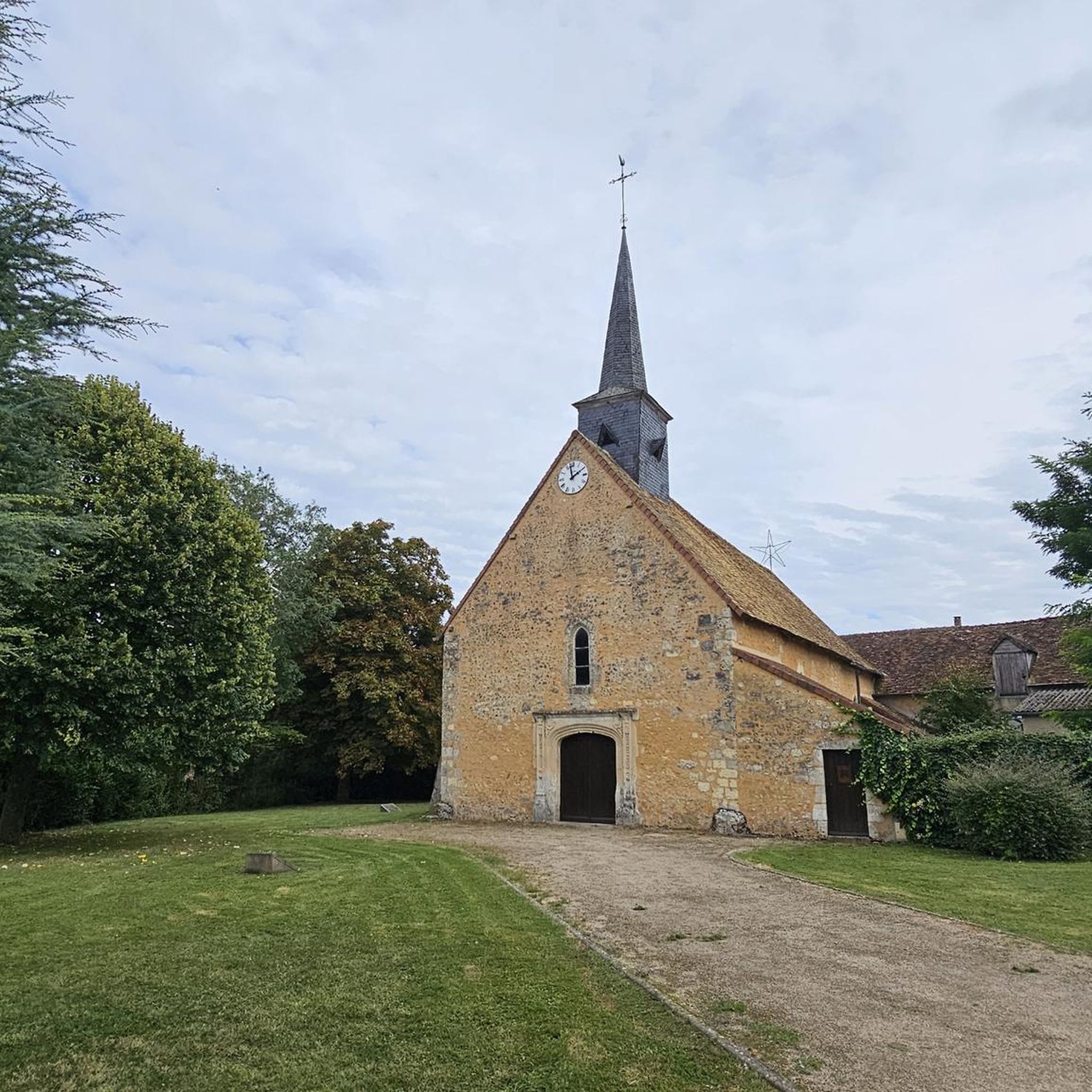
The church of Commerveil is built on a simple plan with a single nave and a straight chevet. According to the town hall's research, this small church dates from the 11th, 12th and 17th centuries. Its small spire can be seen from afar and its ogival windows match its size. Inside, the altarpiece dates from the middle of the 18th century. Behind the wooden tabernacle, we discover a painting representing the Assumption of the Virgin. To the right of the large marble altar, is the statue of Saint Anne and to the left that of the Holy Virgin. On the side aisles, to the right above the altarpiece of the Sacred Heart, we see in a niche the statue of Saint John the Baptist with a sheep. To the left, above the altarpiece of the Virgin with the Sorrowful Heart, is in a niche a statue of Saint Magdeleine. These two altarpieces, in marble and sculpted stone and partly gilded, date from the 17th and 18th centuries and have been listed as historical monuments since 1982. At the top of the nave, there is a Christ on the cross, probably made of wood. A statue of St. Gilles, placed on a wooden base, is located on the back wall of the church. Note a painted paneled vault that dates from the 19th century. The restoration of the church was carried out in the early 1980s.
0
0
The Church of Saint-Rémy appears on the cartulary of the Abbey of Saint-Vincent du Mans, however, as usual, it was the Bishop of Le Mans who had the collation of the priest. Rectangular in plan, it has a single nave and a straight chevet lit by a triplet, which was hidden by the installation of a high altar. The church was enlarged in the 15th and 16th centuries by two chapels, placed to the north and south of the nave. The church has some remarkable pieces of furniture: a Christ on the cross and a Saint Anne, in stone, from the 16th century; the tympanum of a stained glass window, open in the south wall, depicting the angels carrying the Instruments of the Passion (16th century); a Pietà in stone from the 16th or 17th century; a Charity of Saint Martin, in stone (15th century). two wooden statues from the 18th century, Saint Leo Fort, pope, and Saint James (mistakenly identified as Saint Martin). Benefiting from a policy of the General Council of Sarthe in favor of contemporary artists, eight bays in this church were entrusted to Michel Madore (Montreal, 1949- ). The work focused on the restoration of the roof and the framework of two bays of the nave. The entire ridge was refinished in lead, including the simple finial, thus replacing the glazed tiles and the terracotta finial.
0
0
The Chapitrel is the name given to the entrance gate. The period door is in the Renaissance style. This construction had several functions: It was reserved for catechumens who were not allowed to enter the church and served as a warehouse for farmers who sold at the market on Sunday mornings. The saddleback tower dates from 1545. It is 28 m high. It is square and has four levels. Each floor is separated by an external Roussard belt called a "larmier" which overhangs quite widely, preventing water from running off. At the top of the roof are two granite crosses, each topped with a copper weather vane representing a crowned dragon's head.
0
0
Saint-Martin Chapel. It dates from the 12th or 13th century. It is made of granite, roussard sandstone and brick. This small chapel is lost in the middle of the fields. It is a simple rectangular nave which has a Romanesque window at its chevet.
0
0
Dedicated to St Jouin, the church is only mentioned at the end of the 11th century. The building was fortified during the wars of religion. Gunboats (some rotating) are added as well as an underground refuge. You will see one as you go around the church. You can also admire the gargoyles and the magnificent sculpted capitals on either side of the portal. Inside, don't miss the carved keystones and capitals. The building contains quite rich furniture, including a headless sculpture holding a book whose origin and meaning remain mysterious.
0
0
Frequently Asked Questions
How many road cycling routes are available around Commerveil?
There are over 100 road cycling routes available around Commerveil, offering a wide range of options for different skill levels and preferences.
Are there easy road cycling routes suitable for beginners in Commerveil?
Yes, Commerveil offers several easy road cycling routes perfect for beginners. One such option is the Motte castrale de Peray – Saint-Jouin Church of Marnes loop from Saint-Rémy-des-Monts, an easy 24.5-mile path that gently winds through the countryside, connecting historical landmarks.
What are some challenging long-distance road cycling routes in the Commerveil region?
For experienced cyclists seeking a challenge, the Saint-Léonard-des-Bois – Saint-Cénéri-le-Gérei loop from Mamers is a difficult 76.8-mile route with over 3,600 feet of elevation gain, traversing varied rural landscapes.
Are there circular road cycling routes or loops around Commerveil?
Many of the road cycling routes in Commerveil are designed as loops, allowing you to start and finish in the same location. Examples include the Château de Bellerive – La Chapelle de Ma Mère loop from Saint-Longis, a 25.7-mile trail through rural areas, and the Château de Bellerive – Halle aux Grains de Mamers loop from Mamers.
What kind of scenery can I expect on road cycling routes in Commerveil?
Road cycling routes around Commerveil traverse a diverse landscape characterized by rolling hills, agricultural plains, and rural roads. You'll encounter a mix of small villages, forested sections, and open countryside, often connecting historical sites and natural points of interest.
Are there any scenic road cycling routes with viewpoints in Commerveil?
While specific viewpoints are not detailed, the region's rolling hills and varied terrain naturally offer numerous scenic vistas. Routes often pass through elevated sections, providing panoramic views of the agricultural plains and charming villages. The Saint Martin Church – Porte Saint Denis loop from Mamers, for instance, covers 76.6 miles with moderate elevation, suggesting opportunities for scenic outlooks.
What historical landmarks or attractions can I see along the road cycling routes in Commerveil?
The routes often connect historical sites and points of interest. You might pass through charming settlements like La Perrière or René. Other notable landmarks include Les Halles de René and various historic churches such as Catholic Church - St-Étienne de Neuchâtel and Saint Peter's Church.
What is the best time of year for road biking in Commerveil?
The region's climate generally supports road cycling from spring through autumn. Spring offers lush greenery and mild temperatures, while autumn provides beautiful foliage. Summer is also popular, though it can be warmer. Always check local weather forecasts before heading out.
What do other road cyclists enjoy most about road cycling in Commerveil?
The road cycling routes in Commerveil are highly rated by the komoot community, with an average score of 5.0 stars. Reviewers often praise the diverse terrain, from rolling hills to agricultural plains, and the opportunity to connect with historic villages and natural points of interest.
Are there road cycling routes in Commerveil that pass by cafes or places to stop for refreshments?
While specific cafes are not listed for each route, the routes frequently pass through small villages and towns. These settlements often provide opportunities to stop for refreshments, especially in larger towns like Mamers, which serves as a common starting point for several routes.
What should I wear for road biking in Commerveil during autumn?
During autumn, temperatures in Commerveil can vary. It's advisable to dress in layers, including a base layer, a long-sleeved jersey, and a windproof or waterproof jacket. Gloves, a neck gaiter, and appropriate cycling tights or leg warmers will also help keep you comfortable as the weather cools.
Most popular routes around Commerveil
Most popular attractions around Commerveil

Get inspired with the komoot mobile app


Explore more
Browse the best Road cycling routes in other regions.
