Attractions and Places To See around Saint-Ulphace - Top 12
Attractions and places to see around Saint-Ulphace offer a blend of historical heritage and tranquil rural landscapes. This commune in the Sarthe department of France is characterized by its peaceful countryside and proximity to the Perche Regional Natural Park. The area provides opportunities to explore historical sites and experience the quiet ambiance of a French rural setting.
Best attractions and places to see around Saint-Ulphace
- The most popular attractions is Château de Montmirail, a castle that is a striking example of the region's castles. It is now open to the public as a hotel, allowing visitors to appreciate its beauty.
- Another must-see spot is Notre-Dame Church of Chapelle-Guillaume, a religious building. This church boasts robust grison pillars, revealing its ancient roots, and its interior features warm furnishings, including a painted vault and choir woodwork.
- Visitors also love Château de Charbonnières, a castle built on medieval foundations in the 16th century. It underwent 18th-century enlargements and a 19th-century neo-Gothic transformation.
- Saint-Ulphace is known for its historical sites, religious buildings, and châteaux. The area offers a variety of attractions to see and explore, reflecting its rich past and rural character.
- The attractions around Saint-Ulphace are appreciated by the komoot community, with more than 15 upvotes and 6 photos shared.
Last updated: July 1, 2026
Château de Montmirail
Highlight • Castle
Translated by Google •
Tip by

Notre-Dame Church of Chapelle-Guillaume
Highlight • Religious Site
Translated by Google •
Tip by

Sign up now to discover places like this
Get recommendations on the best single tracks, peaks, & plenty of other exciting outdoor places.
Sign up for free
Saint John the Baptist Church
Highlight • Other
These 16th century stained glass windows (bays 1 to 4) have been partially classified as historic monuments since 1908. Bays 1 and 2 were restored in the 17th century thanks to the Bourbon-Conti family, lords of Bazoche-Gouet from 1676 in 1719, the 4 in the 19th century, then in 1974, by Michel Petit, master glassmaker whose workshop is located in Thivars in Eure-et-Loir.
Outside the choir, the stained glass windows are from the 19th century, made by two renowned master glassmakers, the Lorin workshops in Chartres and the Carmel stained glass factory in Le Mans, the first in a neo-Romanesque style, the second approaching the neo-Romanesque style. Gothic.
Translated by Google •
Tip by
Saint-André Church of Saintigny
Highlight • Religious Site
Translated by Google •
Tip by
Saint Anne Church
Highlight • Religious Site
This Romanesque building, 35 m long, with a single nave and flat apse, reinforced with buttresses and lit by round-arched windows splayed internally and simply chamfered towards the outside, was never vaulted in stone: it is covered with 'a paneled vault. The masonry is entirely made of Grison stone, including the frames, giving an austere appearance specific to this region of Perche.
We enter to the west through a semi-circular door with a double arch into the lower room of a bell tower-porch established later inside the original nave. The upper part of this bell tower was pierced with semi-circular bays. The eastern one was obstructed during the installation of the high roof of the nave and the bells were placed above in a belfry under a frame. The interior of the building was in fact covered as a whole by a paneled vault with molded beams and punches from the 16th century.
In the 17th century, the entire back of the choir was decorated with a large altarpiece with columns and pilasters, paintings and sculptures, of great decorative effect. A curious set of carpentry from the same period presents above a confessional a paneled pulpit surmounted by a large sounding board. Note in the furniture a carved Gothic canopy from the beginning of the Renaissance and on the glory beam a carved wooden calvary from the same period. The 19th century. added a gallery, repainted the vault and provided the windows with stained glass.
Translated by Google •
Tip by
Sign up for free to discover even more attractions around Saint-Ulphace.
Sign up for free
Already have an account?
Start today with a free account
Your next adventure awaits.
Login or Signup



Tips from the Community

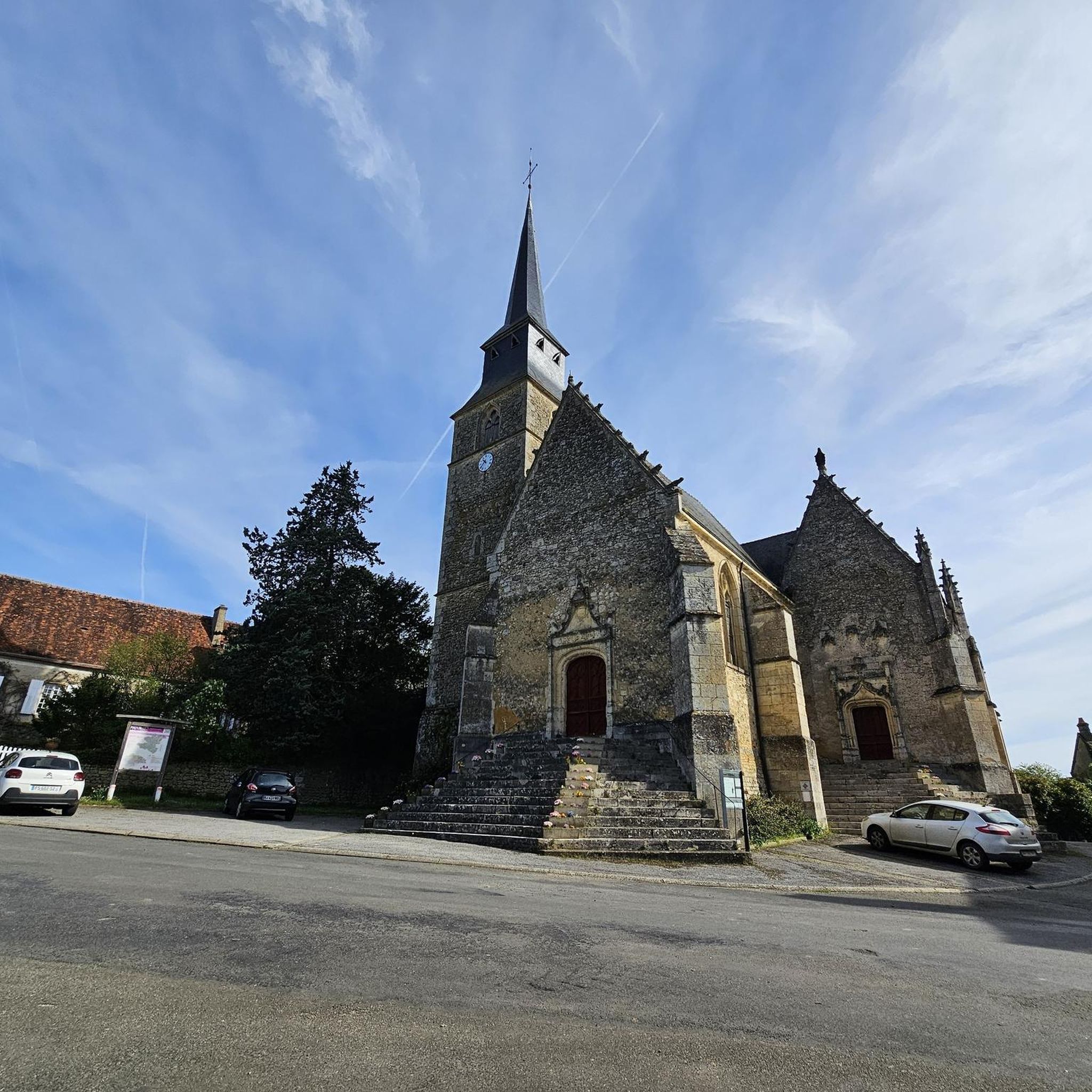
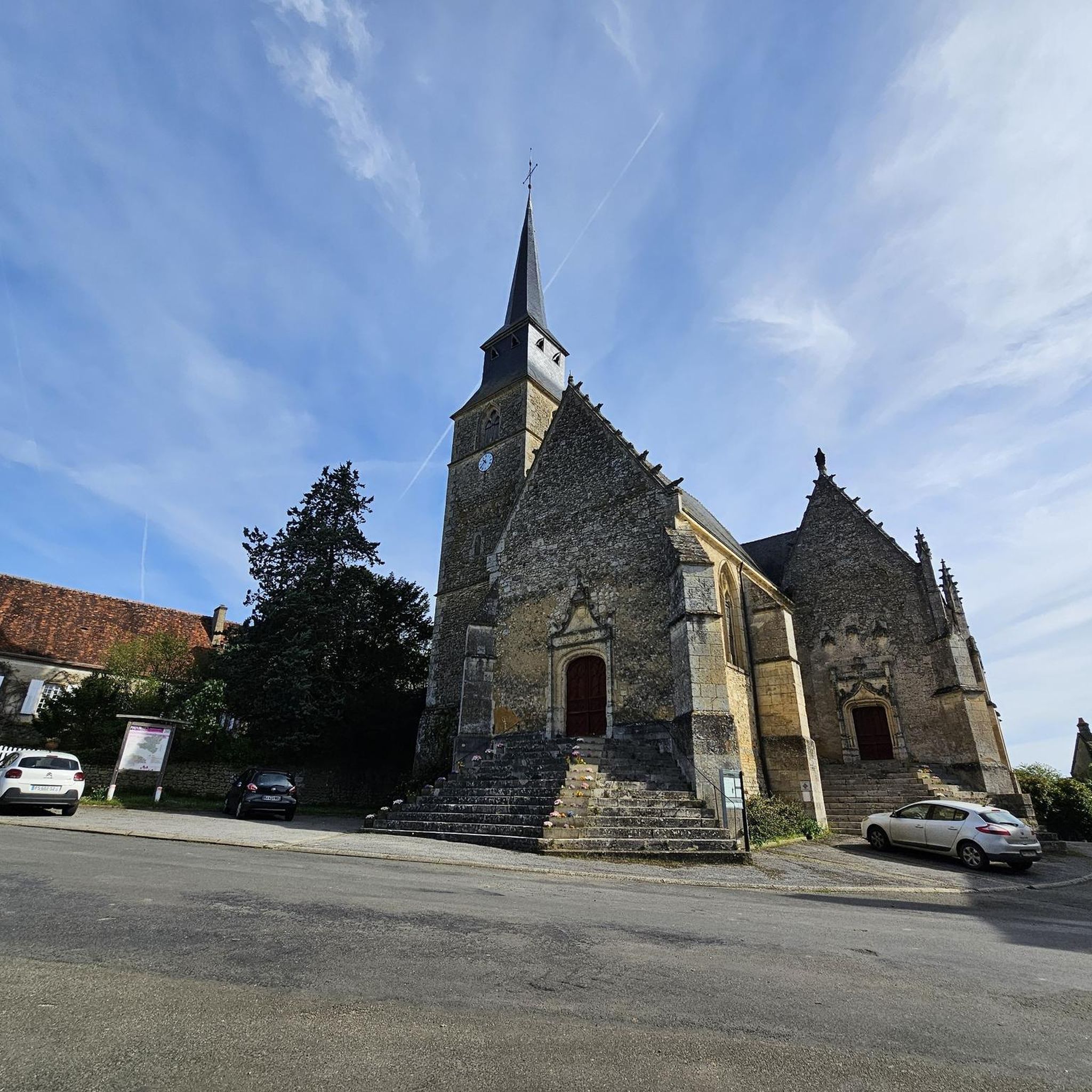
the Saint-André church dates from the 11th century; it was a priory then dependent on the abbey of St.-Calais, but the current building was completely rebuilt around the walls and framework of the old building. The project was carried out in 1877. The construction of a transept, enlarged windows and a stone bell tower completely modified the old monument. The environment has also changed a lot. All traces of the old cemetery, transferred outside the village at the beginning of the 18th century, have disappeared. The furniture includes a stone baptistery, a statue of the Virgin and Child, a confessional and a Louis XV period bench. The beautiful wooden tabernacle decorated with a statue of Saint Lubin comes from the church which was located a few kilometers away, in Saint-Lubin-des-Cinq-Fonts, and of which only the choir, which has become a chapel, remains today. .
0
0
The parish church dedicated to Saint Anne, perhaps more anciently to the Virgin, depended on the diocese of Chartres. This former possession of Ganelon, treasurer of Saint-Martin de Tours in the 11th century, was undoubtedly part of the important donation made by his descendants Eudes and Rahier de Montigny for the benefit of the chapter of Chartres Cathedral around 1160. This Romanesque building, 35 m long, with a single nave and flat apse, reinforced with buttresses and lit by round-arched windows splayed internally and simply chamfered towards the outside, was never vaulted in stone: it is covered with 'a paneled vault. The masonry is entirely made of Grison stone, including the frames, giving an austere appearance specific to this region of Perche. We enter to the west through a semi-circular door with a double arch into the lower room of a bell tower-porch established later inside the original nave. The upper part of this bell tower was pierced with semi-circular bays. The eastern one was obstructed during the installation of the high roof of the nave and the bells were placed above in a belfry under a frame. The interior of the building was in fact covered as a whole by a paneled vault with molded beams and punches from the 16th century. In the 17th century, the entire back of the choir was decorated with a large altarpiece with columns and pilasters, paintings and sculptures, of great decorative effect. A curious set of carpentry from the same period presents above a confessional a paneled pulpit surmounted by a large sounding board. Note in the furniture a carved Gothic canopy from the beginning of the Renaissance and on the glory beam a carved wooden calvary from the same period. The 19th century. added a gallery, repainted the vault and provided the windows with stained glass.
0
0
This 13th, 15th and 16th century church does not have a transept. It has a central shingled nave with aisles. The choir ends with a polygonal apse. The apse is decorated with glass roofs dating from 1541 representing various scenes from the Passion. These 16th century stained glass windows (bays 1 to 4) have been partially classified as historic monuments since 1908. Bays 1 and 2 were restored in the 17th century thanks to the Bourbon-Conti family, lords of Bazoche-Gouet from 1676 in 1719, the 4 in the 19th century, then in 1974, by Michel Petit, master glassmaker whose workshop is located in Thivars in Eure-et-Loir. Outside the choir, the stained glass windows are from the 19th century, made by two renowned master glassmakers, the Lorin workshops in Chartres and the Carmel stained glass factory in Le Mans, the first in a neo-Romanesque style, the second approaching the neo-Romanesque style. Gothic.
0
0
The robust grison pillars of the church of Chapelle-Guillaume reveal its distant roots in the beautiful country of Perche-Gouët, and even if it is often difficult to fix with precision the date of construction of a church, at least It seems obvious to her that she has been watching over the small village that surrounds her for many centuries – probably not far from ten… It owes her name to Guillaume Gouët. In any case, the last two hundred years have given it many alterations and restorations. Thus the bell tower that a hurricane had brought down was rebuilt in 1827, while the capital which adorned the entrance disappeared a few decades later, serving as a narthex, or more simply as a “caquetoire”. Everything here announces the joy of welcome and the simple peace that a place of prayer requires. The interior is distinguished by the great care taken in maintaining the warm furnishings: painted vault, gallery, benches, paneling, statues and choir woodwork. The altarpiece is illustrated by a pretty painting of the Annunciation. A great harmony emerges from the whole and invites prayer. There was also not far from there near the church a Notre-Dame priory dependent on Marmoutier, where Saint Martin resided.
0
0

The castle of Montmirail is a striking example of the castles of the region. The good news is that you can stay there if you wish, as the castle is now open to the public as a hotel. Make it a weekend run or just appreciate its beauty as you pass by.
2
0

with water point and wc nearby! by bike it's always practical!
1
0
Frequently Asked Questions
What historical sites can I explore in and around Saint-Ulphace?
Saint-Ulphace and its surroundings are rich in history. You can visit the 15th-century Saint-Ulphace Church, a Historic Monument known for its stained-glass windows and altarpiece. Nearby, explore the impressive Château de Montmirail, which now operates as a hotel, or the Château de Charbonnières, a 16th-century castle with neo-Gothic transformations. Religious heritage includes the ancient Notre-Dame Church of Chapelle-Guillaume with its robust grison pillars, the 11th-century Saint-André Church of Saintigny, and the austere Saint Anne Church built entirely of Grison stone.
Are there any family-friendly attractions in the Saint-Ulphace area?
Yes, several attractions are suitable for families. Both the Château de Montmirail and the Notre-Dame Church of Chapelle-Guillaume are considered family-friendly. Exploring the historical châteaux and churches can be an engaging experience for all ages, offering a glimpse into the region's past.
What kind of natural features can I find near Saint-Ulphace?
While Saint-Ulphace itself is a rural commune, its natural features are defined by the peaceful countryside of the Sarthe department. The area is close to the broader Perche Regional Natural Park, offering tranquil landscapes ideal for those seeking a connection to the French countryside. You'll find a quiet, nature-rich environment perfect for walks and experiencing rural charm.
What outdoor activities can I do around Saint-Ulphace?
The region around Saint-Ulphace is excellent for outdoor activities, especially cycling. You can find numerous routes for mountain biking, road cycling, and touring. For example, there are moderate MTB trails like the "Montmirail Castle – Château de Montmirail loop" or road cycling routes such as the "Porte Saint Julien – Saint-Denis Church of Cormes loop." Explore more options on the dedicated komoot guides for MTB Trails, Road Cycling Routes, and Cycling around Saint-Ulphace.
Are there any specific hiking trails or popular walks near Saint-Ulphace?
While specific hiking trails are not detailed as highlights, the rural commune of Saint-Ulphace and its proximity to the Perche Regional Natural Park offer many opportunities for walks and exploring the tranquil countryside. The cycling routes mentioned, such as the "Bois de Chêne Dreux loop" for touring bikes, can often be adapted for walking, providing scenic paths through the natural environment.
What is the architectural style of the Saint-Ulphace Church?
The Saint-Ulphace Church, dating back to the 15th century, features a late Gothic architectural style. It is characterized by ogival vaults and a straight chevet, showcasing the craftsmanship of its era. The church is also notable for its 15th and 16th-century stained-glass windows.
Can I stay overnight at any of the châteaux in the area?
Yes, the Château de Montmirail has been converted into a hotel, offering visitors the unique opportunity to stay within a historic castle and appreciate its beauty firsthand.
What makes the Notre-Dame Church of Chapelle-Guillaume unique?
The Notre-Dame Church of Chapelle-Guillaume stands out for its robust grison pillars, which hint at its ancient roots in the Perche-Gouët region. Its interior is particularly warm and inviting, featuring a painted vault, gallery, and beautifully crafted choir woodwork, with an altarpiece depicting the Annunciation.
Are there any local markets or places to experience local life near Saint-Ulphace?
While Saint-Ulphace itself is a quiet rural commune, nearby towns such as La Ferté-Bernard and Nogent-le-Rotrou host various local markets. These markets provide an excellent opportunity to experience local life, discover regional products, and soak in the authentic ambiance of the French countryside.
What do visitors appreciate most about the attractions around Saint-Ulphace?
Visitors to Saint-Ulphace and its surrounding attractions particularly enjoy the blend of historical heritage and the tranquil rural landscapes. The opportunity to explore ancient castles like Château de Montmirail and historic churches, combined with the peaceful ambiance of the French countryside, is highly valued. The komoot community has shared over 6 photos and given more than 15 upvotes, highlighting the appeal of these sites.
What is the history behind the Château de Charbonnières?
The Château de Charbonnières was built on medieval foundations in the 16th century. It underwent significant enlargements in the 18th century and later received a neo-Gothic transformation in the 19th century, inspired by Count Auguste de Chamoy. This rich history makes it a fascinating example of regional architecture.
Are there any monuments commemorating historical events in Saint-Ulphace?
Yes, in the cemetery of Saint-Ulphace, you can find a Monument aux Morts. This white pyramid serves as a memorial, commemorating the soldiers from the commune who died for France during World War I and II.

Get inspired with the komoot mobile app


Explore more
Still not found the Highlight you’re looking for? See guides of the top attractions in other regions:
