Attractions and Places To See around Soisy-Sur-École - Top 20
Best attractions and places to see around Soisy-Sur-École. This charming village is situated within the French Gâtinais Regional Natural Park, bordered by the École River. The area is characterized by its rural setting, with significant agricultural land and forests. Soisy-Sur-École also features a rich artistic heritage and notable historical sites.
Best attractions and places to see around Soisy-Sur-École
- The most popular attractions is Cross of Lorraine on the Maquisards' Pignon, a man-made monument that stands in memory of resistance…
Last updated: July 2, 2026
Cross of Lorraine on the Maquisards' Pignon
Highlight • Monument
Translated by Google •
Tip by

Barbizon Village
Highlight • Settlement
Translated by Google •
Tip by

Sign up now to discover places like this
Get recommendations on the best single tracks, peaks, & plenty of other exciting outdoor places.
Sign up for free
Fleury-en-Bière Castle
Highlight • Castle
Translated by Google •
Tip by

Sequoia Avenue at Villeroy Park
Highlight (Segment) • Natural Monument
A little history: the Mennecy sequoia avenue was planted in Villeroy park in 1887 at the request of the Darblay family, owner of …
Translated by Google •
Tip by

Milly-la-Forêt
Highlight • Other
The hall
In 1479, by a special grace from Louis
The North-South facing Hall, 46 m long, 16 m wide and 13 …
Translated by Google •
Tip by

Sign up for free to discover even more attractions around Soisy-Sur-École.
Sign up for free
Already have an account?
Start today with a free account
Your next adventure awaits.
Login or Signup
Tips from the Community

Barbizon, a must-see of must-sees! Even the streets are decorated with mosaic paintings! Unclassifiable!
0
0

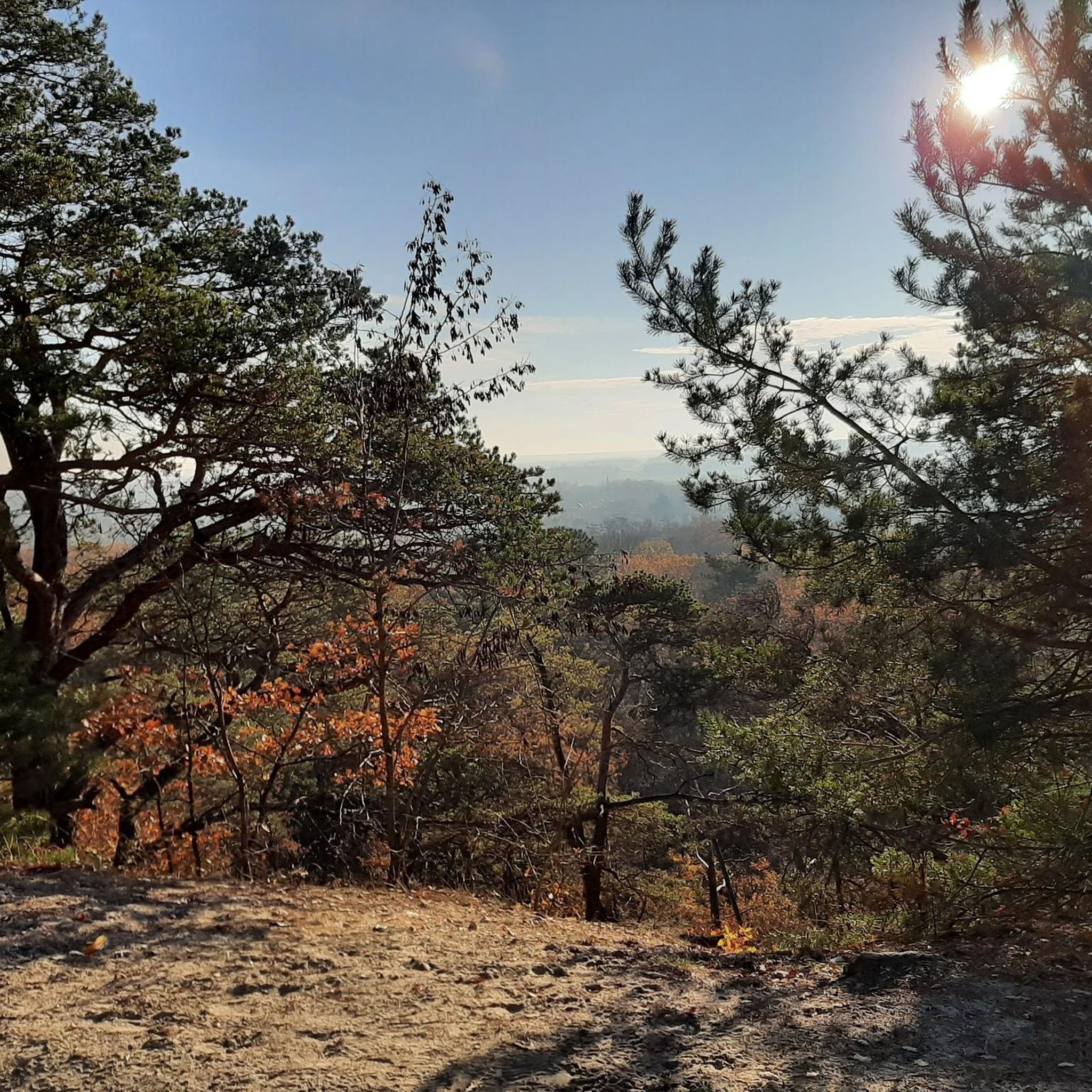
This Lorraine cross is actually located on the gable of the maquisards. There is a beautiful view of Fontainebleau. This place also serves as a break/photo point for trailers/hikers.
0
0

This was one of the locations used for the filming of the 3 Mousquetaires with Vincent Cassel, François Civil, Romain Dursis & Pio Marmai
0
0

The trail moves on to the main essentials The hall In 1479, by a special grace from Louis The North-South facing Hall, 46 m long, 16 m wide and 13 m high, covers a total surface area of 730 m2. 48 oak pillars, resting on “dice”-cut stone bases, support a chestnut frame typical of Ile-de-France at that time; this frame presents to the north (on the rue Langlois side) a “pavilion” farm. Today, La Halle is still the site of a market on Thursday afternoons. The square, the houses gathered all around, bear witness to the great commercial activity which already reigned in the region 500 years ago. La Halle has been classified as a Historic Monument since 1923. Bonde Castle is located near the town center of Milly-la-Forêt, Built near an artificial island in the l'École river to the west of the Notre-Dame collegiate church, its park is bordered to the west by the course of the river which forms a moat to the north protecting the châtelet. History Built in the 12th century by the lords of Milly, the castle was ruined during the English siege in 1432. At the end of the 15th century around 1475, owned by Admiral Louis Malet de Graville, it was rebuilt and enlarged. What was then the keep became the entrance gatehouse, the drawbridge was replaced by a permanent stone bridge and a gate closed access between the northern defense tower and the governor's house. A square courtyard was surrounded by a wall and had in the center a chapel dedicated to Saint Valentine. The castle was successively the property of Hugues III de Bouville, Olivier V de Clisson, Jean II de Montmorency, Jean-François de Faudoas d'Averton, Marc-Antoine Front de Beaupoil de Saint-Aulaire and Pierre Marie of Lau d’Allemans. In the 19th century, the towers of the chatelet were enhanced with brick battlements and a slender roof. In 1859 the Corne bridge was rebuilt near the castle washhouse which served as a watering trough for the animals. At the end of the 20th century the mills along the river were demolished. In 1964, the Bonde washhouse downstream of the river which was part of the estate was rehabilitated. On December 20, 1972, the castle was partly listed as a historic monument. The park was listed in 1991 for its fences, canals and paths. the house of Jean Cocteau. Entrance to the J. Cocteau house [This 17th century residence, flanked by turrets, was formerly called the Governor's House. It corresponds to an old outbuilding of the castle in front of which the vassals came to pay homage and faith to their lord. Jean Cocteau bought this house with Jean Marais in 1947 and lived there until his death. Notre-Dame de l’Assomption Church Founded in the 11th century, the former chapel of the castle, it was rebuilt around 1485 on the orders of Admiral de Graville in the Gothic style of the 13th and 14th centuries. The bell tower, 57 meters high, dates from the 11th century in its lower part and from the 12th and 13th centuries in its upper part. The arch of the main portal in the primitive Romanesque style comes from an old church in Milly (Saint-Pierre or Saint-Jacques). On the east side of the bell tower - Place Grammont side - the arms of Admiral de Graville are still visible. Many works of sacred art are found inside the church. The church was listed as a Historic Monument in 1926. The dovecote; Located on the old triangular square of the dovecote cul de sac, this old building was part of the Domaine du Moustier, property of Fulbert I, lord of Milly and officer at the court of Dagobert I in the 7th century. Destroyed in 1432 or 1433, the complex included a vast farm. According to a count in 1792 it had around 1200 niches. Only the lords held the right to build these premises designed for breeding. The Moustier de Péronne gate is one of the oldest vestiges of Milly and dates from the 7th century. It provided access to the moustier (monastery in old French) owned by Fulbert I, who obtained the land of Milly from Dagobert I. His son Wulfran was born there around the year 635. Entering religion, he became the apostle of the frieze (Netherlands), then bishop of Sens before retiring to Saint Wandrille where he died in 720.
1
0

there are also exhibitions, workshops, pretty pottery for sale https://www.la-juxtaposition.com/
1
0
Great tea room in Barbizon. Warm welcome, which is not the case everywhere in this slightly upscale town where there are more SUVs than gravels. Very good cheesecakes. A stove to warm your feet in winter.
1
0

The place of the war memorial with its "Gaulois" by Ernest Révillon (1854-1937) offered by a Franco-American subscription in 1920.
1
0

This small sacred monument, in the shape of a "Croix de Lorraine," rises majestically on the Pignon des Maquisards. The structure consists of several elements: a two-tiered foundation above the rock, followed by a brick base containing a plaque with a dedicatory inscription. On top of this rests a brick obelisk, tapering slightly towards the top but not terminating in a point. Above the obelisk, the actual cross, visible from afar, stands enthroned in its typical form with two horizontal crossbeams.
0
1
Frequently Asked Questions
What natural features can I explore around Soisy-sur-École?
Soisy-sur-École is nestled within the French Gâtinais Regional Natural Park, offering a rich natural landscape. You can enjoy the scenic École River that borders the village and discover one of France's largest walnut trees. A notable natural monument is the Sequoia Avenue at Villeroy Park, which features 134 giant sequoias planted in 1887, making it the second-longest avenue of its kind in Europe.
What historical and cultural sites are there to visit near Soisy-sur-École?
The area boasts a rich history and artistic heritage. You can visit the historic Saint-Aignan Church in the village or explore the Cross of Lorraine on the Maquisards' Pignon, a man-made monument with magnificent views. Nearby, the impressive Fleury-en-Bière Castle, though private, is a significant landmark. The village was also home to artist Niki de Saint-Phalle, with several houses adorned with her distinctive decorations. For a deeper dive into art, the Verrerie d'Art de Soisy-sur-École allows visitors to watch master glassblowers at work.
Are there family-friendly attractions around Soisy-sur-École?
Yes, several attractions are suitable for families. The picturesque Barbizon Village, known as the 'village of painters,' offers charming streets and restaurants that families can enjoy. While Fleury-en-Bière Castle is private, its grandeur can still be appreciated from the outside, and it's listed as family-friendly. The Verrerie d'Art de Soisy-sur-École also provides an engaging experience for all ages, showcasing the art of glassblowing.
What outdoor activities can I do near these attractions?
The region around Soisy-sur-École is excellent for outdoor activities. You can find numerous routes for cycling, hiking, and running. For cycling, consider routes like the 'Domaine de Courances – Baulne pond loop' or the 'Church of St Sauveur sur Ecole loop.' Hikers can explore trails such as 'Walk between Brie and Gâtinais' or the 'Mardelas Washhouse – Domaine de Courances loop.' Runners have options like the 'Champcueil Descent – View of the Ballancourt Quarry loop.' You can find more details and routes on the dedicated guides for Cycling around Soisy-Sur-École, Hiking around Soisy-Sur-École, and Running Trails around Soisy-Sur-École.
Are there hiking trails suitable for different skill levels near Soisy-sur-École?
Yes, the area offers hiking trails for various skill levels. You can find easy routes like the 'Mardelas Washhouse – Domaine de Courances loop' (6.9 km) or more moderate options such as 'Walk between Brie and Gâtinais' (9.3 km) and 'Rochers loop from Videlles' (10.9 km). These trails allow you to explore the Gâtinais Regional Natural Park and its rural landscapes. For more options, refer to the Hiking around Soisy-Sur-École guide.
What is there to see in the nearby village of Milly-la-Forêt?
Milly-la-Forêt, a short distance from Soisy-sur-École, is rich in history and culture. It features a market hall classified as a Historic Monument since 1923, and the Collégiale Notre-Dame with its 12th to 13th-century bell tower. You can also find the Château de la Bonde, originally built in the 12th century, and the former residence of Jean Cocteau. The village is a popular stop for those exploring the region's heritage, and is listed as a highlight: Milly-la-Forêt.
Where can I find scenic viewpoints in the area?
For magnificent views of the surrounding landscape, head to the Cross of Lorraine on the Maquisards' Pignon. This site offers pleasant vistas and is a great spot to take a break and enjoy the scenery.
What do visitors particularly enjoy about the attractions near Soisy-sur-École?
Visitors appreciate the blend of natural beauty and historical charm. The Cross of Lorraine on the Maquisards' Pignon is loved for its 'magnificent views.' Barbizon Village is praised for being 'picturesque and charming' with 'very nice restaurants.' The grandeur of Fleury-en-Bière Castle is also frequently mentioned as impressive. The area's attractions have garnered over 285 upvotes and 65 photos shared by the komoot community, highlighting their appeal.
Are there options for dining or refreshments near the attractions?
Yes, particularly in the more populated areas. Barbizon Village is noted for its 'very nice restaurants' and is an ideal place to stop for an ice cream or a meal. Milly-la-Forêt also offers dining options, especially around its historic market hall. For specific cafes near hiking routes, local inquiries upon arrival would be beneficial.
When is the best time to visit Soisy-sur-École for outdoor activities?
The Gâtinais Regional Natural Park, where Soisy-sur-École is located, is pleasant for outdoor activities during spring, summer, and early autumn. These seasons offer milder weather, making hiking, cycling, and exploring the natural features more enjoyable. Spring brings blooming landscapes, while autumn showcases beautiful foliage. Always check local weather forecasts before your visit.
Can I visit a castle near Soisy-sur-École?
Yes, the impressive Fleury-en-Bière Castle is located nearby. While it is private property and cannot be visited internally, its magnificent exterior and historical significance make it a notable landmark to see. Additionally, the historic Château des Réaux, though now senior housing, has a rich past, and the Château de la Bonde is located near Milly-la-Forêt.
What is 'The Cyclop' and where is it located?
'The Cyclop' is a gigantic and unique artwork located between Soisy-sur-École and Milly-la-Forêt. It is a significant example of the region's cultural and creative richness, offering an unusual and striking artistic experience in the landscape.
Most popular routes around Soisy-Sur-École
Most popular attractions around Soisy-Sur-École

Get inspired with the komoot mobile app


Explore more
Still not found the Highlight you’re looking for? See guides of the top attractions in other regions:
