Attractions and Places To See around Lugasson - Top 16
Attractions and places to see around Lugasson, a commune in Gironde, Nouvelle-Aquitaine, France, offer a blend of historical landmarks and tranquil rural settings. The area is characterized by its vineyards, ancient roads, and proximity to the Engranne river. Lugasson serves as a base for exploring the diverse cultural and natural offerings of the Entre-deux-Mers region. This area provides insights into prehistoric, Gallo-Roman, and medieval history.
Best attractions and places to see around Lugasson
- The most popular attractions is Roger Lapébie…
Last updated: July 2, 2026
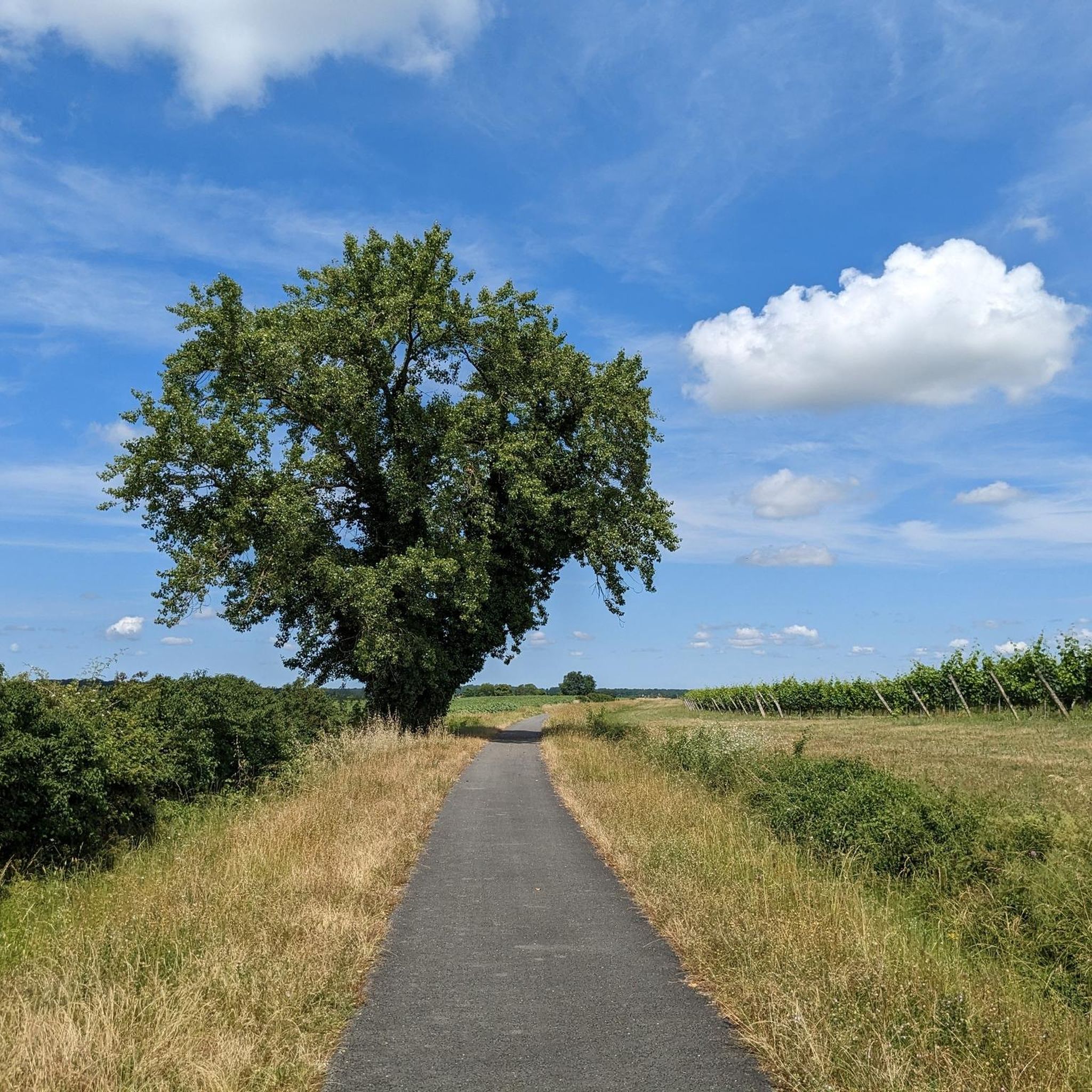
Roger Lapébie Cycle Path: Créon to Dardenac
Highlight (Segment) • Cycleway
Translated by Google •
Tip by

Sauveterre-de-Guyenne - bastide
Highlight • Other
Translated by Google •
Tip by

Sign up now to discover places like this
Get recommendations on the best single tracks, peaks, & plenty of other exciting outdoor places.
Sign up for free
Church of Branne
Highlight • Religious Site
Showing Translation
Tip by

Roger Lapébie track - Sauveterre to Cessac
Highlight (Segment) • Other
Translated by Google •
Tip by

Old railway track - Piste Roger Lapébie
Highlight • Other
Translated by Google •
Tip by

Sign up for free to discover even more attractions around Lugasson.
Sign up for free
Already have an account?
Start today with a free account
Your next adventure awaits.
Login or Signup

Tips from the Community

Lively small market town, with an arcaded market square
0
0

The Saint-Étienne church of Branne is a true haven of peace in the heart of the village, offering a setting conducive to recollection and prayer. The architecture, both sober and majestic, bears witness to the deep faith that has inhabited these places through the centuries. The beauty of the sanctuary naturally invites the elevation of the soul and contemplation of the divine mysteries. One feels an atmosphere of serenity that helps each faithful to find themselves before the Lord in silence and dignity. It is a living place of worship where the presence of Christ is felt, recalling the importance of our Christian roots in the Gironde landscape. A spiritual stopover highly recommended for all those who seek to nourish their faith within a beautifully maintained church.
0
0

Sauveterre-de-Guyenne is a bastide. A bastide is a type of French medieval town, founded in the 13th and 14th centuries, primarily in southwestern France. A bastide is characterized by a rectangular street pattern that divides the town into eight blocks around a central market square. The Treaty of Paris (1229) prohibited the building of walls around new towns. Many bastides were provided with some form of fortification, such as gates, after their founding to provide some protection during turbulent times. Most bastides had only local significance and did not develop into large towns. As a result, many bastides, such as that of Sauveterre-de-Guyenne, have been preserved in their original state.
1
0

Pretty village in the center of Entre-Deux-Mers - Medieval bastide with ramparts all around, some pretty gates and a central square which is worth a stop...
2
0

Very well developed cycle path and easy to ride.
2
0

Very nice railway cycle path.
2
0

Great bike ride from Bordeaux. We had planned overnight accommodation in Saint Brice, in a large tent made available for participation. Ecological solar shower toilets. It is located in the chestnut grove (Google Maps). No reservations, just ask on the spot.
4
0
The Sauve train station is also worth seeing. Information about the railway line, old water crane, barriers and the parked railway carriages, some still need to be restored. The railway cycle path is great at this point.
5
0
Frequently Asked Questions
What historical sites can I visit near Lugasson?
The region around Lugasson is rich in history. You can explore the ruins of the Château de Rauzan, a medieval fortress with a polygonal enclosure and a high cylindrical keep. Further afield, the impressive ruins of the Abbey of La Sauve-Majeure, a UNESCO World Heritage site, are about 12 km away. Lugasson itself features the historical Eglise Saint-Martin and vestiges of the Château de Roquefort.
Are there any medieval towns or bastides to explore?
Yes, the charming medieval bastide of Sauveterre-de-Guyenne is about 9 km south-east of Lugasson. This town retains its original medieval plan, complete with ramparts and a central market square. Saint-Emilion, a UNESCO World Heritage site renowned for its medieval charm and vineyards, is also about 16 km away.
What cycling opportunities are available around Lugasson?
The area offers excellent cycling, particularly along the Roger Lapébie Cycle Path: Créon to Dardenac and the Roger Lapébie track - Sauveterre to Cessac. These greenways are built on old railway lines, winding through forests and featuring old stations, some with water points or restaurants. For more road cycling options, you can find routes like the "Rauzan Castle – Dordogne River loop" on the Road Cycling Routes around Lugasson guide.
Where can I find quiet walking or hiking routes?
You can enjoy peaceful walks along the Country lane along the Dordogne, which offers an idyllic journey with minimal traffic. For dedicated hiking, there are various trails available, including easy and moderate loops from nearby towns like Rauzan and Cessac. Explore options like the "Dolmen de Curton loop" or "Château de Rauzan loop" on the Hiking around Lugasson guide.
Are there family-friendly activities or trails?
Yes, the Roger Lapébie Cycle Path is considered family-friendly, offering a pleasant and safe route for all ages. Many of the greenways and country lanes are suitable for family walks and bike rides. The area's historical sites and charming towns also provide engaging experiences for families.
What natural features or gardens can I visit?
While Lugasson's immediate surroundings are rural, the broader region offers beautiful natural spots. You can visit remarkable gardens such as the Jardins du château de Vayres (20km) and Jardins du Sardy (24km). The Jardin de Lusseau in Lugasson is also a magnificent garden. For more extensive nature, the Landes de Gascogne Regional Nature Park is within reach, offering vast pine forests and diverse landscapes.
Can I experience local culture or wine tourism?
Absolutely. Lugasson is in the heart of the Bordeaux wine region, making wine tourism a major draw. You can visit local vineyards and châteaux, such as Château de Roquefort, which produces Grand vins de Bordeaux. Nearby towns like Sauveterre-de-Guyenne and Branne host local markets, offering a taste of regional produce and local life.
What is the best time of year to visit Lugasson?
The region generally enjoys pleasant weather from spring to autumn, making these seasons ideal for exploring. Spring (April-May) offers blooming landscapes, while summer (June-August) is perfect for outdoor activities, though it can be warm. Autumn (September-October) brings harvest season, which is excellent for wine tourism, and comfortable temperatures for hiking and cycling.
Are there options for running trails near Lugasson?
Yes, there are several running trails available. You can find routes like the "Chateau médiéval loop from Rauzan" or the "Bois de Maurey loop from Rauzan." These trails vary in difficulty from moderate to difficult, offering diverse options for runners. More details can be found on the Running Trails around Lugasson guide.
What is the historical significance of Lugasson itself?
Lugasson has a deep history, with human occupation dating back to prehistoric times, evidenced by discoveries from the carved stone, polished stone, bronze, and iron ages. It was also an important Gallo-Roman settlement, situated near an ancient road along the Engranne river. The Eglise Saint-Martin, dating to the 12th century, and vestiges of the Château de Roquefort further highlight its historical importance.
What do visitors enjoy most about the attractions around Lugasson?
Visitors particularly appreciate the peacefulness and scenic beauty of the area. The greenways, like the Roger Lapébie Cycle Path, are highly rated for their pleasant routes through forests and past old stations. The quiet country lanes along the Dordogne are also loved for their idyllic, traffic-free experience. The blend of historical sites and natural tranquility makes the region appealing.
Are there any specific tips for cycling the Roger Lapébie Cycle Path?
When cycling the Roger Lapébie Cycle Path, note that the section in Créon can be frequented by local pedestrians. Further along, it becomes calmer. Some old stations along the route offer water points or even a bar/restaurant. In Créon, you can find bike rentals directly on the path if you don't have your own. The path is well-developed and easy to ride, with a notable tunnel section that many find enjoyable.

Get inspired with the komoot mobile app


Explore more
Still not found the Highlight you’re looking for? See guides of the top attractions in other regions:
