The best walks and hikes around Monnières
4.5
(1159)
6,096
hikers
15
hikes
Hiking around Monnières offers a network of trails through the local countryside, characterized by gentle elevation changes and scenic river valleys. The region features historic mills and natural grottoes, providing varied points of interest along the paths. These routes often traverse woodlands and open fields, showcasing the rural landscape. The terrain is generally accessible, with options ranging from easy strolls to more moderate excursions.
Best hiking trails around Monnières
- The most popular hiking route is Lourdes Grotto – Moulin de la Minière loop from Monnières, a 7.8 miles (12.5 km) trail that takes 3 hours 17 minutes to complete, exploring historical sites and natural features.
- Another top favourite among local hikers is Lourdes Grotto – Le Gué Joubert loop from Monnières, a moderate 5.8 miles (9.3 km) path. This route winds through local countryside and past water features, offering diverse scenery.
- Local hikers also love the On the road to Compostela – Moulin de Gervaux loop from Monnières, a 8.6 miles (13.8 km) trail leading through historic paths and river valleys, often completed in about 3 hours 37 minutes.
- Hiking around Monnières is defined by river valleys, historic paths, and woodlands. The network offers options for different ability levels, including 6 easy and 8 moderate trails.
- The routes in Monnières are highly rated by the komoot community with an average score of 4.6 stars from over 1,100 reviews. More than 5,900 hikers have used komoot to explore Monnières's varied terrain.
Last updated: May 8, 2026
4.7
(12)
65
hikers
12.7km
03:20
110m
110m
Moderate hike. Good fitness required. Easily-accessible paths. Suitable for all skill levels.
16
hikers
27.8km
07:16
210m
210m
Hard hike. Very good fitness required. Easily-accessible paths. Suitable for all skill levels.

Sign up for free
11
hikers
9.29km
02:27
90m
90m
Moderate hike. Good fitness required. Easily-accessible paths. Suitable for all skill levels.
5.0
(1)
9
hikers
13.8km
03:37
100m
100m
Moderate hike. Good fitness required. Easily-accessible paths. Suitable for all skill levels.
4
hikers
4.51km
01:12
40m
40m
Easy hike. Great for any fitness level. Easily-accessible paths. Suitable for all skill levels.
Get access to more routes and recommendations from other explorers.
Sign up for free
Already have an account?
Our route recommendations are based on thousands of hikes, rides, and runs completed by other people on komoot.
Start today with a free account
Your next adventure awaits.
Login or Signup
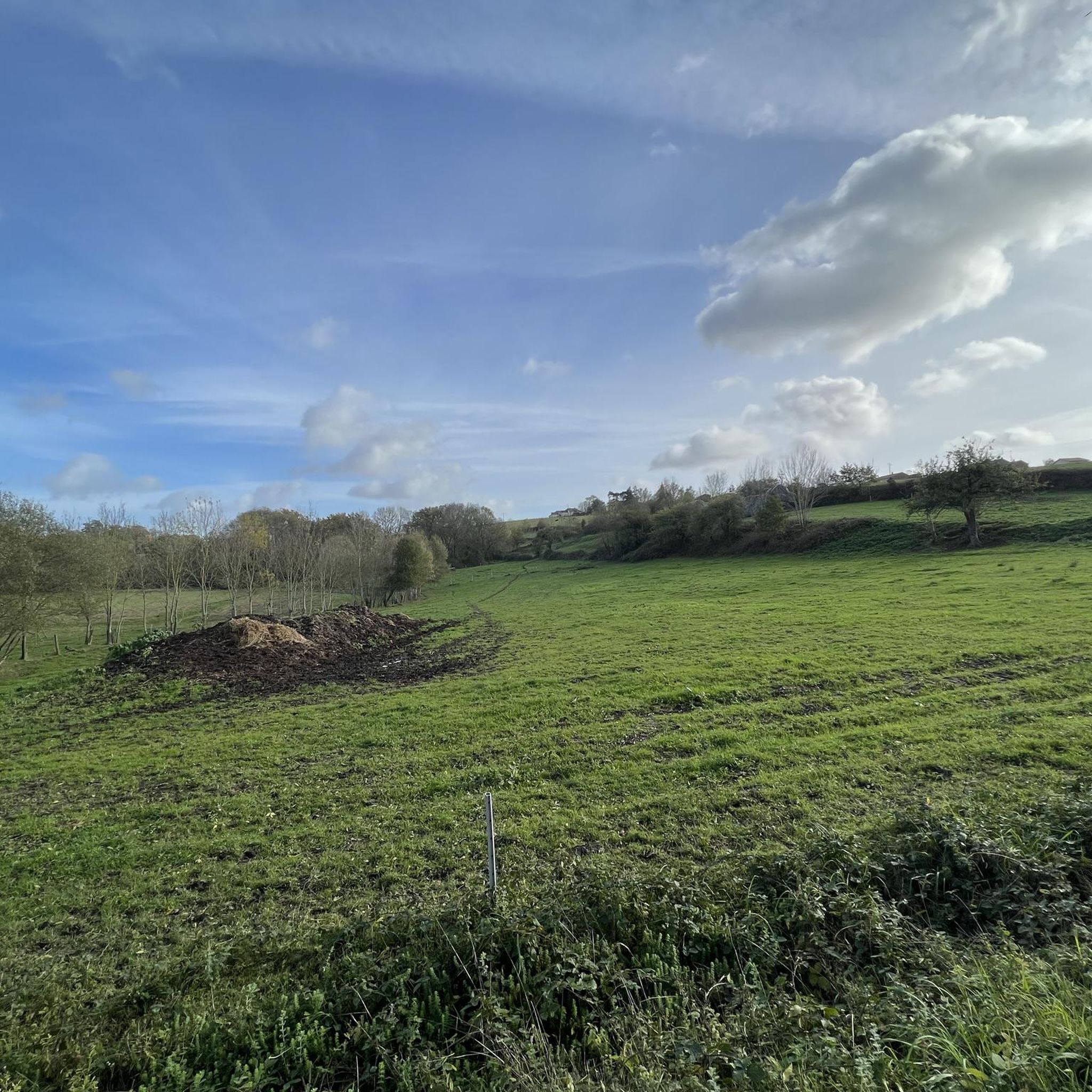
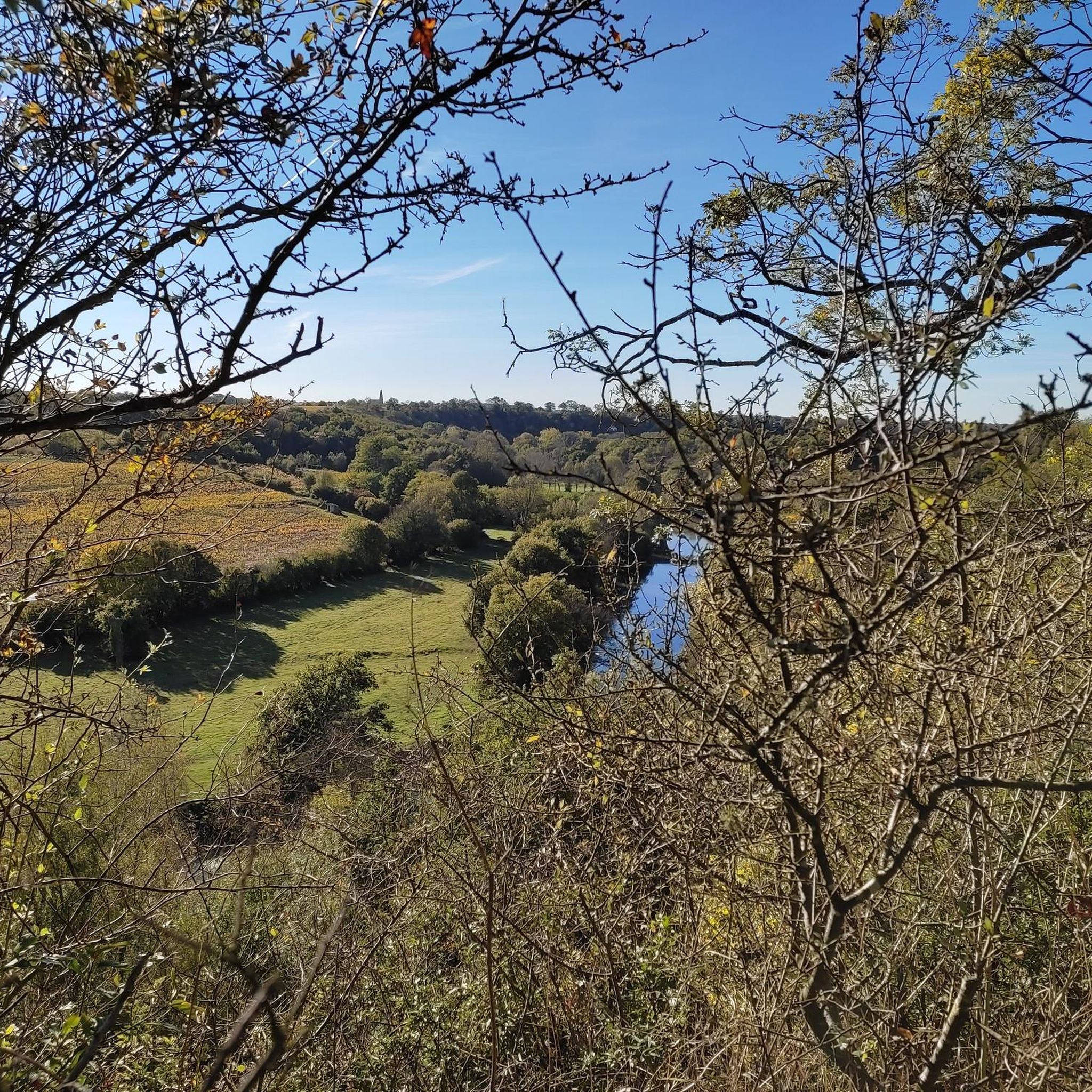
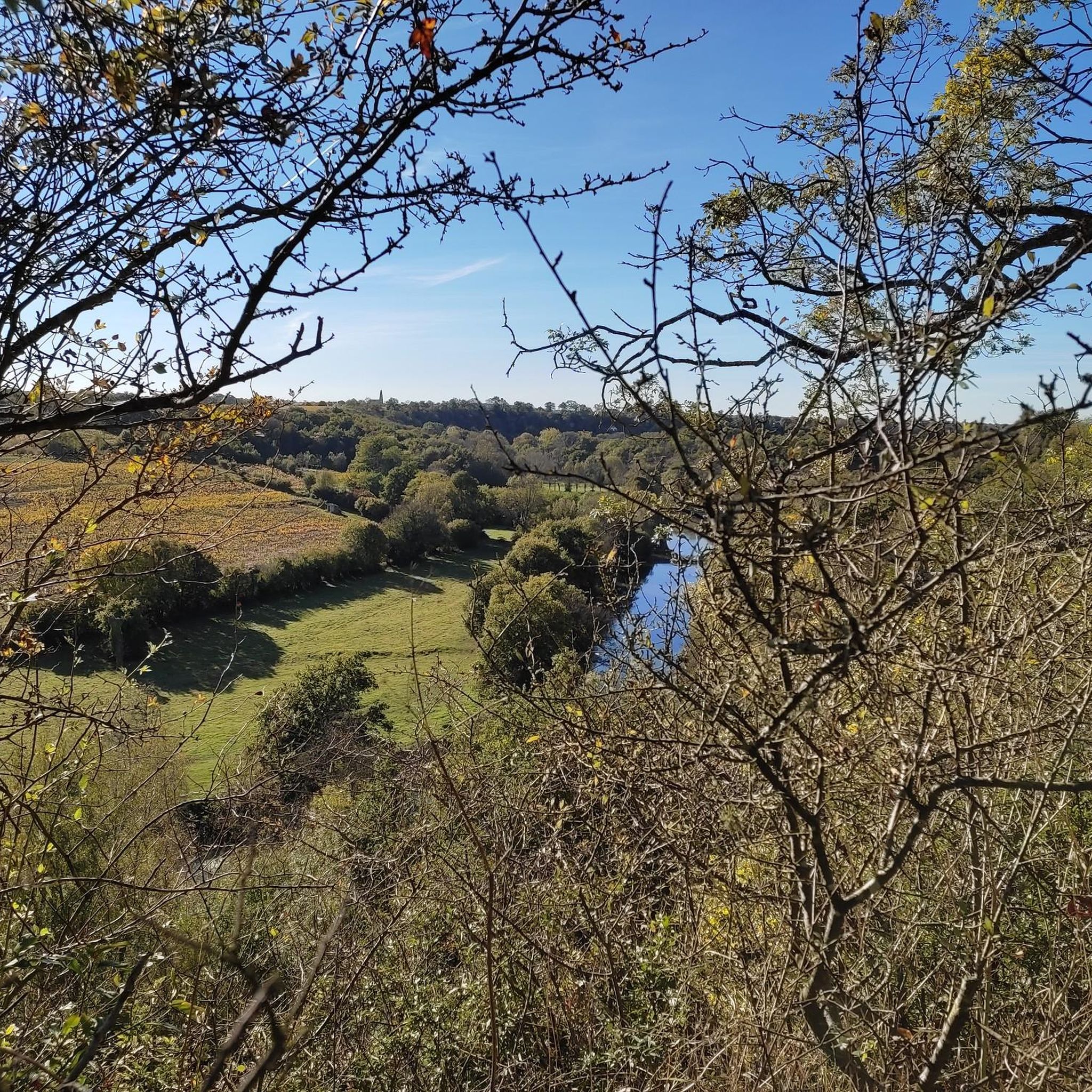


Tips from the Community

The bridge almost went under!
0
0
Minimalist but pleasant layout for a shaded break by the water! Be careful, the path along the river is not very well maintained and was overgrown with brambles and nettles when I passed by. The path from the stadium is fine.
0
0

Possible passage via the granite dice, outside the high-water season. This site, mentioned as early as the 16th century, consists of two mills. Until the Revolution and their sale as national property, the mills served as flour and fulling mills. At the beginning of the 19th century, both mills were flour mills, but in 1826-1828, the Nantes merchants Massion et fils converted the right bank mill into a spinning mill (cotton, linen). Unprofitable, the factory changed managers and owners several times. From 1892 to 1943, it was converted into a tannery and chamois leather factory. Closed during the Second World War, the factory welcomed boys who had fled the bombings of Saint-Nazaire and Nantes. A school was established near this site, the current Angreviers school. https://100secrets.sevre-nantaise.com/moulins/44/gorges/angreviers/141984
0
0

The municipality installed interpretive panels in the fall of 2022. Outside the mill, furniture reminiscent of the old mill sails showcases the mill's history and mechanism, while also promoting the vineyard's tourist attractions. Inside the mill, on both floors, glazed lava orientation tables present the various sites visible from the mill while evoking the work of the vineyard throughout the four seasons. A picnic table is available on site. The site is only accessible on foot or by bicycle. Nearest parking is at the Tuileries Pond.
0
0
The last remaining witness to the region's papermaking industry, the association "Pour les arts graphiques en Vallée de Clisson" (For Graphic Arts in the Clisson Valley) has been working with local authorities since 1998 to revive the 19th-century papermaking industry at Le Liveau in Gorges. The Moulin du Liveau is a superb example of the region's Italianate architecture. With the active support of local authorities, the mill, owned by the municipality of Gorges, was restored to its original purpose as a paper mill. This magnificent site on the Sèvre Nantaise River in the Clisson Valley opened to the public in spring 2015. MORE THAN A MUSEUM, IT'S A LIVING WORKSHOP The association "Pour les arts graphiques en Vallée de Clisson" offers activities centered around the history and manufacture of paper. Children and adults alike can discover the mechanisms of the paper mill, handcraft their own sheets of paper, and learn about printing. An informative journey through history, accompanied by the ever-present pleasure of playfully recreating the gestures of the past. Inside, a hammer mill powered by a paddle wheel driven by the Sèvre River evokes the preparation of paper pulp from rags. Visitors can also practice calligraphy, participate in writing workshops, take bookbinding courses, and enjoy many other activities.
1
0
The Liveau Paper Mill in Gorges in the Clisson Valley (Loire Atlantique, 44) offers guided tours, educational outings, group visits to the paper mill, papermaking workshops, events, and exhibitions. The mill welcomes you south of Nantes and also offers a shop with a wide selection of paper, stationery, and books. The Liveau Paper Mill is located in Loire-Atlantique, in Gorges on the banks of the Sèvre Nantaise. Two flour mills, one on the right bank, the other on the left bank, made up the Liveau hydraulic site, first mentioned in 1407. Until 1561, it was owned by the lords of Clisson. • 1826, transformation of the right bank mill into a paper mill, a more prosperous activity at that time, and construction of the drying rack (drying rack), marked in its architecture by the strong Italian influence prevalent at that time in the canton of Clisson. • 1827: Papermaking begins at the mill. It produces "large gray paper" or "envelope paper" (wrapping paper) sold to the sugar refineries of Nantes. • 1850: Papermaking ends. • 1851 to 1952: Milling resumes. • 2001: The municipality of Gorges acquires the abandoned mill. • 2004: The "Pour les arts graphiques en vallée de Clisson" association wins first prize from the Fondation du Patrimoine for its project to rehabilitate and promote the Moulin du Liveau, with the support of Gorges elected officials and the Clisson Valley community of municipalities. • 2006: The Fondation du Patrimoine approves the project and brings in financial partners. • 2008-2009: Airtight and watertight construction of the buildings (mill and dryer), half of which was financed by the Total Foundation. Additional funding was provided by the Fondation du Patrimoine, the Crédit Agricole Foundation, parliamentary funds, the Pays de Loire Regional Council, the Loire-Atlantique General Council, the Clisson Valley Community of Communes, the municipality of Gorges, and various private funds. . 2014: Rehabilitation work in preparation for an artisanal papermaking activity, for cultural and tourist purposes. • April 2015: The Liveau paper mill in Gorges welcomes its first visitors.
1
0
The modest Chapel of Saint Anne is the last vestige of the parish church of Saint Vincent. In the second half of the 11th century, the Chapel of Saint Anne was built. It adjoins the southern flank of a pre-existing castle chapel, probably contemporary with the keep, which dates from the late 10th or early 11th century. At an undetermined date, the two chapels were extended westward and became the chevet of the parish church of Saint Vincent. This extension was completed before 1646, the date at which a drawing by L. Doomer, preserved at the Dobrée Museum in Nantes, shows the complete building. In 1683, Archdeacon Binet described the dilapidated Church of Saint Vincent and the choir on the verge of ruin. No one dared touch it because it belonged to the lord of La Galissonnière and Le Pallet. We can therefore assume that the nave itself belongs to the parish, which is responsible for its upkeep. The choir, a former castle chapel, disappeared during the Revolution. The old church was razed in 1853, and only the Sainte-Anne chapel was spared thanks to the intervention of Prosper Mérimée. A new church was built on a new site in the village, reusing the stones from the old building. In addition to its dilapidated condition, the old church had the disadvantage of being located far from the village. The chapel was listed as a historical monument in 1941 (decree of August 9). It was restored in 1957. NOTE: THE CHURCH HAS BEEN CLOSED SINCE JULY 23, 2018, FOR INDEFINITE WORK.
1
0

Frequently Asked Questions
How many hiking trails are available around Monnières?
Monnières offers a selection of 15 hiking routes. These trails vary in difficulty, with 6 easy routes and 8 moderate options, catering to different experience levels.
Are there any easy hiking trails suitable for beginners or families in Monnières?
Yes, Monnières has 6 easy hiking trails. A good option for a relaxed walk is the Lourdes Grotto loop from Monnières, which is 4.5 km long and takes about 1 hour 10 minutes to complete.
What kind of natural features or landmarks can I expect to see on hikes in Monnières?
Hiking trails in Monnières often traverse woodlands and open fields, featuring scenic river valleys. You can also discover historic mills and natural grottoes along the paths. Notable points of interest include the Chaussée des Moines and the Butte de la Roche.
Are there any longer hiking routes for a more extended excursion?
For a longer hike, consider the On the road to Compostela – Moulin de Gervaux loop from Monnières. This moderate trail is 13.8 km long and typically takes around 3 hours 37 minutes, leading through historic paths and river valleys.
Are the hiking trails in Monnières suitable for dogs?
The rural landscape and varied terrain of Monnières generally make its hiking trails suitable for dogs. However, it's always recommended to keep dogs on a leash, especially when passing through agricultural areas or near wildlife, and to check for any specific local regulations or signage on individual routes.
Are there any circular hiking routes in Monnières?
Yes, many of the hiking routes in Monnières are circular, offering convenient starting and ending points. For example, the Lourdes Grotto – Le Gué Joubert loop from Monnières is a popular moderate circular path winding through the local countryside.
What is the best time of year to go hiking in Monnières?
The best time to hike in Monnières is typically during spring, summer, and early autumn. These seasons offer pleasant weather conditions for exploring the woodlands and river valleys. Spring brings blooming flora, while autumn showcases vibrant foliage.
What do other hikers say about the trails in Monnières?
The hiking routes in Monnières are highly regarded by the komoot community, with an average rating of 4.6 stars from over 1,100 reviews. Hikers often praise the diverse scenery, well-maintained paths, and the blend of natural beauty with historical points of interest like the grottoes and mills.
Are there any castles or historic sites to explore near the hiking trails?
Yes, the region around Monnières is rich in history. You can find several castles nearby, such as the impressive Château de Clisson, La Preuille Castle, and La Frémoire Castle. These historical sites offer additional points of interest to combine with your hikes.
Is public transport available to reach the hiking areas in Monnières?
While Monnières is a rural area, public transport options might be limited directly to trailheads. It is advisable to check local bus schedules or consider driving to the starting points, as many routes are accessible by car with potential parking nearby.
Are there any viewpoints along the hiking trails in Monnières?
Yes, you can find scenic spots offering views of the surrounding landscape. One notable viewpoint is the Picture frame by Emmanuel Ritz, which provides a unique perspective of the area.
What is the typical terrain like for hiking in Monnières?
The terrain in Monnières is generally accessible, characterized by gentle elevation changes. Trails often traverse woodlands, open fields, and follow river valleys. While mostly well-defined, some paths may involve natural surfaces, so appropriate footwear is recommended.
Most popular routes around Monnières
Most popular attractions around Monnières

Get inspired with the komoot mobile app


Explore more
Browse the best Hikes in other regions.
