Top 7 Castles around Saint-Lumine-De-Clisson
Best castles around Saint-Lumine-De-Clisson offer a journey through history in the Pays de la Loire region. The area is characterized by its river valleys, such as the Sèvre, and its historical significance as a border region. Visitors can explore a variety of architectural styles, from medieval fortresses to more recent châteaux, often set amidst vineyards. The landscape provides a backdrop for historical exploration and scenic views.
Best castles around Saint-Lumine-De-Clisson
- The most popular castles is Château de Clisson, a…
Last updated: July 7, 2026
Château de Clisson
Highlight • Castle
Translated by Google •
Tip by

Picture frame by Emmanuel Ritz
Highlight • Viewpoint
Translated by Google •
Tip by

Sign up now to discover places like this
Get recommendations on the best single tracks, peaks, & plenty of other exciting outdoor places.
Sign up for free
Montaigu Castle
Highlight • Viewpoint
Translated by Google •
Tip by

La Sénardière Castle
Highlight • Castle
Translated by Google •
Tip by

La Preuille Castle
Highlight • Castle
Translated by Google •
Tip by
Sign up for free to discover even more castles around Saint-Lumine-De-Clisson.
Sign up for free
Already have an account?
Start today with a free account
Your next adventure awaits.
Login or Signup
Tips from the Community

Clisson Castle has quite a story to tell: first an impregnable fortress overlooking the Sèvre, then a ducal residence, and finally a romantic ruin. In the 12th century, the powerful lordship of Clisson built this stone castle with highly elaborate defensive architectural systems: arrow slits, gun ports, and slits. A strategic point protecting the border of the Duchy of Brittany in the 15th century, it was abandoned by its owners from the second half of the 17th century onward before being burned down by Republican troops in 1793. But, beyond its grand history, this castle also has a more historic significance! In 1807, François-Frédéric Lemot, creator of the Garenne Lemot estate (a picturesque landscape located on the other side of the river), was captivated by these ruins and purchased it to turn it into an ornamental factory. The château was declared a historic monument in 1924, before being acquired by the Loire-Atlantique department in 1962. Today, visitors can visit it, take a guided tour, or simply experience its history. A stop on the Journey through the Vineyard, it's a stopover during the wine tourism tour of Nantes' wine country, featuring natural sites, heritage features, characterful villages, and unique cellars.
1
0
. Originally, there was an ovoid-shaped enclosure flanked by about ten towers and a gatehouse, located to the northeast. The fortified town was located to the north of the fortress and extended a little to the east. A dry moat separated the fortified town from the fortress. A barbican protected the gatehouse. A Romanesque keep of the Niort type, with its courtyard and small enclosure, was located in the castle courtyard, roughly in the middle in the north-south direction and located to the west. The fortified city extended from the rue de Gaulle, a gate was located at the level of the Carré de l'Europe (the porte de Nantes), then the ramparts continued along the rue de la Place du Champ de Foire, then went back down the Esplanade des Olivettes, where a gate was located towards the roundabout of the rue des Jardins (porte de Tiffauges) then the ramparts ran along the Asson to go up the rue du Pont Jarlet and around the barbican not far from the Presbytery The dry moats surrounding the city were 16 meters deep in the 15th century, today they are flowered and are the subject of different colored squares decorating this part of the ramparts.
0
0
In the 9th century, a castrum, a wooden castle built on a mound of earth, was built to counter the Viking raids that had previously sacked the city of Durivum (Saint-Georges-de-Montaigu). For strategic reasons, this fortress was built on a rocky spur at the junction between the Maine and Asson rivers. Maurice I of Montaigu, the first known lord, witnessed the consecration of the church of Saint-Nicolas de la Chaize-le-Vicomte in 1099. His successor until 1174 was Brient I of Commequiers, married to his daughter, Agathe de Montaigu. Later, his grandchildren, Brient II, Maurice II "the Younger," and Marguerite, succeeded him. It was perhaps this Brient II who had the Romanesque keep built in 1218, a large square tower with flat corner towers. He also removed the wooden palisade, replacing it with a wide moat extending to the Saint-Georges Gate. The Montagues (also known as Belleville by marriage around 1180) pledged allegiance to the Plantagenets, Henry II, Richard the Lionheart, and John Lackland. Margaret of Belleville-Montaigu, daughter of Brient de Montaigu and Agnes de Belleville, granddaughter of Maurice I de Montaigu, sister of Maurice II de Belleville-Montaigu, married Hugh of Thouars in 1203. In 1227, the couple submitted to Philip Augustus through the ceremony of homage. Hugh of Thouars died in 1229, and Margaret remarried in 1235 to the Duke of Brittany, Mauclerc, whose real name was Pierre de Dreux. Marguerite de Montaigu died in 1241, childless. The lordship of Montaigu fell to her nephew, Maurice III de Belleville-Montaigu (d. c. 1297; son of Maurice II). He became lord of Montaigu upon the death of Mauclerc in 1250[2], and his son Maurice IV (d. c. 1292) ensured the succession through his children Jeanne (d. 1284 Geoffroy II David de La Flocellière) and Maurice V de Belleville-Montaigu (he married 1° Sibylle, daughter of Geoffroy VI de Châteaubriant, then 2° Isabelle/Létice de Parthenay, daughter of Guillaume V Larchevêque de Parthenay). Jeanne de Belleville (c. 1300-c. 1359), daughter of Maurice V of Montaigu and Létice of Parthenay, married Olivier IV of Clisson for the second time in 1328. Olivier IV was executed by beheading after being suspected of "felony" against the English, during the Hundred Years' War. Jeanne became a privateer with her children Olivier V and Jeanne de Clisson, in revenge, and was banished from the kingdom of France. While she attacked French ships, the fortress of Montaigu was held by the English, according to the Treaty of Brétigny-Calais, a garrison of which engaged in pillaging the surrounding area. Jeanne lost her ship and withdrew with her children to England. Olivier V, having grown up, rallied to the king of France, recovered his property in 1362 and fought the English with Bertrand du Guesclin. In 1373, Olivier and Bertrand succeeded in driving the English out of Montaigu, and Olivier ceded the lordship to his sister Jeanne, who had married an English captain, Jean Harpedenne. The latter sided with the King of France in 1373 and became Jean de Belleville. His grandson, Jean III, married Charles VII's half-sister, Marguerite de Valois, in 1433. Louis I de Belleville succeeded Jean III. King Louis XI advised him to fortify the town between 1464 and 1468 to protect it from the Bretons.
0
0

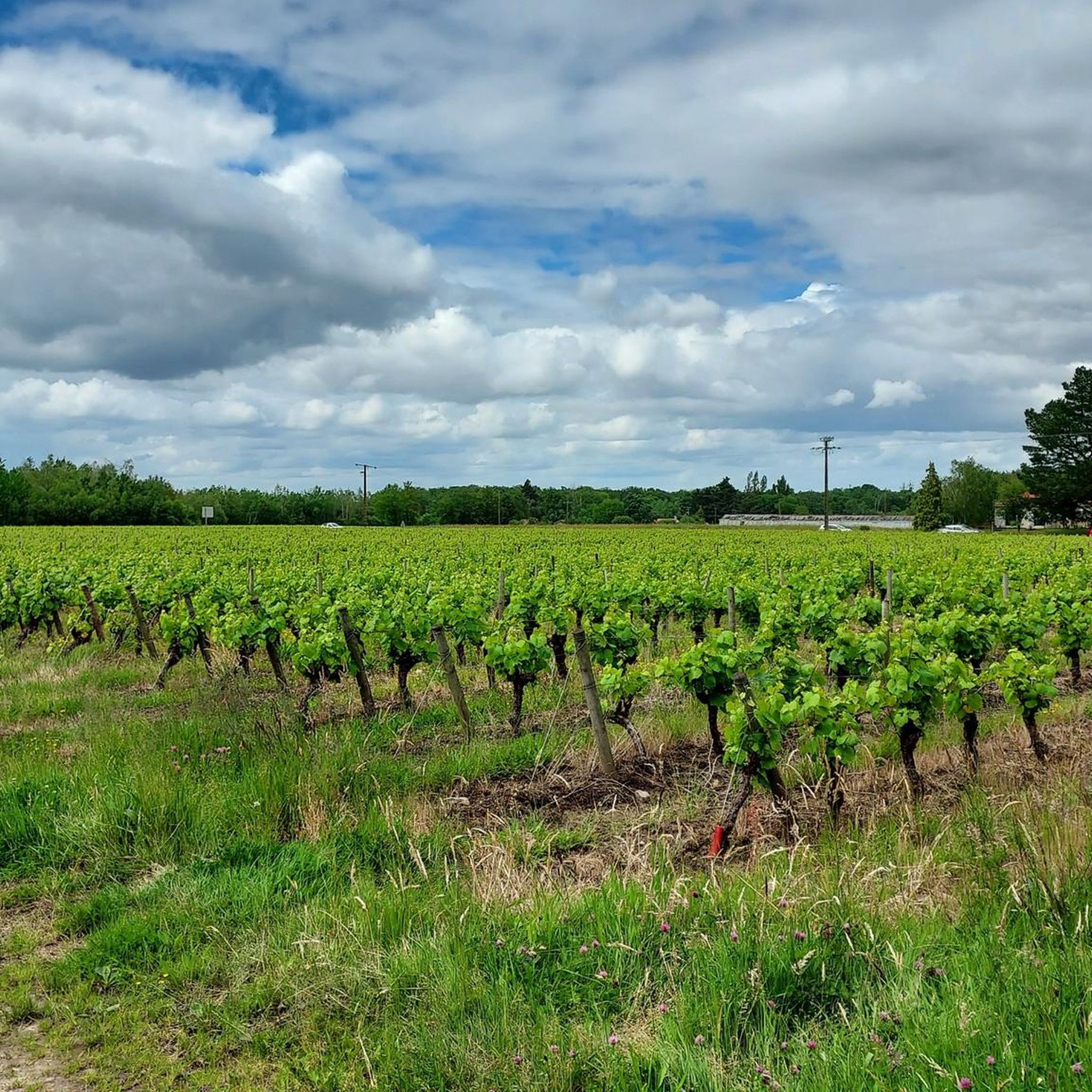
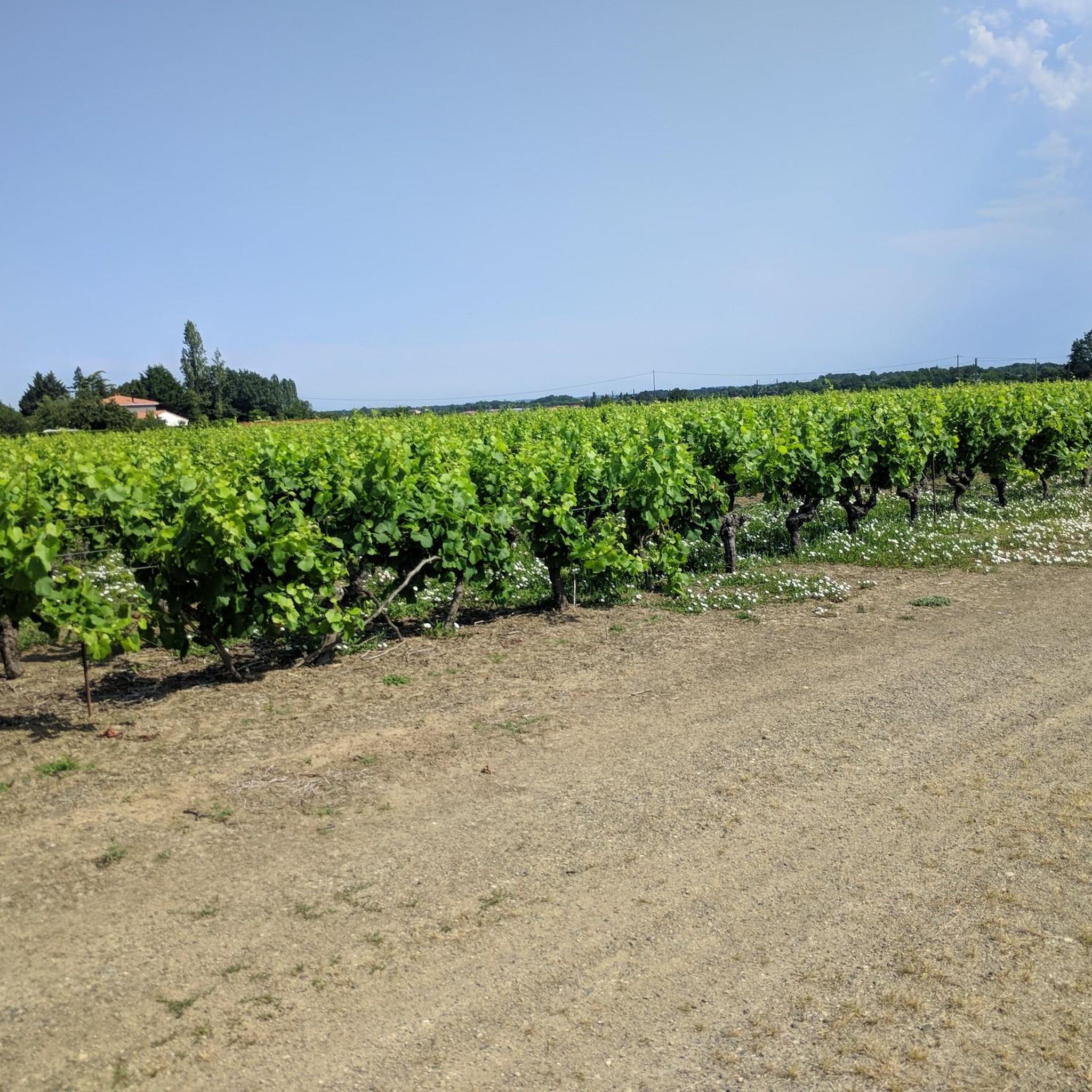
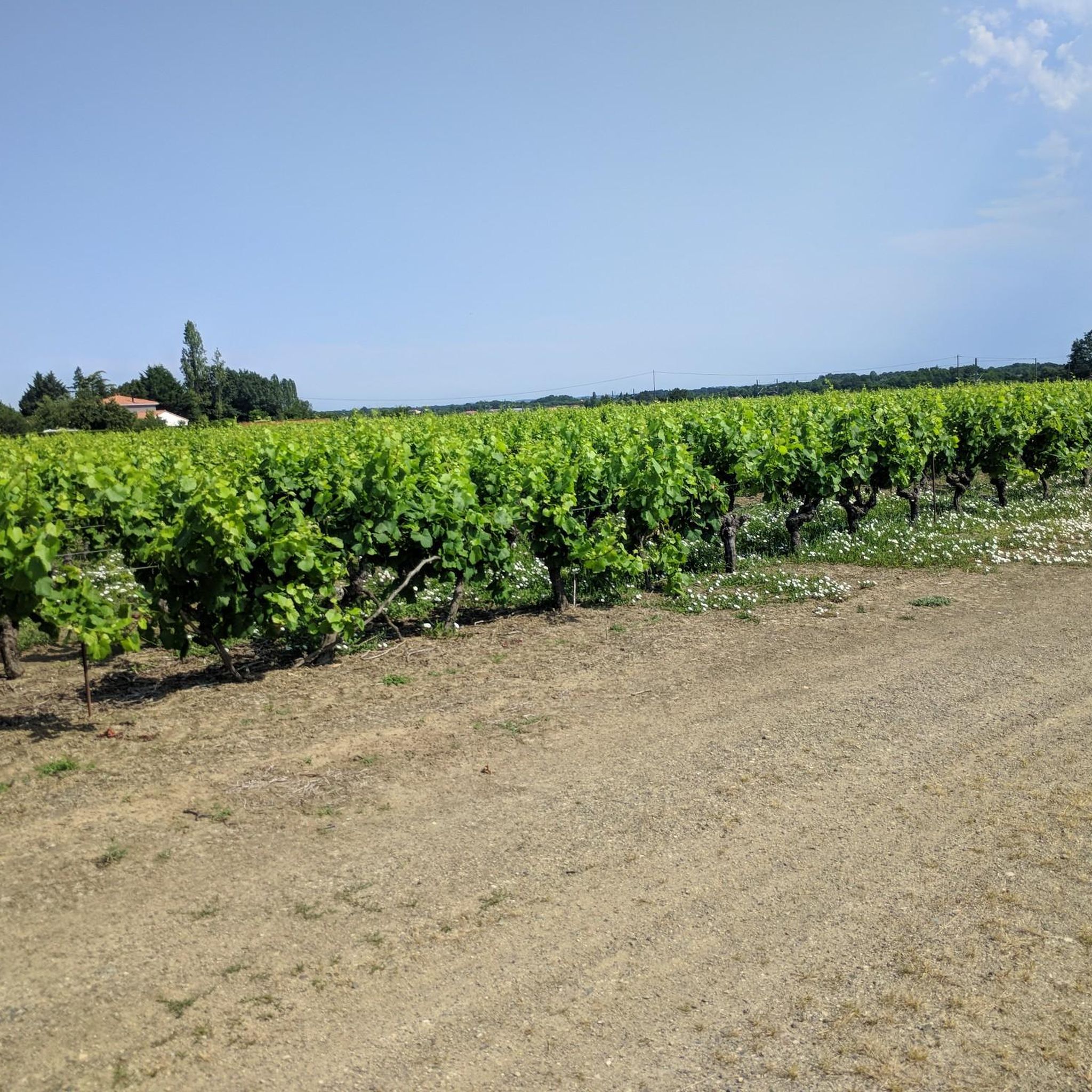
Beautiful castle surrounded by vineyards, considered one of the oldest castles in the Loire Valley.
3
0

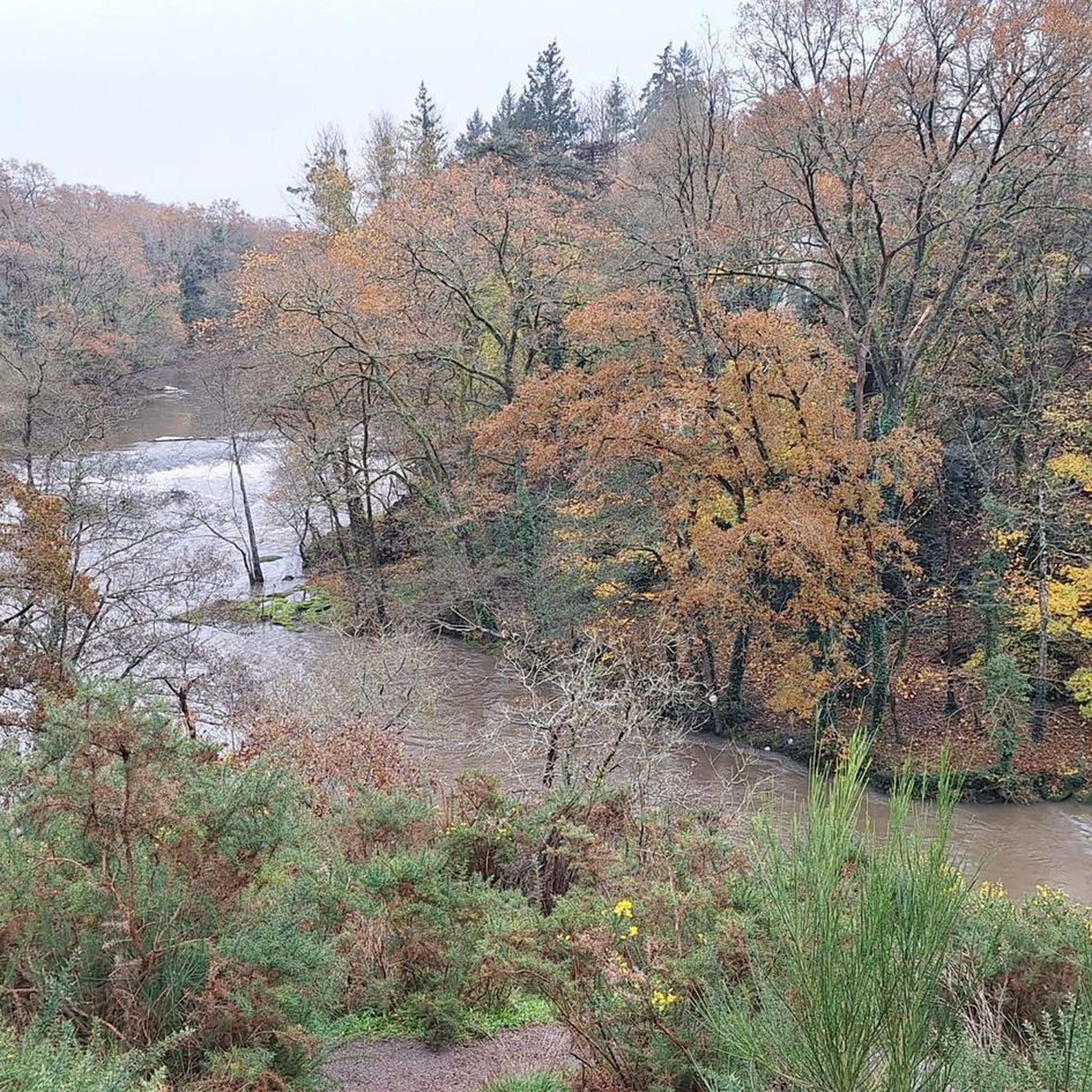
A viewpoint as astonishing as it is impressive stands out from the cliff 30 meters above the Pont Caffino leisure center. Put your feet on the ground to discover the magnificent panorama of the vineyards and the Maine valley.
1
0

After admiring the multicultural site of Pont Caffino, go back to the village of Château-Thébaud to contemplate the aerial view of this site from the magnificent belvedere
1
0
Long an impregnable fortress, Clisson Castle is a model of a fortified castle. Built by the powerful Clisson family from the 12th century, this castle became a strategic point protecting the border of the Duchy of Brittany in the 15th century. In 1793, during the Vendée War, the fortress was burned and partially destroyed. Today, Clisson Castle still offers many examples of defensive architecture: archers, gunboats, stunners, etc. Ref: enpaysdeloire.com
0
0

The view is worth it, you still need to have a little leg to get there
0
0
Frequently Asked Questions
What are the most popular castles to visit around Saint-Lumine-De-Clisson?
Among the most popular castles, you'll find Château de Clisson, a medieval fortress from the 11th century that proudly overlooks the city and the Sèvre river. Another significant site is Montaigu Castle, fortified in the 9th century against Viking invasions, with visible remains illustrating its historical importance.
Are there family-friendly castles near Saint-Lumine-De-Clisson?
Yes, several castles in the area are suitable for families. Château de Clisson and Montaigu Castle are both listed as family-friendly. La Frémoire Castle, now home to a wine industry, also offers activities that can be enjoyed by families.
What historical insights can I gain from visiting castles in this region?
The castles around Saint-Lumine-De-Clisson offer a rich historical journey. Château de Clisson, for instance, has endured many historical events and was once connected to Gilles de Rais. Montaigu Castle showcases fortifications from the 9th century, built to defend against Viking raids, and later against the Bretons, providing a glimpse into the region's strategic past as a borderland.
What kind of outdoor activities can I do near these castles?
The area around Saint-Lumine-De-Clisson is excellent for outdoor activities. You can find numerous routes for mountain biking, cycling, and road cycling. For example, there are MTB trails like the 'Clisson – Port of La Haie-Fouassière loop' or cycling routes such as the 'Moulin de la Minière – Pont Caffino Recreation Area loop'. You can explore more options on the MTB Trails around Saint-Lumine-De-Clisson, Cycling around Saint-Lumine-De-Clisson, and Road Cycling Routes around Saint-Lumine-De-Clisson guide pages.
Are there any viewpoints offering scenic panoramas near the castles?
Yes, the region boasts stunning viewpoints. The Picture frame by Emmanuel Ritz is a notable belvedere offering an exceptional panorama of the magnificent valley of Pont Caffino, featuring a footbridge extending above the void for an exhilarating experience. You can also get great views of Château de Clisson from the bridge over the Sèvre river.
What is the best time of year to visit the castles around Saint-Lumine-De-Clisson?
The Pays de la Loire region generally enjoys pleasant weather from spring to autumn, making these seasons ideal for exploring the castles. Spring offers blooming landscapes, while summer provides warm days for outdoor activities. Autumn brings beautiful foliage and is often a good time for wine-related activities, especially near castles like La Frémoire Castle and La Preuille Castle, which are set amidst vineyards.
Can I find castles that are also associated with local wine production?
Absolutely. The region is known for its vineyards. La Frémoire Castle, a former 16th-century seigneury, now houses professional premises for the wine industry and offers activities centered around Loire wines. Similarly, La Preuille Castle, dating back to the 11th century, is nestled in a vineyard and is known for producing Muscadet in Vendée.
What do visitors particularly enjoy about the castles and surrounding area?
Visitors appreciate the rich history and architectural diversity of the castles, from medieval fortresses to vineyard châteaux. The scenic views, especially from spots like the Picture frame by Emmanuel Ritz overlooking the Pont Caffino valley, are highly praised. The komoot community has shown strong engagement, with over 330 upvotes and 90 photos shared, highlighting the area's appeal for historical exploration and outdoor adventures.
Are there any hidden gem castles or less-known historical sites worth exploring?
While the main castles like Clisson and Montaigu are popular, exploring the smaller, vineyard-associated châteaux such as La Frémoire Castle and La Preuille Castle can offer a more intimate experience. These sites provide a blend of history and local culture, particularly around the Loire wines, and are often set in picturesque, less crowded surroundings.
What kind of landscape can I expect to see around the castles?
The castles around Saint-Lumine-De-Clisson are set within the beautiful Pays de la Loire region, characterized by its river valleys, notably the Sèvre. You can expect to see lush green landscapes, often interspersed with vineyards, which contribute to the region's charm. The historical sites are frequently perched on strategic points, offering commanding views of the surrounding natural beauty.
Are there any castles that offer a unique architectural style?
The region offers a variety of architectural styles. Château de Clisson is a prime example of a medieval fortress, showcasing robust 11th-century construction. Montaigu Castle also features medieval fortifications. In contrast, La Frémoire Castle, a 16th-century seigneury, represents a later period, often associated with the more refined château style, sometimes adapted for agricultural or wine-making purposes.
Most popular routes around Saint-Lumine-De-Clisson
Most popular attractions around Saint-Lumine-De-Clisson

Get inspired with the komoot mobile app


Explore more
Looking for the best castles somewhere else? Discover other guides around Saint-Lumine-De-Clisson:
