The best MTB trails around La Bastide-Pradines
4.3
(399)
2,568
riders
154
rides
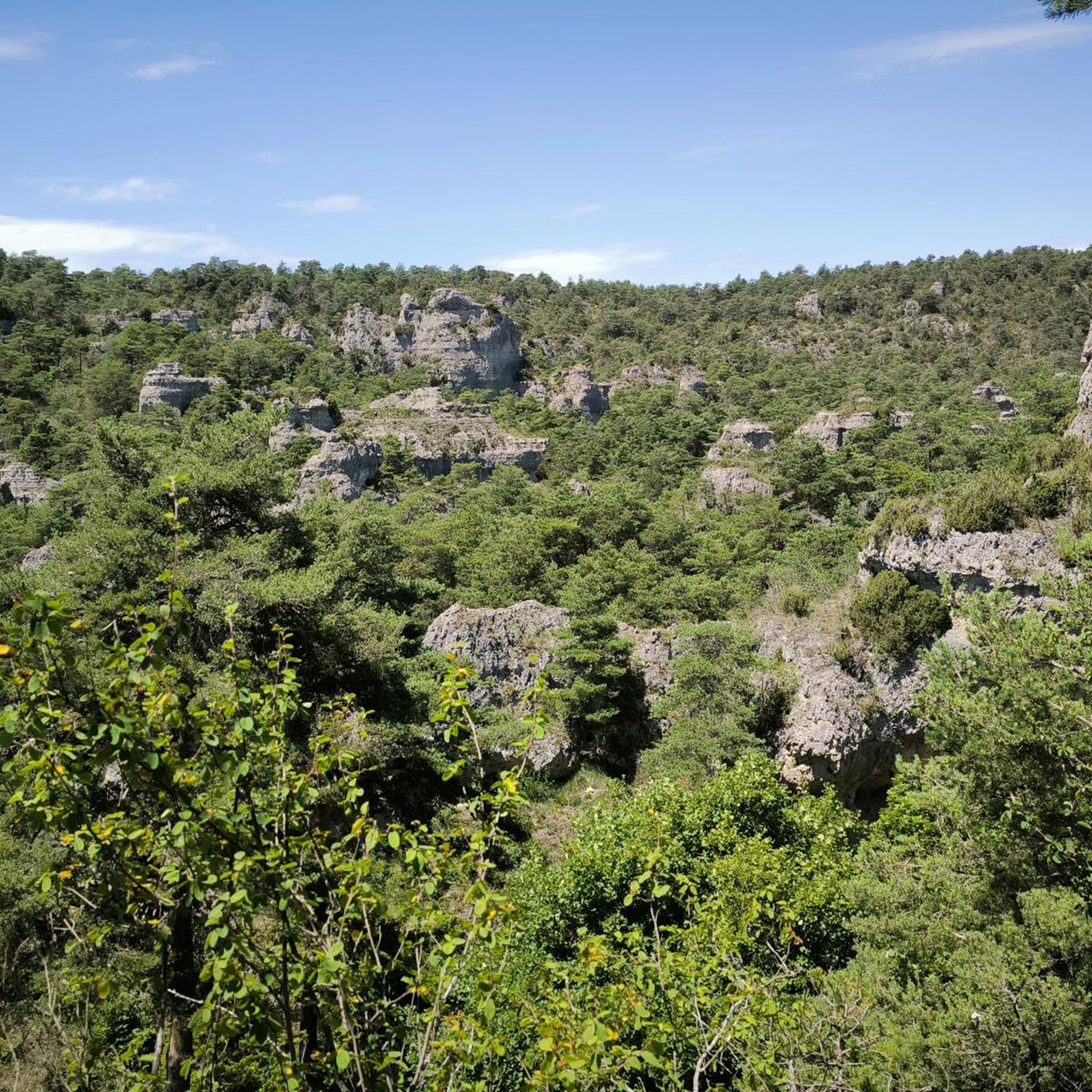
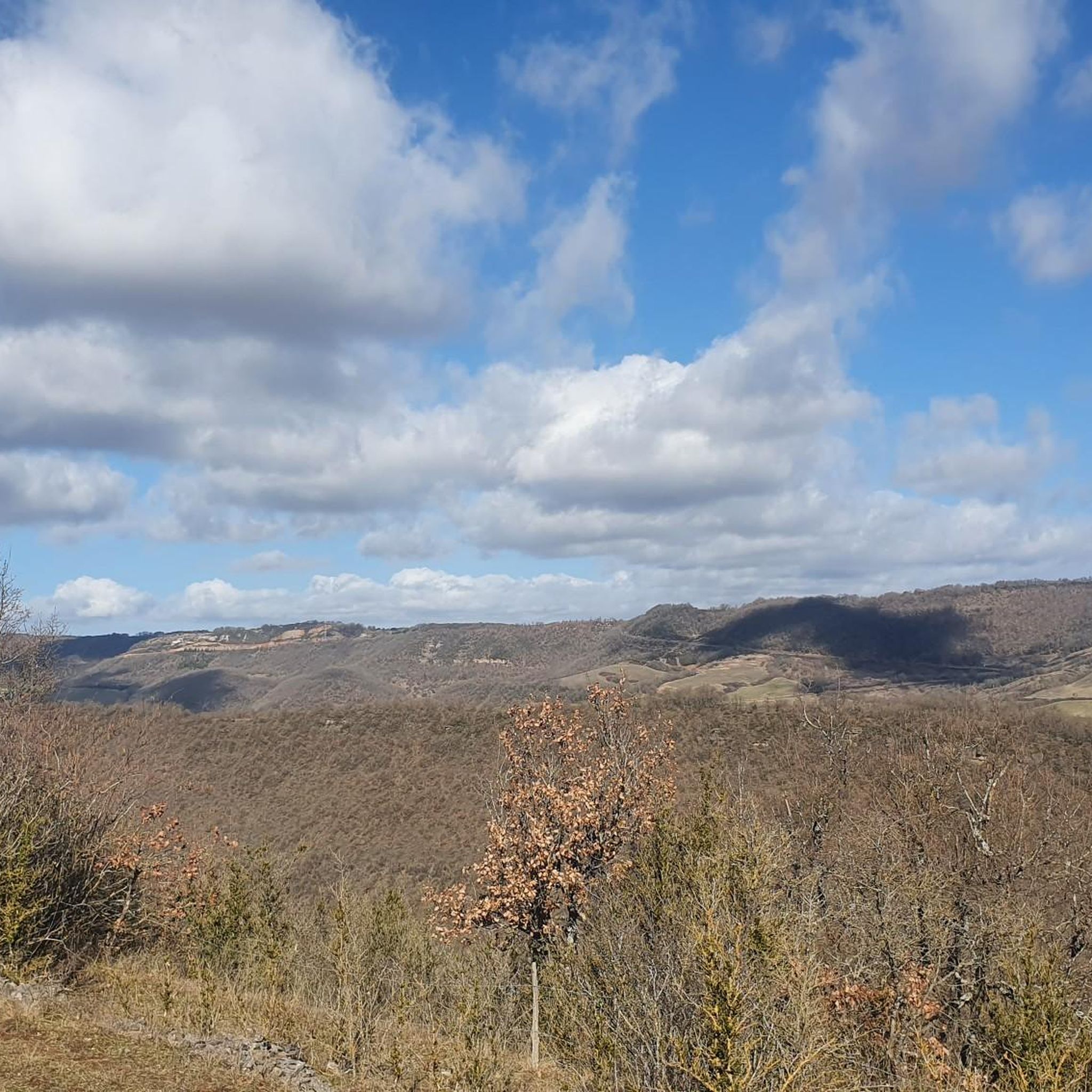
Mountain bike trails around La Bastide-Pradines are set within the diverse landscapes of the Aveyron department, overlooking the Cernon valley and backed by the vast Larzac plateau. This region is characterized by heavily forested areas, farmland, and the Grands Causses Regional Natural Park, offering varied terrain for mountain biking. The area features a mix of hills, wooded valleys, and proximity to dramatic gorges, providing a rich environment for exploration.
Best mountain bike trails around La Bastide-Pradines
- The most popular mountain…
Last updated: October 11, 2026
4.0
(6)
30
riders
Moderate mountain bike ride. Good fitness required. Suitable for all skill levels.
5.0
(1)
10
riders
Hard mountain bike ride. Good fitness required. Advanced riding skills necessary. Some portions of the route may require you to push your bike.

12
riders
115km
09:15
1,770m
1,770m
Hard mountain bike ride. Very good fitness required. Advanced riding skills necessary. Some portions of the route may require you to push your bike.
8
riders
Moderate mountain bike ride. Good fitness required. Suitable for all skill levels.
3
riders
47.8km
04:37
1,200m
1,200m
Hard mountain bike ride. Very good fitness required. Advanced riding skills necessary.
Get access to more routes and recommendations from other explorers.
Already have an account?
Our route recommendations are based on thousands of hikes, rides, and runs completed by other people on komoot.
Start today with a free account
Your next adventure awaits.

Tips from the Community

Located in the heart of the Larzac plateau, in the Aveyron, La Couvertoirade is a superb fortified medieval city, ranked among the Most Beautiful Villages of France. Formerly owned by the Templars, then by the Hospitallers, it captivates with its 15th-century ramparts, its cobbled streets, its stone houses, and its Templar castle. Don't miss the church, the communal oven, and the lavogne, a traditional basin for collecting rainwater.
0
0
This place is the starting point of the Voie Verte which runs along the Tarn and leads to Creissels. You can discover the troglodytic village of Peyre in particular, a very pleasant forest section which, in places, forms a real green tunnel. Further on, you can enjoy a magnificent view of the Millau Viaduct.
2
0
From the Larzac plateau, the Brunas site offers a vast panorama of the Millau valley. Stretched between the two banks of the Tarn, the viaduct with its seven concrete piers appears in its entirety. Behind it unfolds the entire causse Rouge, a large limestone plateau whose undulations dominate the valley. Then, the Puech d’Andan is distinguished by its wooded silhouette, cut in two by a clear central notch. Further to the right stands the Pouncho d'Agast, a pyramidal promontory marking the beginning of the causse Noir at an altitude of 841 m. Brunas is also a true site for free flight. The take-off area is located directly on the plateau; the site is mainly used with a north wind and allows paragliders to take off and then land in the vicinity of the same sector, with approximately 370 m of elevation difference down to the valley. The spectacle of the sails evolving in front of the viaduct adds a particular dimension to this panorama.
2
0
Isolated in the middle of the open landscapes of the Larzac, the fortified farm of Brouzes is a remarkable testimony to medieval rural architecture. The complex, whose construction began in 1491, is organized in a rectangle around three courtyards. It was later remodeled, notably in 1628, then in the 18th century. Behind its appearance as a large farm lies a true defensive architecture: the buildings are largely vaulted, a stable has loopholes, two towers reinforce the south side, and a dovecote tower as well as an old bread oven complete the complex. The farm nevertheless experienced a long period of abandonment. Uninhabited from 1922 to 1970, it was progressively looted and severely degraded. In the 1970s, an artist couple, Élisabeth and Claude Baillon, bought it and began its restoration. Their intervention largely contributed to saving the complex, which was finally classified as a historic monument in 1990.
2
0
Perched at an altitude of about 730 meters, the Cap de Coste viewpoint overlooks the eastern end of the Boundoulaou cirque. It reveals a vast panorama of the Millau basin and its surrounding massifs. To the left, the easily recognizable Millau Viaduct spans the Tarn valley to connect the Larzac to the Causse Rouge. Further to the right stretches the latter: a large limestone plateau whose undulations dominate the valley. Then, the Puech d’Andan stands out with its wooded silhouette, cut in two by a clear central notch. Finally, further away, the Pouncho d’Agast, an emblematic relief of the Causse Noir, is easily recognized by its profile like a true limestone pyramid.
3
0
Perché at an altitude of approximately 730 meters, the Cap de Coste viewpoint overlooks the eastern end of the Boundoulaou cirque. It reveals a vast panorama of the Millau basin and its surrounding massifs. To the left, the easily recognizable Millau Viaduct spans the Tarn valley, connecting the Larzac to the Causse Rouge. Further to the right stretches the latter: a large limestone plateau whose undulations dominate the valley. Then, the Puech d’Andan stands out with its wooded silhouette, cut in two by a clear central notch. Finally, further away, the Pouncho d’Agast, an emblematic relief of the Causse Noir, is easily recognized by its profile like a true limestone pyramid.
2
0
From this point at the foot of the structure, the regular succession of piers and guyed pylons can be particularly well distinguished. The deck, 2,460 m long, crosses the valley at a height of approximately 270 m above the Tarn. Pier P2, the tallest, culminates at 245 m, while the assembly formed by the pier and its pylon reaches 343 m: a height greater than that of the Eiffel Tower. This perspective also recalls the technical feat that the construction of the viaduct represented. The metal deck was assembled in sections from either side of the valley, then progressively launched across the void. The joining of the two parts was carried out on May 28, 2004, 268 m above the Tarn, before the official inauguration a few months later. An interesting detail can be discerned here: despite its exceptional dimensions, the structure appears remarkably light. This impression is not accidental. The viaduct was specifically designed to blend into the valley by limiting the visual impact of its structure, with a very slender deck and piers that branch out in a "Y" shape.
2
0

Absolutely worth seeing - view it from below and definitely join the architecture tour.
0
0
Frequently Asked Questions
How many mountain bike trails are available around La Bastide-Pradines?
There are over 150 mountain bike trails around La Bastide-Pradines, offering a wide range of options for different skill levels. The komoot community has explored these routes over 2000 times.
What are the different difficulty levels for mountain biking in this area?
The trails around La Bastide-Pradines cater to various skill levels. You'll find approximately 20 easy routes, nearly 100 moderate routes, and over 40 difficult trails, ensuring there's something for everyone from beginners to experienced riders.
Are there any circular mountain bike routes?
Yes, many mountain bike routes in the area are designed as loops. For example, the Verzolet mountain bike trail – Moulin de Gotty loop from Tournemire - Roquefort is a popular moderate circular route, and the more challenging Sainte-Eulalie-de-Cernon – Tour du Viala-du-Pas-de-Jaux loop from Lapanouse-de-Cernon also offers a full circuit.
What is the best time of year for mountain biking in La Bastide-Pradines?
The region benefits from a mix of Mediterranean and Atlantic climates, making spring and autumn ideal for mountain biking. The weather is generally milder, and the landscapes are particularly vibrant. Summer can also be pleasant, especially in the mornings or late afternoons, though some trails might be more exposed to the sun.
Can I go mountain biking in La Bastide-Pradines during winter?
While some trails may be accessible, winter mountain biking can be challenging due to colder temperatures and potentially wet or icy conditions, especially on higher elevations of the Larzac plateau. It's always best to check local weather forecasts and trail conditions before heading out.
What natural landmarks or viewpoints can I see while mountain biking?
The region is rich in natural beauty. You can encounter impressive geological formations like the 'cities of rocks' at Chaos de Montpellier-le-Vieux, or explore the dramatic Gorges du Tarn and Gorges de la Jonte. Specific viewpoints include Cap de Coste Viewpoint and Pas Destrech Cross, offering panoramic vistas of the Cernon valley and Larzac plateau.
Are there any interesting places to explore near the trails?
Absolutely. Beyond the trails, you can visit the town of Millau, a significant hub for mountain biking with its own bikepark. Other notable attractions include the impressive Millau Viaduct and its dedicated Millau Viaduct Viewpoint. The area also features unique natural monuments like The Rock Engraved with Two Crosses and Dinosaur Footprints of Peyre.
Are there family-friendly mountain bike trails around La Bastide-Pradines?
Yes, with around 20 easy routes, there are options suitable for families or beginners. These trails typically feature less elevation gain and smoother terrain, allowing for a more relaxed riding experience through the scenic landscapes.
Where can I find parking for mountain biking in La Bastide-Pradines?
Parking is generally available in the villages and towns that serve as starting points for many routes, such as Tournemire - Roquefort or Lapanouse-de-Cernon. For specific routes, it's advisable to check the individual tour details on komoot for recommended parking spots.
Are there options for advanced mountain bikers seeking a challenge?
Definitely. The region offers over 40 difficult mountain bike routes. For instance, the View of Cirque de Tournemire loop from Tournemire - Roquefort is a challenging 48 km route with significant elevation changes, providing a demanding experience for advanced riders. The nearby Millau also boasts a renowned downhill trail and bikepark for expert riders.
What do other mountain bikers say about the trails in La Bastide-Pradines?
The mountain bike trails around La Bastide-Pradines are highly rated by the komoot community, with an average score of 4.4 stars from over 300 reviews. Riders often praise the diverse terrain, the stunning views of the Cernon valley and Larzac plateau, and the variety of routes available for all skill levels.
Are there mountain bike trails that offer scenic views?
Many trails in the region are known for their scenic beauty, especially those traversing the Grands Causses Regional Natural Park or overlooking the Cernon valley. Routes like the Brunas Viewpoint – Cap de Coste Viewpoint loop from Tournemire - Roquefort are specifically designed to take you past breathtaking vistas and natural monuments.
Are there any less crowded mountain bike trails around La Bastide-Pradines?
While popular routes can see more traffic, the extensive network of over 150 trails means you can often find quieter paths, especially on weekdays or by exploring some of the less-trafficked moderate and difficult routes that venture deeper into the forested areas and plateaus. The sheer size of the Grands Causses Regional Natural Park allows for plenty of solitude.
Most popular routes around La Bastide-Pradines
Most popular attractions around La Bastide-Pradines

Get inspired with the komoot mobile app


Explore more
Browse the best MTB trails in other regions.
