Attractions and Places To See around Bugnicourt - Top 20
Best attractions and places to see around Bugnicourt include historical landmarks, ancient megaliths, and significant waterways. This commune in the Nord department of France offers insights into its rich history and rural character. Visitors can explore sites dating back to antiquity, religious edifices, and historical boundary markers. The area provides a blend of cultural heritage and natural landscapes, inviting exploration of its unique points of interest.
Best attractions and places to see around Bugnicourt
- The most popular attractions is Bridge…
Last updated: July 7, 2026
The Menhir of Lécluse or the Devil's Stone
Highlight • Summit
Translated by Google •
Tip by

The Big Rock
Highlight • Historical Site
Be careful, the place is very swampy and it is more easily accessible in dry weather 😉.
Translated by Google •
Tip by

Sign up now to discover places like this
Get recommendations on the best single tracks, peaks, & plenty of other exciting outdoor places.
Sign up for free
The Orangery Castle
Highlight • Parking
Roucourt Castle was built at the end of the 18th century by Monsieur Béranger, a cannon founder under the Empire.
Translated by Google •
Tip by

the stone that grows
Highlight • Historical Site
Translated by Google •
Tip by
Gœulzin Castle.
Highlight • Castle
During the Great War, this castle was occupied by German troops, pillaged and abandoned. Its ruined state dates from this period.
Translated by Google •
Tip by

Sign up for free to discover even more attractions around Bugnicourt.
Sign up for free
Already have an account?
Start today with a free account
Your next adventure awaits.
Login or Signup
Tips from the Community

Magnificent..I love walking there to see the deer 😍
1
0

The menhir is located in the marsh of Aubigny-au-Bac, on a footpath leading to Brunémont. It is a block of Landenian sandstone 2.90 m high (including 1.48 m above ground) by 2.15 m wide and 0.70 m thick. It is said to have been sunk to about 2.40 m. Shaped like a horse's head, it is associated with a prehistoric megalith despite the absence of evidence.
0
0
A Brief History Note. Roucourt Castle was built at the end of the 18th century by Monsieur Béranger, a cannon founder under the Empire. …During World War I, the castle was occupied by the squadron and men of Captain Baron Von Richthofen, known as the "Red Baron," who sheltered his planes in the avenue of over 100-year-old lime trees that precede the entrance gate. Destroyed by fire in 1918, it was rebuilt between 1921 and 1923 and restored in 1997 by Colette and Guy Becquet de Mégille, the current owners.
3
0


Medieval Gœulzin Castle from the 17th century. During the Great War, this castle was occupied by German troops, pillaged and abandoned. Its ruined state dates from this period.
5
0

They are part of the unknown treasures of Arras and the Pays d'Artois. The various megalithic sites are good for a beautiful walk, among mysteries and legends, history and extraordinary landscapes. Set sail for the Scarpe valley and the Sensée valley, in the wake of the megaliths of the Pays d'Artois.
2
0

The ruins of Goeulzin Castle are what remains of a medieval fortress which was burned down twice in the 16th century and rebuilt by a Count of Bucquoy. The castle, located in the marshy Sensée valley, played a defensive role until the 18th century, when it was abandoned and pillaged. We can still see the remains of its walls, its towers and its main facade with this characteristic plan of stepped gables. You can also admire the neighboring tower which served as an ice house and dovecote in the 18th century.
3
0

The story goes that once the people of the country showed the scratches produced, according to legend, by the claws of the demon when he seized the stone. Streaks do indeed appear on two sides of the menhir… But are they the same as before or do they come from the destruction of the stone in 1918
2
0
Frequently Asked Questions
What historical sites can I explore in Bugnicourt and its surroundings?
Bugnicourt and its surroundings are rich in history. You can visit ancient megaliths like The Menhir of Lécluse or the Devil's Stone, a historical monument with local legends, and the stone that grows, another listed historical monument known for traditions suggesting it continues to grow. The area also features the Orangery Castle, a reconstructed 18th-century château, and the archaeological site of the 11th-century Castral Motte. Other notable sites include the Church of Saint-Pierre Saint-Paul, several religious chapels, a War Memorial, and historical boundary markers like the "Longue Borne".
Are there any ancient monuments or megaliths to see near Bugnicourt?
Yes, the area is home to significant ancient monuments. You can discover The Menhir of Lécluse or the Devil's Stone, a 3.20-meter tall menhir classified as a historical monument, surrounded by local legends of the devil's claws. Another intriguing site is the stone that grows, a block of Landenian sandstone listed as a historical monument, with traditions claiming it continues to expand. Additionally, The Big Rock (Menhir of Oisy-le-Verger) is another impressive megalith planted in the marshy terrain of the Sensée valley, also steeped in local lore.
What natural features can I discover around Bugnicourt?
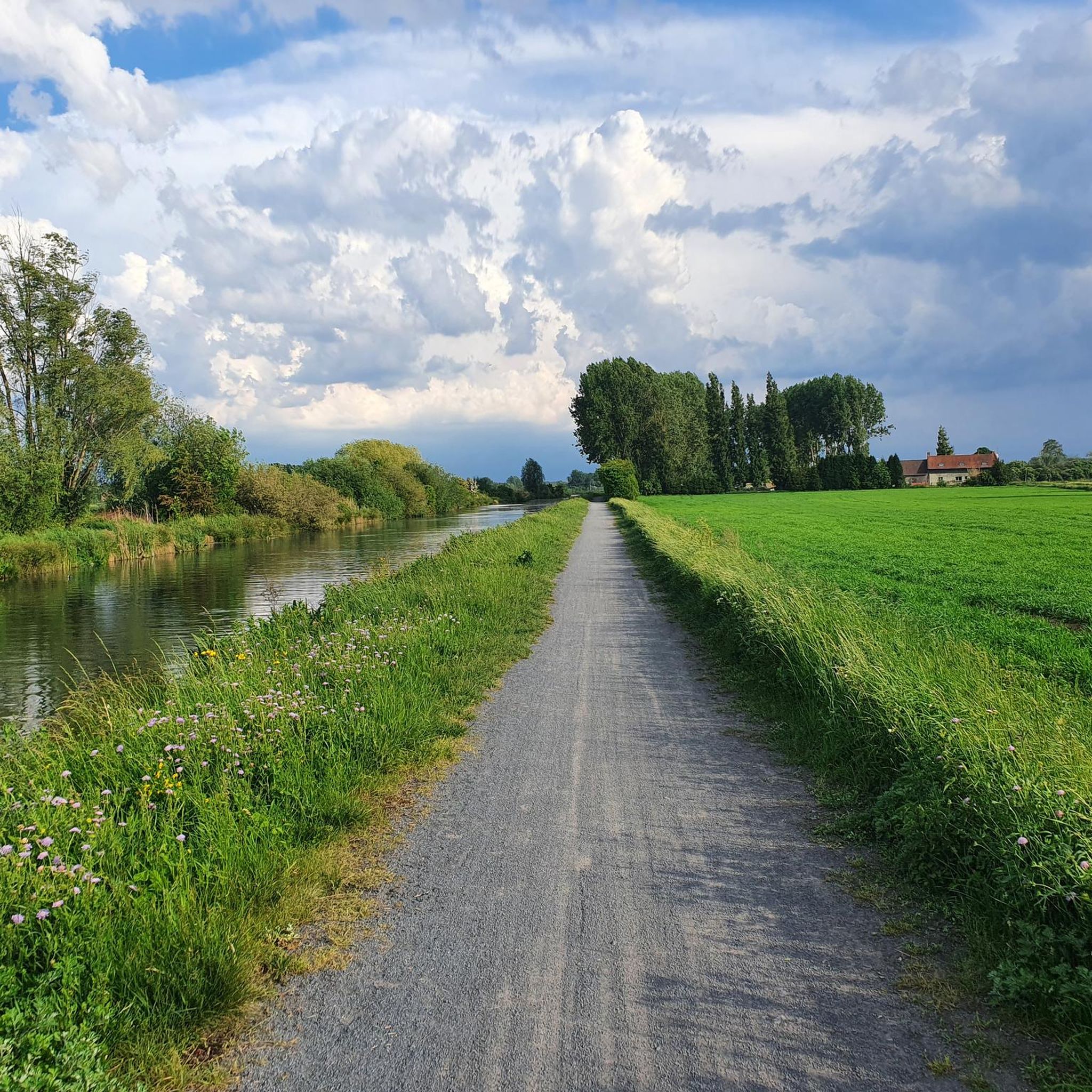
Beyond its historical sites, Bugnicourt offers pleasant natural features. The Bridge Over the Canal is part of the historic Canal de la Sensée, a waterway connecting the Scarpe and the Scheldt, offering scenic views. The commune's website also suggests exploring the panoramic views of the surrounding countryside during visits or walks, providing a tranquil rural experience. The menhirs, while historical, are also considered natural monuments.
Are there family-friendly attractions in Bugnicourt?
Several attractions around Bugnicourt are considered family-friendly. Both The Menhir of Lécluse or the Devil's Stone and the stone that grows offer intriguing historical and legendary stories that can captivate children. The Orangery Castle is also listed as family-friendly, providing a glimpse into local heritage. Exploring the countryside and historical markers can also be an engaging activity for families.
What outdoor activities or trails can I find near Bugnicourt?
The area around Bugnicourt is excellent for outdoor activities. You can find various routes for mountain biking, gravel biking, and running. For mountain biking, explore trails like the 'Oisy-le-Verger Marshes – Single Canal Arleux loop' or 'The stone that grows – Roost-Warendin Slag Heap 138 loop'. Gravel biking options include 'Arenberg Creative Mine – Étang des Argales loop'. Runners can enjoy routes such as 'Jetty on the Aubigny Marsh loop' or 'Marais de Brunémont loop'. You can find more details on these activities and routes in the respective guides: MTB Trails around Bugnicourt, Gravel biking around Bugnicourt, and Running Trails around Bugnicourt.
Are there any wheelchair accessible attractions in Bugnicourt?
Yes, the Bridge Over the Canal is noted as wheelchair accessible, offering an easy and pleasant experience along the historic Canal de la Sensée.
What is the best time to visit Bugnicourt attractions?
The best time to visit Bugnicourt attractions, especially for exploring historical sites and enjoying outdoor activities, is generally during the drier seasons. Some sites, like The Big Rock, can be swampy and are more easily accessible in dry weather. Spring and autumn often offer pleasant temperatures for walking and sightseeing, while summer provides longer daylight hours.
What do visitors particularly enjoy about the attractions around Bugnicourt?
Visitors appreciate the rich history and unique local legends associated with sites like The Menhir of Lécluse or the Devil's Stone and the stone that grows. The historical significance of the Canal de la Sensée, accessible via the Bridge Over the Canal, is also a highlight. Many enjoy the blend of cultural heritage with the tranquil, rural character and countryside views of the area.
Can I bring my dog to the attractions or trails near Bugnicourt?
While specific policies for individual attractions are not always detailed, the surrounding countryside and many outdoor trails are generally dog-friendly. When exploring trails, it's always advisable to keep dogs on a leash and ensure you clean up after them. For specific attractions, it's best to check locally upon arrival.
Are there any unique or lesser-known historical curiosities in the Bugnicourt area?
Beyond the main highlights, Bugnicourt holds several unique historical curiosities. The village features historical stone markers, including one that once designated the border between Flanders and Wallonia, and another for Bouchain Hainaut, as well as the "Longue Borne" roundabout. These markers offer insights into historical regional divisions. The commune also encourages visitors to discover Bugnicourt through its various constructions and remarkable sites, referred to as "Pierres et édifices," which reveal local curiosities and landmarks.
Where can I find accommodation near Bugnicourt?
While Bugnicourt itself is a small commune, you can find accommodation options in nearby towns and villages. These typically include guesthouses, bed and breakfasts, and small hotels, offering a comfortable base for exploring the region's attractions and countryside.
Are there places to eat or drink near the attractions in Bugnicourt?
Bugnicourt offers a rural experience, so dining options might be limited directly at every attraction. However, you can find local cafes and restaurants within Bugnicourt village or in the surrounding larger towns, providing opportunities to enjoy regional cuisine and refreshments after your explorations.
Most popular routes around Bugnicourt
Most popular attractions around Bugnicourt

Get inspired with the komoot mobile app


Explore more
Still not found the Highlight you’re looking for? See guides of the top attractions in other regions:
