Top 13 Castles around Saint-Malo
Castles around Saint-Malo are a prominent feature of this historic port city in Brittany, France. The area is known for its impressive fortifications, including a formidable castle, extensive ramparts, and several offshore forts. These structures offer insight into the city's rich maritime and defensive history. The old town, known as Intra-Muros, is encircled by imposing granite walls.
Best castles around Saint-Malo
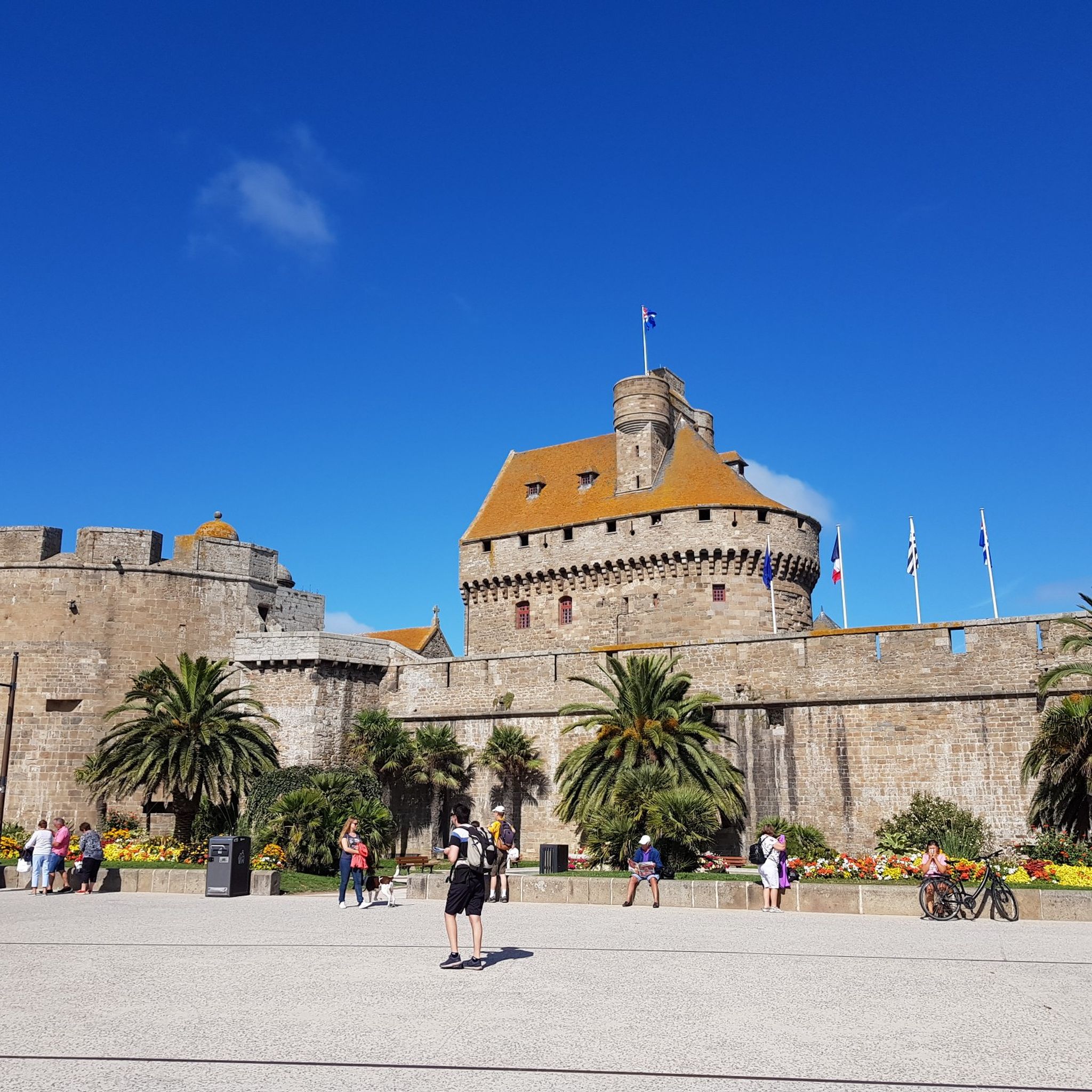
- The most popular castles is Saint-Malo Castle, a castle built by the Dukes of Brittany between the 15th and 18th centuries. It is classified as a historic monument.
- Another must-see spot is Queen's Fort, a historic bastion that forms part of the city's fortifications. This bastion offers views of the Fort National and the islet of Grand-Bé.
- Visitors also love Solidor Tower, a castle located at the mouth of the Rance, built in 1382 to control the city of Saint-Malo. Its floors were used as a prison during the Revolution and then as a warehouse under the Empire.
- Saint-Malo is known for fortified castles, defensive towers, and offshore forts. The region offers a variety of historical structures to explore.
- The castles around Saint-Malo are appreciated by the komoot community, with more than 600 upvotes and over 250 photos shared by visitors.
Last updated: July 7, 2026
Saint-Malo Castle
Highlight • Castle
Translated by Google •
Tip by

Queen's Fort
Highlight • Castle
Translated by Google •
Tip by

Sign up now to discover places like this
Get recommendations on the best single tracks, peaks, & plenty of other exciting outdoor places.
Sign up for free
View of Fort National from Éventail Beach
Highlight • Viewpoint
Translated by Google •
Tip by
Bidouane Tower
Highlight • Historical Site
Translated by Google •
Tip by

Fort du Guesclin
Highlight • Castle
Translated by Google •
Tip by

Combourg Castle
Highlight • Castle
This haunted fortress can be visited. For information visit the following site: chateau-combourg.com
Translated by Google •
Tip by

Fort National
Highlight • Historical Site
Translated by Google •
Tip by
Château Richeux
Highlight • Castle
She fell in love with this wild moorland facing the bay of Mont Saint Michel and decided to build her home there with the help of a young architect from Saint-Malo Yves HEMAR, who would sign the most beautiful homes on the coast.
This large villa from the 1920s, which she baptized “Serenity at daybreak”, was the privileged witness to joyful dinners where artists, intellectuals and politicians rubbed shoulders between the two wars.
After years of successive changes of owners, Jane and Olivier Roellinger have, in turn, fallen under the spell of this enchanting place.
In 1992, they created a hotel there with 11 rooms and 2 suites and opened La Table du Coquillage where Hugo has been cooking since 2014.
To come and contemplate the bay and let yourself be lulled by the rhythm of the tides, you can book your stay on our website.
Translated by Google •
Tip by
Access to Port-Breton Park & Château, Dinard
Highlight • Castle
In 1920, Mrs. Meyer Sassoon, a British aristocrat born in India, decided to build a house in Dinard, by the sea. She entrusted the work of the manor to a young architect from Dinard, René Aillerie, and those of the park to a famous landscape architect, Mr. Neveu.
At that time, the property stretched over 23 hectares and the lawns went down to the sea. Port Breton will be nicknamed the "Versailles Dinardais". Then, the castle and the park of Port-Breton were respectively bought by the city of Dinard in 1982 and 1989.
Celtic symbolism is in the spotlight thanks to the astrological signs that you will find on the trees, explaining the character of each according to his date of birth.
The rose garden of 2000 plants (including the Rose Picasso), in autumn, 1200 bulbs, some plants of heather earth (azaleas, rhododendrons, heather) 5 topiaries (shrubs in squirrel fome, pelican, blackbird, heron, thrush) 2000 to 2500 trees.
ville-dinard.fr/le-parc-de-port-breton-2
Translated by Google •
Tip by

Chateaubriand's birthplace
Highlight • Historical Site
Translated by Google •
Tip by

Sign up for free to discover even more castles around Saint-Malo.
Sign up for free
Already have an account?
Start today with a free account
Your next adventure awaits.
Login or Signup
Popular around Saint-Malo
10 of the most beautiful walks in Brittany
The Customs Officers’ Path – GR 34 between Saint-Malo and Pontorson
The Customs Officers’ Path – GR 34 between Erquy and Saint-Malo
A hiking break in Brittany
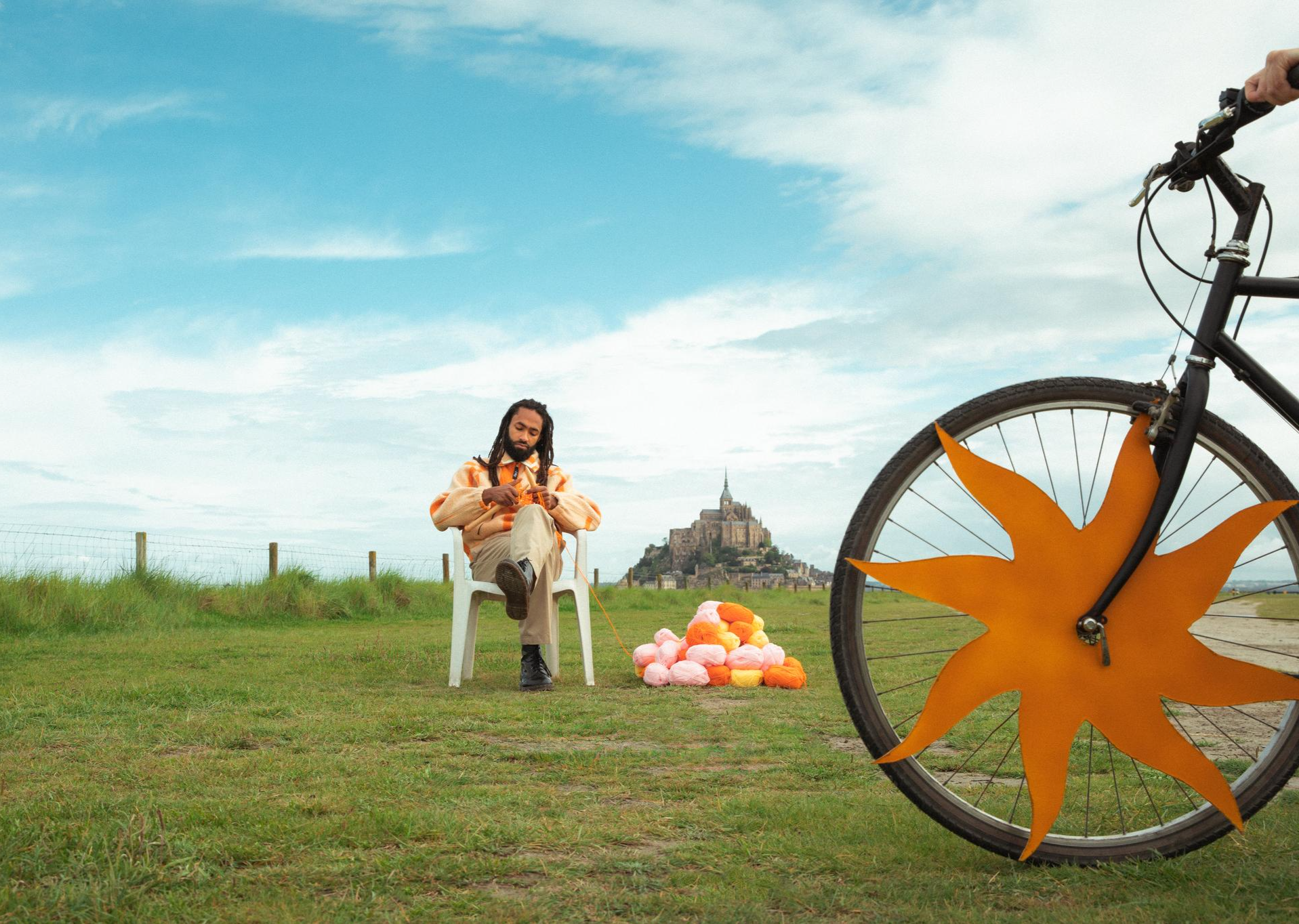
Brittany by bike – cycling from Nantes to Mont-Saint-Michel
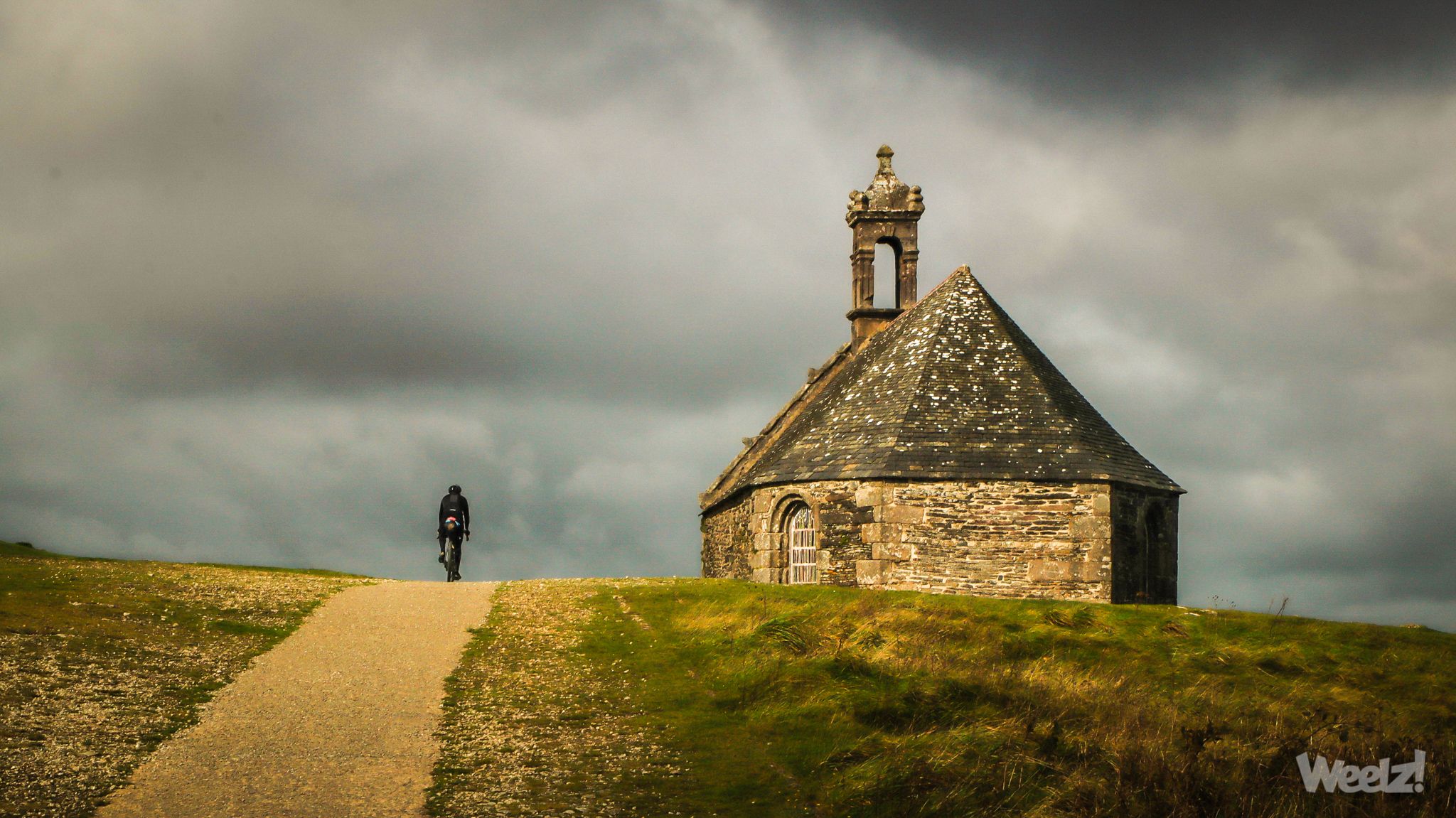
The Seven Saints Pilgrimage — France’s Tro Breizh revisited
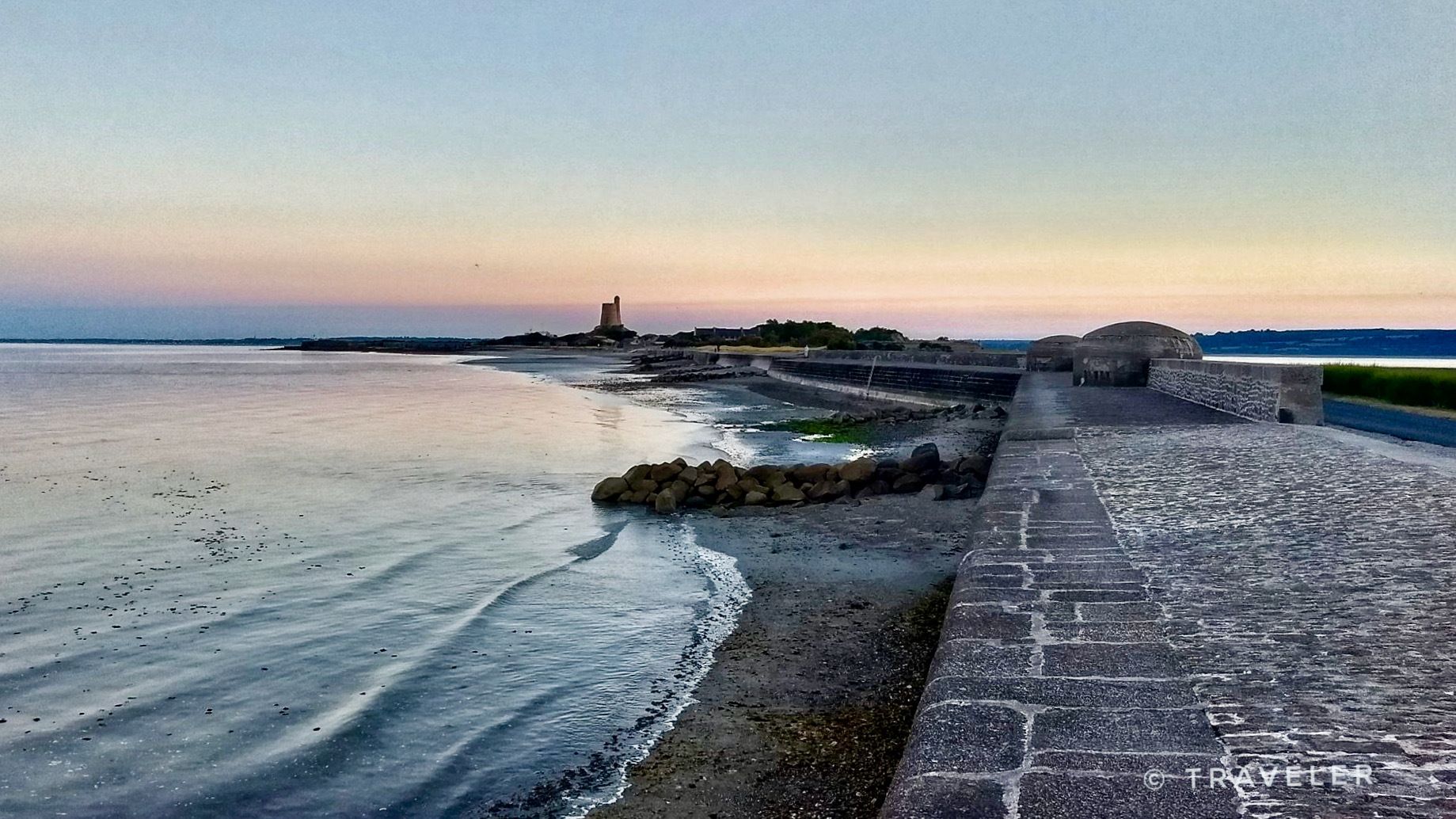
From pink granite to the Opal Coast — cycle France’s la Vélomaritime
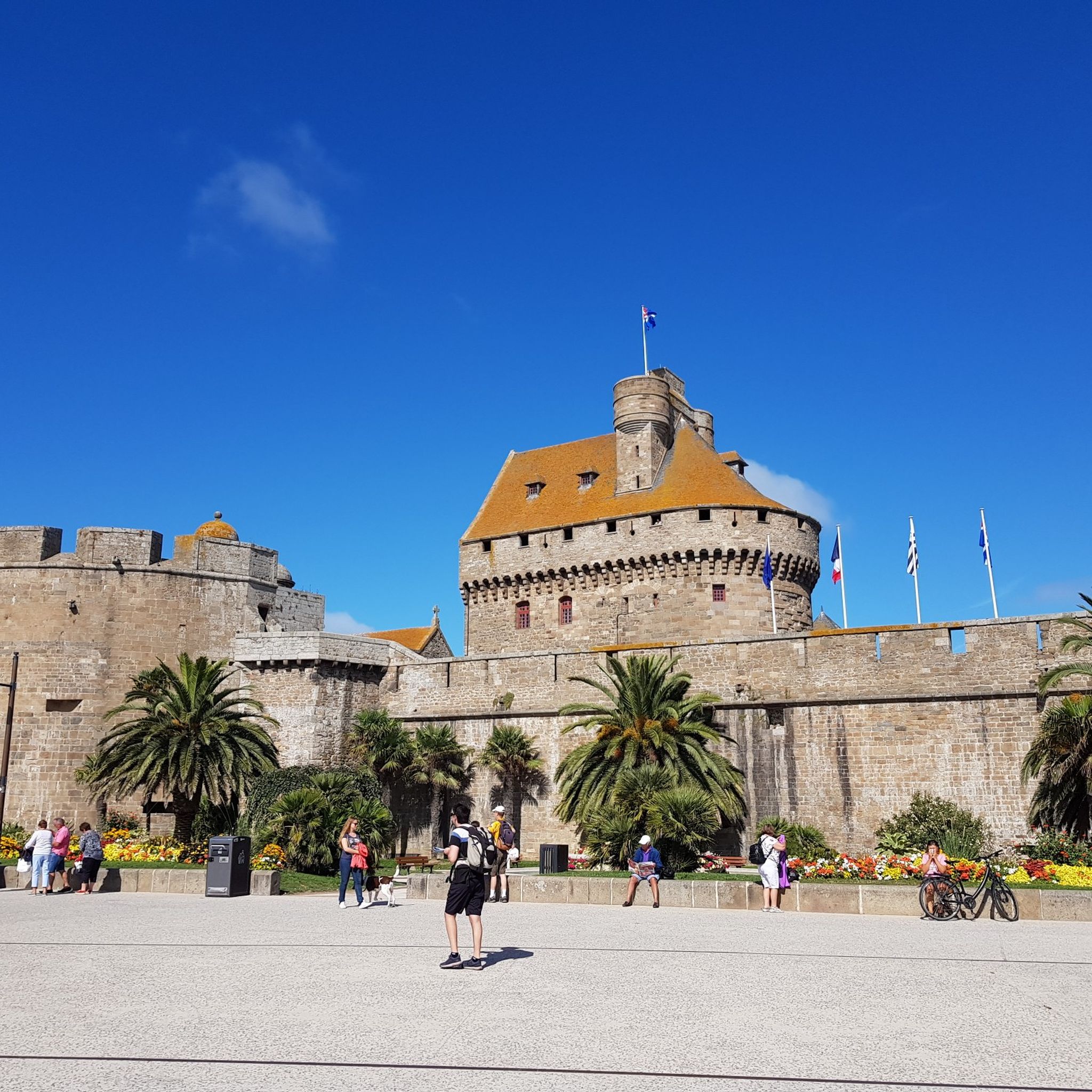
Hiking around Saint-Malo
Cycling around Saint-Malo
Running Trails around Saint-Malo
Other adventures around Saint-Malo


Tips from the Community

The fortress was built in 1689 by Sébastien Le Prestre de Vauban, the famous military engineer of King Louis XIV, to protect the city from attacks from the sea. At that time, Saint-Malo was a prosperous seafaring city that was frequently threatened by pirates. Visitor tips: 1/ The best time to visit is at low tide to reach the fortress on foot. 2/ Sturdy shoes are recommended, as the path to the fort is over uneven rock. 3/ Can be combined with a walk along the city walls of Saint-Malo.
2
0
The birthplace of François-René de Chateaubriand is located in Saint-Malo on what is now Rue Chateaubriand. Chateaubriand, one of the most important French writers of the 19th century, was born there on September 4, 1768. The building, now part of the Hôtel de la Gicquelais, bears the family coat of arms and Chateaubriand's motto above the entrance. "Mon sang atteint les bannières de France" ("My blood reaches the banners of France") This motto expresses his pride in his heritage and his connection to France.
1
0
The Fort à la Reine is a historic bastion of the city walls of Saint-Malo, originally built in the 17th century by order of Vauban and later heightened in the 18th century. Located at the northwestern tip of the city, near the Tour Bidouane and the Plage de Bon-Secours, it provided strategic defense across the bay. Today, it is freely accessible, part of the city wall circuit, and offers panoramic views.
1
0
The Bidouane Tower is a historic gunpowder tower at the northwestern tip of the city walls, built in the 15th century for the defense of the city. In 1693, an attack by Anglo-Dutch forces on the tower failed when a ship loaded with explosives ran aground prematurely. In 1889, the tower lost its military function and today serves as a lookout point with panoramic views of the Bay of Saint-Malo, the islands of Grand Bé and Petit Bé, and the coast as far as Cap Fréhel.
1
0

Don't hesitate to stop and take the time to visit this 11th century castle and in particular its patrol path offering a magnificent 360° view of the surrounding countryside.
0
0

The Fort à la Reine in Saint-Malo is a historic bastion that forms part of the city's fortifications. It was originally built in 1694 as the "Bastion du Cheval-Blanc" after an Anglo-Dutch attack on Saint-Malo. The famous military engineer Vauban ordered its construction to better protect the city against enemy attacks.
7
0
The Château de Saint-Malo is a historic castle in the city of Saint-Malo, Brittany. Located in the old town of Saint-Malo (Intra-Muros), close to the city beach and the city walls. Built in the 15th century by the Dukes of Brittany, particularly under Duke Jean V, it originally served to control the city of Saint-Malo, which was known for its strong sense of independence.
7
0

Please note that this road has been closed again since the last storm on December 22, 2024, and the erosion of the coastline is leading to more frequent closures. The possibility of a permanent closure to traffic is even under consideration.
0
0
Frequently Asked Questions
What is the historical significance of the fortifications in Saint-Malo?
Saint-Malo is renowned for its impressive fortifications, which include a formidable castle, extensive ramparts, and several offshore forts. These structures, many built or reinforced by engineers like Vauban, offer a deep dive into the city's rich maritime and defensive history, showcasing its resilience against numerous attacks and its strategic importance as a port city.
Which castles or forts around Saint-Malo have notable historical uses, such as being prisons or playing roles in conflicts?
Several fortifications in the area have significant histories. The Solidor Tower, built to control the Rance estuary, had its floors used as a prison during the Revolution and later as a warehouse. Fort National, built by Vauban, served as a prison after the French Revolution. The main Saint-Malo Castle was built by the Dukes of Brittany to assert control over the city.
What are the best places to experience panoramic views of Saint-Malo's fortifications and coastline?
A walk along the Ramparts of Saint-Malo offers spectacular panoramic views of the city, harbor, and surrounding islands like Fort National and Grand Bé. The Queen's Fort bastion also provides beautiful views of Fort National and the islet of Grand-Bé. From Éventail Beach, you can get great views of Fort National.
Are there any unique offshore forts near Saint-Malo that are worth visiting?
Yes, Saint-Malo is protected by several impressive offshore forts. Fort National is accessible on foot at low tide, offering a fascinating glimpse into military history. Fort du Petit Bé, also on a rocky islet, is often visitable during low tide, sometimes with guided tours. Fort de la Conchée, a masterpiece by Vauban, is further offshore and rarely open to the public but is an imposing sight.
What can I expect to see at the main <a href="https://www.komoot.com/highlight/474464" target="_blank" rel="noopener">Saint-Malo Castle</a>?
The Château de Saint-Malo, also known as Château de la Duchesse Anne, is a designated monument historique. While it currently houses the city hall, visitors can often peer into its interior courtyard to see 17th and 18th-century barracks facades. The Grand Donjon previously hosted a museum covering the city's maritime history, with collections expected to reopen in a new maritime history museum in 2025.
Are there family-friendly castles or fortifications to visit around Saint-Malo?
Yes, several sites are considered family-friendly. The Saint-Malo Castle and the View of Fort National from Éventail Beach are great options. Walking the Ramparts of Saint-Malo is also a popular family activity, offering engaging history and scenic views.
What outdoor activities can I do near the castles and fortifications of Saint-Malo?
The region around Saint-Malo offers various outdoor activities. You can find easy hikes like the Saint-Malo Ramparts – Saint-Malo Castle loop. For cycling enthusiasts, there are gravel biking routes such as the Fort du Guesclin – Guesclin Beach loop, and MTB trails like the Porcon Beach – Fort du Guesclin loop.
Are there hiking trails that incorporate the castles or coastal fortifications?
Absolutely. You can enjoy easy hikes that take you past these historic sites. For example, the Saint-Malo Ramparts – Saint-Malo Castle loop is an easy route that allows you to explore the city's defenses. Many coastal paths offer views of the offshore forts and the ramparts.
What is the best time of year to visit the castles and fortifications in Saint-Malo?
The best time to visit Saint-Malo's castles and fortifications is generally during the spring (April-June) and early autumn (September-October). During these periods, the weather is typically pleasant, and the crowds are smaller than in the peak summer months. This allows for comfortable exploration of the ramparts and offshore forts, especially those accessible at low tide.
Can I visit the offshore forts like Fort National or Fort du Petit Bé?
Yes, Fort National and Fort du Petit Bé are often visitable. They are accessible on foot at low tide, so it's crucial to check the tide times before planning your visit to ensure safe passage and avoid getting stranded. The raising of the French flag at Fort National indicates it is open for visits.
Are there any castles further afield from Saint-Malo that are worth visiting?
Beyond the immediate fortifications of Saint-Malo, you can explore other notable castles in the region. Combourg Castle is a significant historical site, and Fort du Guesclin, a former home of Léo Ferré, also offers historical intrigue and panoramic views, accessible at low tide.
What do visitors enjoy most about the castles and fortifications in Saint-Malo?
Visitors particularly appreciate the historical depth and the stunning views. Walking the ramparts provides unique perspectives of the city and the sea. The integration of the Saint-Malo Castle into the city wall and the opportunity to visit offshore forts like Fort National at low tide are also highly valued experiences.
Most popular routes around Saint-Malo
Most popular attractions around Saint-Malo

Get inspired with the komoot mobile app


Didn’t find what you were looking for?
Explore Saint-Malo’s best castles region by region:
Explore more
Looking for the best castles somewhere else? Discover other guides around Saint-Malo:
