Attractions and Places To See around La Roche-Sur-Yon - Top 20
Best attractions and places to see around La Roche-sur-Yon include a blend of historical, cultural, and natural sites. Founded by Napoleon Bonaparte, the city features a distinctive pentagonal layout centered around Place Napoléon. The region offers diverse landscapes, from the tranquil Yon Valley with its hiking trails to artificial lakes and historical landmarks. Visitors can explore a variety of attractions, reflecting both its rich history and natural beauty.
Best attractions and places to see around La Roche-Sur-Yon
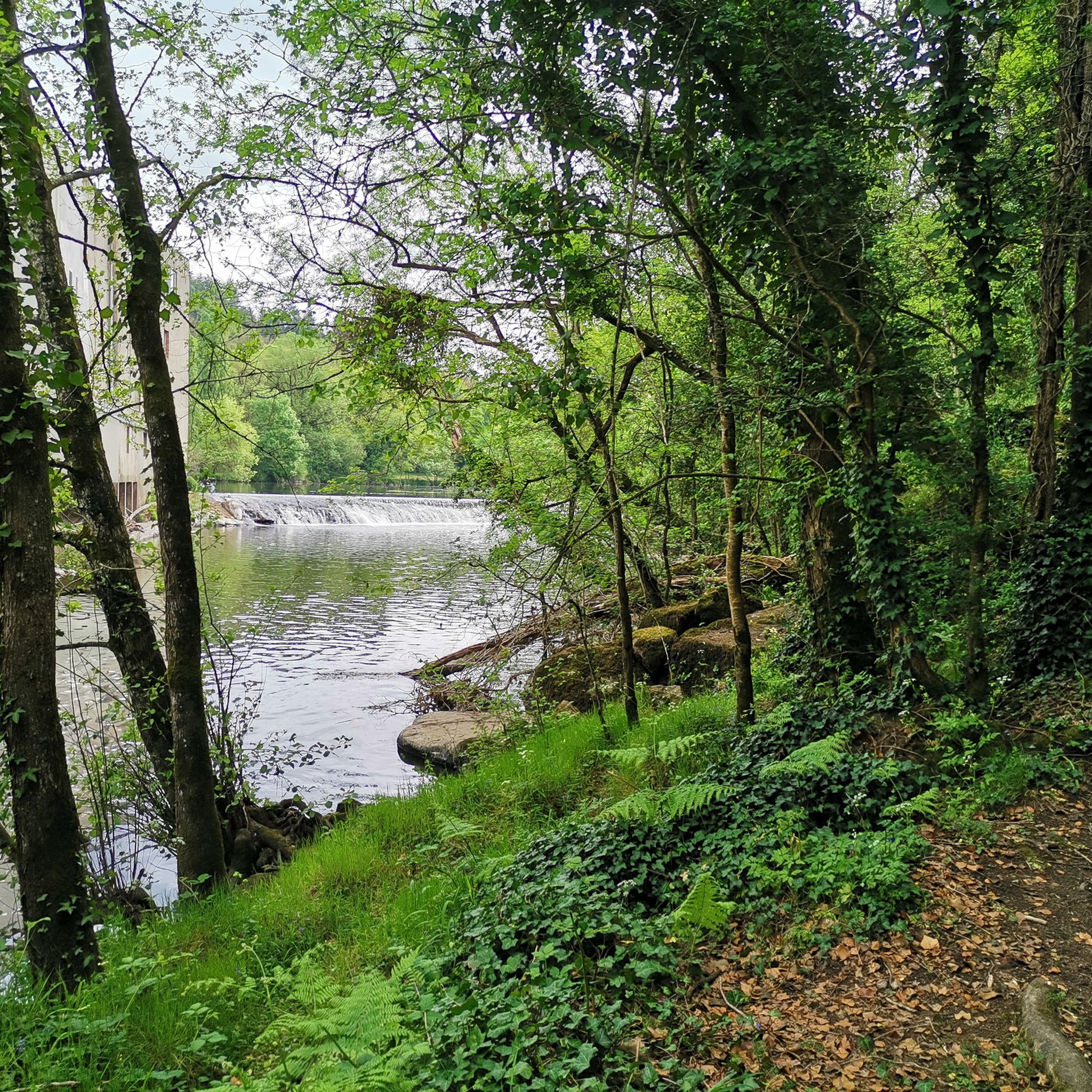
- The most popular attractions is The Arsenal, a bridge that connects hamlets and offers scenic views of the Sèvre. This site, formerly a mill and forge, is now a residential area with many rocks along the river.
- Another must-see spot is Lac de la Bultière, an artificial water reservoir. This lake, with a 15 km path around it, is popular for fishing and nature walks, offering views of the calm water and surrounding hills.
- Visitors also love Tiffauges Castle, a large medieval castle. It features themed shows and demonstrations of siege engines, with thick walls and 18 towers.
- La Roche-Sur-Yon is known for its historical sites, natural features, and cultural attractions. The region offers a variety of places to see, from castles and religious buildings to lakes and river valleys.
- The attractions around La Roche-Sur-Yon are appreciated by the komoot community, with more than 60 upvotes and over 20 photos shared by visitors.
Last updated: August 29, 2026
Lac de la Bultière
Highlight • Lake
This lake of exceptional fish wealth awaits you with almost all kinds of fish (perch, pike, zander, catfish, carp, roach, bream, tench, etc.). You can practice predator fishing from the shore or with a boat to catch zander or pike, catfish.
Translated by Google •
Tip by

Mont des Alouettes
Highlight • Viewpoint
Accessible by a main road, unfortunately very frequented by cars and trucks, or by other more roundabout routes.
Translated by Google •
Tip by

Sign up now to discover places like this
Get recommendations on the best single tracks, peaks, & plenty of other exciting outdoor places.
Sign up for free
The Arsenal
Highlight • Bridge
The path along the Sèvre towards Clisson Castle is passable by bike (except for a staircase in one place). However, it can quickly become crowded with walkers.
Translated by Google •
Tip by

Valley of the Three Provinces
Highlight • Monument
It is a peaceful valley with an inn. On the map, this place is found under its real name: "La Grossière", but it is still less elegant...
For cyclists, it's an opportunity to go uphill with also 3 choices: a gentler slope (approximately 4 or 5%) going towards Torfou and Maine et Loire, steeper (6 to 8%) going towards the Bruffière and the Vendée, and can be even a little steeper (6 to 9%) on the small road which goes up towards the north and allows to branch off towards Boussay and the Loire Atlantique.
Translated by Google •
Tip by
Sanctuary of La Salette of La Rabatelière
Highlight • Religious Site
The hiking highlight "La Salette" can be found on komoot at the following link =>> komoot.com/de-de/highlight/1861054
Translated by Google •
Tip by

The Old Bridge of Rocheservière
Highlight • Bridge
Translated by Google •
Tip by
Montaigu Castle
Highlight • Viewpoint
Translated by Google •
Tip by
Tiffauges Castle
Highlight • Castle
Translated by Google •
Tip by
Saint-Sauveur Church of Mareuil-sur-Lay
Highlight • Religious Site
The town is also at the heart of the Mareuil vineyard, which is the largest and one of the most famous in Vendée. Located on the slopes of the Lay and Yon rivers, it extends over an area of 300 hectares divided between 10 municipalities. Annual production is approximately 17,000 hl.
Translated by Google •
Tip by
Napoléon Square
Highlight • Other
Translated by Google •
Tip by

Sign up for free to discover even more attractions around La Roche-Sur-Yon.
Sign up for free
Already have an account?
Start today with a free account
Your next adventure awaits.
Login or Signup
Popular around La Roche-Sur-Yon
La Vélidéale - From the Limousin to the Atlantic
Coast, marshes and hedges — Vendée Vélo Tour
Hiking around La Roche-Sur-Yon
Running Trails around La Roche-Sur-Yon
Cycling around La Roche-Sur-Yon
Road Cycling Routes around La Roche-Sur-Yon
MTB Trails around La Roche-Sur-Yon

Gravel biking around La Roche-Sur-Yon
Other adventures around La Roche-Sur-Yon


Tips from the Community

On foot or by bike, this is a mandatory passage in Les Herbiers!
0
0

A truly unusual place, worth the detour.
0
0

On Place Napoléon in La Roche-sur-Yon, thirteen mechanical animals made of wood and steel, designed by François Delarozière and the La Machine company, populate the pools and are free for the public to handle. This mechanical zoo brings together crocodiles, hippopotamuses, dromedaries, sacred ibises, otter, owls, flamingos, frogs, and Nile perches. Each animal has a control station that allows different parts of its body to be activated (wings, mouth, legs, etc.). Visitors, young and old, can bring these works to life using hydraulic, pneumatic, or mechanical systems. The animals spit water, move, or interact according to the wishes of passersby. The activity is designed to be interactive, fun, and educational, supervised by "veterinarians" to guide visitors. The animals are inspired by a bestiary that is half-Egyptian and half-Vendean, paying homage to local history and biodiversity.
1
0

Bultière Lake is an artificial reservoir. The Bultière Dam was built in 1994. It is located in the commune of Chavagne en paillers. It supplies the drinking water network. Its surface area is 72 hectares and contains 5.2 million cubic meters of water. It is possible to walk around the lake via a 15-km trail. This lake, with its exceptionally rich fish population, awaits you with almost every type of fish (perch, pike, zander, catfish, carp, roach, bream, tench, etc.). You can go predator fishing from the shore or from a boat to catch zander, pike, and catfish. It is, of course, possible to still fish for roach, bleak, or bream. Carp are also present in this lake. A night carp fishing route located on the right bank in the Maurosière sector will delight those who love a good catch.
0
0
. Originally, there was an ovoid-shaped enclosure flanked by about ten towers and a gatehouse, located to the northeast. The fortified town was located to the north of the fortress and extended a little to the east. A dry moat separated the fortified town from the fortress. A barbican protected the gatehouse. A Romanesque keep of the Niort type, with its courtyard and small enclosure, was located in the castle courtyard, roughly in the middle in the north-south direction and located to the west. The fortified city extended from the rue de Gaulle, a gate was located at the level of the Carré de l'Europe (the porte de Nantes), then the ramparts continued along the rue de la Place du Champ de Foire, then went back down the Esplanade des Olivettes, where a gate was located towards the roundabout of the rue des Jardins (porte de Tiffauges) then the ramparts ran along the Asson to go up the rue du Pont Jarlet and around the barbican not far from the Presbytery The dry moats surrounding the city were 16 meters deep in the 15th century, today they are flowered and are the subject of different colored squares decorating this part of the ramparts.
0
0
In the 9th century, a castrum, a wooden castle built on a mound of earth, was built to counter the Viking raids that had previously sacked the city of Durivum (Saint-Georges-de-Montaigu). For strategic reasons, this fortress was built on a rocky spur at the junction between the Maine and Asson rivers. Maurice I of Montaigu, the first known lord, witnessed the consecration of the church of Saint-Nicolas de la Chaize-le-Vicomte in 1099. His successor until 1174 was Brient I of Commequiers, married to his daughter, Agathe de Montaigu. Later, his grandchildren, Brient II, Maurice II "the Younger," and Marguerite, succeeded him. It was perhaps this Brient II who had the Romanesque keep built in 1218, a large square tower with flat corner towers. He also removed the wooden palisade, replacing it with a wide moat extending to the Saint-Georges Gate. The Montagues (also known as Belleville by marriage around 1180) pledged allegiance to the Plantagenets, Henry II, Richard the Lionheart, and John Lackland. Margaret of Belleville-Montaigu, daughter of Brient de Montaigu and Agnes de Belleville, granddaughter of Maurice I de Montaigu, sister of Maurice II de Belleville-Montaigu, married Hugh of Thouars in 1203. In 1227, the couple submitted to Philip Augustus through the ceremony of homage. Hugh of Thouars died in 1229, and Margaret remarried in 1235 to the Duke of Brittany, Mauclerc, whose real name was Pierre de Dreux. Marguerite de Montaigu died in 1241, childless. The lordship of Montaigu fell to her nephew, Maurice III de Belleville-Montaigu (d. c. 1297; son of Maurice II). He became lord of Montaigu upon the death of Mauclerc in 1250[2], and his son Maurice IV (d. c. 1292) ensured the succession through his children Jeanne (d. 1284 Geoffroy II David de La Flocellière) and Maurice V de Belleville-Montaigu (he married 1° Sibylle, daughter of Geoffroy VI de Châteaubriant, then 2° Isabelle/Létice de Parthenay, daughter of Guillaume V Larchevêque de Parthenay). Jeanne de Belleville (c. 1300-c. 1359), daughter of Maurice V of Montaigu and Létice of Parthenay, married Olivier IV of Clisson for the second time in 1328. Olivier IV was executed by beheading after being suspected of "felony" against the English, during the Hundred Years' War. Jeanne became a privateer with her children Olivier V and Jeanne de Clisson, in revenge, and was banished from the kingdom of France. While she attacked French ships, the fortress of Montaigu was held by the English, according to the Treaty of Brétigny-Calais, a garrison of which engaged in pillaging the surrounding area. Jeanne lost her ship and withdrew with her children to England. Olivier V, having grown up, rallied to the king of France, recovered his property in 1362 and fought the English with Bertrand du Guesclin. In 1373, Olivier and Bertrand succeeded in driving the English out of Montaigu, and Olivier ceded the lordship to his sister Jeanne, who had married an English captain, Jean Harpedenne. The latter sided with the King of France in 1373 and became Jean de Belleville. His grandson, Jean III, married Charles VII's half-sister, Marguerite de Valois, in 1433. Louis I de Belleville succeeded Jean III. King Louis XI advised him to fortify the town between 1464 and 1468 to protect it from the Bretons.
0
0
A large medieval castle. It features themed shows, including siege engine demonstrations.
2
0
Another beautiful site on the Sèvre Nantaise, with the unusual feature this time: it's not only at the crossroads of three departments (LA, Vendée, and M&L), a rather common occurrence, but also of three former provinces: Brittany, Poitou, and Anjou. The crossroads is formed by the Sèvre on one side and its tributary, the Bon Débit, on the other. The inn of the same name looks very nice; in any case, the setting is splendid.
0
0
Frequently Asked Questions
What historical sites can I explore in and around La Roche-sur-Yon?
La Roche-sur-Yon, founded by Napoleon, offers several historical attractions. You can visit the Tiffauges Castle, a large medieval fortress with themed shows and siege engine demonstrations. Within the city, the Place Napoléon features an equestrian statue and interactive mechanical animals. Don't miss the Mont des Alouettes: Windmills and Chapel, offering historical insight and scenic views, or the Sanctuary of La Salette of La Rabatelière, an astonishing 19th-century monument.
Are there any natural attractions or outdoor spaces to enjoy near La Roche-sur-Yon?
Absolutely. The region boasts beautiful natural spots. The Lac de la Bultière is an artificial reservoir with a 15 km path perfect for nature walks and fishing. Just a few minutes from the city, the Yon Valley provides numerous hiking trails with picturesque views of the Yon River. You can also explore the Valley of the Three Provinces, a peaceful area where the Sèvre Nantaise river flows.
What kind of outdoor activities can I do around La Roche-sur-Yon?
The area around La Roche-sur-Yon is ideal for various outdoor activities. You can enjoy hiking on trails like the 'Lake Moulin Papon Loop' or 'La Pierre aux Fées — loop from Piquet'. Cycling is also popular, with routes such as 'Loop west of Aizenay' and 'Discovery of Montaigu and its surroundings'. For more options, explore the hiking guides and cycling guides available for the region.
Are there family-friendly attractions in the area?
Yes, many attractions cater to families. The Lac de la Bultière is great for walks and fishing. Tiffauges Castle offers engaging historical shows. The Place Napoléon in the city center features interactive mechanical animals that children often love. Additionally, the Haras de la Vendée (National Stud Farm) provides equestrian demonstrations and insights into horse breeding, which can be very entertaining for all ages.
What cultural experiences does La Roche-sur-Yon offer?
La Roche-sur-Yon has a rich cultural scene. You can visit the Municipal Museum (Musée de La Roche-sur-Yon – Espace Malraux) for art and history exhibitions. The Théâtre à l'Italienne hosts various performances, including plays, concerts, and dance shows. For a unique experience, the Musée du Chocolat offers insights into chocolate making, and Vendée Miniature features a 1/10-scale replica of the Vendée region's landscapes and monuments.
What is the best time of year to visit La Roche-sur-Yon and its attractions?
The best time to visit La Roche-sur-Yon largely depends on your interests. Spring and early autumn offer pleasant weather for outdoor activities like hiking and cycling in the Yon Valley or around Lac de la Bultière. Summer is ideal for enjoying the city's lively atmosphere, including the Place Napoléon, and for day trips to the nearby Vendée Coastline. Historical sites like Tiffauges Castle are enjoyable year-round, though some seasonal events might occur in warmer months.
Are there any unique or 'hidden gem' attractions worth discovering?
Beyond the main highlights, consider visiting The Arsenal, a scenic bridge connecting hamlets with beautiful views of the Sèvre river and its rocky banks. Another interesting spot is the Valley of the Three Provinces, a unique geographical point where three departments and historical provinces meet, offering a peaceful setting for exploration.
What are some notable architectural landmarks in La Roche-sur-Yon?
La Roche-sur-Yon is known for its Napoleonic-era architecture. The Place Napoléon is a prime example with its distinctive pentagonal layout. The Saint-Louis Church, located on the square, showcases impressive Neo-Gothic and Neoclassical styles and is the largest church in the Vendée region. The Renaissance House (Maison Renaissance), dating back to 1566, also stands out with its Italian architecture and historical exhibitions.
What do visitors particularly enjoy about the attractions around La Roche-sur-Yon?
Visitors frequently praise the diverse offerings, from the historical depth of sites like Tiffauges Castle to the natural beauty of Lac de la Bultière. The interactive mechanical animals at Place Napoléon are a unique highlight. Many appreciate the well-maintained trails for walking and cycling, and the opportunity to explore both urban history and tranquil natural landscapes.
Are there any castles or religious buildings to visit?
Yes, the region features several notable castles and religious sites. The prominent Tiffauges Castle is a must-see medieval fortress. You can also find Montaigu Castle, offering historical insights. For religious architecture, visit the Saint-Louis Church in La Roche-sur-Yon, or the unique Sanctuary of La Salette of La Rabatelière. The Mont des Alouettes also features a chapel alongside its historic windmills.
What are the options for easy hiking trails near La Roche-sur-Yon?
For those seeking easier walks, there are several accessible trails. The 'La Pierre aux Fées — loop from Piquet' is an easy option, as is the 'Tricherie Lake Loop'. You can also explore 'The Banks of the Yon – Belvedere sur l'Yon loop from La Bodinière'. These trails offer gentle terrain suitable for a relaxed outdoor experience. More easy hiking options can be found in the easy hikes guide for the area.
Can I find viewpoints with scenic vistas around La Roche-sur-Yon?
Yes, there are several spots offering great views. The Mont des Alouettes: Windmills and Chapel provides scenic vistas of the surrounding landscape. The The Arsenal bridge offers picturesque views of the Sèvre river. Additionally, the path around Lac de la Bultière reveals superb views of the calm water and surrounding hills.
Most popular routes around La Roche-Sur-Yon
Most popular attractions around La Roche-Sur-Yon

Get inspired with the komoot mobile app


Didn’t find what you were looking for?
Are you keen on exploring more awesome places nearby? Browse our guides:
Explore more
Still not found the Highlight you’re looking for? See guides of the top attractions in other regions:
