Attractions and Places To See around Pithiviers - Top 20
Attractions and places to see around Pithiviers offer a blend of historical landmarks, cultural sites, and natural features in the Loiret department of France. The town and its surroundings provide opportunities to explore centuries of history, from medieval castles to significant World War II memorials. Visitors can discover diverse landscapes, including wetlands and rose gardens, alongside architectural heritage. This region is characterized by its historical depth and varied points of interest.
Best attractions and places to see around Pithiviers
- The most popular attractions is Saint Lubin Chapel, a historical site that consists of the ruins of an unfinished church. Its romantic appearance inspired Victor Hugo, leading to its classification as a historical monument.
- Another must-see spot is Chamerolles Castle, a 16th-century castle. It features a large park and a Renaissance garden, offering a glimpse into historical architecture and landscape design.
- Visitors also love Moulin de la Porte Marsh, a 20-hectare wetland. This ecological setting is rich in diverse flora and fauna, featuring a discovery trail with educational panels for walkers.
- Pithiviers is known for its historical sites, natural areas, and cultural experiences. The region offers a variety of attractions to see and explore, from castles and chapels to marshes and gardens.
- The attractions around Pithiviers are appreciated by the komoot community, with 59 upvotes and 51 photos shared by visitors.
Last updated: July 7, 2026
Chamerolles Castle
Highlight • Castle
It is surrounded by a large park and a charming Renaissance garden, created by Lancelot II du Lac.
Translated by Google •
Tip by

Augerville Castle
Highlight • Castle
Translated by Google •
Tip by

Sign up now to discover places like this
Get recommendations on the best single tracks, peaks, & plenty of other exciting outdoor places.
Sign up for free
Caillettes Viewpoint
Highlight • Viewpoint
Translated by Google •
Tip by

Manoir de La Taille (Château de Bondaroy)
Highlight • Castle
Translated by Google •
Tip by
St. Lubin Church
Highlight • Other
From the town website:
In the 13th century, the inhabitants of Yèvre-le-Châtel obtained permission from the Bishop of Orléans to build a parish church in the cemetery. However, following the intervention of the monks of Saint-Benoit-sur-Loire, the bishop reversed his decision and work was interrupted.
Work resumed after the Hundred Years' War, but the church was never completed. Furthermore, in 1708, the bishop authorized the sale of stones and materials that had fallen onto the ground, resulting in Saint-Lubin being both unfinished and in ruins.
The building, with a single nave and two bays, is perfectly homogeneous. The structure, in the shape of a Latin cross, ends with a flat chevet, characteristic of the 13th century.
The romantic remains of this church were admired by Victor Hugo in the 19th century.
Tip by

Saint Lubin Chapel
Highlight • Historical Site
Translated by Google •
Tip by

Yèvre-le-Châtel
Highlight • Castle
Translated by Google •
Tip by
Moulin de la Porte Marsh
Highlight • Natural
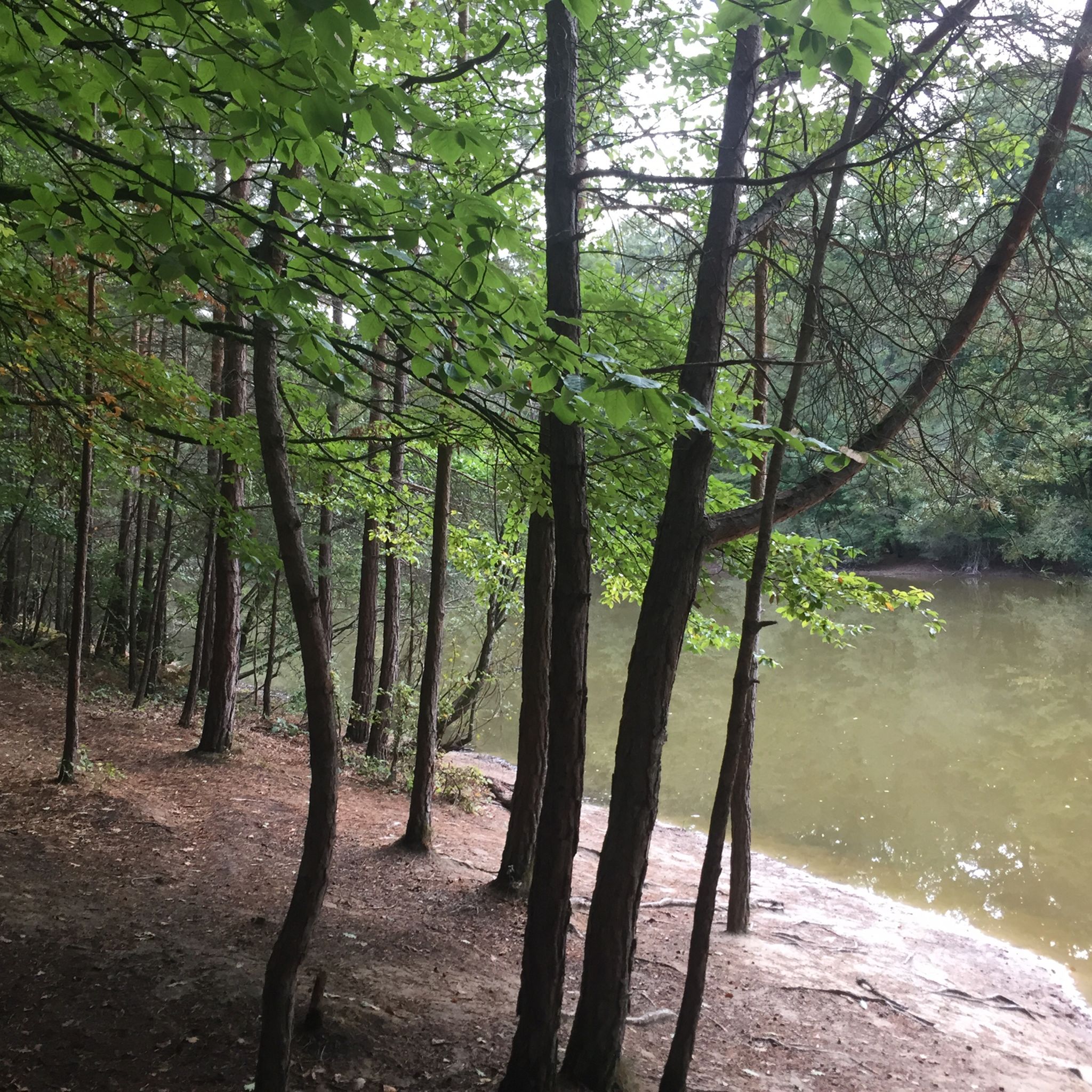
Popular with walkers, the marsh is also a leisure activity for hikers who travel through the Egg Valley. In the heart of the marsh, a discovery trail decorated with educational panels tells you more about the richness of its nature.
Translated by Google •
Tip by

Moulin de Bouffault
Highlight • Monument
Translated by Google •
Tip by

Bouville Castle
Highlight • Castle
Translated by Google •
Tip by
Sign up for free to discover even more attractions around Pithiviers.
Sign up for free
Already have an account?
Start today with a free account
Your next adventure awaits.
Login or Signup
Popular around Pithiviers



Tips from the Community

The unfinished church built after the other church near the Châtel in the 13th century. From the town website: In the 13th century, the inhabitants of Yèvre-le-Châtel obtained permission from the Bishop of Orléans to build a parish church in the cemetery. However, following the intervention of the monks of Saint-Benoit-sur-Loire, the bishop reversed his decision and work was interrupted. Work resumed after the Hundred Years' War, but the church was never completed. Furthermore, in 1708, the bishop authorized the sale of stones and materials that had fallen onto the ground, resulting in Saint-Lubin being both unfinished and in ruins. The building, with a single nave and two bays, is perfectly homogeneous. The structure, in the shape of a Latin cross, ends with a flat chevet, characteristic of the 13th century. The romantic remains of this church were admired by Victor Hugo in the 19th century.
0
0

A huge magnifying glass on a plane tree
0
0

Nestled on the edge of the Orléans forest, the Château de Chamerolles is a magnificent Renaissance castle which retains its medieval heritage. It was built between 1500 and 1530 on the site of an old medieval fortress by Lancelot du Lac, chamberlain of King Louis XII and Governor of Orléans. He wanted to make the old medieval building into a real pleasure castle responding to the architectural fashion of the time. With its polychrome brick decor and its open gallery, the Château de Chamerolles is inspired by the Louis XII wing of the royal Château de Blois. It retains its moat and its layout of corner towers from the medieval period. During the wars of religion, Lancelot's grandson, Lancelot II, transformed the castle of Chamerolles into a center of Protestantism. From this period remains the chapel whose painted tables of laws are the oldest in France. Chamerolles remained in the du Lac family until the end of the 17th century. In 1672, the castle belonged to Jacques Saumery, brother-in-law of Colbert. A century later, the castle passed into the hands of the Lambert family and in 1924, into those of Gaston Jessé-Curély. Occupied, ransacked, stripped during the Second World War, the Château de Chamerolles was put up for sale in 1970. In 1976, the city of Paris found itself in charge of Chamerolles. Abandoned, the Château de Chamerolles fell into ruins. In 1987, it became the property of the Loiret Departmental Council which then undertook an ambitious restoration program. The five years of work allow us to discover a transitional architecture, between the medieval heritage and the innovations of the Renaissance. Today, the Château de Chamerolles is dedicated to the history of perfumery and offers a historical and heritage showcase to the Cosmetic Valley, located in the Centre-Val de Loire region. Chamerolles offers a visual and olfactory journey, in pieces reconstructed from the 16th century to the 18th century, allowing you to discover the history of toiletry and perfume. The castle is surrounded by a large park and a charming Renaissance garden, created by Lancelot II du Lac, after a trip to Italy. A garden where it is beautiful to stroll in the summer.
0
0

Very beautiful village which is definitely worth the detour. You can notably discover its castle, built in the 13th century under Philippe Auguste. Don't hesitate to dismount and take a walk in the pedestrian part of the village.
0
0

The Caillettes belvedere is located in the heart of the Ingrannes massif. This 24 meter high lookout tower stands on the Caillettes hill at the highest point of the Orléans forest. It offers a breathtaking view of the entire surrounding massif and the forest canopy. An orientation table allows you to orient yourself when reading the surrounding points of interest.
0
0

The Manoir de la Taille, also known as the Château de Bondaroy, is a fortified manor house which dates from the 14th century and was the birthplace of two Renaissance poets, Jean and Jacques de La Taille. You can admire the impressive facade, towers and gatehouse, as well as the surrounding countryside. You can also explore the neighboring town of Pithiviers, which has a rich heritage and a famous pastry, the pithivier.
2
0
Château d'Augerville is a historic castle located in the commune of Augerville-la-Rivière, in Loiret, France. It dates back to the 12th century, when it was a hamlet and fort for the d'Augerville family. It changed hands several times during the Middle Ages and the Renaissance, and hosted important figures such as Catherine de Medici and King Charles IX. In the 17th century, it was sold to the taxes and renovated into a country house by Jean Perrault de Montevrault. It remained a private residence until the 21st century, when it was transformed into a 5-star hotel with a golf course, spa and chocolate factory. It is a historic monument, a national heritage site of France.
2
0

The castle was built between 1500 and 1530 on the site of an old medieval fortress by Lancelot I du Lac, chamberlain of King Louis XII. It is surrounded by a large park and a charming Renaissance garden, created by Lancelot II du Lac.
2
0
Frequently Asked Questions
What historical sites can I visit in and around Pithiviers?
Pithiviers and its surroundings are rich in history. You can explore the impressive Chamerolles Castle, a 16th-century Renaissance castle with beautiful gardens. Don't miss the romantic ruins of Saint Lubin Chapel, which inspired Victor Hugo, located in the charming village of Yèvre-le-Châtel. The town also features the historic Church of Saint-Salomon-and-Saint-Grégoire and the poignant Memorial de la Shoah.
Are there any natural attractions or outdoor spaces to enjoy near Pithiviers?
Yes, the region offers several natural spots. The Moulin de la Porte Marsh is a 20-hectare wetland east of Pithiviers, featuring a discovery trail with educational panels, perfect for walkers. You can also visit the André Eve Rose Garden, a beautiful site on the Route de la Rose, ideal for leisurely strolls. For a peaceful escape, the Étang à Madame et Monsieur offers a quiet pond surrounded by nature.
What family-friendly activities are available in the Pithiviers area?
Many attractions are suitable for families. The Chamerolles Castle with its large park and gardens is a great option. The Moulin de la Porte Marsh offers an engaging discovery trail for all ages. Additionally, the Museum of Transport and Touristic Railway allows visitors to step back in time and even enjoy a 4 km journey aboard an old steam train, which is often a hit with children.
Where can I go hiking or cycling around Pithiviers?
The Pithiviers region is excellent for outdoor activities. For hiking, you can explore easy trails like the 'Yèvre-le-Châtel – Château de Yèvre-le-Châtel loop' or the 'Étang à Madame – Monsieur Pond loop'. Cyclists have options like the 'Malesherbois Circuit' for road cycling or various MTB trails, including the 'Château de Yèvre-le-Châtel – Moulin de la Porte Marsh loop'. You can find more details and routes on the Easy hikes around Pithiviers, Road Cycling Routes around Pithiviers, and MTB Trails around Pithiviers guide pages.
What are some unique cultural experiences or local specialties in Pithiviers?
Pithiviers is famous for its namesake pastry, the 'Pithiviers' cake, a delicious puff pastry filled with almond cream. You can also find other gastronomic specialties like lark pâté and Bondaroy hay cheese. To experience local life, visit one of the weekly markets held on Wednesdays, Fridays, and Saturdays. The Museum of Transport and Touristic Railway offers a unique glimpse into the region's industrial heritage.
What is the best time of year to visit Pithiviers for outdoor activities?
The spring and summer months are generally ideal for outdoor activities in Pithiviers, especially for enjoying the André Eve Rose Garden when it's in bloom. The discovery trail at the Moulin de la Porte Marsh is also pleasant during these seasons. For comfortable hiking and cycling, late spring and early autumn offer milder temperatures.
Are there any notable castles or manors besides Chamerolles Castle?
Beyond Chamerolles Castle, you can discover the 14th-century fortified Manoir de La Taille (Château de Bondaroy) with its impressive facade. Other historical castles in the vicinity include Augerville Castle and Bouville Castle, each offering a glimpse into the region's rich past.
What do visitors enjoy most about the attractions around Pithiviers?
Visitors frequently appreciate the blend of historical depth and natural beauty. The romantic ruins of Saint Lubin Chapel and the charm of Yèvre-le-Châtel are often highlighted. The peaceful atmosphere of places like the Moulin de la Porte Marsh and the historical significance of sites like Chamerolles Castle also receive high praise.
How can I get around to the attractions from Pithiviers?
While some attractions are within Pithiviers itself, many are best reached by car. Public transport options may be limited for certain sites. For specific information on public transport to places like Chamerolles Castle or the Museum of Transport, it's advisable to check local transport schedules. Parking is generally available at major attractions like Chamerolles Castle and the Museum of Transport.
Are there any hidden gems or lesser-known spots worth discovering in the Pithiviers region?
Beyond the main attractions, consider visiting the remnants of the Collegiate Church of Saint-Georges, which includes an 11th-century crypt accessible via guided tours. The Moulin de Bouffault, an old mill, offers a picturesque stop. For a unique historical monument, the Lavoir d'Orville, an old washhouse by the river, provides a charming glimpse into local heritage.
Can I find information about the Pithiviers region from a local tourist office?
Yes, the Pithiviers Tourist Office (Office de Tourisme du Grand Pithiverais) is an excellent resource for visitors. They can provide information on local attractions, events, and guided tours of the historic center. You can also find more general information about the Loiret department on the Tourisme Loiret website.
Most popular routes around Pithiviers
Most popular attractions around Pithiviers

Get inspired with the komoot mobile app


Didn’t find what you were looking for?
Are you keen on exploring more awesome places nearby? Browse our guides:
Explore more
Still not found the Highlight you’re looking for? See guides of the top attractions in other regions:
