Top 9 Castles around Blaye
Best castles around Blaye are found in a region known for its strategic location on the Gironde Estuary, Europe's largest estuary. The area is characterized by its historical fortifications and numerous wine estates. This landscape combines significant military architecture with a rich viticultural heritage.
Best castles around Blaye
- The most popular castles is Citadel of Blaye, a historical site that is a UNESCO World Heritage site. This 17th-century military fortification was designed by Vauban and covers 38 hectares.
- Another…
Last updated: August 30, 2026
Citadel of Blaye
Highlight • Historical Site
Translated by Google •
Tip by

Château Pontet d'Eyrans
Highlight • Castle
Translated by Google •
Tip by

Sign up now to discover places like this
Get recommendations on the best single tracks, peaks, & plenty of other exciting outdoor places.
Sign up for free
Blaye
Highlight • Settlement
Translated by Google •
Tip by

Rudel Castle
Highlight • Castle
Tip by
Citadelle Castle
Highlight • Castle
Translated by Google •
Tip by
East Gate, Vauban Citadel 🏰
Highlight • Castle
Translated by Google •
Tip by
Château Reynaud 🏰
Highlight • Castle
Translated by Google •
Tip by
Château La Croix de Millorit - Bayon-sur-Gironde
Highlight • Castle
Translated by Google •
Tip by
Superb Chateau de Bouilh
Highlight • Castle
Translated by Google •
Tip by

View of Château La Grave and Vineyards
Highlight • Viewpoint
Josiane …
Translated by Google •
Tip by
Start today with a free account
Your next adventure awaits.
Login or Signup


Tips from the Community

In the 16th century, the Bourg citadel, the stronghold of Bordeaux, was elevated to the rank of impregnable citadel thanks to the work of the Duke of Épernon, whose vaulted passage remains a vestige that you can discover during guided tours. You'll also visit the basement, where the former stone quarries were used to build impressive 70-meter-long reinforced concrete oil tanks, used during World War II. The Bourg Citadel Museum is located near the castle, which features 18th-century neoclassical architecture. You'll be amazed by its collection of horse-drawn carriages, which you'll learn about during guided tours.
1
0

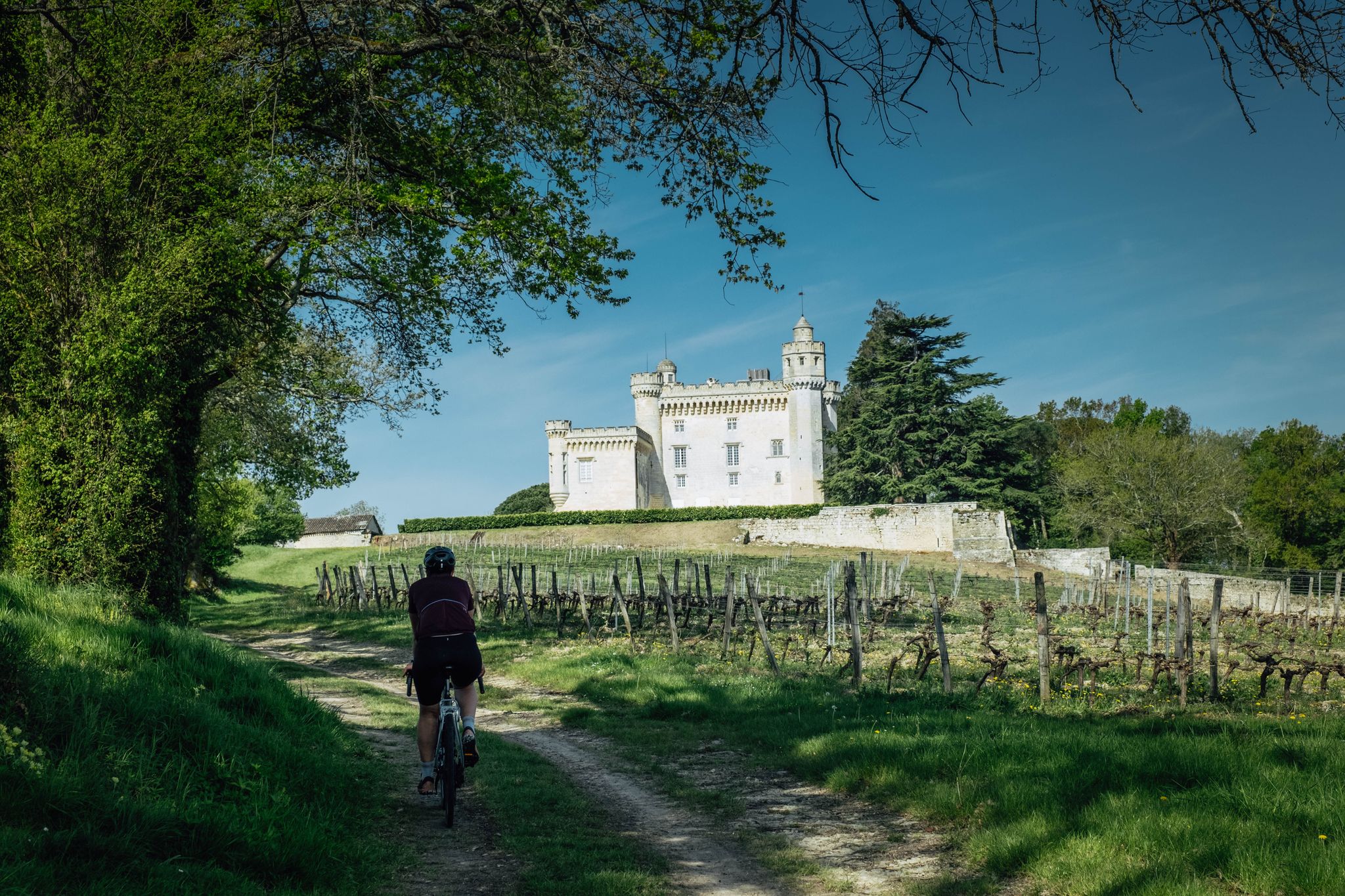
The view of the castle from the cypress-lined path and the valley behind it from the path is very beautiful.
1
0

Legacy of the priory of Milhegrand, stronghold of the abbey of Lagrasse in the 12th century, the estate then became a smallholding, maintained by a whole line of winegrowers. Josiane and Jean-Pierre OROSQUETTE, themselves from these families dedicated to the vineyard, have in turn perpetuated this long chain. In the 1970s, they decided to leave the cooperative cellar to settle in their own private cellar. They therefore settled on the La Grave estate where the vineyard, due to lack of maintenance, was in poor condition. From the first harvest, they discovered a lot of white grapes. Surprise ! The majority grape variety is Maccabeu, very appreciated for its aromas, it allows La Grave to obtain a great reputation for its white wines! This is the legendary grape variety of La Grave! Today, their son Jean-François has taken over. While continuing to produce excellent white wines, he developed red (and rosé) wines, bringing them elegance and finesse. The next generation arrives with nephew Tristan (vineyard side) and Jean-François' son, Julien... his sister Marie follows closely behind him! Château La Grave produces its wines under 3 appellations (white, rosé and red).
1
0
The terrace of the Chateau de la Citadelle de Bourg en Gironde offers a superb view of the Dordogne just before the junction with the Garonne, from where they form the Gironde estuary. You can still see the facade of the old 18th century charterhouse that was built there, as well as a view of the river. The Citadel of Bourg museum presents an impressive network of underground passages as well as a collection of horse-drawn carriages. Open daily between June and September.
2
0

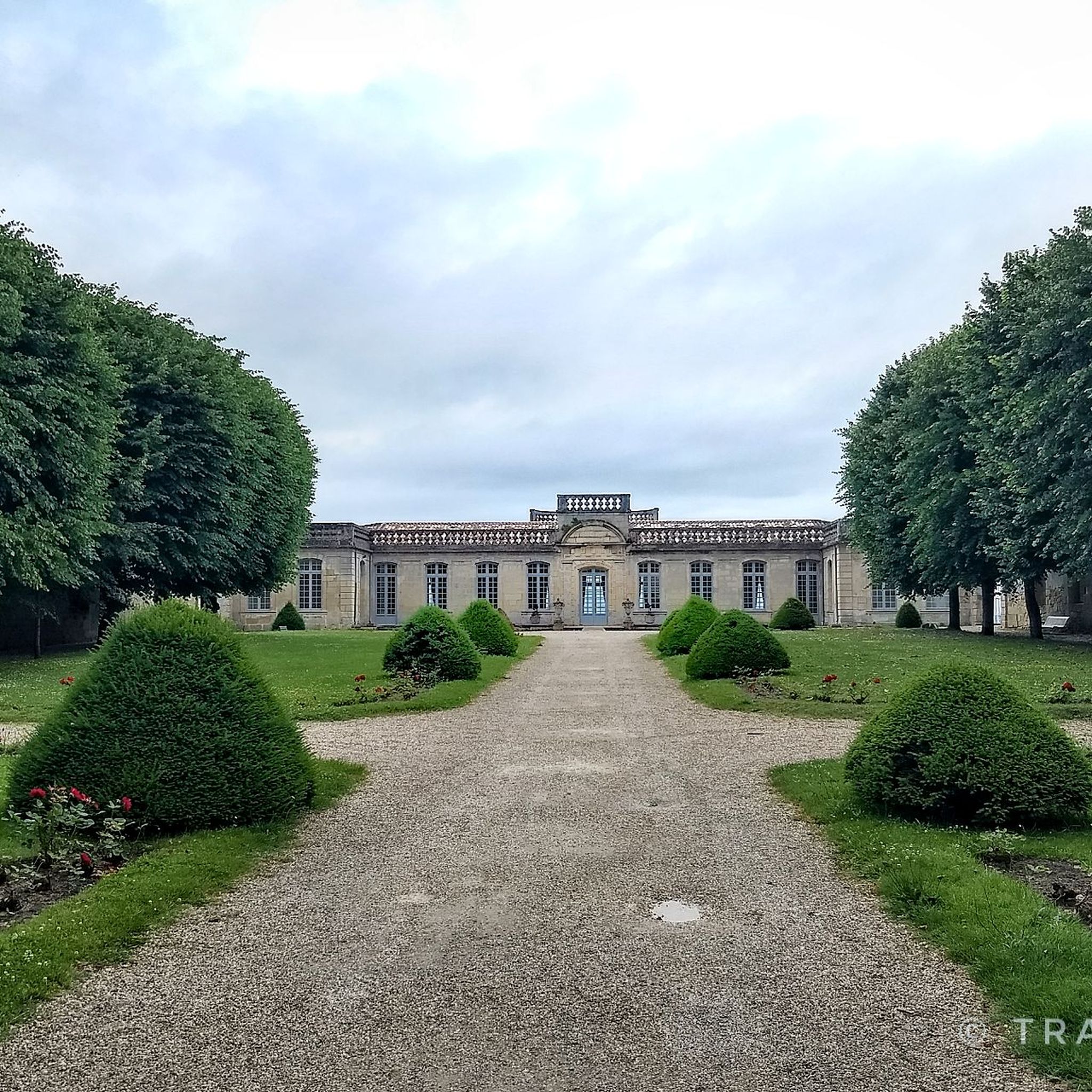
Worth seeing small manor house with winery.
6
0
Worth seeing fortress, unfortunately the weather was not nice for further explorations.
4
0

Since we wanted to continue with the ferry, but still had 60 minutes until the next crossing, we looked at this pretty citadel. There is also a café that invites you to linger.
0
0

Citadel built under Vauban to protect the port of Blaye. https://de.m.wikipedia.org/wiki/Zitadelle_Blaye
0
0
Frequently Asked Questions
What is the primary historical fortification to visit in the Blaye region?
The most significant historical fortification is the Citadel of Blaye. This UNESCO World Heritage site is a masterpiece of 17th-century military architecture designed by Vauban, covering 38 hectares with extensive ramparts and historical buildings. It was a crucial part of the "Bolt of the Estuary" defensive system.
Are there any family-friendly castles or activities in the Blaye area?
Yes, the Citadel of Blaye is very family-friendly. Entrance to the grounds is free, allowing exploration of its ramparts and cobblestone streets. It also houses artisan shops, restaurants, and a museum. Tourist train rides and bicycle tours are often available within the citadel, and it's listed as a family-friendly highlight.
What kind of historical insights can I gain from visiting the castles in Blaye?
Visiting the Citadel of Blaye offers a deep dive into French military history, showcasing Vauban's genius in defensive strategies. You can explore its 17th-century fortifications, including the East Gate, and discover the ruins of the medieval Rudel Castle within its walls. The citadel played a role in significant historical events and is part of the UNESCO-recognized 'Verrou Vauban' system.
Can I explore the Blaye castles on foot, and are there easy walking trails?
Yes, the Citadel of Blaye is ideal for walking, with 1.6 kilometers of ramparts to explore. The grounds are extensive and offer panoramic views. For longer walks, you can find various running and cycling routes around Blaye, including moderate options like the 'Loop of Plassac' or 'Blaye Citadel loop from Blaye' which are suitable for walking. You can find more details on these routes in the Running Trails around Blaye guide.
What are the best viewpoints to appreciate the Blaye region's castles and natural features?
The Citadel of Blaye offers magnificent panoramic views of the Gironde Estuary, Europe's largest estuary. From its ramparts, you can see the strategic importance of the area. Additionally, the View of Château La Grave and Vineyards provides a scenic perspective of the region's viticultural landscape.
Are there opportunities for wine tasting or vineyard tours near the castles?
Absolutely. While the Citadel of Blaye is a military fortress, the Blaye region is renowned for its wine estates. Many 'châteaux' here are primarily wineries. For example, Château Reynaud 🏰 is a small manor house that also functions as a winery. Château Pontet d'Eyrans, a 19th-century manor, offers tours of its vineyards and cellars, alongside wine tastings, allowing you to explore the region's viticultural heritage.
What outdoor activities can I do near the castles in Blaye?
The Blaye region offers various outdoor activities. You can find numerous routes for cycling, mountain biking, and running. For instance, there are cycling routes like the 'Citadelles of Blaye and Bourg - loop in Côtes de Bourg' in the Cycling around Blaye guide, and MTB trails such as the 'Boucle de la Citadelle de Blaye' in the MTB Trails around Blaye guide. These activities allow you to explore the scenic landscapes surrounding the historical sites.
Is there public transport available to reach the castles in Blaye?
While specific public transport routes directly to each château might vary, the town of Blaye, home to the main Citadel of Blaye, is accessible. It's advisable to check local bus schedules or regional transport options for connections to Blaye and surrounding areas. For exploring the wider region and its wine châteaux, a car often provides more flexibility.
Are there any hidden gem castles or lesser-known historical sites worth visiting near Blaye?
Beyond the prominent Citadel of Blaye, you might consider Superb Chateau de Bouilh in Saint-André-de-Cubzac. This 18th-century château, designed by Victor Louis, is classified as a historical monument and offers a different architectural style. While not as fortified as the Citadel, it provides a glimpse into the region's grand estates.
What facilities are available at the Citadel of Blaye for visitors?
The Citadel of Blaye is well-equipped for visitors. Within its walls, you'll find artisan shops, restaurants, and a museum of history and archaeology. Guided tours are available, often including access to underground passages. The citadel also hosts markets on Wednesdays and Saturdays, offering local produce and seafood.
What is the best time of year to visit the castles and the Blaye region?
The Blaye region is pleasant to visit during spring (April-June) and autumn (September-October) when the weather is mild, ideal for exploring the castles and vineyards. Summer (July-August) is also popular, with the Citadel of Blaye offering entertainment on summer evenings. These periods generally provide good conditions for outdoor activities and enjoying the scenic views.
Most popular routes around Blaye
Most popular attractions around Blaye

Get inspired with the komoot mobile app


Didn’t find what you were looking for?
Explore Blaye’s best castles region by region:
Explore more
Looking for the best castles somewhere else? Discover other guides around Blaye:
