The best cycling routes around Sant Mateu De Bages
4.6
(93)
4,939
riders
250
rides
Touring cycling routes around Sant Mateu de Bages traverse a landscape of rolling hills and extensive Mediterranean forests in the Bages region of Catalonia. The area is characterized by a mosaic of vineyards, olive groves, and cereal fields, offering varied terrain for cyclists. The prominent Serra de Castelltallat, a protected natural area, provides elevated sections and scenic backdrops. Water features like the Riera de Navàs and various streams also crisscross the region.
Best touring cycling routes around Sant Mateu De…
Last updated: May 18, 2026
59.9km
04:37
1,060m
1,060m
Hard bike ride. Very good fitness required. You may need to push your bike for some segments of this route.
36
riders
63.2km
04:05
780m
780m
Hard bike ride. Very good fitness required. Mostly paved surfaces. Suitable for all skill levels.

Sign up for free
29
riders
33.9km
03:12
670m
670m
Hard bike ride. Very good fitness required. You may need to push your bike for some segments of this route.
14
riders
52.4km
03:41
1,000m
1,000m
Hard bike ride. Very good fitness required. Mostly paved surfaces. Suitable for all skill levels.
13
riders
42.8km
03:20
530m
530m
Hard bike ride. Very good fitness required. Mostly paved surfaces. Suitable for all skill levels.
Get access to more routes and recommendations from other explorers.
Sign up for free
Already have an account?
Our route recommendations are based on thousands of hikes, rides, and runs completed by other people on komoot.
Start today with a free account
Your next adventure awaits.
Login or Signup

Tips from the Community

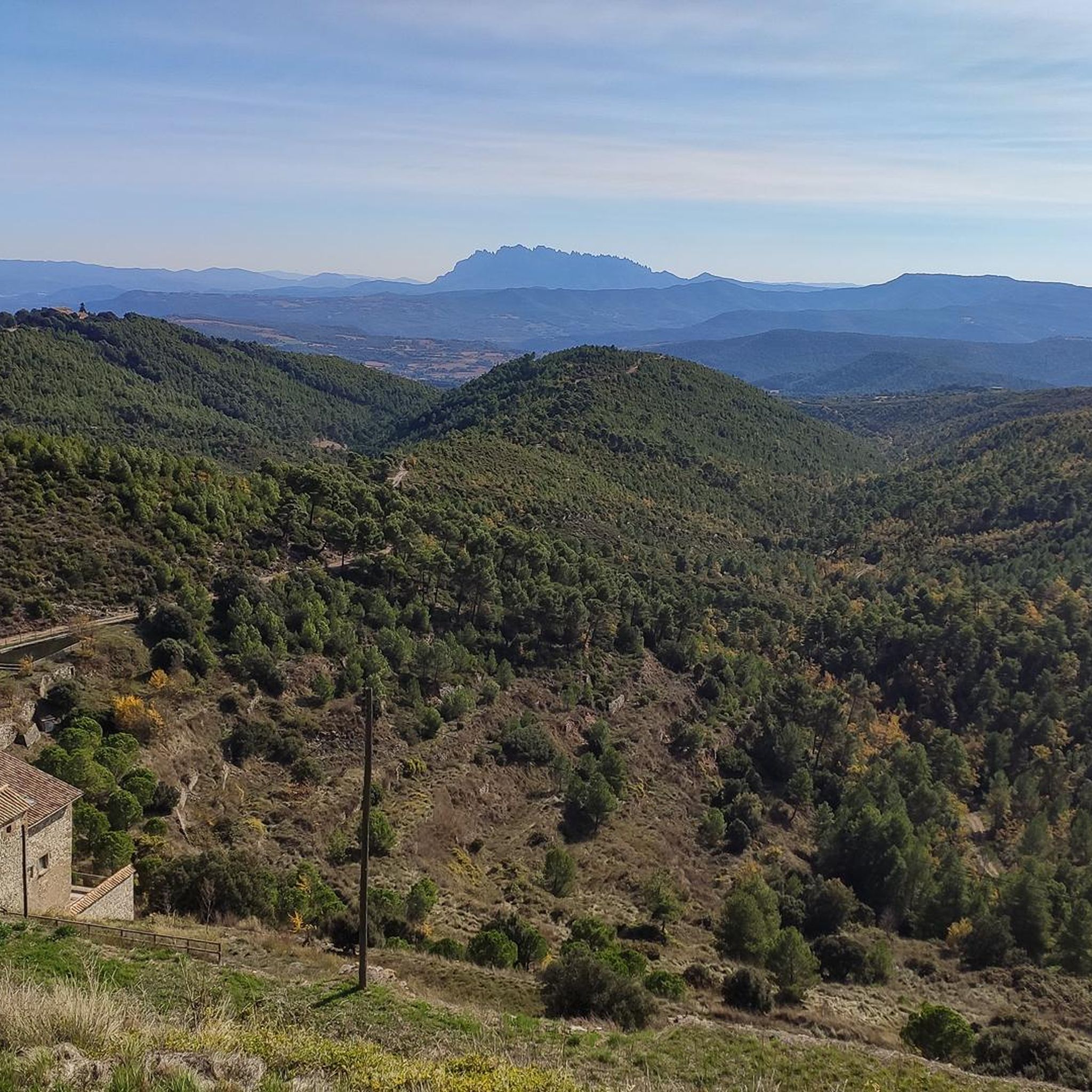
Recreation area with picnic area and spectacular views of Montserrat
0
0

Space to relax and look towards Montserrat
0
0

The archaeological site of Sant Amanç de Viladés is made up of a Roman villa, an early medieval settlement and some remains from the Iberian period. The entire site is located on the southern side of a mountain range, crossed by the C-25 road in the section that goes from Rajadell to Calaf and which divides the whole into two parts: north and south. The importance of the Roman town of Rajadell is understood by the presence of a Roman road that connected the lands of the Manresa sector with those of Calaf and Prats de Rei (ancient Roman municipality of Sigarra). The route of this road had to necessarily follow the Rajadell stream very closely as it passed through the Roman town. Passing through this place is the most suitable for moving between the Bages and Anoia regions, as indicated by the Peric oratory, located at the foot of the N-141g and parallel to the Eix Transversal C-25. The appearance that the site has now corresponds to the plan of the Low Empire. Currently the road crosses the Roman site and divides the remains of the Roman villa into two sectors. The northern sector corresponds to the residential area or pars urbana, with an elongated structure, where the noble rooms and the set of terms are located. The southern sector is on flatter terrain and was intended for agricultural work, especially wheat and vines (pars rustica). At the western end of the villa there were bathrooms, characterized by different air-conditioned spaces, with areas of hot, warm and cold water and with the oven to heat the whole. The main body of the residential area consists of three rooms, one of which preserved a polychrome mosaic. The original is in the Museu Comarcal de Manresa, and a reproduction of part of it can be seen at Rajadell Town Hall.
0
0

The first stone was laid in 1936 and construction was completed in 1940. It is certainly worth a stop to admire its beautiful architecture.
0
0
Section with progressive ascents. At the top there is a bar with coffee and food.
0
0

One of the most important medieval fortresses in Catalonia. It is located on a hill that dominates the saline valley and the Cardener valley, in the municipality of Cardona. It was built in the year 886 by Wifredo el Velloso. Romanesque and Gothic style,
0
0
Church of the municipality of Callús (Bages) included in the Inventory of the Architectural Heritage of Catalonia. This church was built in 1936 due to the fact that at the end of the 19th century a series of textile industries were installed on the banks of the Cardener River that were a pole of attraction for the population; Thus, a new town was set up on the plain that was far from the parish church located on top of a hill near the castle of Callús.
0
0

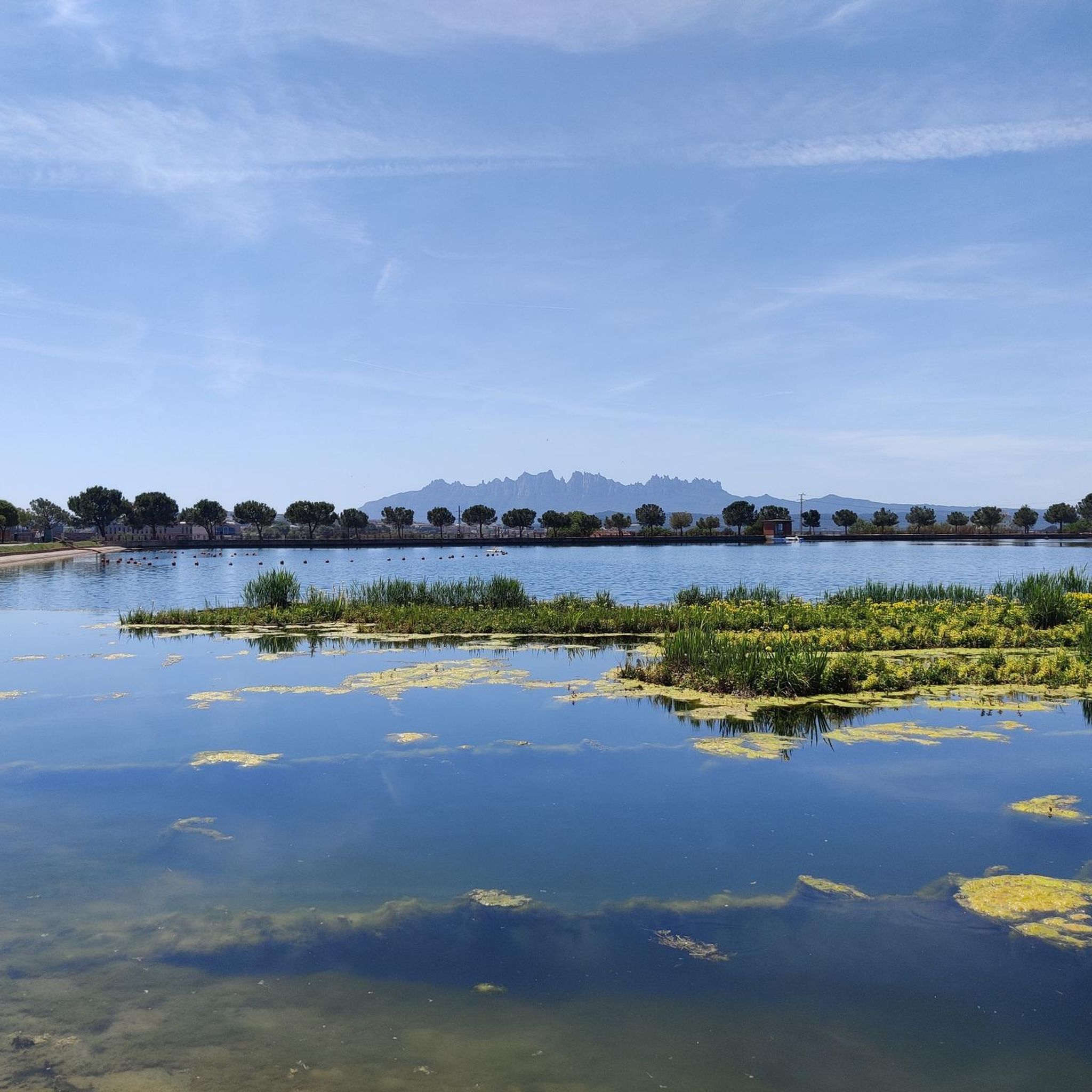
This park is a large reservoir with a nice trail around it for walking and biking. There is parking and a picnic area. It is a good place to relax or start or end an adventure.
2
0
Frequently Asked Questions
What kind of terrain can I expect when touring cycling in Sant Mateu de Bages?
Touring cycling in Sant Mateu de Bages offers a varied landscape. You'll encounter rolling hills, extensive Mediterranean forests, and a mosaic of vineyards, olive groves, and cereal fields. Some routes feature significant elevation gains and unpaved segments, particularly in areas like the Serra de Castelltallat, while others are on mostly paved surfaces.
Are there touring cycling routes suitable for beginners or families in Sant Mateu de Bages?
Yes, Sant Mateu de Bages caters to various skill levels. While many routes are classified as difficult, there are 14 easy routes and 53 moderate routes available, providing options for beginners or families looking for less challenging rides. These routes often wind through agricultural landscapes and offer a gentler experience.
How many touring cycling routes are available in Sant Mateu de Bages?
There are over 250 touring cycling routes in Sant Mateu de Bages documented on komoot, offering a wide range of options for exploration.
What natural features will I encounter on touring cycling routes in Sant Mateu de Bages?
You'll cycle through diverse natural settings, including pine, holm oak, and kermes oak forests. The prominent Serra de Castelltallat provides elevated sections and scenic backdrops. Water features like the Riera de Navàs and streams of Salo and Coaner also crisscross the terrain, sometimes featuring riparian forests. For panoramic views, the 543-meter Collbaix peak is a notable vantage point.
Are there historical landmarks or cultural sites to see along the touring cycling routes?
Absolutely. The region is rich in history. You can explore sites such as the Castelltallat Castle, the tranquil Sanctuary of Mare de Déu de la Serra, and numerous historic farmhouses (masías). The area is also known for its 'tinas de piedra seca' (dry stone vats), showcasing traditional viticultural architecture. Nearby, you can visit the Pont Vell de Manresa.
Can I find circular touring cycling routes in Sant Mateu de Bages?
Yes, many touring cycling routes in Sant Mateu de Bages are designed as loops, allowing you to start and finish at the same point. An example is the Castell de Cardona - Circular gravel in the Pla del Bages, which offers a circular journey through varied terrain.
What is the best time of year for touring cycling in Sant Mateu de Bages?
Sant Mateu de Bages is suitable for touring cycling for much of the year. Spring and autumn generally offer the most pleasant temperatures for cycling through the vineyards and forests. Summers can be warm, but early mornings or late afternoons are still enjoyable. Winters are typically mild, making it possible to cycle year-round, though some higher elevation areas might be cooler.
What do other touring cyclists enjoy the most about touring cycling in Sant Mateu de Bages?
The area is highly rated by the komoot community, with an average score of 4.7 stars from over 90 reviews. Reviewers often praise the diverse landscapes, from rolling hills and Mediterranean forests to expansive vineyards, and the variety of routes catering to different skill levels. The blend of natural beauty and historical sites is also frequently highlighted.
Are there any specific routes that pass through protected natural areas?
Yes, some routes specifically traverse protected natural areas. For instance, the Castillo de Boixadors - loop in the Castelltallat Sierra Protected Natural Area takes you through the Castelltallat Sierra, which is recognized as a Plan of Spaces of Natural Interest (PEIN) and part of the Natura 2000 network.
Are there any routes that highlight the region's agricultural heritage?
Many routes in Sant Mateu de Bages showcase the region's agricultural heritage. You'll frequently cycle through vineyards, olive groves, and cereal fields. The Sant Sadurní Church of Callús – Totem Poles of Sant Joan loop from FGC Súria (Mercaderies), for example, leads through agricultural landscapes and rolling hills, offering insights into the local farming traditions.
What are some of the longer touring cycling routes available?
For those seeking longer rides, routes like the Sant Sadurní Church (Callús) – Bòbila Wetlands loop from FGC Súria (Mercaderies) cover approximately 69.7 km (43.3 miles) and involve significant elevation gain, providing a substantial touring experience.
Most popular routes around Sant Mateu De Bages
Most popular attractions around Sant Mateu De Bages

Get inspired with the komoot mobile app


Explore more
Browse the best Cycling routes in other regions.
